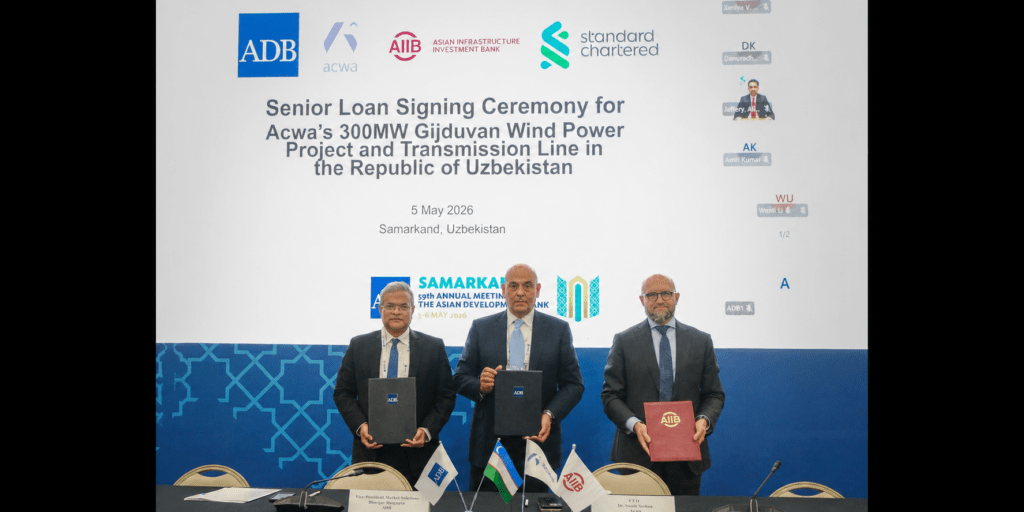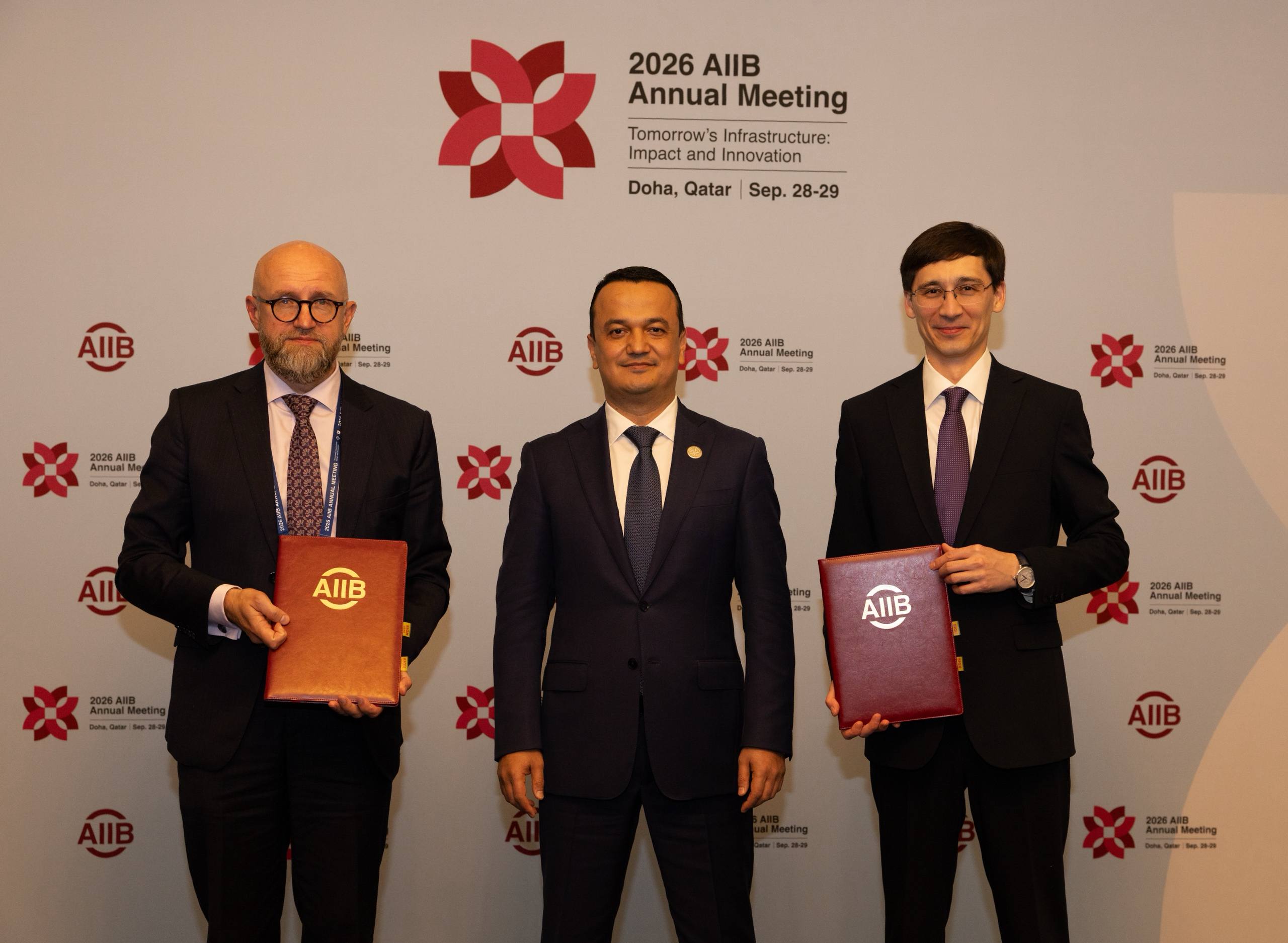
The Asian Infrastructure Investment Bank (AIIB) and Uzbekistan have agreed on a pipeline of potential infrastructure projects worth up to $5 billion for 2026-2029. The two sides also signed a $1.5 million grant agreement to help prepare a project to modernize the country’s electricity transmission network.
The updated Multi-Year Rolling Pipeline (MYRP) was signed on the sidelines of the AIIB’s 11th Annual Meeting in Doha. The document identifies areas for potential financing through 2029. The $5 billion figure represents a pipeline of prospective investments, rather than loans already approved by the bank.
Uzbekistan is a founding member of the AIIB and is the bank’s largest partner in Central Asia, accounting for 51% of its operations in the region, according to Uzbekistan’s Ministry of Investment, Industry and Trade. Tashkent is seeking to expand cooperation on cross-border transport, energy, and water projects, while bringing more private capital into infrastructure development.
The AIIB also agreed to provide a $1.5 million grant to help prepare the electricity transmission project. The funding will support technical studies, assessments of investment needs and climate risks, and preparations for integrating new solar and wind power plants into the grid.
The work will focus on the southern energy corridor between the Surkhandarya and Samarkand regions and on the Fergana Valley. The studies are intended to identify bottlenecks in the transmission network and options for increasing its capacity.
Grid modernization is becoming one of the key challenges in Uzbekistan’s energy transition. The government says renewable energy accounted for around 30% of electricity generation in 2025 and aims to raise the share to 54% by 2030. Connecting additional generating capacity will require both an expansion of the high-voltage transmission network and improvements in its reliability.
As previously reported by The Times of Central Asia, Uzbekistan plans to commission more than 17 GW of additional renewable energy capacity and build around 6,000 kilometers of high-voltage transmission lines by 2030. The expansion of green generation is becoming increasingly important as domestic gas production declines: Uzbekistan, once a net gas exporter, became a net importer in 2023.