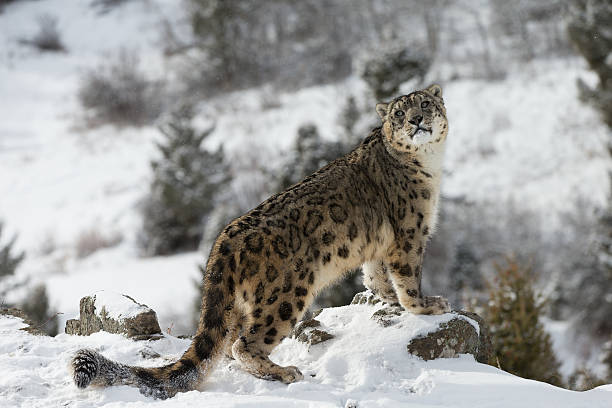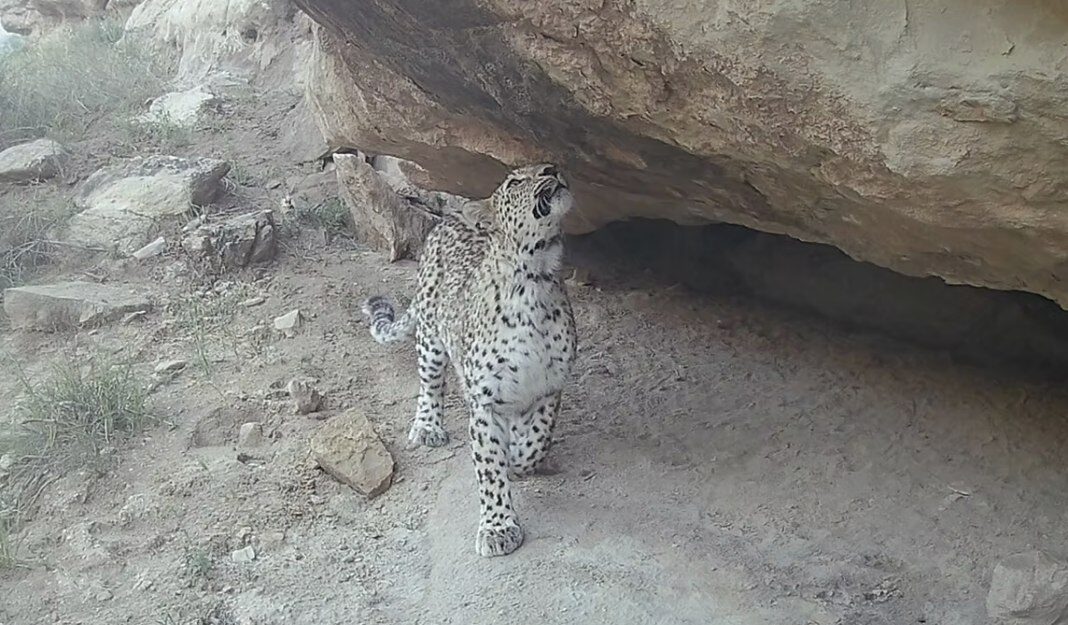
Between 60 and 80 Caucasian leopards, also known as Persian leopards, currently inhabit Turkmenistan, according to extensive monitoring conducted throughout 2025. The findings confirm not only the stable presence of this rare predator in key ecological zones but also provide encouraging signs of population recovery.
A recent report by Conservation X Labs estimates Turkmenistan’s Persian leopard population at 60-80 individuals. Most breeding activity occurs within protected natural reserves, while border zones serve as critical migration corridors that support the dispersal and genetic diversity of the species.
The Persian leopard is one of the largest leopard subspecies and plays a vital role in maintaining biodiversity in Turkmenistan. The majority of the national population is concentrated along the Kopetdag Mountains, near the border with Iran.
Camera trap data also confirms a significant presence in the Uly-Balkan Range, an area of ecological importance. It supports the potential repopulation of the Garabogazgol region and sustains habitat connectivity with neighboring Kazakhstan. The re-confirmed presence of leopards along the southern coast of Garabogazgol is viewed as a particularly meaningful indicator of the species’ gradual return to its historical range.
In 2025, monitoring efforts were significantly expanded. A wide network of camera traps was deployed across key habitats, providing more accurate and consistent long-term data.
The data confirms that individual leopards have been present in the same territories over multiple years. Notably, a third breeding female has now been recorded in the Uly-Balkan mountains, an important development for the species’ viability.
Conservation X Labs researchers describe the findings as “an important step in the conservation of the species,” citing improvements in habitat quality, sufficient prey availability, and the cumulative impact of long-term conservation efforts.
Despite this progress, the global outlook for the Persian leopard remains fragile. Experts estimate that the total wild population numbers between 750 and 1,044 individuals, including only 450-626 adults. The majority of these leopards live in fragmented and declining habitats across the region. As such, the subspecies is listed as endangered in the IUCN Red List of Threatened Species.
Turkmenistan’s leopard population thus serves as a rare example of regional recovery, underscoring the importance of continued monitoring, cross-border cooperation, and sustained habitat protection.