The United States is trying to turn its political dialogue with Central Asia into concrete projects for mining and processing critical minerals. American capital is already moving into Kazakhstan’s tungsten sector and has long been present in Tajikistan’s antimony industry, while Washington is looking more closely at the mineral potential of Uzbekistan and Kyrgyzstan. But access to deposits is only part of the challenge. China is already deeply embedded in the region’s mining, processing, and supply routes.
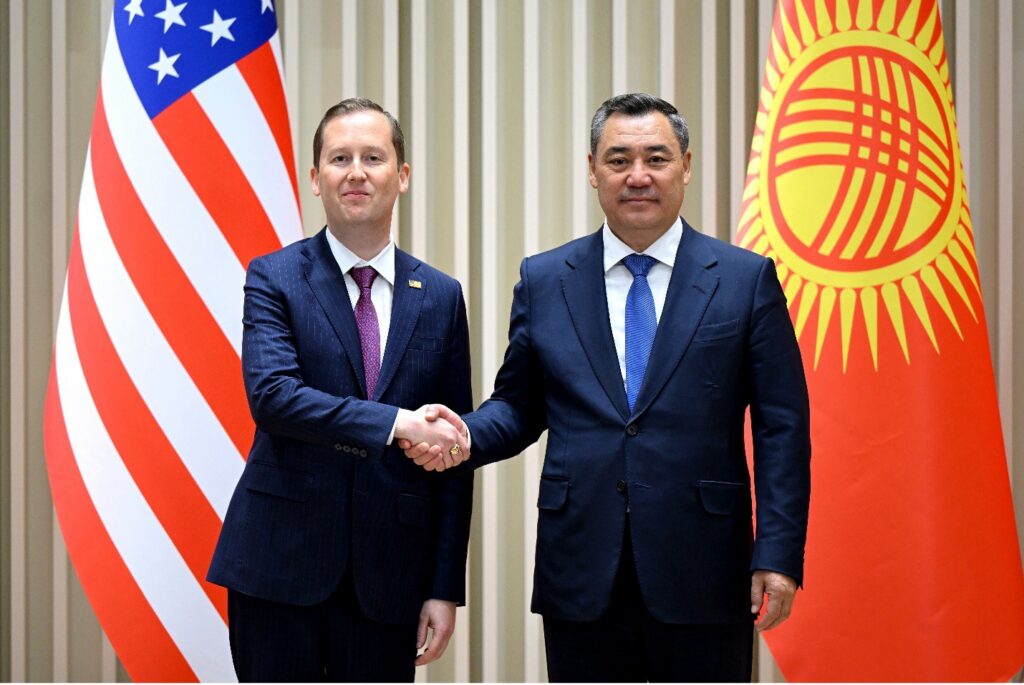
A new round of talks took place during a visit by U.S. Special Envoy for South and Central Asia Sergio Gor and Senator Steve Daines. In Bishkek, the U.S. delegation met with regional leaders and discussed investment and resource projects.
Daines represents Montana, one of the United States’ major mining states, and serves on the Senate Committee on Energy and Natural Resources. He has also advocated repealing the Jackson-Vanik amendment, a Cold War-era provision that still applies to Kazakhstan, Tajikistan, Turkmenistan, and Uzbekistan. The 1974 law was designed to pressure Soviet-bloc governments that restricted emigration and still prevents the four countries from receiving permanent normal trade relations with the United States. In Washington, its repeal is increasingly being linked to expanding trade and U.S. investment in the region.
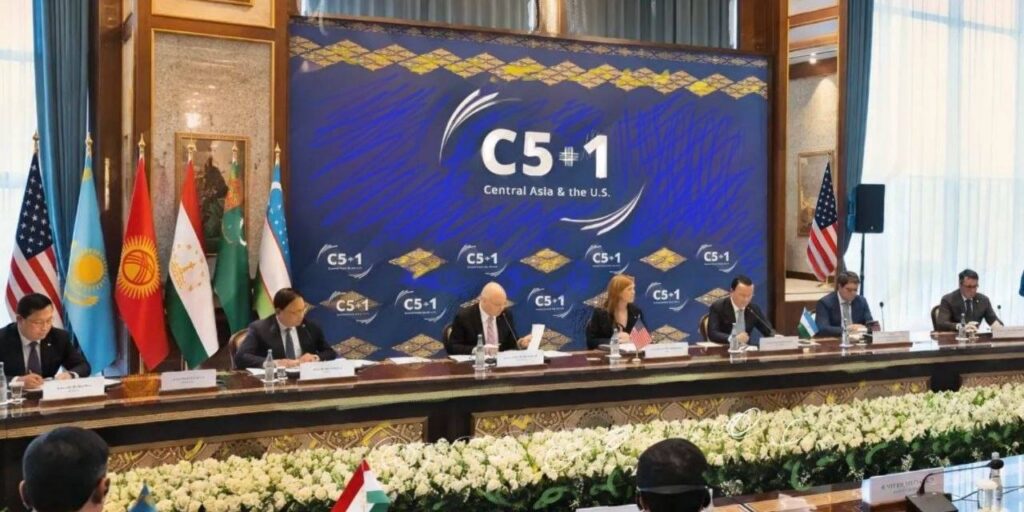
U.S. mineral diplomacy has already acquired a dedicated regional format. In June, Astana hosted the C5+1 Critical Minerals Dialogue with representatives of all five Central Asian states. Discussions ranged from geological exploration and access to data to processing and getting raw materials to international markets.
U.S. Assistant Secretary of Commerce David Fogel called for faster progress in turning those discussions into investment projects. More than 20 U.S. mining and related companies joined the delegation, while a Kazakhstan-U.S. roundtable focused on processing capacity and new supply chains.
The question now is whether Washington can turn that diplomatic push into projects that not only extract Central Asia’s minerals, but process them in the region and move them to Western markets without relying on China.
Kazakhstan: America’s Bet on Tungsten
The most prominent U.S.-backed project is already taking shape in Kazakhstan.
Cove Capital, through Cove Kaz Capital Group, is working with state-owned Tau-Ken Samruk to develop the Severny Katpar and Verkhneye Kairakty deposits in the Karaganda Region. The U.S. investor holds a 70% interest in the project, while its Kazakh partner has a 30% stake.
Investment is estimated at around $1.1 billion. The project goes beyond mining: processing is also planned in Kazakhstan. At Severny Katpar, average annual production is projected at about 5,000 tons of tungsten trioxide. Mining is scheduled to begin in 2030.
Tungsten is particularly important to the United States. It is used in aerospace, electronics, machinery, and defense, while the global market remains heavily dependent on China.
Professor Younkyoo Kim of Hanyang University and his co-authors highlighted the middle of the production chain – smelting, refining, and separation – in a 2026 study. These processing capabilities are even more concentrated geographically than mining itself.
Kazakhstan is trying to use competition among investors to keep more stages of production at home. Exporting ore leaves the country dependent on foreign processors. Producing intermediate and finished materials domestically can generate more revenue, technology transfer, and skilled jobs.
Tajikistan: An Existing Project
In Tajikistan, the American presence is already visible in antimony mining – a metal used in batteries, electronics, flame-retardant materials, and defense applications. In 2025, the country produced around 22,000 tons, roughly one-fifth of global output.
American capital arrived long before the current wave of mineral diplomacy. Since 2006, Comsup Commodities has wholly owned the Anzob enterprise, which develops the Dzhizhikrut antimony-mercury deposit.
The United States is therefore already established in Tajikistan. Its weaker point is the processing side of the supply chain, where Chinese capital has already secured a position in one of the country’s largest projects.
Uzbekistan Builds Projects Around Processing
Uzbekistan could become another major destination for U.S. capital.
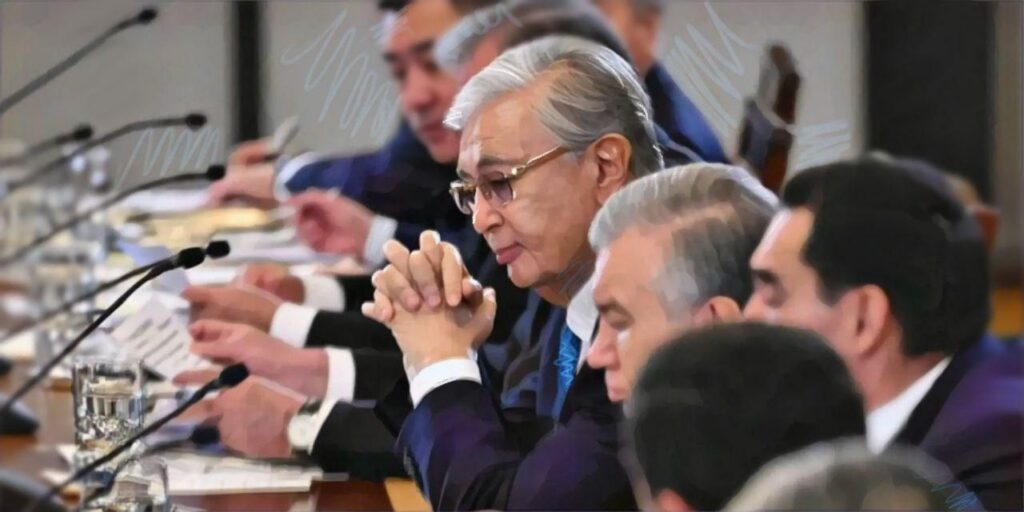
On September 3, President Shavkat Mirziyoyev received Daines in Tashkent. The official statement specifically identified energy, critical minerals, transport, digital technologies, and industry among areas of bilateral economic cooperation. The two sides also discussed further regional cooperation through the C5+1 format.
Uzbekistan has deposits of gold, copper, uranium, tungsten, and other metals, but it is now trying to build production beyond basic extraction. The Uzbekistan Technological Metals Complex plans to implement 120 projects worth a combined $4.2 billion in 2026-2030.
The portfolio covers tungsten, molybdenum, lithium, graphite, nickel, cobalt, and other metals. The broader plan combines mining, concentration, processing, and production for external markets. Authorities believe Uzbekistan could eventually establish industrial production of 28 types of critical minerals.
As in Kazakhstan and Tajikistan, the competition here is increasingly about where processing takes place. Uzbekistan is offering investors access to its resource base while seeking to manufacture metal powders, alloys, wire, industrial components, and other higher-value products domestically.
Kyrgyzstan Is Still Offering Geology
In Kyrgyzstan, U.S. engagement is at an earlier stage. During Gor and Daines’ meetings in Bishkek, the two sides discussed investment, trade, infrastructure, and opportunities for American businesses.
The country has adopted its own critical minerals development program through 2030. Its national list includes 22 types of raw materials. From the existing mineral base, the authorities have identified four priority projects, five of the most promising deposits, and 16 areas for further study. Most of these sites still require additional geological exploration.
Resources potentially attractive to foreign investors include antimony, beryllium, rare earth elements, molybdenum, and bismuth. Kyrgyzstan does not yet have a major U.S.-backed project comparable to Kazakhstan’s tungsten development.
China Has Already Built the Chain
The United States is entering a market where China has been operating for years. Chinese companies are involved in mining and processing metals across Central Asia, while China itself has enormous industrial capacity to turn concentrates into materials used in electronics, batteries, and other technologies.
Geography also works in China’s favor. It shares borders with Kazakhstan, Kyrgyzstan, and Tajikistan, allowing ores and concentrates to move directly to Chinese processing facilities without lengthy transit through several countries.
That is why the U.S. strategy increasingly links minerals with transportation. A joint statement by the United States and the five Central Asian countries specifically calls for investment in geological exploration, mining and processing of critical minerals, development of value-added production, and expansion of the Trans-Caspian Trade Route.
For westbound shipments, the route runs through Kazakhstan to the Caspian Sea and then through Azerbaijan, Georgia, and Turkey. It provides an alternative to sending raw materials through Russia or China, but requires reliable rail connections, sufficient port capacity, and long-term contracts with buyers.
Severny Katpar already shows what such a model could look like in practice: American capital, a Kazakh deposit, and processing inside Kazakhstan.