For many years, U.S. relations with Central Asia were primarily political in nature, while economic ties developed slowly. However, in the past year, engagement has intensified significantly, with recent agreements suggesting the U.S. is poised to strengthen its economic presence in the region. A recent statement by U.S. Secretary of State Marco Rubio reinforces this outlook. Calls to repeal the outdated Jackson-Vanik trade restrictions have been framed by U.S. officials as a way to facilitate trade with Central Asia and strengthen U.S. energy security.
The Jackson-Vanik Amendment
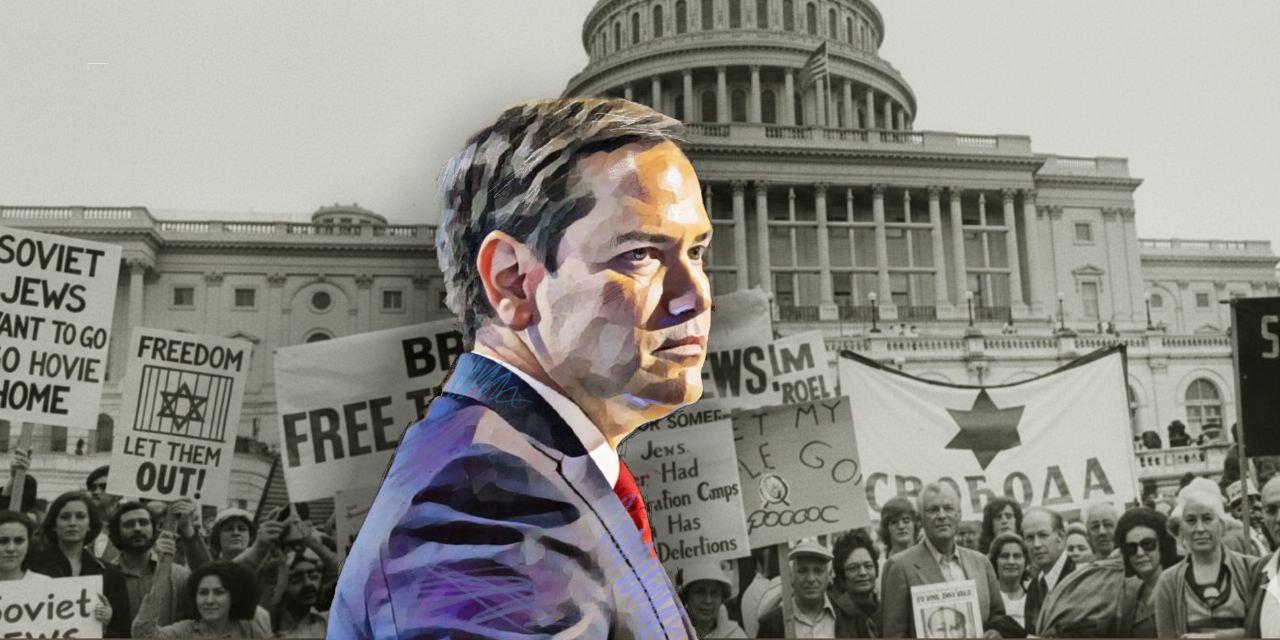
The Jackson-Vanik Amendment, enacted in 1974, restricts trade with countries that limit their citizens’ right to emigrate. At the time of its passage, Central Asia was still part of the Soviet Union.
The amendment prohibits granting most-favored-nation (MFN) status, government loans, and credit guarantees to countries that violate their citizens’ right to emigrate, and allows for discriminatory tariffs and fees on imports from non-market economies.
The amendment was repealed for Ukraine in 2006, and for Russia and Moldova in 2012. However, it remains in effect for several countries, including Azerbaijan, Kazakhstan, Tajikistan, Turkmenistan, and Uzbekistan, which continue to receive only temporary normal trade relations.
In May 2023, a bill proposing the establishment of permanent trade relations with Kazakhstan, which included repealing the Jackson-Vanik Amendment, was introduced in the U.S. Congress. A follow-up bill with similar provisions was submitted in February 2025.
Then-nominee and now Secretary of State Marco Rubio previously noted that some policymakers viewed the amendment as a tool to extract concessions on human rights or to push Central Asian states toward the U.S. and away from Russia. However, he characterized such thinking as outdated, stating that, “In some cases, it is an absurd relic of the past.”
Rubio has consistently supported expanding U.S. ties with Central Asia.
Expanding Cooperation
In 2025, relations between the U.S. and Central Asia deepened significantly, particularly with Kazakhstan and Uzbekistan, which are seen by analysts as the primary beneficiaries of this cooperation.
In late October 2025, U.S. Deputy Secretary of State Christopher Landau and U.S. Special Representative for South and Central Asia Sergio Gor visited Kazakhstan and Uzbekistan.
One of the year’s major events was the Central Asia-U.S. (C5+1) summit held in Washington on November 6. Leaders of the five Central Asian states met with President Donald Trump and members of the U.S. business community. Uzbekistani President Shavkat Mirziyoyev also met with U.S. Senator Steve Daines, co-chair of the Senate Central Asia Caucus, with both sides focusing heavily on economic cooperation.
At the summit, Uzbekistan finalized major commercial agreements with U.S. companies, including aircraft orders by Uzbekistan Airways and deals spanning aviation, energy, and industrial cooperation.
Kazakhstan signed agreements worth $17 billion with U.S. companies in sectors including aviation, mineral resources, and digital technologies. This included a deal granting American company Cove Kaz Capital Group a 70% stake in a joint venture to develop one of Kazakhstan’s largest tungsten deposits, an agreement valued at $1.1 billion.
Further agreements were signed on critical minerals exploration. Kazakhstan and the U.S. committed to joint development of these resources, while Uzbekistan signed similar agreements with Denali Exploration and Re Element Technologies.
Central Asia holds nearly 170 identified rare earth element occurrences. Experts argue the region’s largely untapped reserves could provide a viable alternative to China’s near-monopoly on the global supply chain.
Strategic Balancing
In November 2025, Kazakhstan announced its accession to the Abraham Accords. The Foreign Ministry stated that this move aligns with Kazakhstan’s strategic interests and commitment to a fair resolution of the Middle East conflict.
The Abraham Accords, initially signed in 2020, normalized relations between Israel and several Arab nations, including the UAE, Bahrain, and Morocco, with the U.S. acting as mediator.
In January 2026, Kazakhstan, Uzbekistan, and Azerbaijan joined the Trump-initiated Board of Peace as founding signatories. According to the draft charter, extended or permanent membership may require significant financial contributions.
An Economic Shift Toward Central Asia
Central Asia was long a peripheral concern for U.S. foreign and economic policy. That began to change following the outbreak of the war in Ukraine and amid rising concerns over China’s control of rare earth markets.
Kazakhstan has identified at least 15 rare earth deposits and occurrences, many of which are crucial for modern technologies. Kazakhstan hosts some of the world’s largest undeveloped tungsten deposits. The U.S. approach to regional cooperation has shifted significantly under President Trump, who has prioritized deal-making and economic interests.
Still, the extent to which Kazakhstan and Uzbekistan are prepared to help the U.S. compete with China remains unclear. Beijing remains Central Asia’s largest economic partner, even surpassing Russia.
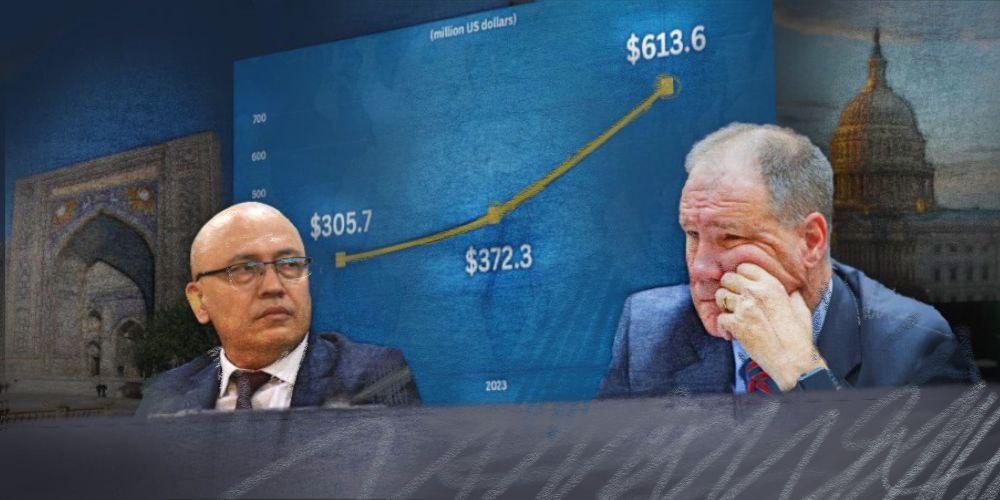
In 2025, trade between China and Central Asia totaled $106.3 billion, a 12% increase year-on-year. In contrast, U.S. trade with Kazakhstan, its top regional partner, amounted to around $5.5 billion in 2024, making Kazakhstan by far the United States’ largest trade partner in Central Asia.
While recent agreements may improve this imbalance, closing the gap with China will be a long-term challenge. Nonetheless, repealing the Jackson-Vanik Amendment could mark a pivotal step.
“From an economic point of view, the Jackson-Vanik amendment has not directly restricted U.S. trade with Central Asian countries in recent years,” political commentator Janibek Suleev told The Times of Central Asia. “Most already enjoy normal trade relations.”
However, Suleev noted that a full repeal of the amendment could offer several upgrades, most importantly, an improved investment climate.
“This is particularly relevant for hydrocarbon projects, energy, transport infrastructure, and the processing of critical minerals. The regional economy could also access new markets beyond China and Russia,” he stated.
Suleev argued that the political significance of any repeal outweighs the economic effect.
“Central Asia has become a stage for strategic rivalry between China, Russia, and the West. A new model is now emerging. From recent developments, it appears Washington is aiming to expand bilateral ties without formal alliances,” he said, cautioning that a dramatic increase in U.S. investment should not be expected.
“Still, the shift is clear. For most of the post-independence period, U.S. engagement focused heavily on promoting human rights and democratic norms,” Suleev concluded. “Today, relations are taking a more pragmatic turn.”