• KGS/USD = 0.01144 0%
  • KZT/USD = 0.00210 0%
  • TJS/USD = 0.10554 -0.09%
  • UZS/USD = 0.00008 0%
  • TMT/USD = 0.28530 0%
  • KGS/USD = 0.01144 0%
  • KZT/USD = 0.00210 0%
  • TJS/USD = 0.10554 -0.09%
  • UZS/USD = 0.00008 0%
  • TMT/USD = 0.28530 0%
  • KGS/USD = 0.01144 0%
  • KZT/USD = 0.00210 0%
  • TJS/USD = 0.10554 -0.09%
  • UZS/USD = 0.00008 0%
  • TMT/USD = 0.28530 0%
  • KGS/USD = 0.01144 0%
  • KZT/USD = 0.00210 0%
  • TJS/USD = 0.10554 -0.09%
  • UZS/USD = 0.00008 0%
  • TMT/USD = 0.28530 0%
  • KGS/USD = 0.01144 0%
  • KZT/USD = 0.00210 0%
  • TJS/USD = 0.10554 -0.09%
  • UZS/USD = 0.00008 0%
  • TMT/USD = 0.28530 0%
  • KGS/USD = 0.01144 0%
  • KZT/USD = 0.00210 0%
  • TJS/USD = 0.10554 -0.09%
  • UZS/USD = 0.00008 0%
  • TMT/USD = 0.28530 0%
  • KGS/USD = 0.01144 0%
  • KZT/USD = 0.00210 0%
  • TJS/USD = 0.10554 -0.09%
  • UZS/USD = 0.00008 0%
  • TMT/USD = 0.28530 0%
  • KGS/USD = 0.01144 0%
  • KZT/USD = 0.00210 0%
  • TJS/USD = 0.10554 -0.09%
  • UZS/USD = 0.00008 0%
  • TMT/USD = 0.28530 0%

Chess: Sindarov Wins Candidates Contest, Will Face World Champion

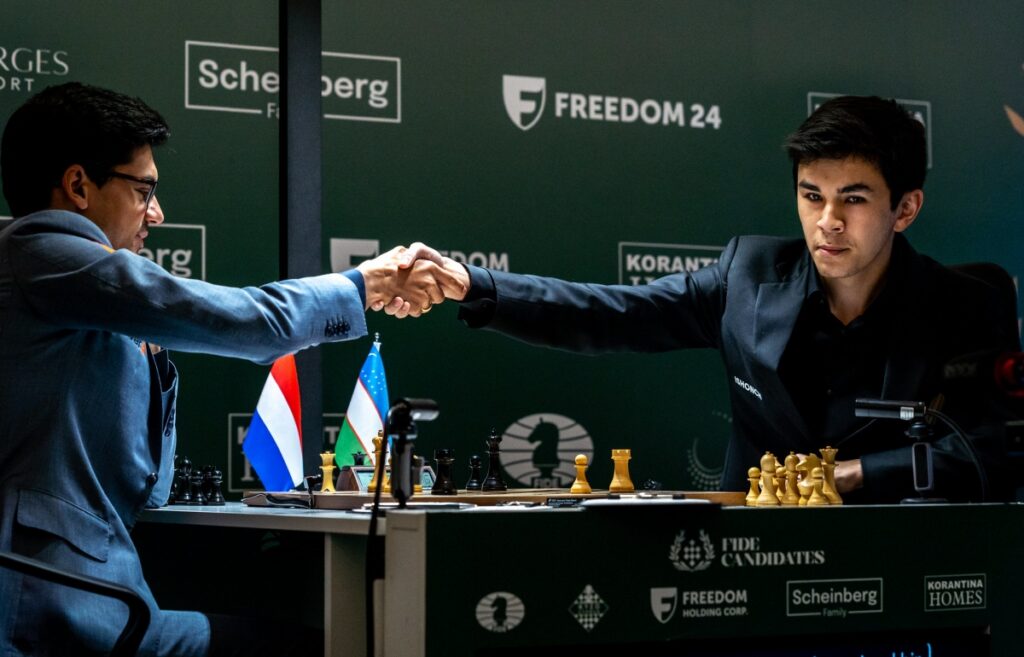
Javokhir Sindarov of Uzbekistan has won the eight-player FIDE Candidates Tournament, earning the opportunity to challenge world chess champion Gukesh Dommaraju of India later this year.

Sindarov drew a game against Anish Giri at the tournament venue in Cyprus on Tuesday, “and with one round remaining, Sindarov holds a commanding two-point lead over the rest of the field,” said FIDE, the international governing body of chess.

On the women’s side, Bibisara Asaubayeva of Kazakhstan defeated Ukrainian Anna Muzychuk on Tuesday to move into a tie for first place with India’s R. Vaishali.

The women’s final round on Wednesday “will determine whether there will be an outright winner or a tiebreak will be required,” FIDE said. “Up to six of the eight players still have a theoretical chance to win the event.”

Sindarov, who won the 2025 World Cup in Goa, India, was one of Uzbekistan’s youngest national champions in history, achieving that goal at the age of 13. He is now 20 years old.

Magnus Carlsen of Norway currently doesn’t play in the candidates tournament format even though he is the top-ranked classical chess player in the world.

Tajikistan, Dependent on Sugar Imports, Contends with Price Surge

Tajikistan’s government has been trying to reduce or at least diversify food imports whose prices are vulnerable to regional or global shocks. But a recent surge in the cost of sugar highlights ongoing challenges for the landlocked country.

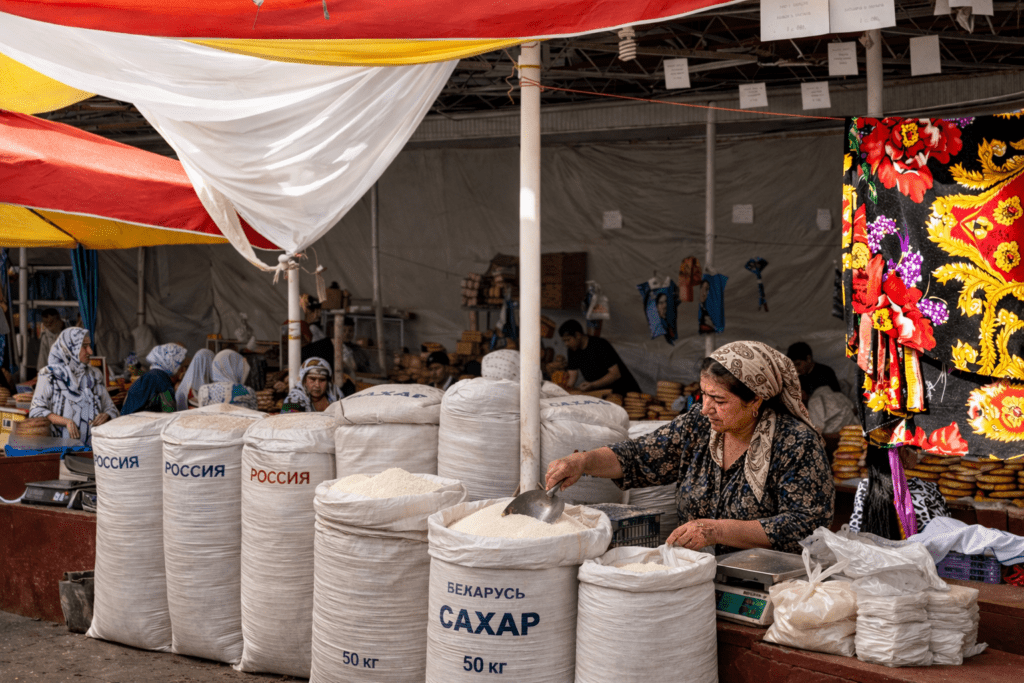
Tajikistan relies on sugar imports from Russia, Belarus, India, Pakistan, Kazakhstan, and other countries. Last year, it imported about 190,000 tons. Now, as oil prices fluctuate because of conflict in the Middle East, Tajikistan is among many countries, including its neighbors in Central Asia, that are struggling with uncertainty over the international energy trade.

The country has faced similar cycles in the past.

In 2024, Russia announced a ban on grain and sugar exports to some trading partners to ensure its own food needs as it grappled with sanctions and other economic pressures related to the war in Ukraine. Kazakhstan imposed a similar ban on exports as supply tightened. The result was that the sugar price in Tajikistan jumped by about 25% over the previous year.

Those export bans were eventually lifted, and the sugar price stabilized and even dropped in Tajikistan in 2025. Now the country faces another bout of price volatility as concerns mount following U.S. and Israeli air strikes on Iran and Iranian retaliation in the region. U.S. and Iranian negotiators failed to reach an agreement in recent talks, and the International Monetary Fund warns that oil market disruptions could slow global growth and spur inflation.

The price of a kilogram of sugar in Tajikistan has increased from 9–11 somoni ($0.80–$1) at the end of March to 12–14 somoni ($1.10–$1.30) this month, according to Asia-Plus, a media group in Tajikistan. It said the wholesale price of a 50-kilogram bag had risen from 380–400 somoni ($34–$36) to more than 500 somoni (more than $45) during the same period.

Those are increases of at least 25%, similar to the 2024 jump in cost.

The Food and Agriculture Organization, a United Nations agency, said the global sugar price index, which measures the monthly change in cost, was up 7.2% in March, and that the Middle East conflict was contributing to upward pressure on prices.

“Nevertheless, the overall increase in world sugar prices was contained by the generally favorable global supply outlook for the 2025/26 season, supported by good harvest progress in India and Thailand,” the agency said.

Minister Sydykov on the Bakai Bank Verdict and Kyrgyzstan’s Economic Path Forward

On April 13 in Washington, D.C., The Times of Central Asia’s Javier M. Piedra spoke with Kyrgyzstan’s Minister of Economy and Commerce, Bakyt Tolomushevich Sydykov, regarding the April 7 verdict in the “Bakai Bank vs. Open Dialogue Foundation” case before the Enterprise Court of Brussels – an important legal win for Kyrgyzstan and its stance in international financial markets.

In a verdict with international implications for Kyrgyzstan and the region, the Enterprise Court of Brussels sided with Bakai Bank, a Kyrgyz financial institution, in connection with a high-profile defamation case between Bakai Bank and Open Dialogue Foundation (ODF) – finding that ODF published allegations about the bank’s financial conduct without sufficient evidence. The judgment marks a significant development in a cross-border reputational and financial dispute, setting a visible bar for accountability and offering a more balanced snapshot of Kyrgyz efforts to cultivate transparency and compliance in its banking sector.

Kyrgyz government officials responded to the ruling with a practical and positive outlook, acknowledging that the country has prioritized policy, monitoring, and enforcement steps to bolster integrity and trust in its institutions. This ruling is expected to reinforce public confidence and strengthen the long-term resilience of Kyrgyzstan’s governance framework.

In Washington D.C. this week, Sydykov told TCA that, “We welcome this decision not just as an affirmation of Bakai Bank, but also for our broader financial system. It helps to convey our message to policymakers, diplomats, investors, and partners that Kyrgyzstan is open for business – and a ready contributor to regional and international trade. Our financial institutions operate in line with international standards, compliance expectations, and responsible governance. We are glad to move forward with strengthening our banking system and growing Kyrgyzstan’s economy for the benefit of its citizens.”

Case background

The proceedings were brought before the French-speaking Enterprise Court of Brussels (Tribunal de l’entreprise francophone de Bruxelles) after Bakai Bank challenged a series of publications issued by the Open Dialogue Foundation in 2023. The NGO had alleged that Bakai Bank was involved in facilitating financial transactions linked to sanctions circumvention and networks connected to Russian capital flows following the expansion of Western sanctions in early 2022.

Bakai Bank rejected these allegations as unsubstantiated and damaging to its international reputation and access to financial markets. It subsequently filed a civil action in Belgium, where the ODF is active and publishes much of its advocacy material.

Court proceedings and findings

In its judgment, the Brussels court examined whether the Open Dialogue Foundation had sufficient factual grounds to support its published claims. The court found that the NGO’s statements were presented as factually assertive allegations rather than opinion or conjecture, thereby requiring a higher evidentiary threshold.

The court concluded that the ODF had failed to provide adequate supporting evidence for its assertions regarding Bakai Bank’s alleged involvement in illicit financial activity. As a result, the court determined that the publications were unlawful in their form and impact, particularly in relation to reputational harm inflicted on the bank.

The ruling ordered the ODF to remove the contested publications from its platforms, publish the court’s decision prominently on its website, and cover legal costs associated with the proceedings.

Decision and implications

The case has been widely interpreted as reinforcing the responsibility of advocacy organizations operating in the EU to distinguish between allegations and substantiated claims, particularly in sensitive areas involving sanctions, banking integrity, and geopolitical conflict.

While the Open Dialogue Foundation has not been criminally sanctioned, the civil ruling represents a reputational setback.  Minister Sydykov told TCA, “We welcome further engagement in Kyrgyzstan’s banking and natural resources sectors, alongside expanded credit access, entrepreneurship, cross-border trade, and transport development.”

The case could set a precedent for how courts may respond to unproven claims made by NGOs.

Kyrgyzstan Accelerates Small Hydropower Construction to Achieve Energy Independence

Kyrgyzstan plans to significantly expand its hydropower capacity by commissioning new hydroelectric power plants with a combined capacity of 81 megawatts and expected annual generation of 348.3 million kWh, according to the Ministry of Energy.

The largest number of new facilities will be built in Chuy region, where four plants are planned. At the same time, projects will be implemented across all regions of the country. Individual plant capacity will range from 1.5 to 9 MW, with the largest developments concentrated in Chuy and Issyk-Kul regions, with total capacities of 39.5 MW and 21 MW, respectively.

The ministry noted that between 2021 and 2025, 27 small plants with a combined capacity of 109.8 MW were commissioned, generating around 427 million kWh annually. Over the next four years, authorities plan to continue expanding the sector by launching an additional 48 hydropower plants with a total capacity of 421 MW.

The government views the development of small hydropower as a key element of its strategy to achieve energy independence and shift from electricity imports to exports.

Energy Minister Taalaibek Ibraev emphasized that the country has significant hydropower potential.

“We have substantial hydropower potential. There is an opportunity to generate 142 billion kWh. Today, we are using about 13-14 percent of this. As you can see, development is underway across the country. Many new hydropower plants are currently under construction, and we are also modernizing existing plants using new technologies,” Ibraev told The Times of Central Asia.

The minister stressed that the expansion of small plants is linked to the goal of eliminating energy shortages and ending rolling blackouts during the winter period.

According to Ibraev, Kyrgyzstan is adopting modern technologies for small hydropower construction from partners in Russia and European countries. Investors from Russia, Southern Europe, and Canada have also expressed interest in the country’s energy sector, including solar and wind projects.

“Currently, much of the equipment for the energy sector is purchased from Russia. During our last meeting with Russian energy specialists, we agreed to procure equipment directly from manufacturers, without intermediaries,” the minister said.

He added that such arrangements are expected to reduce the cost of constructing new hydropower plants.

Russia to Boost Energy Exports to Uzbekistan as Trade Surpasses $13 Billion

Russia plans to increase deliveries of oil and natural gas to Uzbekistan, Prime Minister Mikhail Mishustin said at the sixth session of the intergovernmental commission at the level of the two countries’ prime ministers in Moscow.

“Agreements have been reached to continue supplies of Russian oil and natural gas and to increase their volumes,” Mishustin said, noting that energy remains a key area of cooperation between Moscow and Tashkent. He added that Russian specialists are also involved in drilling new wells and modernizing refining and gas transportation infrastructure in Uzbekistan.

The meeting brought together Mishustin and Uzbekistan’s Prime Minister Abdulla Aripov to review progress on agreements set by Presidents Vladimir Putin and Shavkat Mirziyoyev. Both sides emphasized the continued expansion of what they described as a comprehensive strategic partnership.

Mishustin said bilateral trade increased by nearly 12.5% last year, approaching one trillion rubles, and is expected to grow further by 2030. Aripov, citing Uzbek data, said trade turnover exceeded $13 billion in 2025 and rose by a further 30% in the first two months of this year.

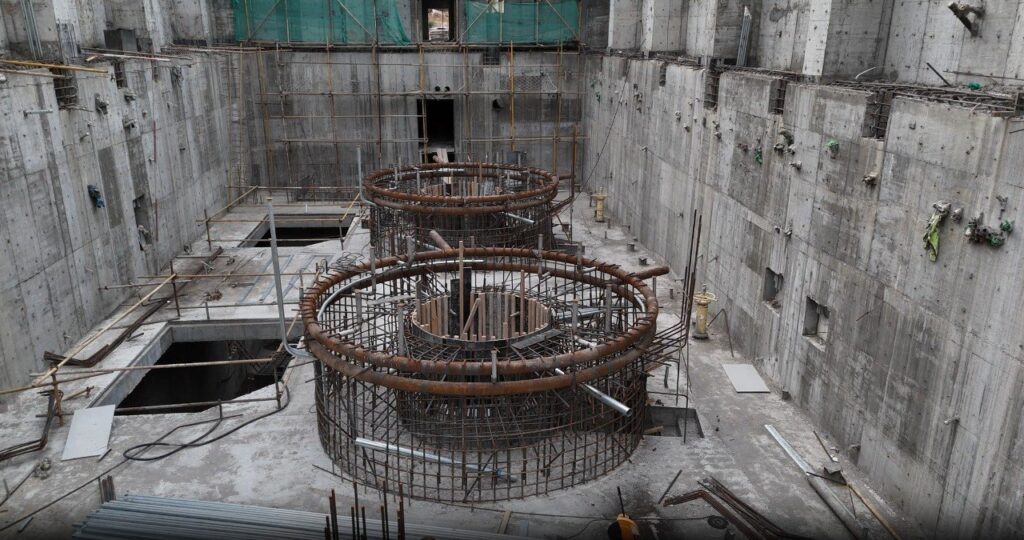
Energy cooperation featured prominently in the discussions. Construction of a Russian-designed nuclear power plant in Uzbekistan’s Jizzakh region is underway, with concrete work beginning in March. Aripov described the project as opening “a new page” in bilateral relations, adding that Uzbekistan would become “the first country where both small and large nuclear power plants will be located on one site.”

Beyond energy, the two sides highlighted expanding investment and industrial cooperation. Around 150 joint projects worth more than four trillion rubles are currently being implemented, while Uzbekistan hosts over 3,200 enterprises with Russian capital. Projects span sectors including mining, chemicals, textiles, pharmaceuticals, logistics, and digital technologies.

Previous reporting indicates that Russia remains one of Uzbekistan’s largest trading partners, with both governments aiming to increase bilateral trade to $30 billion by 2030. Transport links are also expanding, with 367 weekly flights now operating between the two countries, according to Aripov.

Uzbekistan’s Islamic Civilization Center Enters Guinness World Records as Largest Museum

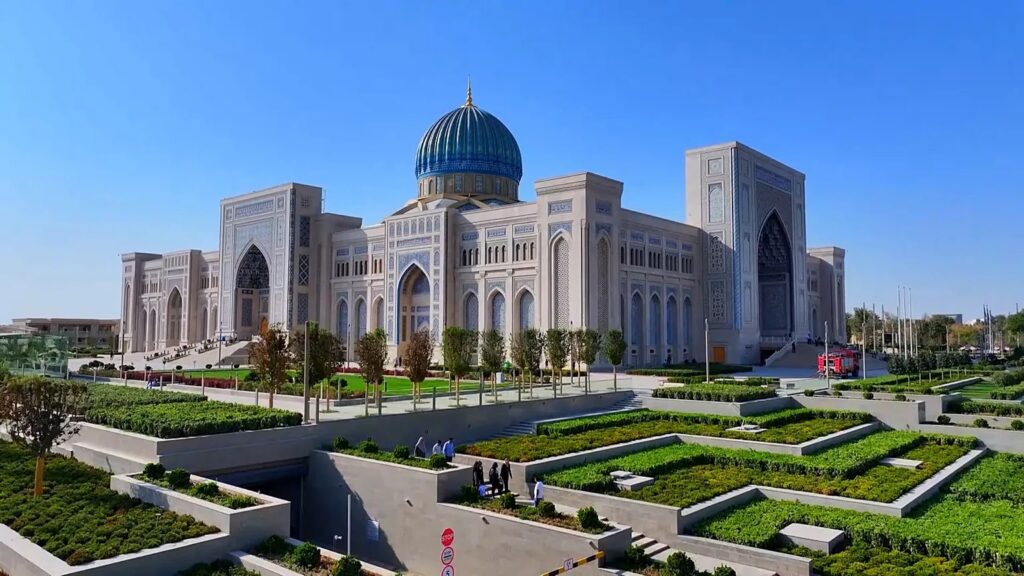
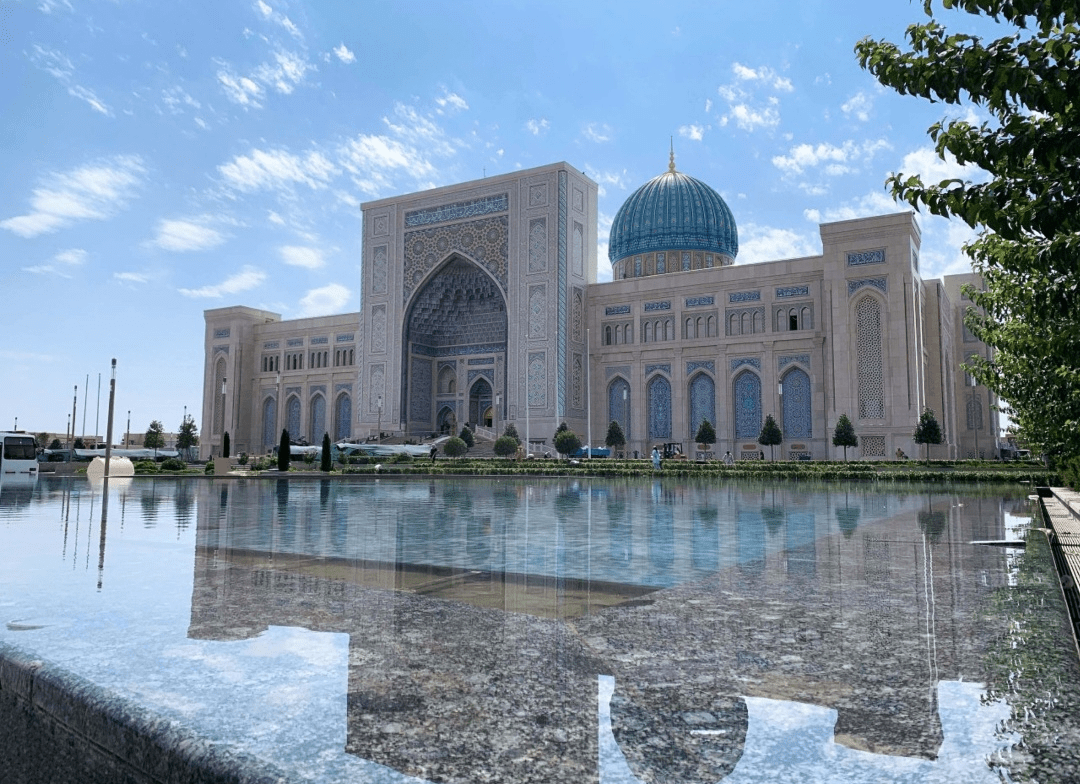
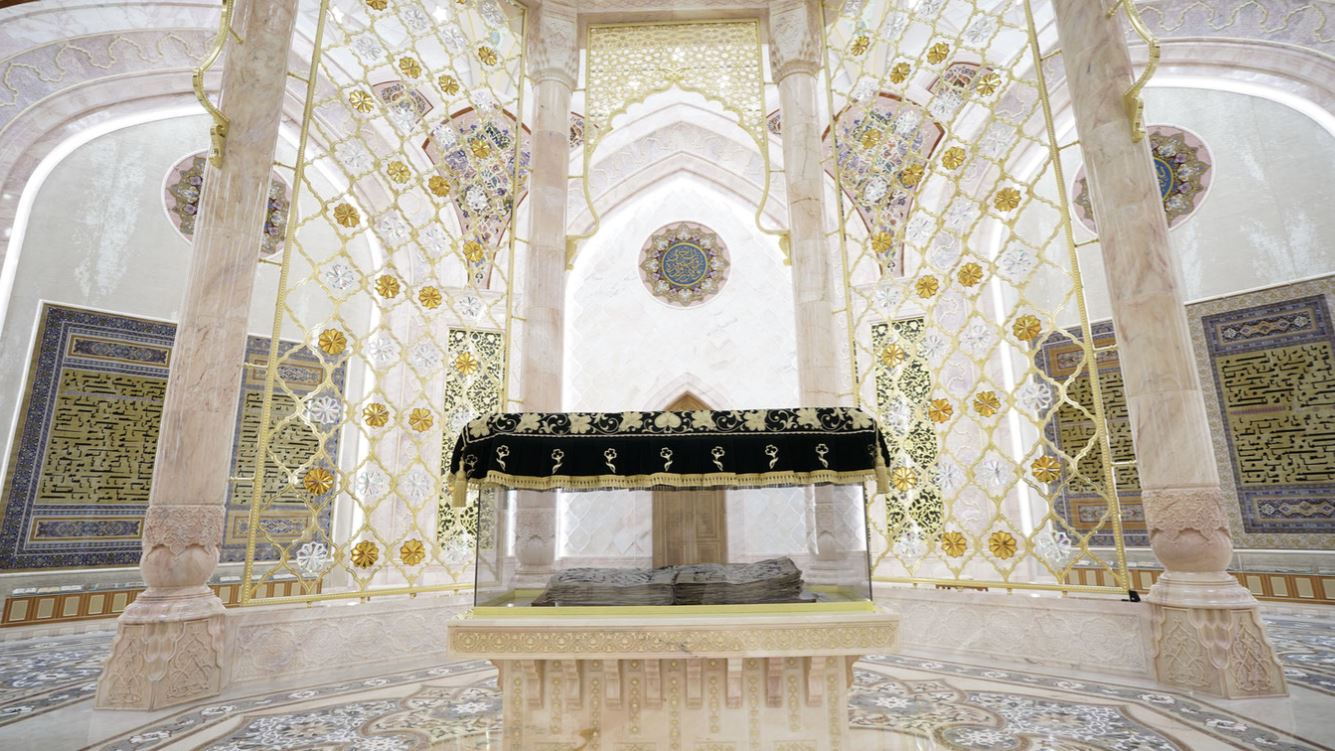
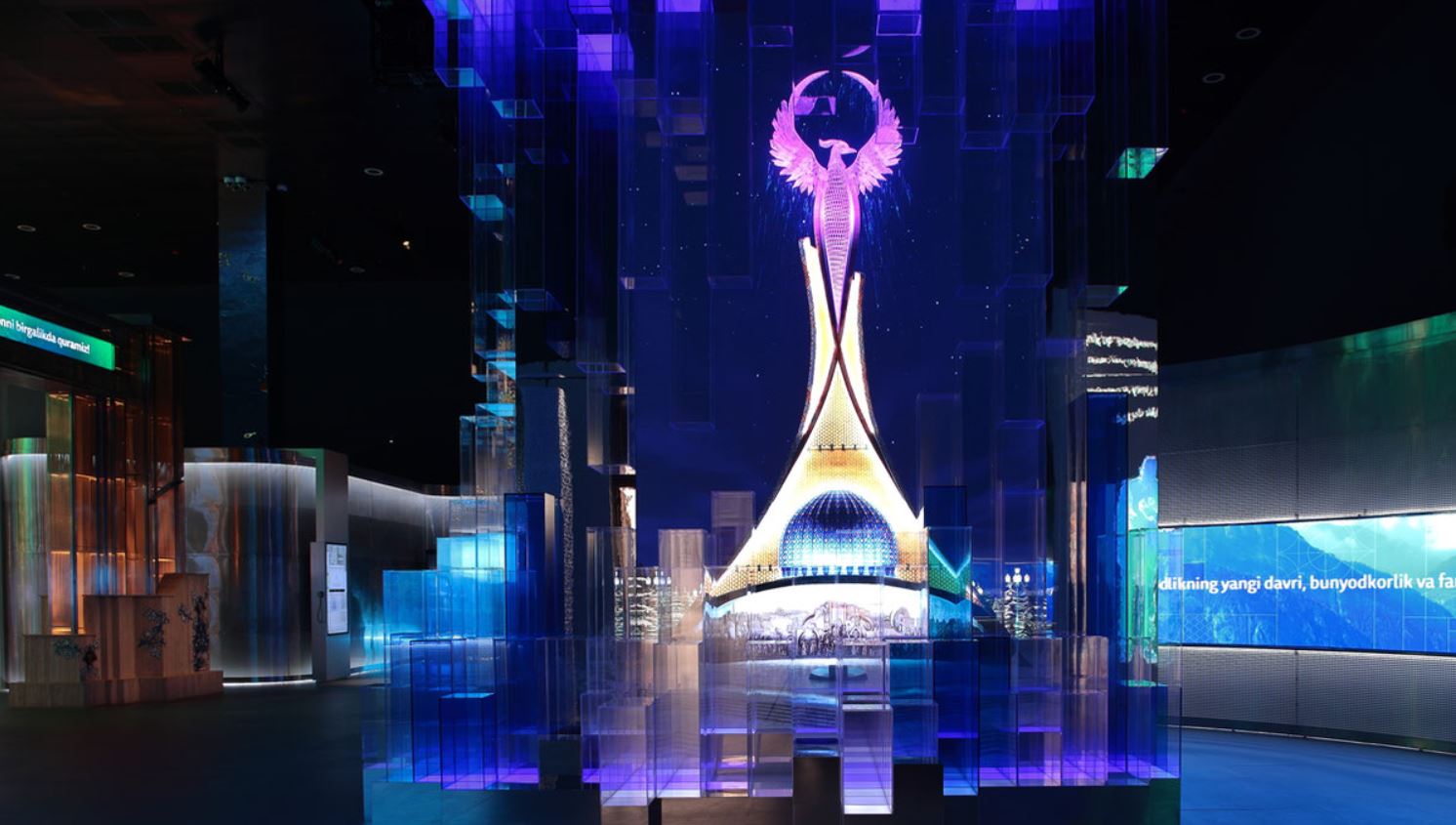
The Center of Islamic Civilization in Uzbekistan has been officially recognized as the world’s largest museum dedicated to Islamic civilization, receiving a Guinness World Records title on April 13.

The recognition was confirmed by Guinness World Records adjudicator Şeyda Subaşı Gemici, who attended the ceremony alongside project architects, designers, and members of the Center’s Scientific Council. The award followed a detailed verification process. The recognition comes as Uzbekistan continues to invest in large-scale cultural infrastructure as part of a broader effort to present its historical narrative and reshape its international image.

“As an official Guinness World Records adjudicator, I can state that every corner of the museum and every exhibit possesses its own uniqueness and cultural value,” Gemici said. “The evaluation process strictly followed established procedures… every exhibit was recorded and verified by specialists in Islamic archaeology, art, and science.”

She added that the scale and depth of the project left a strong impression, describing it as “an outstanding achievement” and, in Guinness terminology, “Officially Amazing.”

The Center is a large-scale scientific, educational, and museum complex initiated in 2017 under the leadership of President Shavkat Mirziyoyev and completed on March 17, 2026. It was conceived as a platform combining research, cultural heritage, and modern technologies, aimed at showcasing the history and contributions of Islamic civilization. The project reflects a wider policy under Mirziyoyev of positioning Uzbekistan not only as a historical center of Islamic scholarship but as a modern platform for its study and interpretation.

Chief architect, Abdukakhor Turdiev, said the project reflects Uzbekistan’s historical and cultural legacy. “The uniqueness of the Center lies in the fact that its architecture reflects the rich culture and heritage of Uzbekistan,” he said, adding that the country is increasingly positioning itself as an active participant in global cultural dialogue.

Across Central Asia, governments have increasingly used large cultural projects to reinforce national identity and attract international attention, but Uzbekistan has placed particular emphasis on linking heritage with scholarship and global engagement.

According to officials, the complex has quickly become one of the most visited cultural sites in the region, receiving up to 5,000 visitors daily, including both locals and international tourists. That scale suggests the Center is intended not only as a museum, but as a flagship institution shaping how both domestic and international audiences understand the region’s intellectual and cultural history.

Director Firdavs Abdukhalikov described the award as recognition of years of work by hundreds of specialists. He said the Center’s primary goal is to support scientific and educational projects while preserving and promoting Uzbekistan’s cultural heritage.

Beyond its record-setting size, the Center reflects Uzbekistan’s broader effort to reclaim and reinterpret its place in the history of Islamic civilization. By combining scholarship, state backing, and public accessibility, it positions cultural heritage as both a foundation of national identity and a tool of international engagement.