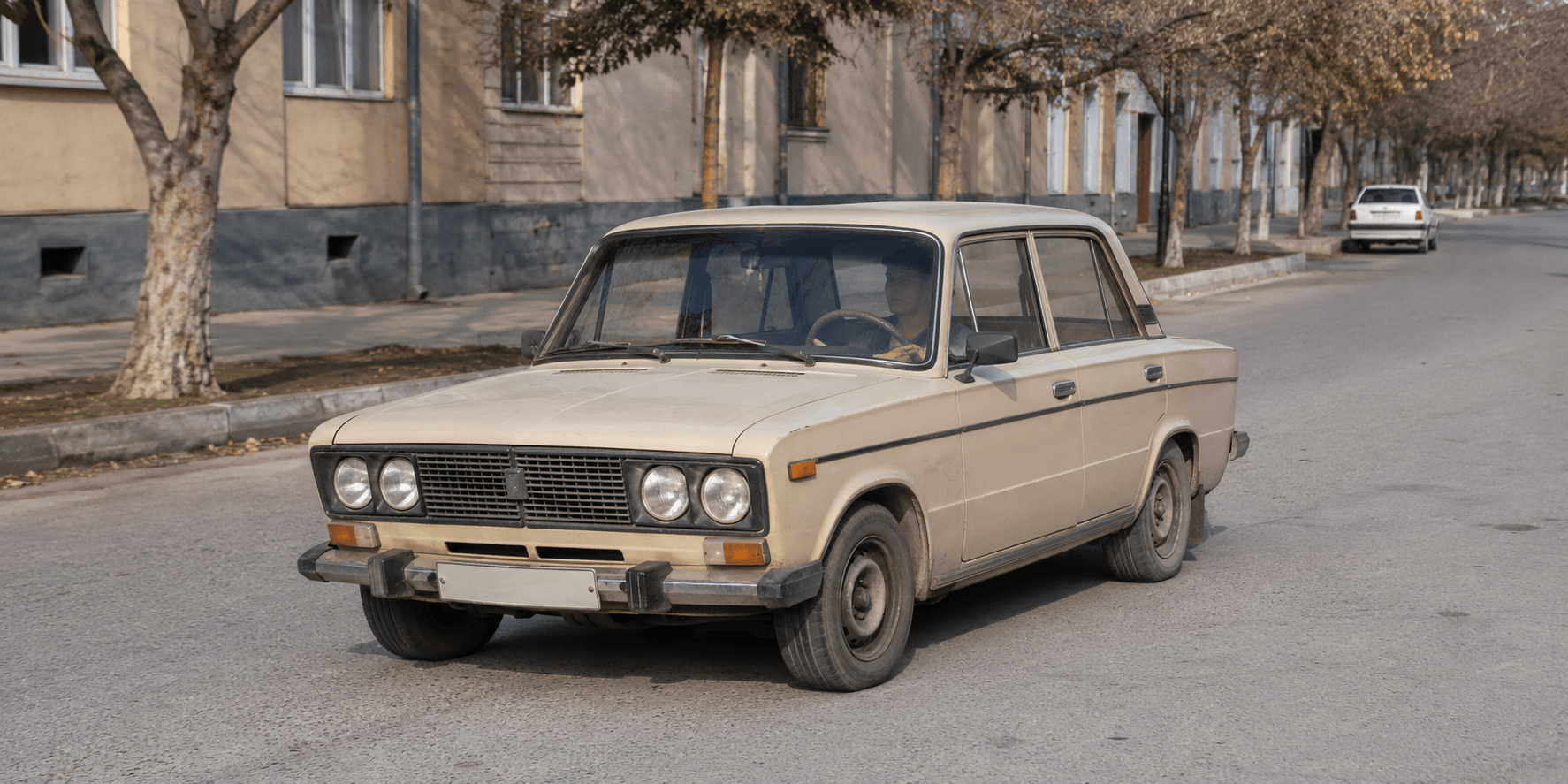
A draft government resolution in Uzbekistan has proposed annual environmental compensation payments for owners of vehicles manufactured 30 or more years ago, as part of a wider plan to regulate end-of-life transport and expand vehicle recycling.
The proposal has not yet been adopted.
The draft document, titled “On Organizing the Utilization of Vehicles with Expired Service Life and Recycling of Their Components,” was released through official public consultation channels and outlines a phased approach to introducing scrappage and recycling mechanisms across the country.
According to the proposal, from January 1, 2027, owners of passenger vehicles manufactured 30 or more years ago would be required to pay an annual environmental compensation fee equal to 30 times the base calculation value. At the current rate, that would amount to about 12.36 million Uzbek som, or approximately $1,033. The payment is described as a mechanism intended to offset environmental damage caused by older vehicles.
The draft was prepared under Uzbekistan’s broader environmental and waste-management reforms, led by the National Committee for Ecology and Climate Change, which is responsible for policy coordination in the environmental sector. The initiative also involves the planned creation of a national system for collecting, evaluating, and recycling vehicles that have reached the end of their operational life.
The recycling system would be introduced in stages. From 2026, it would cover M1 category vehicles, primarily passenger cars. From 2027, it would extend to M2, M3, N1, N2, and N3 categories, covering minibuses, buses, and freight vehicles. By 2030, the framework is expected to cover all types of wheeled transport. The proposed environmental compensation fee for vehicles 30 or more years old would begin separately on January 1, 2027.
The draft also proposes restrictions on vehicles deemed environmentally harmful. From 2027, vehicles classified as environmentally harmful could face restrictions on re-registration and continued use, with exceptions for antique vehicles recognized under existing regulations.
A central component of the proposal is the creation of a unified digital system to manage the process. The platform would be developed under the coordination of the Ministry of Digital Technologies of Uzbekistan together with the national waste-management and circular economy agency. The system is expected to integrate data from tax, customs, and public-service databases through Uzbekistan’s e-government infrastructure. Technical implementation support is planned to involve Uzinfocom, the state IT integrator responsible for digital government platforms.
Under the proposed model, vehicle owners would first undergo a technical inspection and valuation process before transferring their vehicles for recycling. Operators and assessment companies would be selected through competitive tenders. Once approved, they would handle vehicle acceptance, dismantling, and material recovery, including metals, plastics, batteries, and glass components.
Owners of scrapped vehicles could receive compensation in several forms, including direct cash payments, electronic vouchers for purchasing new vehicles at discounted prices, or other mechanisms defined under national legislation. The value of compensation would depend on the technical assessment of the vehicle.
The draft also introduces incentives for recycling operators through a “green subsidy” system financed by recycling-related fees. These subsidies would be distributed based on performance indicators, such as the volume of processed vehicles and the level of material recovery. Authorities say the aim is to encourage a zero-waste approach in the transport sector and expand secondary raw material production.