Kazakhstan wants a railway route to the Indian Ocean through Afghanistan and Pakistan. There is already freight that could use such a corridor: in the first seven months of 2026, Kazakhstan’s exports to Afghanistan approached $573 million. What does not yet exist is a continuous railway all the way to the sea.
Several developments around this route took place in late September. Kazakhstan, Uzbekistan, and the United Arab Emirates agreed to study a corridor through Afghanistan to Pakistani ports. In western Afghanistan, a new section of a separate railway built with the participation of a company from Kazakhstan opened. Astana is also involved in plans for a railway from the Turkmen border through Herat and farther across Afghanistan.
It is important not to treat all these projects as a single railway. The September 30 memorandum on the Central Asia-South Asia (CASA) project describes a route through Uzbekistan. The Khaf-Herat and Torghundi-Herat projects are separate schemes involving western Afghanistan. Official terminology has not always been consistent, with earlier government statements also using the CASA label for the Torghundi-Herat-Kandahar-Spin Boldak proposal.
Afghanistan has already become a significant market for Kazakhstan’s food products. In January-July 2026, bilateral trade reached $581.1 million, compared with $541.6 million for the whole of 2025. Almost all of this year’s turnover, $572.9 million, consisted of exports from Kazakhstan. Flour accounted for $215.6 million, wheat for $122 million, and vegetable oil for $51.1 million.
In the 2022-2023 season, Kazakhstan exported around 17,000 tons of sunflower oil to Afghanistan. The volume has risen to 75,000 tons in the current season, while the industry is targeting 110,000-120,000 tons next season. The two governments have set a target of increasing bilateral trade to $3 billion.
For Kazakhstan, Afghanistan is currently primarily a market. The larger transport plans envisage a second role for the country: a transit territory through which Kazakh freight could eventually reach the sea.
CASA: Across Afghanistan to the Sea
The route now under consideration would run from Kazakhstan through Uzbekistan and Afghanistan to Pakistan, providing access to Pakistani ports on the Indian Ocean. Kazakh authorities say the corridor could eventually carry up to 10 million tons of freight a year.
The three countries agreed to conduct technical and economic studies and examine financing options. No cost estimate, final route, or construction timetable has been announced.
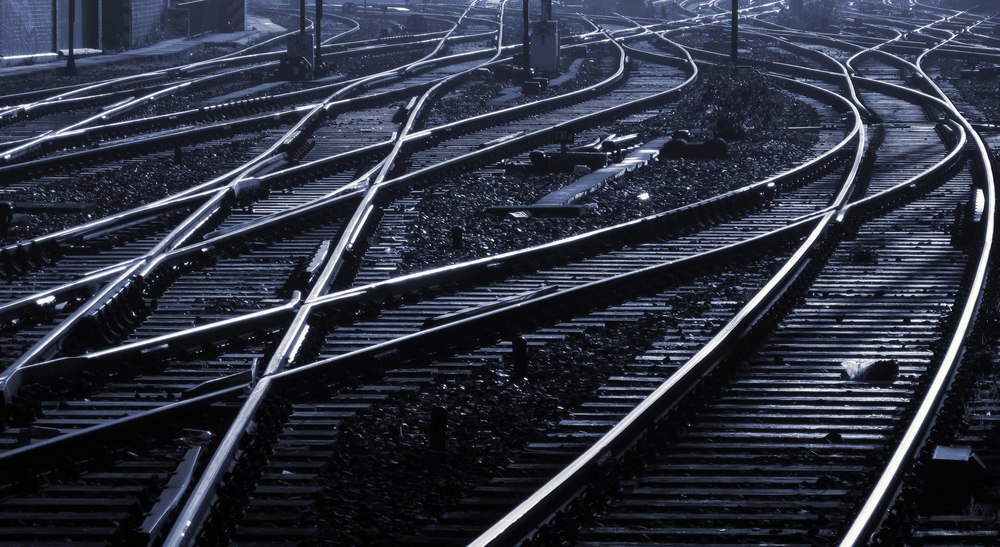
The infrastructure gap is clear on Afghanistan’s railway map. Short railway lines enter the country from Uzbekistan and Turkmenistan in the north and from Iran in the west. Pakistan’s rail network, in turn, does not extend into Afghanistan.
Kazakhstan is also building ties with the Pakistani end of any future corridor. During President Kassym-Jomart Tokayev’s state visit to Pakistan in February, transport and railway organizations signed cooperation documents, while the ports of Aktau and Karachi agreed to exchange information. Talks also covered Gwadar and transit routes through Afghanistan.
Why Herat Matters to Kazakhstan
Herat lies in western Afghanistan, close to both Iran and Turkmenistan. That geography puts the city at the center of several railway projects.
One is the Khaf-Herat railway, which enters Afghanistan from Iran. It does not run to Pakistan and is not the railway route described in the September CASA memorandum.
On September 28, a new 43-kilometer section from Rozanak to Rabat-e Paryan opened. Integra Construction KZ, a company from Kazakhstan, participated in its construction. A separate 47-kilometer final phase toward Herat’s industrial zone and airport is also under construction.
Kazakhstan is involved in another project north of Herat. Astana and Kabul have been working on a railway of about 120 kilometers between Torghundi, on the border with Turkmenistan, and Herat. In 2025, the two sides signed a protocol confirming Kazakhstan’s interest in participating in a longer Torghundi-Herat-Kandahar-Spin Boldak railway. Plans also include transport infrastructure and a logistics center in Herat.
Astana sees Torghundi-Herat as the northern section of a possible longer railway through Kandahar and Spin Boldak toward Pakistan. The September CASA memorandum, meanwhile, envisages a route through Uzbekistan. There is therefore no single agreed alignment for a Kazakhstan-backed trans-Afghan railway.
There is also a technical complication: neighboring countries use different railway gauges, or distances between the rails. Most of the former Soviet rail network in Central Asia uses a 1,520-millimeter gauge. Iran uses the international standard gauge of 1,435 mm, while Pakistan’s main network uses a 1,676 mm broad gauge. A through route would therefore require technical solutions at gauge breaks, such as transshipment facilities or other systems for transferring freight between networks.
Where the Railway Is Still Missing
Rail access from Central Asia into Afghanistan is not new. The Asian Development Bank financed construction of a 75-kilometer line from the Uzbek border at Hairatan to Mazar-e-Sharif. Since December 2011, the line has been in operation, allowing freight to enter northern Afghanistan by rail.
The gap comes farther south. For trains from Central Asia to reach Pakistan, existing northern railways would have to be connected across Afghanistan and then linked to the Pakistani network. Large sections of such a railway still exist only as proposed projects.
The Afghanistan-Pakistan border adds another uncertainty. Relations between Kabul and Islamabad remain tense, and prolonged border closures have disrupted bilateral and transit trade. For an international shipper, being able to cross the border reliably is as important as having rails leading to it.
The Times of Central Asia previously examined the CASA project and its economics. Dauren Ilesaliev, a professor at Tashkent State Transport University, summed up one of the central problems: “Having railway infrastructure does not guarantee that it will work.” Countries along the route would also need enough freight to sustain it.