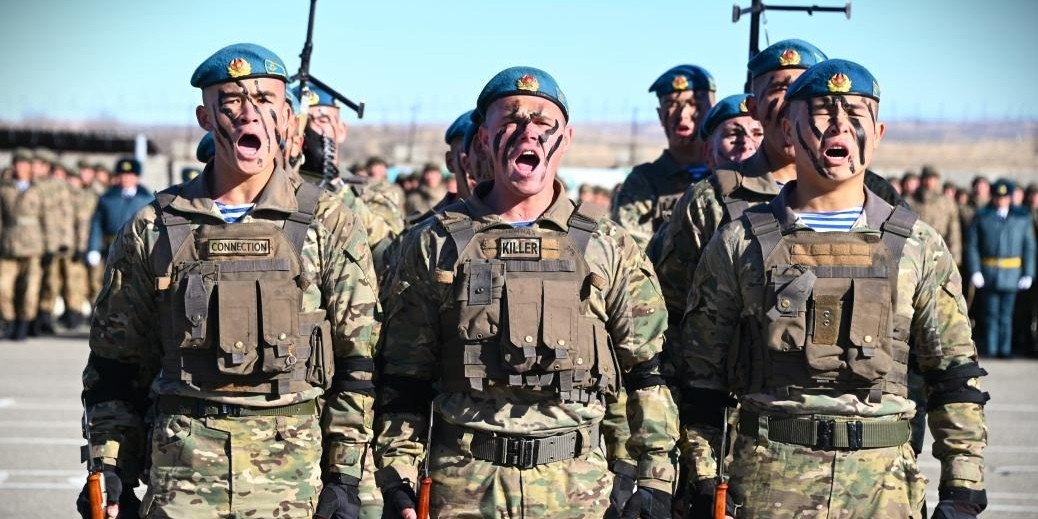
A comprehensive inspection of Kazakhstan’s Defense Ministry has resulted in 13 criminal cases involving suspected theft of state property, abuse of office, and other violations. The inspection follows the deaths of 14 servicemen during military exercises in the Caspian Sea on September 24.
On October 5, President Kassym-Jomart Tokayev heard the inspection’s initial findings. The commission found serious shortcomings in the preparation and planning of the exercises, risk assessment, organization of the landing operation, and measures to ensure the servicemen’s safety. Criminal cases also concern hazing and violence against servicemen.
The tragedy was followed by a reshuffle at the top of the defense establishment. On September 27, Aidos Myrzakhmetov became defense minister, replacing Dauren Kosanov, who was dismissed the same day. Myrzakhmetov had spent much of his career in the State Guard Service, the agency responsible for protecting the president and other designated officials. On October 3, Tokayev dismissed First Deputy Defense Minister and Chief of the General Staff Kanysh Abubakirov, Deputy Defense Minister Almaz Dzhumakeyev, and Navy Commander-in-Chief Kanat Niyazbekov. On October 5, another former senior State Guard Service officer, Aitkurman Omarbekov, was appointed First Deputy Defense Minister and Chief of the General Staff.
Former navy commander Kanat Niyazbekov was detained on October 6 on suspicion of negligence in connection with the deaths, with a court authorizing his arrest, according to the Interior Ministry.
But the president did not stop at personnel changes. Following the deaths of the marines, he ordered the preparation of a Military Reform Plan and delivered one of his harshest public assessments of the armed forces in years.
“Our army is stuck in the last century… the command system must be completely rebuilt in line with advanced international practice,” Tokayev said on September 27. He described the deaths of servicemen in peacetime as the result of what he called “essentially criminal unprofessionalism by officers, including generals.”
Public Anger After the Caspian Tragedy
Political analyst Daniyar Ashimbayev wrote that the deaths of the servicemen in the Mangystau region triggered “a very strong and emotional reaction in the country,” amplified by what he called the “traditionally clumsy actions” of the military bureaucracy.
“Rumors, gossip, fakes, and openly provocative content quickly began to emerge. Nor should we forget that the emergency occurred in the most difficult region,” he wrote, referring to the history of protests in oil-producing Mangystau.
The public reaction was particularly intense because of the circumstances surrounding the soldiers’ deaths. The Khazar Qorgany 2026 exercises were taking place in Kazakhstan’s sector of the Caspian Sea. During a training mission, 17 servicemen were swept out to sea; three were rescued. For some of those who died, these were the final days of their compulsory military service. Deputy Navy Commander Arman Satkanov said some had as little as eight days left before returning home, with their tickets already purchased.
Five members of the military command were detained on September 25 on suspicion of negligence and violations of navigation rules. They included the Navy chief of staff and first deputy commander-in-chief, two military unit commanders, a marine company commander, and a boat commander.
Ashimbayev argued that after the initial shock, the authorities established a more organized flow of information, verification of reports, and an investigation. He described the leadership’s response as an example of its ability to focus and respond quickly during a crisis.
There was also a notable coincidence in timing. The day before the tragedy, Tokayev held his first meeting with the staff of the Security Council after the Security Council Office was established as a separate state body. Among the priorities he identified were information, technological, food, water, and energy security.
Not the First Warning
The current military reform comes after three major tragedies involving military facilities or exercises since 2019.
On June 24, 2019, a fire broke out at an ammunition depot near the southern Kazakh city of Arys. Exploding munitions were scattered across the city, forcing the evacuation of its population. The explosions killed three people, two servicemen and a local resident. The scale of the destruction turned the military emergency into a national disaster. Thousands of homes were damaged, and emergency crews and military personnel worked in the city and around the arsenal. Investigators examined violations of ammunition storage and safety requirements among the factors behind the disaster.
In August 2020, Tokayev visited a military training ground in Arys. “We must under no circumstances allow such a situation to happen again,” the president said at the time.
A year later, on August 26, 2021, a fire broke out at an ammunition depot at a military unit in the Zhambyl region near Taraz. A series of explosions followed. Eighteen servicemen and emergency personnel died.
Investigators accused two soldiers of deliberately starting the fire. According to the prosecution, they set fire to a rag and threw it through a warehouse window in an attempt to avoid punishment from their commanders. The defendants denied their guilt.
Officers from the military unit were also prosecuted. In October 2023, the two soldiers were sentenced to nine years in prison. In March 2024, a military appeals court increased the soldiers’ sentences to 13 years and sentenced two officers to five years in prison.
Arys and Zhambyl were separate criminal cases involving different circumstances, but both raised the same question: how the military stores ammunition, enforces safety rules, and exercises control over its own units. The Caspian exercises have now added another case to that record.
This time, the inspection has gone beyond the circumstances surrounding the deaths of the 14 servicemen. The commission is examining military discipline, service safety, logistics, and training and educational work with personnel.
The commission is headed by Deputy Chair of the Security Council Aida Balayeva. Tokayev ordered its findings to be incorporated directly into the Military Reform Plan.
Tokayev also ordered the Security Council Office and Defense Ministry to submit the plan within 10 days of his September 27 meeting and said it would be considered by the Security Council in the second half of October.