Kyrgyzstan’s public debt reached $10.16 billion by the end of July 2026, with the government expecting to spend about $1.83 billion servicing its external debt between 2027 and 2029.
According to Ministry of Finance figures, external debt stood at $5.19 billion as of July 31, while domestic debt totaled $4.96 billion. External borrowing consists mainly of loans from foreign governments and international financial institutions, while domestic debt is raised primarily through government bonds.
Total debt was equivalent to about 38% of the government’s projected gross domestic product (GDP) for 2026. At the end of 2025, the debt-to-GDP ratio stood at 39.5%, up from 36.2% a year earlier. The International Monetary Fund (IMF) expects the ratio to reach 41.4% by the end of 2026.
The country’s debt burden is relatively high compared with those of its Central Asian neighbors. IMF figures put Kazakhstan’s public debt at 25.2% of GDP in 2025, while the equivalent figures were 28.6% for Uzbekistan and a projected 24.7% for Tajikistan. For comparison, United States government debt stood at 123.9% of GDP in 2025.
China remains Kyrgyzstan’s largest foreign creditor. According to Deputy Finance Minister Umutjan Amanbaev, Bishkek owes Beijing about $1.4 billion, equivalent to 27% of its external debt. Much of the remainder is owed to international development banks and financial institutions.
Most external loans were obtained on concessional terms, generally carrying low interest rates and long repayment periods. However, the country has also begun taking on more expensive commercial debt.
In May 2025, the government issued its first sovereign Eurobonds, raising $700 million through five-year notes carrying an annual interest rate of 7.75%. The bonds, placed on the London Stock Exchange, now account for about 13.5% of external debt. They are due to mature in 2030, when external debt repayments are projected to reach about $1.1 billion, based on the repayment schedule for existing obligations.
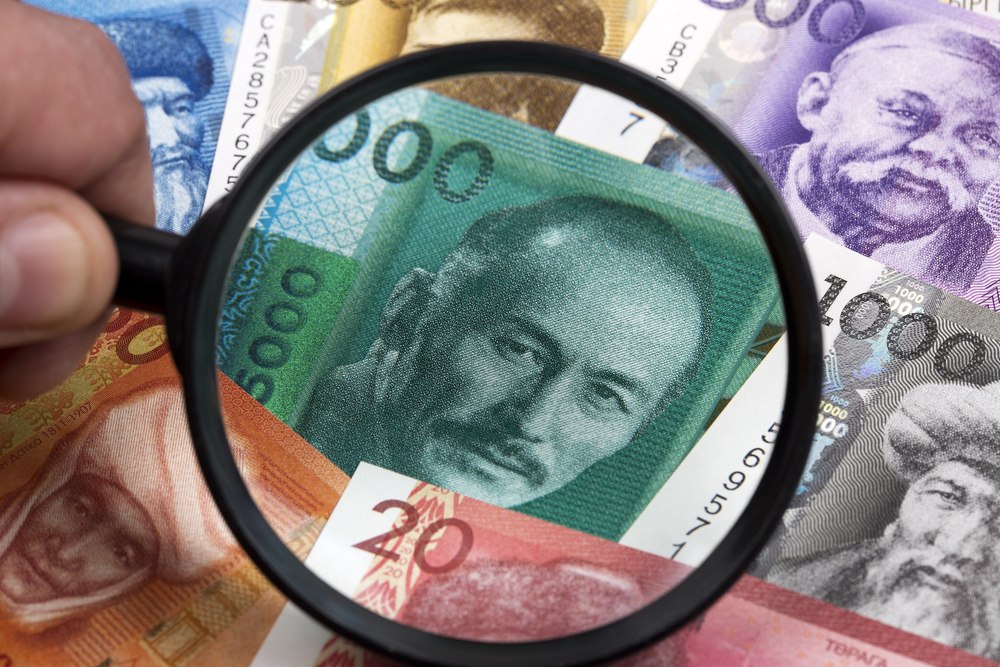
The draft budget for 2027–2029, published by the Ministry of Finance, allocates about $606 million to external debt servicing in 2027, $600 million in 2028, and $621 million in 2029. These payments cover principal and interest on existing debt. More than 80% are denominated in U.S. dollars, so a weaker som could increase the budget cost of meeting the same obligations.
The government also expects to spend 82.2 billion soms servicing domestic debt.
Public debt remains below the government’s benchmark of 70% of GDP. The Ministry of Finance expects debt sustainability to be maintained over the medium term, although exchange-rate fluctuations and economic shocks remain significant risks.
The IMF also considers the debt sustainable, while assessing its risk of debt distress as moderate. However, it has warned that growing repayment costs, particularly on domestic and non-concessional borrowing, could place increasing pressure on public finances.