Kazakhstan has invited Belgian companies to help process critical minerals domestically. Astana hopes to gain access to European processing technologies to expand exports of higher-value products used in high-tech industries. For now, the two sides are discussing laboratory testing and potential projects, with no new investment agreements announced.
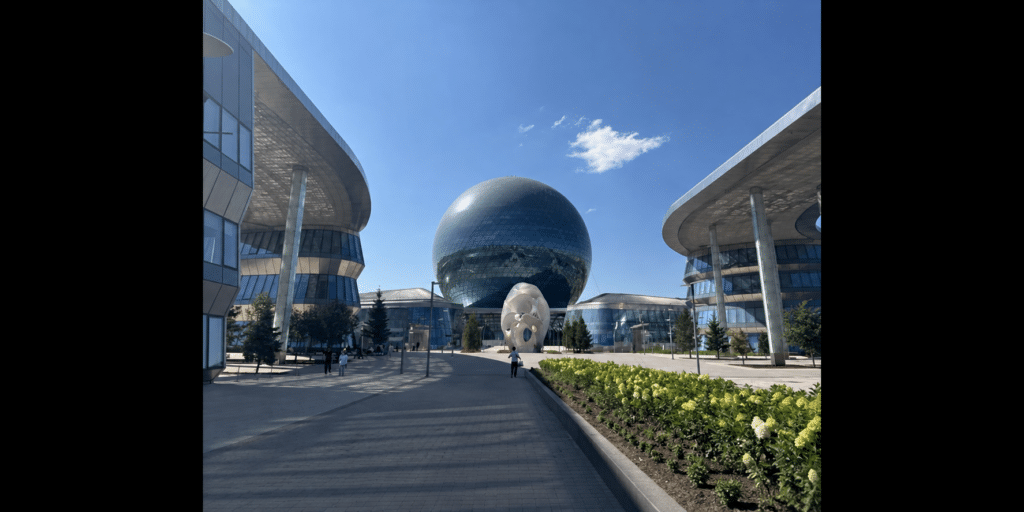
The proposal was presented at a Kazakhstan-Belgium seminar held on October 12 at Nazarbayev University in Astana. Vice Minister of Industry and Construction Olzhas Saparbekov said Kazakhstan could supply 21 of the 34 critical raw materials on the European Union’s list.
“We are ready to discuss phased models under which processing is gradually transferred to Kazakhstan along with the necessary technologies and expertise,” Saparbekov said.
Belgian companies were offered opportunities to cooperate in extracting metals using chemical solutions, separating rare earth oxides, recycling, and manufacturing industrial equipment. Potential projects include producing materials for batteries, semiconductors, specialty alloys, and permanent magnets. The participants also discussed shipping products to Europe through Belgium’s port of Antwerp.
Kazakhstan already produces several sought-after industrial metals, including tantalum, niobium, and beryllium. It also plans to begin gallium production, with a target of 15 metric tons a year. However, developing more advanced processing facilities remains a challenge.
Since 2018, Kazakhstan has allocated more than 67 billion tenge (approximately $149 million) to geological exploration. According to the ministry, surveys at 11 exploration sites have identified 38 promising areas. Commercial development will require determining the metal content of the ores and the cost of extracting them.
In particular, studies of the Kuirektykol site in the Karaganda region have revealed significantly larger rare earth reserves than previously estimated. The size of the discovery does not establish whether mining would be commercially viable.
To study mineral resources and test processing technologies, Kazakhstan plans to establish a regional rare earth research center with the participation of European institutions. The European Bank for Reconstruction and Development has supported the preparation of a preliminary feasibility study. Construction of the laboratory complex is expected to begin in 2027, with operations scheduled to start in 2028.
Representatives of metals processor Molymet Belgium and Australia’s Lindian Resources Limited, which owns a rare earth processing plant in Kazakhstan, took part in the discussions. The next stage of negotiations is expected to involve exchanging samples, testing processing methods, and preparing feasibility studies.
For European industry, Kazakhstan could become an additional supplier of critical minerals amid Europe’s dependence on Chinese processing capacity. However, the country’s stated potential to supply 21 types of critical raw materials encompasses projects at different stages of development, ranging from geological exploration to operating production facilities.