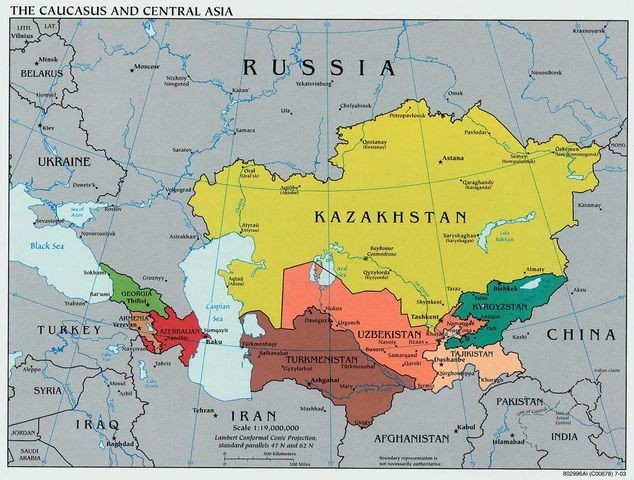
BISHKEK (TCA) — The International Monetary Fund (IMF) has warned of weak economic growth prospects in countries of the Caucasus and Central Asia (CCA) region and has called for reforms to help their economies.
The Caucasus and Central Asia (CCA) is embarking on one of its slowest economic recoveries since independence, the IMF reported on its website, as the region continues to battle the effects of a number of large and persistent external shocks.
The IMF’s Regional Economic Outlook for the Middle East and Central Asia, officially launched on October 19 in Dubai and October 21 in Almaty, forecasts the region’s growth in 2016 to be 1.3 percent, lower than at any other year since 1998.
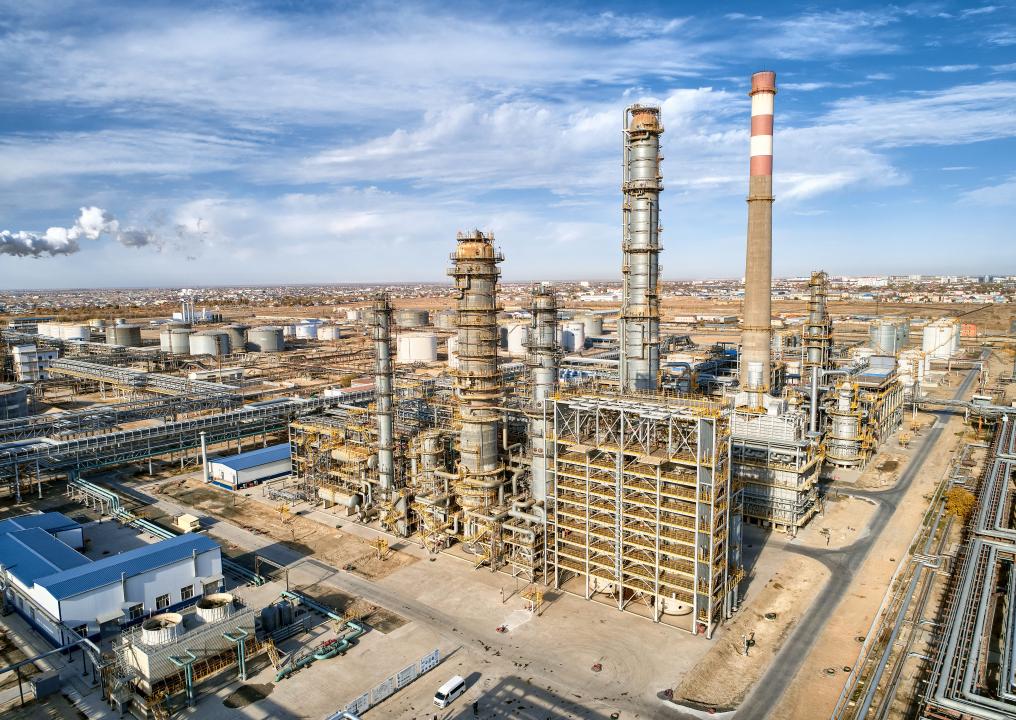
This growth rate is particularly being weighed down by the region’s oil exporters—Azerbaijan, Kazakhstan, Turkmenistan, and Uzbekistan—who are facing growth of 1 percent this year, according to the IMF. The region’s oil importers—Armenia, Georgia, the Kyrgyz Republic, and Tajikistan—are forecast to grow at 3.7 percent, unchanged from 2015.
The IMF says the region’s growth overall will rebound to 2.6 percent in 2017.
In subsequent years, growth is projected to improve further, but the IMF expects that recovery to be slower than either of those that followed the 2009 global financial crisis and the 1998 Russian financial crisis.
Should that happen, the region could see growth in its living standards decelerate over the medium term compared with other emerging markets and developing economies.
The Deputy Director of the IMF’s Middle East and Central Asia Department, Juha Kähkönen, said that while the region is being held back by factors outside its control—the slump in global commodity prices, including crude oil and natural gas, subdued economic conditions in Russia, and slowing growth in China—these developments have only intensified the need for further monetary and financial policy actions, as well as key structural reforms.
“The CCA region is at an important juncture, and policymakers need to take important steps toward promoting strong and inclusive growth and job creation, much needed to preserve and improve living standards,” Kähkönen told reporters in Almaty, Kazakhstan.
“The protracted nature of these shocks underlines the pressing need to diversify these economies away from their dependence on remittances and commodity exports, so they can more effectively cope with the kinds of economic challenges they’re currently facing,” he added.
Kähkönen said that to address the legacy of the external shocks, the CCA countries need to pursue the right mix of policies and structural reforms.
“For these countries, the immediate priorities are to direct what spending is available toward pro-growth areas—such as education, training, and health care,” Kähkönen said.