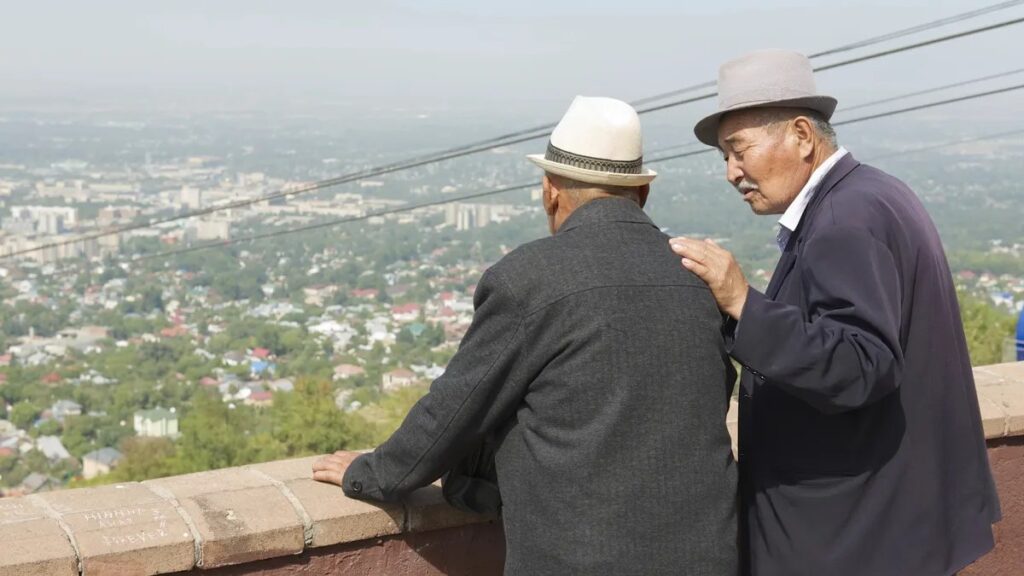
Kazakhstan is undergoing a rapid demographic shift as its population ages at an unprecedented pace. According to a recent study by Ranking.kz, the number of citizens aged 60 and above is growing by 3-4% annually.
As of early 2025, Kazakhstan had 2.8 million residents over the age of 60, an increase of 3.7% compared to the previous year. Seniors now make up 13.9% of the population, up from 12% in 2020 and 9.8% in 2010. The average annual growth rate for this age group has remained steady at around 3.8% since 2010.
The gender disparity is notable: 16.4% of women in Kazakhstan are over 60, compared to just 11.3% of men.
This demographic shift is largely driven by increasing life expectancy. In 2024, life expectancy in Kazakhstan reached 75.44 years, up from 75.1 the previous year. Women live an average of 79.42 years, while men live 71.33. The only recent decline in life expectancy occurred during the COVID-19 pandemic.
The trend mirrors global developments. According to data from the IMF, UN, and WHO, global life expectancy has more than doubled over the past century from just 34 years in 1913 to 72 years by 2022 and continues to rise, even as fertility rates fall.
When the UN and WHO were founded, children under 15 outnumbered people over 65 by seven to one. By 2050, the two groups are projected to be equal. The proportion of people aged 80 and older is expected to nearly quadruple, reaching 5% of the global population.
“These shifts foreshadow a vast array of problems in healthcare, as well as in the social and economic spheres,” IMF analysts caution.
Experts warn that aging will reshape Kazakhstan’s labor market, change consumption patterns, and place mounting pressure on the pension system. Like many other countries, Kazakhstan faces the challenge of balancing support for its growing elderly population with the need to sustain long-term economic development.