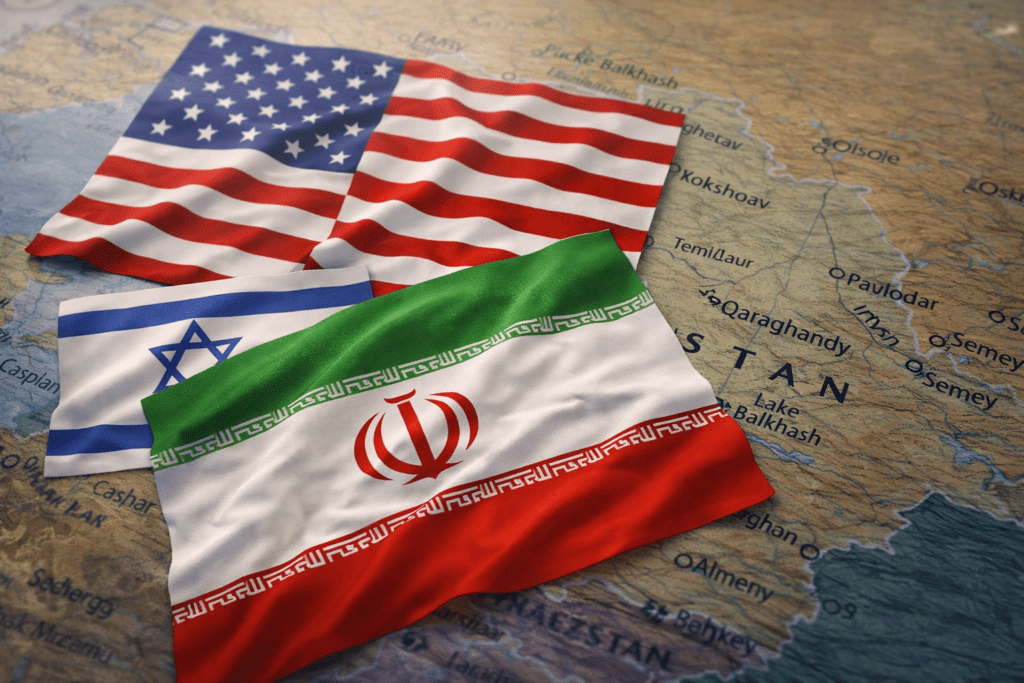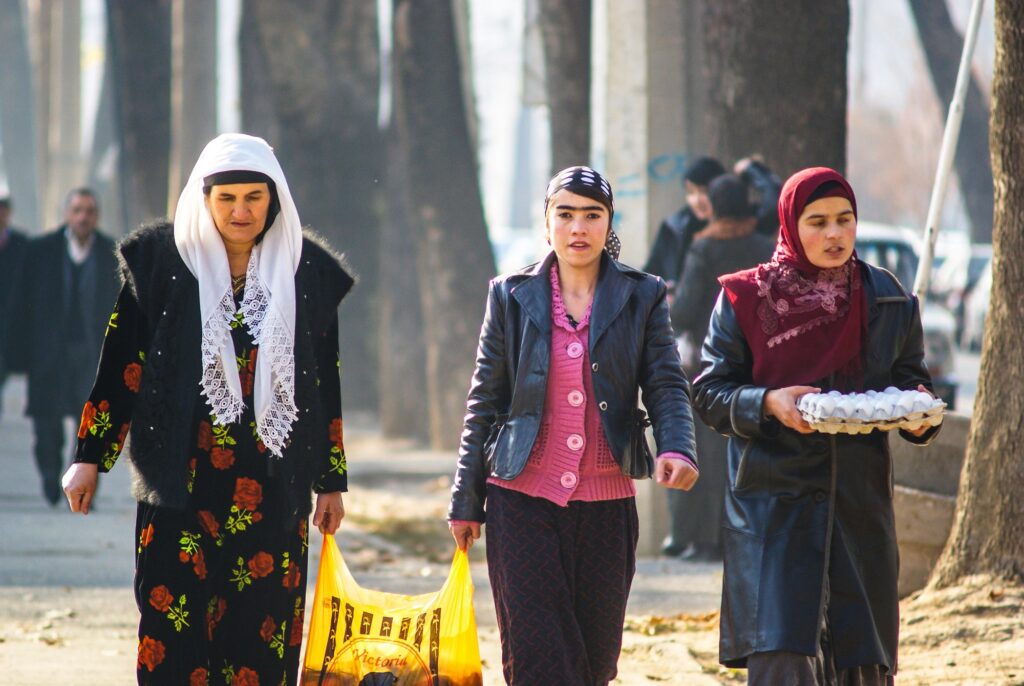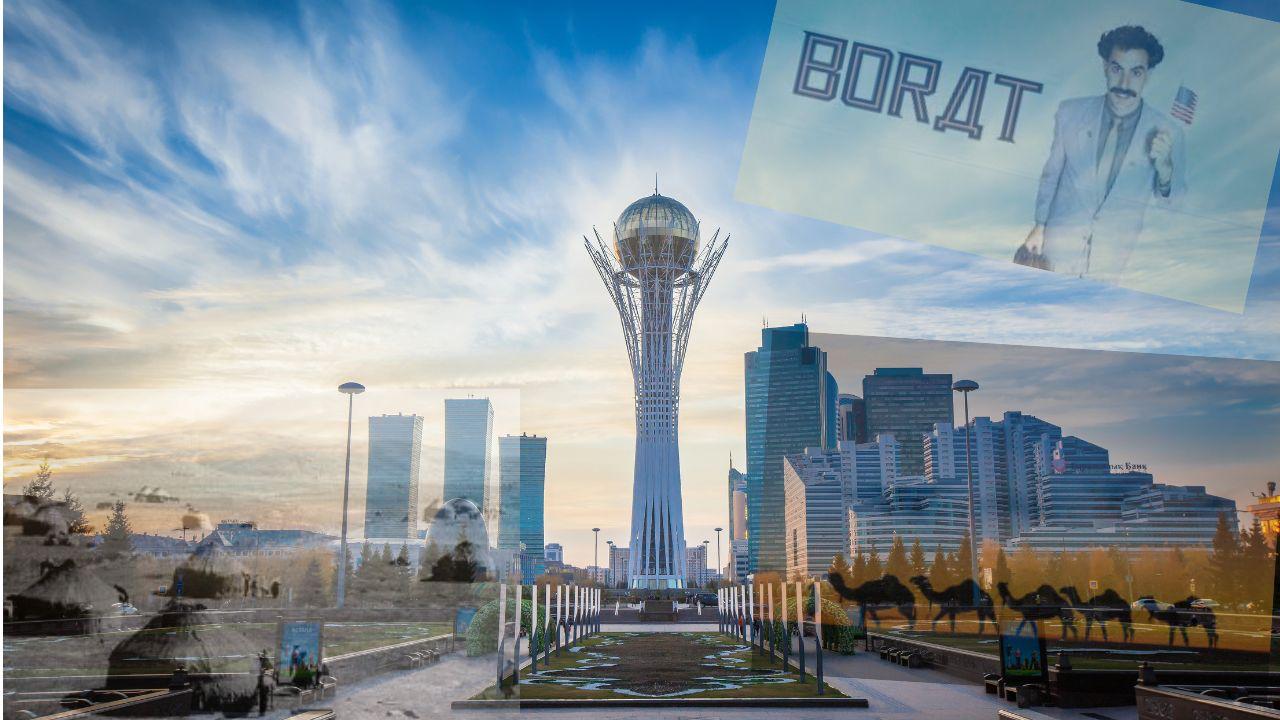
Do you know where Kazakhstan is?
Although the question is straightforward, it often causes hesitation on a university campus in Washington, D.C. Some students gesture uncertainly toward Eastern Europe. Others guess the Middle East. Some admit they have never heard of it, often with a nervous laugh.
Central Asia remains one of the least understood parts of the world for many young people in the West. It is often defined more by pop culture, history, and imagination than by its diverse reality.
“I honestly thought Kazakhstan was somewhere near Afghanistan,” said Michael, a student from Georgetown University. “I didn’t realize it was its own region.”
Such knowledge gaps are not unusual. Central Asia is rarely mentioned in Western education systems or media coverage, despite its size, strategic significance, and rich cultural heritage. As a result, assumptions often take the place of understanding and tend to follow similar patterns, which over time may shape Western attitudes toward the region.
A Region Reduced to Stereotypes
When Western students are asked what comes to mind when they think about Central Asia, their responses often follow a familiar pattern: deserts, nomads, the Soviet Union, and sometimes confusion with other regions.
Emily, a student from American University, remarked, “I picture a lot of sand and heat, and perhaps those who ride horses?”
Although this image is partial, it is not entirely inaccurate, as the region’s customs and natural surroundings do contribute to its character. However, contemporary cities, academic institutions, businesses, and the region’s cultural diversity are largely absent from these perceptions.
Perceptions have also been shaped by pop culture. For some, Kazakhstan is associated less with geography or history than with Borat, the fictional journalist from a Hollywood comedy. Despite being widely recognized as satire, the persona has nevertheless made a lasting impression on viewers unfamiliar with the region.
As Sacha Baron Cohen explained, Kazakhstan was chosen precisely because it was largely unknown to Western audiences. According to his explanation, he selected the country because “no one had heard anything about it,” making it a blank canvas onto which Western attitudes about backwardness could be projected. None of the scenes depicting Borat’s “home village” were filmed in Kazakhstan; they were shot in rural Romania. The language Borat speaks is not Kazakh, and the customs he describes bear no relation to everyday life in Kazakhstan.
Daniel, a student from George Mason University, asked, half-jokingly, “Is that where Borat is from?” These examples illustrate how humor and media can fill gaps in knowledge.
When Kazakhstan first appeared in popular Western media, it was often portrayed through harsh stereotypes, introducing global audiences to a country still defining its image.
Between Curiosity and Ignorance
However, alongside these misconceptions, there is also genuine interest. “I had no idea it was so multicultural,” said Emma, a student from American University. “We never really learned about it.”
This response points to a broader issue: Central Asia is often misunderstood not only because of misinformation, but because of its limited visibility in the global narrative.
The region is typically mentioned only in passing in Western education, usually in connection with the Soviet Union or the Silk Road. Contemporary developments such as economic growth, political change, and cultural activity receive far less attention.
As a result, many students graduate with little or no understanding of the region.
History’s Legacy and Its Boundaries
When knowledge does exist, it is often interpreted through historical frameworks. Some students still link Central Asia mainly with the Soviet era. In some cases, countries such as Kazakhstan, Uzbekistan, and Kyrgyzstan are viewed not as distinct states with their own identities, but as extensions of Russia.
“I thought it was all kind of still connected to Russia, similar to former Soviet nations that underwent minimal change,” said Alexandra, a senior at George Mason University.
While this perception has historical roots, it overlooks more than three decades of independence and transformation. Central Asian nations have developed distinct political systems, economies, and cultural narratives since the collapse of the Soviet Union in 1991.
However, the persistence of these outdated views highlights how slowly perceptions can change in the absence of new information.
The Invisibility Issue
Central Asia is often overlooked by Western media compared with regions that regularly dominate global headlines. It rarely receives sustained coverage unless it is linked to security issues, energy resources, or geopolitical tensions.
This selective focus results in a limited and sometimes distorted understanding. In an already crowded global information environment, Central Asia struggles to compete for attention without consistent coverage. Without it, even the most basic stereotypes can persist.
Rethinking the Narrative
After doing some research on the region, Oliver, a student from American University, said, “It’s actually really interesting. There’s so much going on, but I feel like nobody talks about it.”
However, perspectives begin to shift for those who take the time to learn more. Students who look beyond preconceived notions often describe a sense of discovery: a place that feels both familiar and surprising, shaped by centuries of cultural exchange and contemporary development.
This contrast between perception and reality helps explain why Central Asia remains largely unknown in Western societies.
Education systems, media priorities, and geopolitical focus all contribute to this gap. More broadly, it reflects patterns of global attention, where some regions remain on the periphery of dominant narratives while others occupy the center.
This marginalization presents both challenges and opportunities. Greater exposure can help address misunderstandings and deepen awareness. At the same time, limited visibility has allowed the region to develop without the level of scrutiny seen elsewhere.
Beyond Misconceptions
For many people in Central Asia, improving the way the region is viewed goes beyond making factual corrections. It is about presenting a more complete narrative that captures both history and development, as well as tradition and modernity. As globalization continues to connect different parts of the world, Central Asia may become less of a blank area on the map and more widely recognized.
Returning to the original question: Do you know where Kazakhstan is?
For now, the answer often reveals more about what the world does not know about Central Asia than about the region’s geographical location.
The views expressed in this article are those of the author and do not necessarily reflect the official policy or position of the publication, its affiliates, or any other organizations mentioned.