• KGS/USD = 0.01144 0%
  • KZT/USD = 0.00211 0%
  • TJS/USD = 0.10460 0.19%
  • UZS/USD = 0.00008 0%
  • TMT/USD = 0.28490 0%
  • KGS/USD = 0.01144 0%
  • KZT/USD = 0.00211 0%
  • TJS/USD = 0.10460 0.19%
  • UZS/USD = 0.00008 0%
  • TMT/USD = 0.28490 0%
  • KGS/USD = 0.01144 0%
  • KZT/USD = 0.00211 0%
  • TJS/USD = 0.10460 0.19%
  • UZS/USD = 0.00008 0%
  • TMT/USD = 0.28490 0%
  • KGS/USD = 0.01144 0%
  • KZT/USD = 0.00211 0%
  • TJS/USD = 0.10460 0.19%
  • UZS/USD = 0.00008 0%
  • TMT/USD = 0.28490 0%
  • KGS/USD = 0.01144 0%
  • KZT/USD = 0.00211 0%
  • TJS/USD = 0.10460 0.19%
  • UZS/USD = 0.00008 0%
  • TMT/USD = 0.28490 0%
  • KGS/USD = 0.01144 0%
  • KZT/USD = 0.00211 0%
  • TJS/USD = 0.10460 0.19%
  • UZS/USD = 0.00008 0%
  • TMT/USD = 0.28490 0%
  • KGS/USD = 0.01144 0%
  • KZT/USD = 0.00211 0%
  • TJS/USD = 0.10460 0.19%
  • UZS/USD = 0.00008 0%
  • TMT/USD = 0.28490 0%
  • KGS/USD = 0.01144 0%
  • KZT/USD = 0.00211 0%
  • TJS/USD = 0.10460 0.19%
  • UZS/USD = 0.00008 0%
  • TMT/USD = 0.28490 0%

Russia Closes Criminal Case Into AZAL Plane Crash Near Aktau

Russia has closed its criminal investigation into the crash of an Azerbaijan Airlines (AZAL) aircraft near Aktau, a move that has drawn sharp criticism from Baku, according to Azerbaijani news outlet Minval Politika.

Citing Foreign Minister Jeyhun Bayramov, the outlet reported that a letter from Alexander Bastrykin, the head of Russia’s Investigative Committee, notifying Baku of the case’s closure caused “serious surprise” on the Azerbaijani side. Bayramov stated that Azerbaijan had issued a detailed and principled response to the letter and expects the process to proceed in accordance with public commitments made by Russian President Vladimir Putin in Dushanbe, as well as bilateral agreements between the two countries.

The announcement came just days after Kazakhstan’s Ministry of Transport issued an interim update on its own investigation into the December 2024 crash of the Embraer E190 aircraft operated by AZAL. The update noted that accredited representatives from Azerbaijan, Russia, and Brazil are participating in the probe, alongside an observer from the International Civil Aviation Organization.

The crash occurred on December 25, 2024, when the aircraft was operating a scheduled passenger flight from Baku to Grozny. After multiple failed landing attempts in Grozny, the crew diverted to Aktau, on Kazakhstan’s Caspian Sea coast. The plane reportedly circled the airfield twice before crashing near the runway and catching fire.

Of the 67 people aboard, 62 passengers and five crew members, 38 were killed. The remaining 29 survived, including two members of the flight crew.

Kazakhstan’s Ministry of Transport emphasized that the sole objective of its ongoing investigation is to determine the causes and contributing factors of the accident to prevent similar incidents in the future. The final report, including safety recommendations, will be released once all technical analyses are complete.

In September, The Times of Central Asia reported that Russia had begun disbursing insurance payments related to the crash. The Russian Foreign Ministry stated that AlfaStrakhovanie JSC, one of Russia’s largest insurers and currently under Western sanctions over the war in Ukraine, began issuing compensation in February 2025. Azerbaijan Airlines reportedly received full compensation of 1.003 billion rubles (approximately $12.3 million) for the aircraft.

Additionally, insurance claims related to injuries and fatalities among 46 of the 62 passengers had been settled. These included payments to seven of the 15 Russian citizens, 35 of the 38 Azerbaijani citizens, all three Kyrgyz citizens, and one of the six Kazakh citizens on board. As of that date, total insurance payouts to injured passengers and the families of those killed amounted to 358.4 million rubles.

Russia’s decision does not affect the ongoing technical investigation being led by Kazakhstan.

Kazakhstan Sets 2026 Quota for Foreign Workers

Kazakhstan has set its 2026 quota for the employment of foreign workers at 0.25% of the country’s total labor force, according to the Ministry of Labor and Social Protection. The annual quota is part of the government’s policy to regulate labor migration and safeguard the domestic job market.

The 2026 quota includes specific allocations across several categories of foreign workers: 726 permits for senior managers and their deputies (first category), 3,402 for heads of structural divisions (second category), 5,893 for specialists (third category), and 3,131 for skilled workers (fourth category). An additional 4,994 permits have been allocated for seasonal labor.

Separately, the quota for foreign labor employed in private households has been set at 2.9% of Kazakhstan’s total labor force for the year.

The new quotas mark an increase from 2025, when the initial foreign labor cap was 0.2%, equivalent to 14,800 permits. In March 2025, that figure was raised to 16,500 following requests from regional authorities grappling with labor shortages.

As of December 1, 2025, 14,103 foreign nationals were officially employed in Kazakhstan. The largest contingents came from China, Uzbekistan, Turkey, and India, underscoring the country’s continued dependence on migrant labor in construction, industry, and other specialized sectors.

The quota-based system reflects Kazakhstan’s broader strategy to meet economic labor demands while prioritizing employment for domestic workers, particularly amid ongoing infrastructure expansion and industrial development.

Eco-Friendly Quraq-Korpe Christmas Tree Installed in Astana

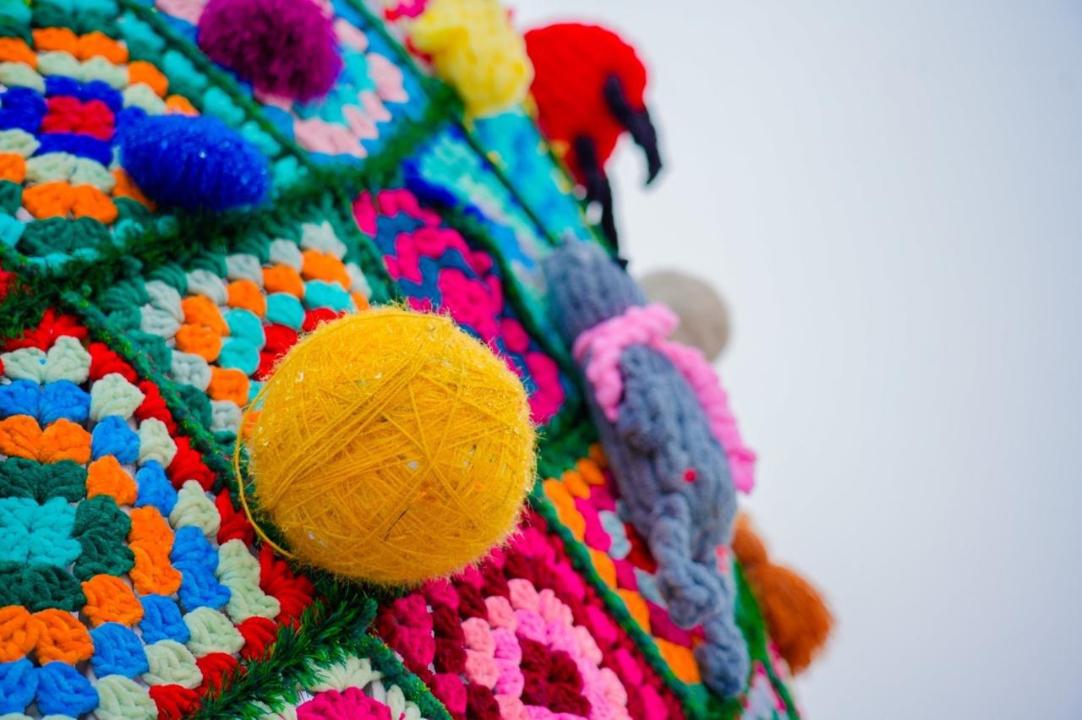
An unconventional art installation has appeared in Astana’s new administrative center: an eco-friendly Christmas tree styled after quraq-korpe, the traditional Kazakh patchwork quilt. Created by local volunteers, the project is part of the city’s broader initiative to incorporate national cultural heritage into contemporary public spaces.

Quraq-korpe, made from multi-colored fabric scraps, symbolizes warmth, family, and hospitality. The New Year’s tree, hand-assembled from textile elements and installed on the left bank of the Ishim River, reflects these values in a striking urban art form.

A similar eco-tree was first introduced in the capital in 2020 and proved popular with both residents and visitors. In response to public interest, the project was revived in 2025 with a fresh concept and deeper symbolic meaning, focusing on community involvement.

Image: gov.kz

“The eco-tree project in the quraq-korpe style has returned to the city at the request of residents,” said organizer Rakhima Mukusheva. “This year’s version is inspired by the Year of Working Professions and the Year of the Horse, symbols of labor, movement, strength, and a living connection to tradition.”

All the tree’s decorations were handmade by Astana residents of all ages. More than 50 volunteers across three generations, grandmothers, mothers, daughters, and grandchildren, contributed to the effort. Within two days, they crafted over 100 unique textile ornaments, which were placed in a symbolic “chest of goodness” as part of the installation. The tree will remain on display through January 20, inviting the public to experience it during the holiday season.

Image: gov.kz

According to the Astana mayor’s office, the initiative supports Kazakhstan’s Year of Working Professions and highlights the value of labor, craftsmanship, and intergenerational professional traditions. It also showcases the potential of handicrafts as a foundation for cultural initiatives and the creative economy.

Interest in Kazakhstan’s national culture continues to grow internationally. As previously reported by The Times of Central Asia, a cultural event called NoMad was recently held in New York to celebrate Kazakh identity.

In Kazakhstan, Christmas is officially celebrated on January 7 by Orthodox Christians as a public holiday, while December 25 is observed privately by Catholic and Protestant communities.

Kazakhstan’s Bibisara Assaubayeva Wins Third World Blitz Chess Championship

Kazakh chess star Bibisara Assaubayeva has claimed her third women’s world blitz title, emerging victorious at the 2025 World Blitz Championship in Doha. The win secures her a direct place in the 2026 Candidates Tournament, set to take place in Cyprus in April.

Assaubayeva reaffirmed her dominance in women’s chess by defeating Ukraine’s Anna Muzychuk 2.5-1.5 in the final. After three consecutive draws, she clinched the title in the decisive fourth game by capitalizing on a strategic advantage.

The 21-year-old first rose to prominence in 2021, when she won the blitz title in Warsaw at just 17, becoming the youngest champion in the tournament’s history. She defended her crown in 2022 at the home championship in Almaty, solidifying her position among the elite in women’s chess.

Her 2025 win in Doha marked the culmination of a strong performance throughout the 2024-2025 FIDE Women’s Tournament Cycle.

“It’s an amazing feeling, as if all my New Year’s wishes have come true,” Assaubayeva told the tournament’s press service. She described this third title as the most emotional of her career due to the pressure and workload tied to the Candidates’ qualification.

Assaubayeva is the first Kazakhstani player to qualify for the Women’s Candidates Tournament, where she will face top contenders including India’s Divya Deshmukh, Humpy Koneru, and Vaishali Rameshbabu; China’s Zhu Jiner and Tan Zhongyi; and Russia’s Kateryna Lagno and Alexandra Goryachkina.

The tournament will follow a double round-robin format in classical time control. The winner will earn the right to challenge China’s Ju Wenjun, who has held the women’s world championship title since 2018.

In Kazakhstan, Assaubayeva’s achievement received high praise. President Kassym-Jomart Tokayev awarded her the Order of Barys, 2nd degree. In his official message, he noted that Assaubayeva “has gone down in the history of world chess as an outstanding master and the first representative of Kazakhstan to become a three-time world blitz champion.”

As previously reported by The Times of Central Asia, Assaubayeva was awarded the title of International Grandmaster (GM FIDE) in July 2025, becoming one of the most decorated chess players in Kazakhstan’s post-independence history.

Astana Plans to Launch Driverless Taxis in 2026

Kazakhstan plans to launch pilot projects for autonomous taxi services in Astana as early as 2026. Memorandums of cooperation have been signed between the Ministry of Artificial Intelligence and Digital Development, the Ministry of Transport, the capital’s akimat, and private companies inDrive and Yandex Qazaqstan.

According to the Ministry of Artificial Intelligence and Digital Development, Astana will be among the first cities in Kazakhstan to test driverless urban transport in real-world conditions. The initiative is part of the country’s broader “smart city” strategy and includes a phased rollout from the creation of a testing ground and a “regulatory sandbox” to limited on-road operation.

The inDrive pilot project is expected to begin in early 2026. A preliminary route has already been mapped in coordination with the capital’s local government (akimat), running from Astana International Airport to the Abu Dhabi Plaza business center on the left bank of the Ishim River. Before deployment, all autonomous vehicles will undergo rigorous safety testing, including assessments related to passenger, pedestrian, and road user safety. Operators and manufacturers will oversee vehicle performance, and road risk evaluations will be mandatory.

InDrive stated that the Astana project draws on the company’s previous experience with autonomous transport in Saudi Arabia. The driverless taxi service will be accessible through a mobile app, with designated boarding areas planned at Astana Airport. Full-scale deployment will proceed only after testing is complete and regulatory approvals are in place.

A parallel pilot project is also planned with Yandex Qazaqstan. The company intends to gradually introduce autonomous taxis on a limited number of routes, beginning with trial operations. The service will feature 24/7 dispatch support, passenger insurance, and AI-based systems for real-time monitoring of road conditions. Expansion will follow once operational experience has been gained.

The ministry highlighted that countries already using driverless taxis have reported reductions in serious traffic accidents. Authorities in Kazakhstan expect similar benefits, alongside a broader transformation in the ride-hailing industry and urban transportation.

As previously reported by The Times of Central Asia, Kazakhstan is also preparing the infrastructure and regulatory frameworks for autonomous trucking on intercity highways.

Deadly Clashes and Gold Mines Fuel Tensions on the Tajik-Afghan Border

Along a short strip of the Tajik-Afghan border, there has been a lot of activity in recent months, including the most serious incidents of cross-border violence in decades. Most of this activity has involved Tajikistan’s Shamsiddin Shohin district, a sparsely inhabited area where the population ekes out a living farming and herding in the foothills of the Pamir Mountains. Why the situation changed so suddenly is not entirely clear, but it is clear that the district is now the hot spot along the Tajik-Afghan frontier.

A Dubious Post-Independence Reputation

The Shamsiddin Shohin district is in Tajikistan’s southwestern Khatlon region. The district is located near the place where Afghan territory starts to make its northern-most protrusion. The elevation across most of the district is between 1,500-2,000 meters.

The district is about 2,300 square kilometers and has a population of some 60,000. Shuroobad, population roughly 11,000, is the district capital, and the entire district was once called Shuroobad. It was renamed Shamsiddin Shohin in 2016 to honor the Tajik poet and satirist of the late 19th century, who was born in the area.

Tajikistan and Afghanistan are divided by the Pyanj River, which further downstream merges with other rivers to become the Amu Darya, known to the Greeks as the Oxus, one of Central Asia’s two great rivers.
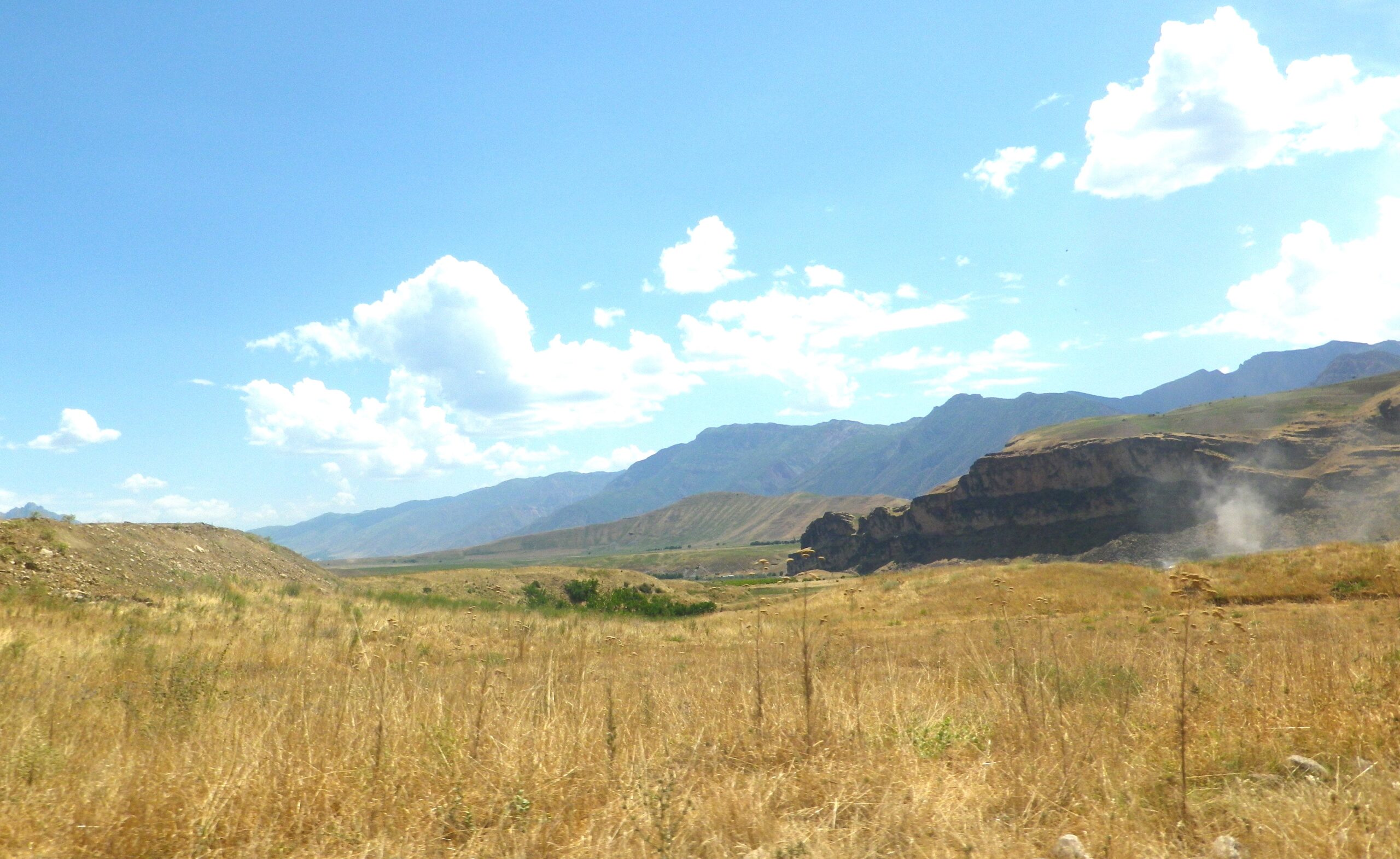
The road to Shuroobad; image: TCA, Stephen M. Bland

The Tajik-Afghan frontier is about 1,360 kilometers. Some 70 kilometers is the southern border of the Shamsiddin Shohin district, but it is the first area, traveling downstream, where the current of the Pyanj River slows significantly.

In the first years after the Bolshevik Revolution broke out, many Tajiks fled through what is now the Shamsiddin Shohin district into Afghanistan. Some seventy years later, thousands of Tajiks again fled through the district into Afghanistan when the newly independent state of Tajikistan was engulfed by civil war.

The United Tajik Opposition (UTO), the group fighting against the Tajik government during the 1992-1997 civil war, made frequent use of the Shamsiddin Shohin area to bring weapons from Afghanistan. UTO fighters had safe havens in Afghanistan, and they often made their way through this district, retreating south of the border and returning via the district once they were rested and resupplied.

There are only a few roads in the Shamsiddin Shohi district. The European Union funded the construction of the Friendship Bridge, which was completed in 2017, and connects the district to Afghanistan. It has often been closed by the Tajik authorities due to security concerns emanating from the Afghan side of the border.

Anyone crossing illegally from Afghanistan into the Shamsiddin Shohin district could easily hide in the rugged hills and abundance of caves in the area, making it ideal for smugglers and other intruders. Aside from a few small villages along the banks, there are no settlements for 20 to 30 kilometers north of the river.

Border posts were built during the time Tajikistan was a Soviet republic. Russian border guards remained in Tajikistan after the collapse of the USSR, and fortified these outposts as they increasingly came under attack from smugglers and UTO fighters crossing from Afghanistan.

Foreign governments funded the construction of new border guard posts along the Afghan frontier after the last Russian border guards departed in 2005. China, for example, financed the construction of the Gulhan border guard post in the Shamsiddin Shohin district in 2016.
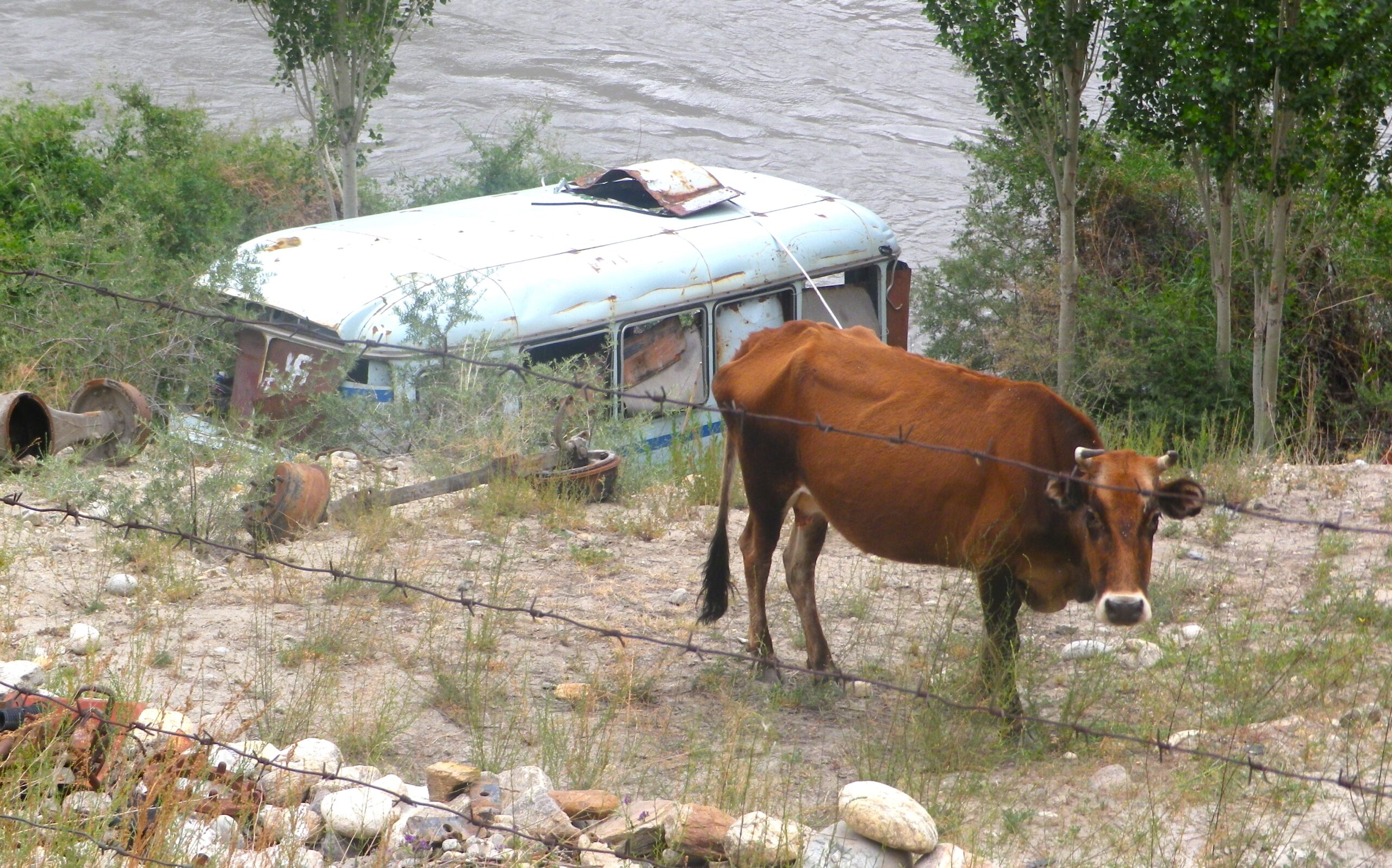
A burnt-out bus in the Pyanj River between Tajikistan and Afghanistan; image: TCA, Stephen M. Bland

New People, New Business

Illegal narcotics, weapons, precious and semi-precious stones, and a variety of contraband goods have been regularly smuggled from Afghanistan through Tajikistan since not long after Tajikistan became independent. It didn’t matter who the government in Afghanistan was. The Shamsiddin Shohin district is one of the more popular places along the Tajik-Afghan border for smugglers.

However, almost all of the recent violence along the Tajik-Afghan frontier is happening in the Shamsiddin Shohin district and Afghan territory on the other side of the river, and smuggling does not seem to be the main reason.

Not long after the Taliban returned to power in August 2021, agreements were signed with Chinese companies to develop Afghan gas and oil fields, and mineral deposits, notably gold. About three years ago, Chinese and Afghans started working at several sites in Afghanistan’s northern Badakhshan Province that borders Tajikistan.

In February 2023, the Tajik-Chinese company Zarafshan announced the discovery of new gold deposits, one of the most promising of which was in the Shamsiddin Shohin district. Zarafshan subsidiary Shohin SM started work shortly after that announcement.

In November 2024, armed men from Afghanistan crossed into Tajikistan and attacked the Shohin SM gold-mining camp, killing one Chinese worker and wounding at least four other workers, three of whom were also Chinese (the fourth was Tajik). The Tajik authorities blamed the attack on drug smugglers who wandered too close to the gold-mining camp and were seen by camp security guards.

In May 2025, the Tajik authorities apprehended a group of Chinese and Afghans who had crossed from Afghanistan on excavators into the Shamsiddin Shohin district. Tajik officials alleged the group intended to launder money, though the head of the district, Zafar Gulzoda, said the group was searching for gold scrap on the Tajik side of the Pyanj River.

Then in August 2025, Tajik border guards stationed in Shamsiddin Shohin exchanged fire with Taliban fighters on the other side of the river.  The Tajik border guards did not suffer any casualties, but one Taliban fighter was killed and four others wounded. The head of the local Tajik border guards led a small detachment of troops across the border into Afghanistan for talks with local Taliban officials and the head of the local mining operation.

In late October, there were reports that Tajik border guards and the Taliban were again involved in a firefight in the same area as the shooting in August. A report from an Afghan media outlet said there were casualties on both sides, but Tajik and Taliban officials never commented on the incident.

The reason for the second exchange of fire was reportedly construction work at a Chinese-Afghan gold mining site that had altered the course of the Pyanj River and sent more water to the Tajik bank, sparking concerns about flooding in the Shamsiddin Shohin district. The Tajik authorities have complained about this several times.

Then, on November 26, three Chinese workers at the Shohin SM gold mining camp were killed and two wounded in an attack that combined gunfire and the use of a drone armed with a grenade. On the last day of November, two Chinese roadworkers were shot dead and three wounded in Tajikistan’s Darvaz district, the next district east of Shamsiddin Shohin. The shots came from the Afghan side of the river.

On December 24, Tajik border guards in Shamsiddin Shohin were again involved in a shootout, this time with an armed group that came across the river from Afghanistan. Two Tajik border guards and three of the attackers were killed in the clash. The Tajik authorities said the armed group were terrorists who attacked the Tajik border guard post in the area.

No other place along the Tajik-Afghan border has seen the sort of violence that is becoming routine in the Shamsiddin Shohin district. The alleged “smuggler” attack on the gold mining camp in November 2024, and then a series of attacks and exchanges of fire since late August 2025.

Chinese gold mining, smuggling, and terrorists are combining to make the Shamsiddin Shohin district the hot spot of Tajikistan’s border with Afghanistan.