• KGS/USD = 0.01144 0%
  • KZT/USD = 0.00213 0%
  • TJS/USD = 0.10456 0.19%
  • UZS/USD = 0.00008 0%
  • TMT/USD = 0.28490 0%
  • KGS/USD = 0.01144 0%
  • KZT/USD = 0.00213 0%
  • TJS/USD = 0.10456 0.19%
  • UZS/USD = 0.00008 0%
  • TMT/USD = 0.28490 0%
  • KGS/USD = 0.01144 0%
  • KZT/USD = 0.00213 0%
  • TJS/USD = 0.10456 0.19%
  • UZS/USD = 0.00008 0%
  • TMT/USD = 0.28490 0%
  • KGS/USD = 0.01144 0%
  • KZT/USD = 0.00213 0%
  • TJS/USD = 0.10456 0.19%
  • UZS/USD = 0.00008 0%
  • TMT/USD = 0.28490 0%
  • KGS/USD = 0.01144 0%
  • KZT/USD = 0.00213 0%
  • TJS/USD = 0.10456 0.19%
  • UZS/USD = 0.00008 0%
  • TMT/USD = 0.28490 0%
  • KGS/USD = 0.01144 0%
  • KZT/USD = 0.00213 0%
  • TJS/USD = 0.10456 0.19%
  • UZS/USD = 0.00008 0%
  • TMT/USD = 0.28490 0%
  • KGS/USD = 0.01144 0%
  • KZT/USD = 0.00213 0%
  • TJS/USD = 0.10456 0.19%
  • UZS/USD = 0.00008 0%
  • TMT/USD = 0.28490 0%
  • KGS/USD = 0.01144 0%
  • KZT/USD = 0.00213 0%
  • TJS/USD = 0.10456 0.19%
  • UZS/USD = 0.00008 0%
  • TMT/USD = 0.28490 0%

2024 Kazakhstan Plane Crash Still Stirs Tension between Russia and Azerbaijan

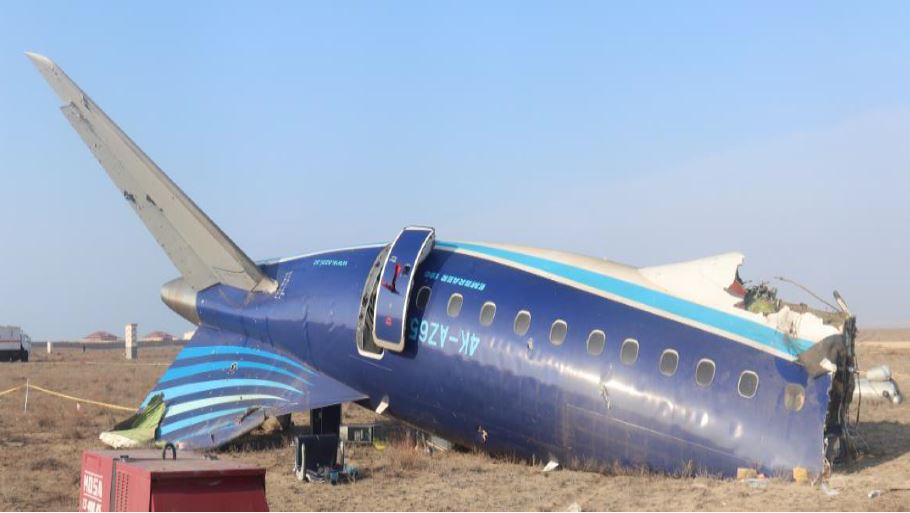
Conflicting statements from Russia about the December 25, 2024 crash of an Azerbaijan Airlines plane that was hit by Russian missile fire have drawn fresh criticism from Azerbaijan, which marked the first anniversary of the disaster with flowers and other tributes. 

Amid growing Azerbaijani accusations that Russia was trying to avoid responsibility, Russian President Vladimir Putin acknowledged in October – nearly a year after the crash – that Russian fire had damaged an Azerbaijani airliner that diverted from its destination in Russia-controlled Chechnya and went down near the city of Aktau in Kazakhstan. Putin indicated that the shooting was accidental, saying Russian forces were trying to fend off a Ukrainian drone attack at the time. The crash killed 38 of 67 people on board. 

However, Alexander Bastrykin, chairman of Russia’s Investigative Committee, sent a letter to Azerbaijan’s prosecutor general last month in which he said Russia’s “criminal case has been terminated” but also refers to the “resumed criminal case” – without making any reference to Russian missile fire. Instead, Bastrykin said the plane was unable to land at the Grozny, Chechnya airport because of cloudy weather and later crashed during the approach to the Aktau airport. 

The Azeri Times, which along with other media outlets published the text of Bastrykin’s letter, described the Russian statement as “a clear cover-up!” 

Farhad Mammadov, director of the South Caucasus Studies Center in Baku, noted what he said were inconsistencies in the Russian letter, including whether Russia’s criminal case had been terminated or resumed. On Telegram, he described Russia’s cloudy weather claim as: “Complete nonsense!!!” 

Mammadov said the latest Russian statement appeared to be an attempt to delay a final resolution with Azerbaijan, which demanded compensation and punishment of those responsible. Putin had said in October that compensation would be paid.  

“All these clumsy, contradictory and unprofessional gestures do not change the position of Azerbaijan,” Mammadov wrote. “Baku is waiting, as the impulse from the recognition of President Putin has not lost its significance… However, after Bastrykin’s letter, Baku may begin to doubt that Russia will take adequate actions…” 

“Azerbaijan has its own criminal case and the opportunity to appeal to international courts in its arsenal,” he said. 

Kazakhstan is also conducting its own politically sensitive investigation into the crash, with the participation of representatives from Russia, Azerbaijan and Brazil, where the Embraer 190 aircraft was made. Interim findings released in December did not assign responsibility for the crash. 

Putin’s acknowledgement in October that Russian missile fire hit the Azerbaijani airliner came during a meeting in Dushanbe with President Ilham Aliyev, appearing to signal a thaw in ties after months of tension over the crash. However, Aliyev did not attend a December meeting in St. Petersburg, Russia of the Commonwealth of Independent States, a group of former Soviet republics that includes Azerbaijan as a member.

Azerbaijan “is still signaling that Baku is unsatisfied with the ramifications and statements from Moscow,” despite Putin’s efforts to ease tensions with Azerbaijan over the plane crash, analyst Fuad Shabazov said on X. 

Although Putin had apologized for the crash, Russia’s Ministry of Foreign Affairs issued a statement on its first anniversary that tried to deflect responsibility, saying the “root cause of the disaster” was an attack by Ukrainian drones on civilian infrastructure. 
U.S. and Kazakhstan Expand Civil Nuclear Cooperation With Focus on Small Modular Reactors

The United States and Kazakhstan have expanded cooperation on civil nuclear energy, placing small modular reactors at the center of a new phase in bilateral engagement. In late December 2025, the U.S. Embassy in Kazakhstan announced two initiatives under the U.S. State Department’s Foundational Infrastructure for Responsible Use of Small Modular Reactor Technology program, known as FIRST. The measures focus on workforce training and technical evaluation as Kazakhstan prepares to reintroduce nuclear power generation.

Kazakhstan is the first country in Central Asia to participate in the FIRST program, which was launched by the U.S. State Department in 2021 to help partner countries prepare regulatory frameworks, workforce capacity, and infrastructure for advanced nuclear technologies.

The first initiative provides for the installation of a classroom-based SMR (small modular reactor) simulator at the Kazakhstan Institute of Nuclear Physics in Almaty. The simulator is intended to train specialists in reactor operations, safety systems, and emergency response. On January 6, 2026, the American Nuclear Society reported that the simulator will be supplied by U.S. companies Holtec International and WSC Inc., a simulation technology company that operates as part of the Curtiss-Wright group. The project is designed to build domestic technical capacity prior to licensing or construction decisions. The International Science and Technology Center is supporting implementation in Kazakhstan.

The second initiative is a feasibility study examining which U.S.-designed SMRs could be technically and economically suitable for Kazakhstan. According to the American Nuclear Society, the study is being conducted under FIRST, with U.S. engineering firm Sargent & Lundy. The assessment is expected to cover grid integration, siting considerations, cooling requirements, and indicative deployment timelines. The study does not authorize construction or commit Kazakhstan to a specific reactor technology; rather, the feasibility study is intended to produce a shortlist of U.S. SMR designs that could be compatible with Kazakhstan’s grid, geography, and projected electricity demand.

These initiatives follow Kazakhstan’s decision to return to nuclear power. On October 6, 2024, voters approved the construction of nuclear power plants in a national referendum. Official results published by the Central Referendum Commission showed 71.12% voting in favor, with turnout at 63.66%. Kazakhstan has not generated nuclear electricity since the BN-350 fast reactor at Aktau was shut down in 1999. Government energy planners have warned that Kazakhstan faces growing electricity shortfalls as early as the mid-2020s, driven by aging coal plants and rising consumption.

Kazakhstan’s interest in nuclear energy reflects structural pressures in the power sector. Coal-fired plants still supply most electricity, particularly in northern regions, but much of that capacity is aging. Electricity demand continues to rise alongside industrial output and urban growth, while the government has set targets to reduce emissions intensity. Nuclear power is being positioned as a source of stable, low-carbon baseload generation that can complement renewable energy.

Kazakhstan also occupies a central position in the global nuclear fuel market. The country accounts for about 40% of global uranium mine production and holds roughly 14% of identified recoverable uranium resources. Despite that role, the country has relied on fossil fuels for domestic electricity generation for more than two decades, a situation characterized by President Kassym-Jomart Tokayev in a January 5 interview as a “historical absurdity”. Tokayev has repeatedly argued that Kazakhstan’s status as the world’s leading uranium producer strengthens the economic and strategic case for domestic nuclear power generation.

Large-scale reactors remain the core of Kazakhstan’s near-term nuclear plans. In 2025, Kazakhstan selected Russia’s Rosatom to build its first nuclear power plant at Ulken, near Lake Balkhash, using two VVER-1200 reactors. Kazakhstan has also moved forward with plans for a second nuclear power plant to be built by China’s China National Nuclear Corporation, reflecting a broader multi-vector nuclear diplomacy strategy. Officials have presented SMRs as a complementary option that could serve industrial sites or regions not immediately connected to large new nuclear plants.

The U.S.-supported SMR initiatives operate on a different timeline. SMRs are generally defined as reactors producing up to 300 megawatts of electricity per unit and are promoted for their modular construction and potential flexibility in deployment. No U.S. SMR has yet entered commercial operation, but several designs are advancing through licensing and demonstration. The FIRST program focuses on regulatory readiness, workforce development, and early technical planning rather than financing or construction.

For Kazakhstan, participation in FIRST adds a U.S. component to its nuclear strategy. The simulator and feasibility study expand technical expertise and provide comparative data that could inform future decisions on reactor scale and deployment. The initiatives broaden the range of technologies under consideration as nuclear power returns to a central place in Kazakhstan’s long-term energy strategy.

AI Could Boost Productivity of Kazakhstan’s Workforce, Study Finds

AI is poised to significantly enhance workforce productivity in Kazakhstan without triggering mass job losses, according to the initial findings of a joint study by the Ministry of Science and Higher Education and the international analytical agency Quacquarelli Symonds (QS). The results were presented at a government meeting on January 6.

Minister of Science and Higher Education Sayasat Nurbek emphasized that AI should be seen not as a threat to employment but as a tool to augment human labor and improve efficiency.

“About 70% of Kazakhstan’s workforce has medium or high potential for productivity growth through the use of artificial intelligence. In 53% of occupations, automation of specific job functions is possible. In most cases, this doesn’t mean job elimination but rather changes in job content and evolving skill requirements,” Nurbek said.

In response to the findings, the ministry is developing a phased action plan to modernize Kazakhstan’s higher education system. Starting in 2025, AI-related skills are being integrated into all educational programs. Currently, 95 universities across the country have already introduced AI disciplines into their curricula.

Nurbek also announced the forthcoming establishment of an Artificial Intelligence University, in line with a directive from President Kassym-Jomart Tokayev. The new institution will focus on training specialists in interdisciplinary fields aligned with industry demand and will conduct applied research. It will operate as part of the Alem.ai ecosystem and collaborate with leading global universities and tech companies.

Tokayev has declared the transformation of Kazakhstan into a digital nation within three years as a national goal. In his New Year’s address, he designated 2026 as the Year of Digitalization and Artificial Intelligence Development. Speaking to Turkistan newspaper on January 5, he underscored Kazakhstan’s strategic commitment to the widespread adoption of AI across the economy and public life.

According to Tokayev, Kazakhstan has a strong foundation, built on progress in digital public services, fintech, and several key economic sectors. Two national supercomputers, Alem.Cloud and Al-Farabium, have already been launched. In 2025, Kazakhstan’s IT service exports reached approximately $1 billion.

“The advent of artificial intelligence has created a dividing line between countries that will make it into the future and those that will be left behind. That is why I have declared digital technologies and artificial intelligence a priority for Kazakhstan’s development,” Tokayev said.

The Venezuela Effect: Oil, Sanctions, and Kazakhstan’s Strategic Dilemma

The start of 2026 was marked by political upheaval across two continents: fresh protests in Iran drawing comparisons among some Kazakh analysts to the country’s own Bloody January of 2022, and a U.S. military operation described by Washington as a law-enforcement action in Venezuela. The latter led to the arrest of Venezuelan President Nicolás Maduro and what some analysts are describing as a move toward far greater U.S. influence over Venezuela’s oil sector.

Beyond its immediate implications for global oil supply and pricing, the geopolitical symbolism of the Venezuela operation is resonating in unexpected places, including Central Asia.

Contrary to some early reports, the American intervention in Caracas was not bloodless. At least 40 Venezuelan security and military personnel were reportedly killed during the rapid offensive. Still, Kazakh political scientist Marat Shibutov argues that the perception of a swift and decisive U.S. action, especially in contrast to Russia’s grinding war in Ukraine, is symbolically damaging for Moscow.

“This comparison with Russia’s prolonged conflict is not flattering,” Shibutov noted. “It creates a sensitive political backdrop for the Kremlin.”

In Kazakhstan, where debates over foreign energy contracts have been simmering for years, the events in Venezuela are being closely watched. Political analyst Daniyar Ashimbayev referenced Astana’s past discussions about reviewing oil agreements with Western companies. “The topic of revising oil contracts is becoming less and less popular. At this rate, it could even be equated with extremism,” he commented ironically, underscoring how sensitive the issue has become.

Some experts are also concerned that political shifts in Venezuela and Iran could destabilize the oil market in ways that would hit Kazakhstan’s economy hard. Kazakhstan derives a substantial share of its state budget revenues from the oil sector, making sustained price declines a direct fiscal risk rather than a purely market concern, analysts note. Energy analyst Olzhas Baidildinov points out that Venezuela holds the largest proven oil reserves in the world, approximately 300 billion barrels, more than 30 times Kazakhstan’s profitable reserves.

“If liberal or Western-friendly governments come to power simultaneously in Venezuela and Iran, they could supply an additional 2-3 million barrels per day to the global market within the next 3-4 years,” he warned. Even without full regime change, he noted, easing sanctions or the return of “shadow exports” could push global prices down to $50-70 per barrel.

“At such prices, it will be difficult to demonstrate economic growth and maintain momentum in Kazakhstan’s oil sector,” Baidildinov added.

Financial analyst Arman Beisembayev offered a more bearish view. “If production volumes increase and the U.S. begins releasing more oil onto the market, including from Venezuela, then I’m afraid prices won’t stay at $60 per barrel. The base case is a drop to $50. A worst-case scenario could see prices at $40, or even lower.”

But not everyone believes Venezuela can upend the market. Askar Ismailov, a Geneva-based advisor on Central Asia at the Global Gas Centre, remains skeptical. “Venezuelan crude is extremely heavy, difficult to extract, and expensive to transport. Historically, it depended on a complex refining arrangement with U.S. facilities. Rapid production growth is nearly impossible without massive investments and infrastructure overhauls,” he said.

Moreover, experts note that American oil firms have little incentive to flood the market, as lower global prices would hurt their own bottom line. Still, geopolitics looms large. 

Some analysts argue that President Donald Trump may view oil pricing as a strategic lever to pressure the Kremlin into negotiations over Ukraine. If prices fall, Kazakhstan, heavily reliant on oil revenues, could face serious fiscal pressure. That, in turn, may reverberate across Central Asia, where several regional initiatives are underpinned by Kazakh investment.

In short, the first days of 2026 have intensified debate among regional analysts, revealing how far-flung crises can ripple through Central Asia’s economic and political landscape.

Kazakhstan’s New Subsoil Law Opens Underexplored Territories to Investors

Kazakhstan has introduced a new subsoil use law aimed at unlocking the potential of underexplored areas and attracting increased investment in the energy sector. According to the Ministry of Energy, the legislation establishes a special contract type for exploration and production in previously underexplored territories, offering significantly enhanced terms for investors.

Under the new framework, companies that independently finance geological exploration will be granted priority rights for subsequent subsurface use. The Ministry expects this provision to dramatically boost geological activity and accelerate the discovery and development of new hydrocarbon reserves.

The legislative amendments also streamline operational procedures. Subsoil users are now permitted to conduct additional exploration at depths beyond 5,000 meters under existing production contracts, without altering the surface boundaries. This change enables faster exploration of deep reserves while reducing bureaucratic delays.

Officials say the updated legal framework is designed to improve Kazakhstan’s investment climate and provide new incentives for capital inflow into the extractive industries.

According to The Times of Central Asia, investment in geological exploration exceeded $150 million in the first nine months of 2025, following $285 million in 2023 and $304 million in 2024.

As of now, Kazakhstan has 324 active hydrocarbon subsoil use contracts, including 15 for exploration, 170 for combined exploration and production, 131 for production, and 8 production sharing agreements (PSAs), according to the Ministry of Energy.

Uzbekistan Targets 85% Drinking Water Access by 2030

Uzbekistan aims to provide 85% of its population with access to drinking water services by 2030, according to a draft strategy prepared by the Agency for Strategic Reforms under the President of Uzbekistan. The proposal forms part of a broader development roadmap focused on sustaining reform momentum and advancing national priorities through the end of the decade.

The document outlines a gradual increase in drinking water coverage: 82% by 2026, 83% in 2027, 84% in 2028 and 2029, and reaching 85% by 2030. Officials say the targets reflect a long-term effort to modernize water infrastructure and improve living conditions in both urban and rural communities.

The strategy also prioritizes public institutions. Authorities plan to ensure that, by 2030, all preschools and general secondary schools will have access to clean drinking water and be equipped with modern sanitation and hygiene systems. The focus aligns with national concerns over public health and the learning environment for children.

The draft includes measures to enhance the efficiency of water use nationwide. Uzbekistan aims to boost water-use efficiency by 25%, ensure 100% metering of drinking water consumers, and reduce critically affected groundwater areas to 773,400 hectares.

The government is also pursuing major infrastructure and agricultural initiatives. A key component is the planned expansion of the Tuyamuyun water reservoir’s capacity by 1 billion cubic meters. The project is expected to secure water supply for 1.2 million hectares of land, build strategic reserves of drinking water, and improve resilience to drought and shortages.

Additionally, the plan promotes the cultivation of drought-resistant crops and high-yield varieties of fruits and grapes tailored to Uzbekistan’s climate, with the goal of increasing agricultural productivity by 30-35%.

The renewed emphasis on water management comes as Uzbekistan faces mounting pressure on its water resources. Earlier, Energy Minister Jurabek Mirzamahmudov informed lawmakers in the Legislative Chamber of the country’s parliament, the Oliy Majlis, that electricity generation at the country’s hydropower plants had dropped sharply due to water scarcity. According to him, inflows to major hydropower facilities had fallen by 35% compared with the previous year, significantly impacting power output.