• KGS/USD = 0.01144 0%
  • KZT/USD = 0.00196 -0%
  • TJS/USD = 0.10899 -0%
  • UZS/USD = 0.00008 -0%
  • TMT/USD = 0.28490 0%
  • KGS/USD = 0.01144 0%
  • KZT/USD = 0.00196 -0%
  • TJS/USD = 0.10899 -0%
  • UZS/USD = 0.00008 -0%
  • TMT/USD = 0.28490 0%
  • KGS/USD = 0.01144 0%
  • KZT/USD = 0.00196 -0%
  • TJS/USD = 0.10899 -0%
  • UZS/USD = 0.00008 -0%
  • TMT/USD = 0.28490 0%
  • KGS/USD = 0.01144 0%
  • KZT/USD = 0.00196 -0%
  • TJS/USD = 0.10899 -0%
  • UZS/USD = 0.00008 -0%
  • TMT/USD = 0.28490 0%
  • KGS/USD = 0.01144 0%
  • KZT/USD = 0.00196 -0%
  • TJS/USD = 0.10899 -0%
  • UZS/USD = 0.00008 -0%
  • TMT/USD = 0.28490 0%
  • KGS/USD = 0.01144 0%
  • KZT/USD = 0.00196 -0%
  • TJS/USD = 0.10899 -0%
  • UZS/USD = 0.00008 -0%
  • TMT/USD = 0.28490 0%
  • KGS/USD = 0.01144 0%
  • KZT/USD = 0.00196 -0%
  • TJS/USD = 0.10899 -0%
  • UZS/USD = 0.00008 -0%
  • TMT/USD = 0.28490 0%
  • KGS/USD = 0.01144 0%
  • KZT/USD = 0.00196 -0%
  • TJS/USD = 0.10899 -0%
  • UZS/USD = 0.00008 -0%
  • TMT/USD = 0.28490 0%
08 December 2025

Kazakhstan’s Rollout of Aitu Messenger Sparks Fears Over Internet Freedom

Kazakhstan is mandating the use of the national messenger Aitu among officials and state-owned enterprises, raising concerns that this move could signal future restrictions on internet freedom.

The rollout of Aitu coincides with Russia’s introduction of its own national messaging app, Max, which has been accompanied by efforts to block international platforms like WhatsApp and Telegram. The parallels are fueling fears that Kazakhstan may follow a similar path.

Why Is Aitu Being Introduced?

By September 15, employees of all government agencies and quasi-public sector organizations in Kazakhstan are required to switch to Aitu. The directive comes from the Digital Headquarters under the leadership of Prime Minister Olzhas Bektenov.

On August 11, President Kassym-Jomart Tokayev instructed the government to strengthen protections around citizens’ personal data. “A significant part of business and official communication, including the transfer of citizens’ personal data, now takes place through international messengers,” he noted.

Tokayev cited examples of sensitive data, such as individual identification numbers and medical information, being transmitted via foreign platforms. He linked this to repeated data breaches, stating that Kazakhstan experienced over 40 major leaks in 2025 alone, including a major incident in June that exposed data on millions of citizens. He argued that Aitu is a necessary step to prevent further leaks.

Security Concerns Remain Unanswered

Originally launched in 2018, Aitu was used on a limited scale during the COVID-19 pandemic and in educational initiatives. Despite its recent promotion, serious questions about its security remain unanswered.

On August 29, Deputy Minister of Digital Development Dmitry Mun confirmed that Aitu is owned by Kazakhtelecom JSC, a national monopoly, and BTS. The app’s infrastructure is reportedly hosted entirely within Kazakhstan.

However, Yevgeny Pitolin, co-chair of the QazTech Alliance’s Information Security Committee, criticized the lack of transparency: “There is almost no information about security. In official responses, the administration avoids these questions, claiming it is a matter of national security.”

So far, six million people have registered with Aitu, according to the Ministry of Digital Development. Although this represents nearly one-third of Kazakhstan’s population of 20 million, the ministry has not disclosed how frequently the app is used.

A Step Toward a Sovereign Internet?

A major point of concern among Kazakhstanis is whether Aitu could pave the way for a sovereign internet model similar to those in Russia or China both of which tightly control domestic digital ecosystems.

Russia’s Max messenger, modeled after China’s WeChat, integrates payments, government services, banking, and social networking. Though introduced by VK Corporation, the Russian government has embedded itself in its development. In July, the State Duma passed legislation mandating all official communication between citizens and government agencies to occur via Max. It now comes pre-installed on smartphones, and schools and hospitals are transitioning to it.

Crucially, Max works only with SIM cards registered in Russia or Belarus, making cross-border communication difficult. Users have reported frequent disruptions in WhatsApp and Telegram access. Critics argue that the Russian state may be moving toward outright bans on foreign messengers.

Kazakhstan Denies Similar Plans For Now

Amid rising speculation, Kazakhstan’s Ministry of Digital Development has denied any plans to ban international messengers like WhatsApp or Telegram.

“The initiative to introduce Aitu concerns exclusively official communication within central and local government bodies, as well as quasi-public organizations. It is designed to ensure that civil servants can securely exchange information for official use,” the ministry stated.

Despite these reassurances, the timing and context of Aitu’s rollout continue to stir public unease. With precedent set in neighboring Russia, many Kazakhstanis worry that further restrictions could follow.
Russia Says It Has Paid Compensation for Kazakhstan Plane Crash

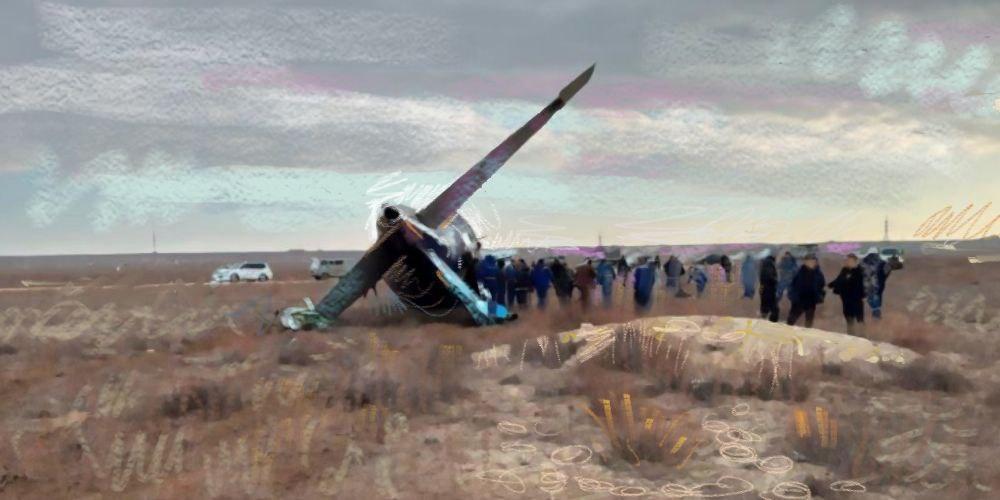
Russia says insurance payments have been made for the crash of an Azerbaijan Airlines plane near the Kazakhstani city of Aktau in December 2024, potentially meeting a demand of Azerbaijani officials who assert the plane was hit by Russian ground fire before diverting and crashing.

While Azerbaijan’s government had said Russia should pay compensation for the disaster that killed 38 of the 67 people on board, it has yet to secure other demands, including full acknowledgement of responsibility for the crash and punishment of those believed to have fired on the aircraft as it tried to land in Grozny, Russia.

The Russian Foreign Ministry said on Thursday that Russian insurance company AlfaStrakhovanie JSC has been making insurance payments since February in connection with the crash, which had taken off from Baku. AlfaStrakhovanie is one of the largest insurance companies in Russia and has been under Western sanctions because of the war in Ukraine. 

“The Azerbaijani airline was paid insurance compensation for the plane in the amount of the full insured value – 1.003 billion rubles,” the equivalent of $12.3 million, the Russian ministry said. 

“Claims in connection with the injuries and deaths of 46 of the 62 passengers on the flight have been fully settled, including full payments for 7 of the 15 Russian citizens, 35 of the 38 Azerbaijani citizens, all 3 Kyrgyz citizens, and 1 of the 6 Kazakh citizens,” the ministry said. “To date, insurance payments have been made to the injured passengers of the plane and relatives of the deceased for a total of 358.4 million rubles.”

The payment to injured passengers and relatives of the deceased is the equivalent of $4.4 million. The Russian ministry said work was continuing with those groups for the purposes of a “full settlement.”

There was no specific mention of the five Azerbaijani crew members in the Russian statement. Two pilots and one flight attendant died. 

Russian President Vladimir Putin has offered a general apology for the crash without providing details about what happened at a time when, according to Russia, the area around Grozny was under attack from Ukrainian drones. Azerbaijan has said it will seek redress in international courts, indicating it has doubts about the outcome of a crash investigation being led by Kazakhstan. 

Putin and Azerbaijani President Ilham Aliyev, who has sharply criticized Russia because of its alleged evasiveness over the crash, were seen shaking hands in a brief encounter at a summit of the Shanghai Cooperation Organization in Tianjin, China earlier in the week. But they didn’t hold a meeting on the sidelines of the event, possibly indicating that there is still significant tension in the relationship between the two countries.

Turkmenistan to Send Tents, Food, Other Aid to Afghanistan; Quake Toll Rises

Turkmenistan plans to send humanitarian aid to Afghanistan as the death toll from an earthquake there increased to more than 2,200, Afghanistan’s Taliban government said on Thursday.

Rashid Muradov, Turkmenistan’s deputy prime minister and foreign minister, said “urgent humanitarian assistance – including clothing, tents, medicine, and food – will soon be delivered” to Afghanistan, the Afghan Ministry of Foreign Affairs said on X.

Muradov announced Turkmenistan’s aid plans in a telephone conversation with Maulvi Amir Khan Muttaqi, Afghanistan’s foreign minister. The Afghan minister thanked Muradov and “assured that the mentioned aid will be delivered to the needy people in a timely manner,” his office said.

Some international donors have previously expressed concern that the Taliban diverts aid for its own purposes rather than delivering it to those most in need. The U.S. Special Inspector General for Afghanistan Reconstruction recently released a report that it said looked into how “the Taliban diverts U.S. aid dollars intended for needy Afghans and the culture of denial within the international aid community, which thwarts effective measures to mitigate that diversion.”

A 6.0 magnitude earthquake struck eastern areas in Afghanistan on Sunday, and rescue efforts have been hampered by a lack of infrastructure and mountainous terrain. Kunar was the hardest hit province, and parts of Nangarhar and Laghman provinces were also affected.

The Afghan Red Crescent Society said on Thursday that at least 2,205 people died and 3,640 others were injured.

“Many people are trapped under the rubble of destroyed homes and rescue efforts are ongoing,” the society said.

Like Turkmenistan, Uzbekistan shares a border with Afghanistan and has said it is ready to help with quake relief. Central Asian countries have sent aid to Afghanistan in the past as they build ties with the Taliban and work on diversifying trade routes.

Security concerns remain. Tajik border guards and Taliban fighters exchanged fire in an area along the Tajik-Afghan border on Aug. 24, though the two sides later met in an effort to reduce tensions.

Kazakhstan Adds Over 4,000 New IT Companies in Two Years Amid Tech Boom

Kazakhstan’s IT sector has seen rapid expansion, with the number of registered IT companies surpassing 18,600 by the end of 2024, a 16% increase over three years, according to the Ministry of Digital Development, Innovations and Aerospace Industry (MDDIAI).

In 2022, the country had around 14,000 IT firms. The surge is attributed in large part to the development of the Astana Hub international technopark, which now hosts more than 1,700 resident companies. Kazakhstan has also launched 19 regional IT hubs and established international platforms in Saudi Arabia, the United States, the United Kingdom, Dubai, and China.

Astana Hub, Central Asia’s largest IT startup technopark, has attracted over 336 billion tenge ($624 million) in investments since its launch in 2018. This growth has been supported by state tax incentives totaling 130 billion tenge ($241 million).

In 2024, Astana Hub residents generated 620 billion tenge ($1.33 billion) in revenue, accounting for more than half of Kazakhstan’s total IT sector revenue, which reached 1.2 trillion tenge ($2.2 billion). Export earnings contributed 140 billion tenge ($260 million).

Looking ahead, the government aims to raise IT service exports to $1 billion by 2026. Support programs include AI’preneurs and the Silk Way Accelerator, which is operated in partnership with Google. More than 40 Kazakhstani startups have taken part in accelerator programs in Silicon Valley through collaborations with AlchemistX, Draper University, and the Silkroad Innovation Hub.

The Tech Orda initiative aims to train 100,000 IT professionals by 2025. In parallel, the AI Qyzmet program, the first of its kind in Central Eurasia, focuses on equipping civil servants with skills in artificial intelligence to modernize public administration.

Kazakhstan is also building out a national AI ecosystem. The Alem.AI International Center for Artificial Intelligence will offer research and training opportunities, while AlemLLM, the country’s largest Kazakh-language large language model, is now available to startups, academic institutions, and private companies.

In July, Kazakhstan launched alem.cloud, Central Asia’s most powerful supercomputer cluster, designed to support AI development and deployment.

Russian Gasoline Export Ban Will Not Impact Kyrgyzstan, Ministry Confirms

The temporary ban on gasoline exports introduced by the Russian government on August 27 will not affect Kyrgyzstan, the country’s Ministry of Energy has confirmed. As a member of the Eurasian Economic Union (EAEU), Kyrgyzstan is exempt from the restriction, which applies only to non-EAEU countries.

Kyrgyzstan consumes approximately 1.6 million tons of motor fuel annually, 93% of which is imported from Russia under a 2016 intergovernmental agreement on fuel trade. While the full quotas for 2025 have yet to be fulfilled, deliveries remain uninterrupted, and negotiations are ongoing regarding 2026 volumes.

Despite the exemption, domestic fuel prices in Kyrgyzstan have risen since mid-2025, reflecting wholesale price hikes in Russia. The Association of Oil Traders of Kyrgyzstan anticipates further increases in retail prices if the current upward trend at Russian refineries continues.

The surge in Russian wholesale prices is attributed to multiple factors, including reduced refining capacity due to both scheduled and emergency maintenance, infrastructure damage from Ukrainian drone attacks, and ongoing difficulties in procuring technological equipment amid Western sanctions.

In Kyrgyzstan, the price of AI-92 gasoline, a commonly used grade, has already reached 70 soms ($0.80) per liter. Nevertheless, retail fuel prices in Kyrgyzstan remain lower than in neighboring Tajikistan and Uzbekistan, which also depend on Russian imports but do not benefit from the EAEU exemption.

What Drives Kazakhstan’s Threefold Growth in High-Tech Exports

Kazakhstan has sharply increased its presence in the global market for high-tech goods in recent years. According to analysts at Finprom.kz, the country’s high-tech exports nearly tripled, rising from $2.5 billion in 2021 to $7.3 billion in 2024.

Geography and Growth Dynamics

This surge was driven less by a physical increase in exports, up 9.7%, and more by rising global prices and the growth of re-exports. Since 2022, amid shifting geopolitical dynamics, Kazakhstan has emerged as a key player in re-export chains for complex technical equipment.

The Bureau of National Statistics reports that nearly 77% of high-tech export value in 2024 ($5.6 billion) was attributed to companies registered in Astana and Almaty. However, this reflects business registration patterns rather than actual production. For example, a Kazakh-Chinese joint venture in Ust-Kamenogorsk manufactures fuel assemblies for nuclear reactors, yet its exports are registered as originating from Almaty.

Uranium: The Strategic Core

Uranium and its compounds remain Kazakhstan’s dominant high-tech export, comprising 62.7% of the total in 2024, or $4.6 billion. Over the past three years, the value of uranium exports rose 2.6 times, while the physical volume increased by just 16.7%. The key driver was a sharp spike in global uranium prices: in the first half of 2024 alone, the spot price rose by 73%, while long-term contract prices also trended upward.

Aviation and Leasing Structures

Aircraft ranked second in terms of profitability. In 2024, exports of airplanes and helicopters exceeded $940 million, 30 times higher than in 2021. Ireland was the largest reported buyer. However, this spike reflects aviation leasing arrangements rather than direct aircraft sales. As noted in a document submitted by Prime Minister Olzhas Bektenov to the Mazhilis, Kazakhstan’s parliament, Kazakhstan’s national carrier Air Astana operates aircraft registered in Ireland, leading to leasing-related flows being counted as exports.

Smartphones, Electronics, and Digital Equipment

Smartphones emerged as a fast-growing category, with exports increasing 54-fold to $433 million. Key markets included Central Asian neighbors, Mongolia, and the Czech Republic. Much of the growth occurred in 2022, driven by shifting supply chains amid international sanctions.

While the volume of exported computers and digital equipment rose, their total value declined. Notably, exports of digital data processing units fell from $136.6 million in 2021 to $11.6 million in 2024.

This discrepancy highlights the predominance of re-exports. In 2024, Kazakhstan produced just 33,000 computing units but exported 744,100. Similarly, it manufactured 7,500 electromechanical devices while exporting nearly 200,000.

Broader Export Structure

According to QazTrade, the share of high value-added products in Kazakhstan’s exports reached 13.5% or $11.1 billion in 2024, marking a 16.1% year-on-year increase. However, the country’s export structure remains resource-heavy: raw materials account for 63.3% of total exports, followed by low value-added goods at 15.5%, with high-tech processed goods in third place.