• KGS/USD = 0.01144 0%
  • KZT/USD = 0.00194 -0%
  • TJS/USD = 0.10877 -0%
  • UZS/USD = 0.00008 0%
  • TMT/USD = 0.28571 0%
  • KGS/USD = 0.01144 0%
  • KZT/USD = 0.00194 -0%
  • TJS/USD = 0.10877 -0%
  • UZS/USD = 0.00008 0%
  • TMT/USD = 0.28571 0%
  • KGS/USD = 0.01144 0%
  • KZT/USD = 0.00194 -0%
  • TJS/USD = 0.10877 -0%
  • UZS/USD = 0.00008 0%
  • TMT/USD = 0.28571 0%
  • KGS/USD = 0.01144 0%
  • KZT/USD = 0.00194 -0%
  • TJS/USD = 0.10877 -0%
  • UZS/USD = 0.00008 0%
  • TMT/USD = 0.28571 0%
  • KGS/USD = 0.01144 0%
  • KZT/USD = 0.00194 -0%
  • TJS/USD = 0.10877 -0%
  • UZS/USD = 0.00008 0%
  • TMT/USD = 0.28571 0%
  • KGS/USD = 0.01144 0%
  • KZT/USD = 0.00194 -0%
  • TJS/USD = 0.10877 -0%
  • UZS/USD = 0.00008 0%
  • TMT/USD = 0.28571 0%
  • KGS/USD = 0.01144 0%
  • KZT/USD = 0.00194 -0%
  • TJS/USD = 0.10877 -0%
  • UZS/USD = 0.00008 0%
  • TMT/USD = 0.28571 0%
  • KGS/USD = 0.01144 0%
  • KZT/USD = 0.00194 -0%
  • TJS/USD = 0.10877 -0%
  • UZS/USD = 0.00008 0%
  • TMT/USD = 0.28571 0%
16 December 2025

In a New Light: Kazakhstan’s Evolving Relationship with Design and Atmosphere

For much of its recent history, Kazakhstan’s image has been shaped by the discourse of natural resource extraction — oil, gas, metals, the infrastructure to transport them, and the political influence they provide. But, a quiet transformation of its public and private spaces is underway, one not measured in barrels, commodity prices, or contracts, but by lighting or lights, which means ambience, illumination, aesthetics, and the atmosphere of lived space. Lighting, of all things, is central to human existence and part of its development story.

It may seem peripheral, but in architecture, lighting is never neutral. It guides, reveals, softens, and dramatizes space. It also mirrors taste, cultural aspirations, and society’s choices.
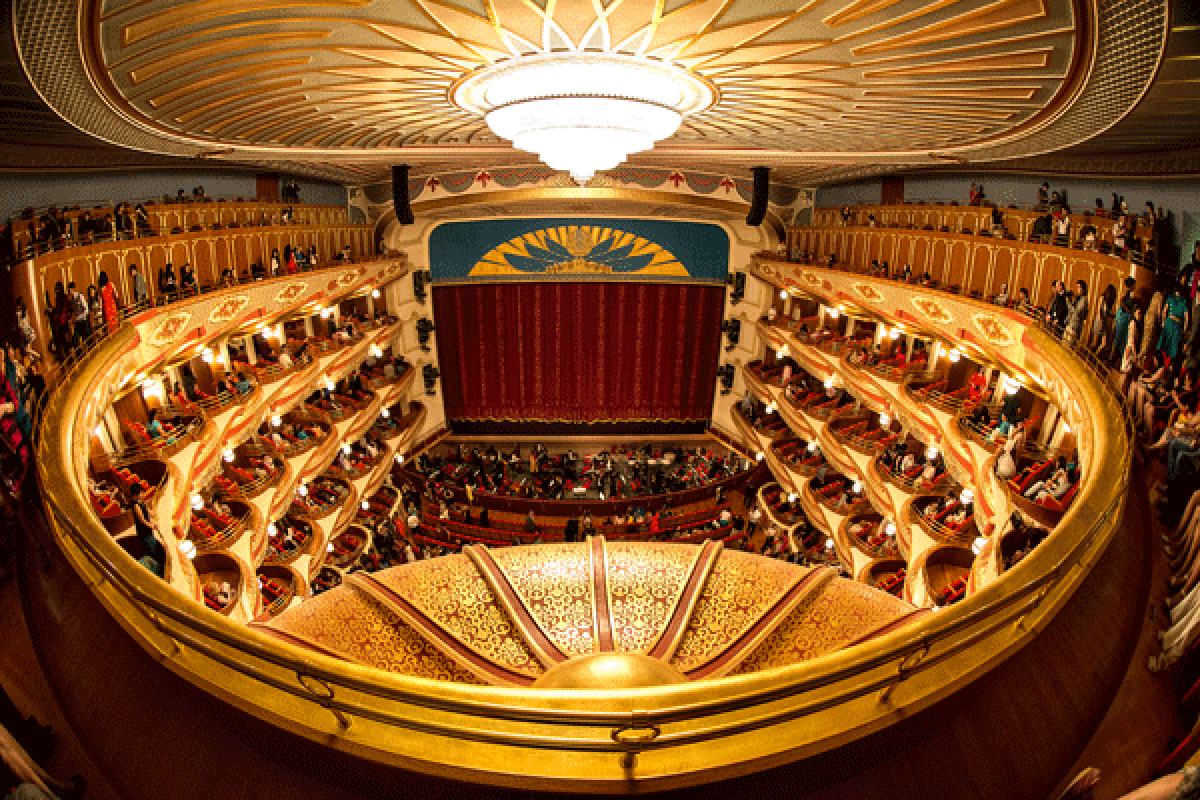
Astana Opera; image: Dilyara Abdirakhmanova

Light is the Language of Architecture and Space

Some of Kazakhstan’s most emblematic public buildings already utilize the optimal use of lighting. The Astana Opera, for example, with its marble staircases and opulent chandeliers, is illuminated to bring out its grandeur and high culture. Its stage is masterfully lit so that musicians are inspired to give their best performances. Likewise, the Palace of Peace and Reconciliation, a crystalline pyramid designed by Foster + Partners, plays with transparency and glow, its stained-glass summit flickering between monument and mirage, giving voice to the need for peace in our time.

Then there’s the Khan Shatyr Entertainment Center — part shopping mall, part climate-controlled urban experiment — which glows at night through its tensile skin – representing a range of civic and family-friendly amenities offering a comfortable and eye-pleasing microclimate for all. And then there’s the Hazrat Sultan Mosque, designed and lit for reverence and reflection. Daylight barrels through high arches; at dusk, soft interior light catches the tracery of Quranic calligraphy, domes, and minarets. The lighting is generous but subtle, quiet, and precise.

In each of these cases, light isn’t an afterthought. It reaches out to the subconscious and makes daily human activity more pleasant.
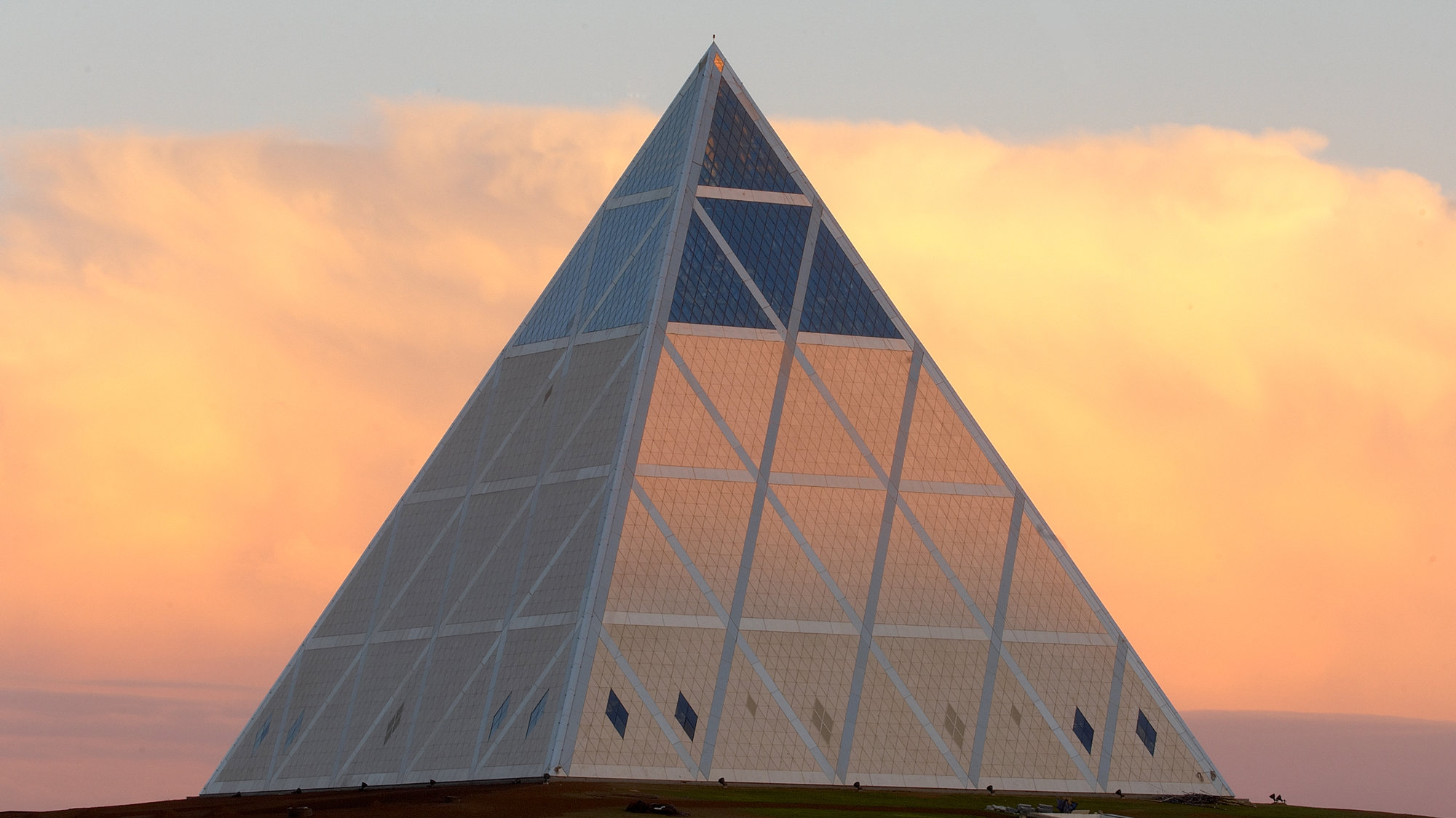
The Palace of Peace and Reconciliation; image: Foster + Partners

A Gap in Everyday Life

Until recently, there has been little discussion in Central Asia about the link between lighting and its impact on the human person. Walking through many apartment buildings, offices, restaurants, and public lobbies, the atmosphere is flat, cold, and covered in uninspiring glare, often overpowering and at times blinding. These spaces may function, but they don’t resonate and are often uninviting. This state of affairs – the depressing nature of fluorescent grids – in the world of lighting is beginning to change, slowly, and unevenly.

This shift towards ‘more welcoming’ lighting isn’t being driven by architects alone, or even by design schools. Demand comes from developers, hoteliers, homeowners, and restaurateurs who want to serve their clients better in an increasingly competitive environment. In this more mobile and inquisitive world, people want lighting that feels and works better for clients, employees, and oneself.

A Market Beginning to Notice

Enter enterprises like iSquare, a recently launched lighting design firm in Almaty. Its operating premise is modest: to help clients think about light earlier and do it with access to European brands and technical guidance that recognizes clients’ physiological and emotional needs. At its launch this summer, iSquare made no sweeping declarations, just a quiet suggestion that Kazakhstan’s conversation about design and the use of space is maturing, i.e., that thoughtful lighting is critical for creating friendly work or living spaces.

Speaking with The Times of Central Asia, co-founder Manish Wahie says that “The demand for refined European design, for brands with heritage and innovation, is growing. But, just as iSquare exists because the market is ready for it – a sign of confidence in the future – many new companies are also breaking into the market.”

Wahie puts it plainly: “The desire for better lighting has always been there; what’s changing is the availability of tools and know-how to meet it. The firm doesn’t represent a revolution, but a recalibration — one of several small signals that people are beginning to value space not only for what it contains, but for how it makes them feel.”
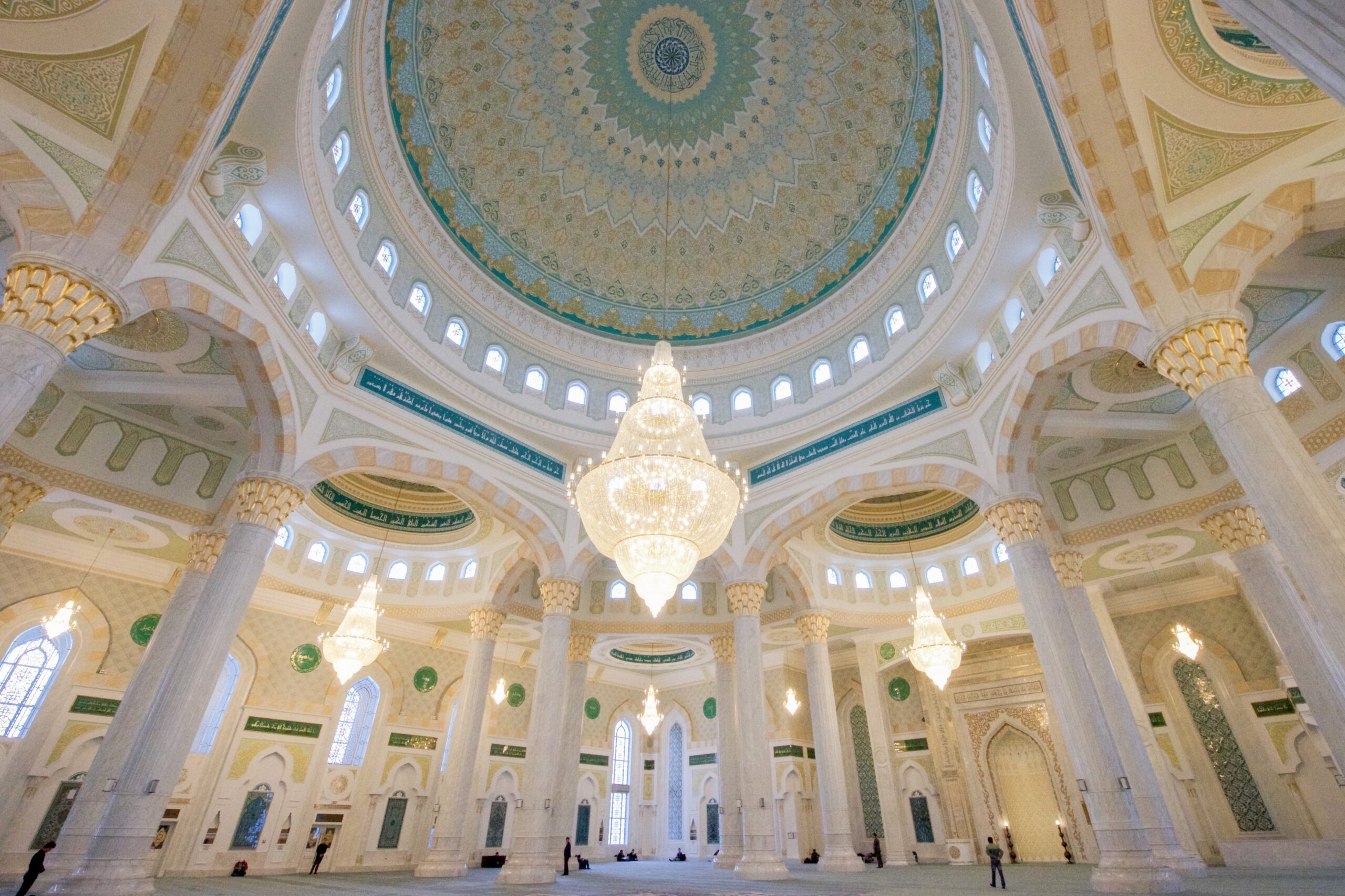
The Hazrat Sultan Mosque; image: U.S. State Department

Light as Mood, Light as Class

Like scent and sound, light operates somewhere between utility, the laws of physics, and emotion. In the post-Soviet context, emotional design has sometimes carried the whiff of indulgence and discordant space. That’s no longer the case. Whereas during the Soviet period, function was often prioritized at the expense of harmony and comfort, today beauty and coherence – the idea of giving birth to objects in order to change the way of living – take precedence over functionality.

To be sure, lighting has increasingly become a marker of social intention and progress. It can signal wealth, but more often it suggests attention, care, and purposeful aspirations. Whether it’s a warm pendant over a dining table or the delicate uplight on a gallery wall, the message is: “someone thought about this.”

This attitude towards one’s work and living space has implications beyond interiors. Kazakhstan’s growing interest in design — and lighting, specifically — isn’t just about taste. It’s about the economy. Countries that invest in their milieu – work-space – are more likely to attract creative talent, tourism, and innovation. The type of lighting that fills a lobby, hotel, or office makes life and living all the more pleasant.

Toward an Independent Atmosphere

It is not only in Astana and Almaty, but across Central Asia, cities are in motion. There are cranes, master plans, bulldozers, and towers going up in Tashkent, Bishkek, and elsewhere. What happens in new buildings, however — how they feel, what they express — is discussed as a strategic proposition.

Design matters. So does light. It’s not just the glow on a wall or the color of a ceiling wash. It’s creativity in motion, a conversation between building and person, between idea and perception.

The cities of Central Asia do not need to become like Milan, Tokyo, or Copenhagen. They can come up with their own vocabulary of materials, shadows, colors, and brightness. What’s important is that people here are beginning to notice the link between lighting, productivity, and quality of life — and to care strategically about their working and living environments.

That might be the clearest sign that things in the region are changing – not in what’s being built, but in how space is seen, how lighting motivates, and how it is personally experienced.


In Tajikistan, Tradition Defines the Ideal Bride in a Changing World

In Tajikistan, the image of the “ideal bride” is shaped not only by character but by deep-rooted societal expectations. While wedding customs vary across Central Asia, they are united by traditional values that place a high premium on modesty, obedience, and domestic skill—qualities that can determine a woman’s future prospects in marriage.

Restraint in All Things

In traditional Tajik households, modesty is synonymous with decency. Future mothers-in-law scrutinise prospective brides for soft-spoken voices, humble body language, and conservative attire. In some homes, daughters-in-law are expected not to make direct eye contact with their parents-in-law—considered a mark of humility.

Clothing is another marker. Revealing outfits like shorts or miniskirts are widely viewed as signs of frivolity and can irreparably damage a girl’s reputation. Respect for elders is paramount. During the matchmaking process, the groom’s family pays close attention to whether a girl rises when elders enter the room, places her hand over her heart in greeting, and avoids using first names.

A “well-raised” kelinka is also expected to manage the home without protest—never challenging her husband or his family, and always deferring to elder relatives. Cooking, especially traditional dishes like pilaf, cleaning, and hospitality are seen as baseline qualifications for marriage.

Chastity as a Social Standard

Virginity remains a critical factor in bride selection. Although the Tajik Ministry of Health does not officially require it, virginity testing remains widespread. A joint statement from the UN and WHO has condemned these tests as “humiliating, traumatic, and medically unnecessary.”

In Tajik culture, premarital sex is widely considered a dishonour to the family. Some households even prohibit young women from grooming practices like eyebrow plucking until marriage, believing these are reserved for wives only.

Age Expectations and Digital Matchmaking

Efforts to arrange marriages can begin as early as a girl’s 18th birthday. In conservative communities, being unmarried by 30 may carry social stigma. However, this does not always preclude education or employment—many families now see value in educated daughters-in-law.

In recent years, digital matchmaking has gained traction. Platforms like Facebook host matchmaking groups where relatives post ads in search of “decent and well-mannered” partners. Girls introducing potential matches often include detailed preferences such as height and eye colour.

While the legal marriage age is 18, Tajik courts can authorise marriage at 17 in “exceptional circumstances.” In reality, these exceptions often stem from emotional or economic hardship—such as orphanhood, poverty, or family pressure.

A Society in Transition?

Despite these enduring customs, signs of change are emerging. Urbanisation, rising education levels, and increased internet access are giving Tajik women new tools to assert choice in their personal lives. NGOs and human rights organisations are pushing for better enforcement of existing protections, and the growing discourse around women’s rights may gradually soften the rigidity of old expectations. While traditions still dominate, a slow cultural shift is underway—one that may eventually reshape what it means to be the “ideal bride” in Tajikistan.


Kazakhstan Plans to Export Up to a Third of Its Fuel Production by 2040

The government of Kazakhstan has approved a long-term development strategy for the oil refining industry for the period 2025-2040, significantly increasing its forecast for petroleum product exports. The new plan triples previous export projections, aiming for exports to account for 30% of total production by 2040.

According to the strategy, key priorities include expanding refining capacity and boosting exports to China, India, and neighboring Central Asian countries.

By comparison, in May 2024, the Ministry of Energy had presented a separate draft strategy looking toward 2050, which proposed limiting fuel exports to 10%, and only in cases where domestic supply exceeded demand.

Refinery Modernization and Capacity Goals

The new strategy builds on recent progress. Following the modernization of Kazakhstan’s three largest refineries, Atyrau, Pavlodar, and Shymkent, total oil processing capacity reached 17 million tons per year. The plan envisions boosting this figure to 39 million tons annually by 2040.

“The refining depth has already reached 89%, and the motor fuel produced now meets Euro-4 standards and higher. These improvements have allowed us to meet 90-95% of domestic demand and created favorable conditions for the export of high value-added products,” the Ministry of Energy stated.

The strategy calls for expanding existing facilities and constructing a new petrochemical complex to raise refining depth to 94%. This will ensure full domestic fuel coverage amid projected annual demand growth of 1.5-2%, driven by urbanization and industrial development.

A major focus will be the advancement of Kazakhstan’s oil and gas chemical industry, including the production of polymers, fertilizers, and other high-value products. Up to $5 billion is expected to be invested in this sector.

“The strategy is designed to attract foreign investment, particularly given the country’s reserves of 30 billion barrels of oil. In the context of the global energy transition, this will position Kazakhstan as a regional leader in hydrocarbon processing and enhance economic resilience to global commodity price fluctuations,” the ministry emphasized.

Implementation is scheduled to begin in 2025 with pilot projects for refinery digitization.

Current Production and Export Landscape

In 2024, Kazakhstan’s refineries produced 13 million tons of petroleum products, 1% more than in 2023, according to national oil and gas company KazMunayGas. This included 4.3 million tons each of gasoline and other fuels, and 4.4 million tons of diesel.

Kazakhstan also imported 1.2 million tons of fuel from Russia. Prior to the reintroduction of export restrictions in 2024, the country exported 13,500 tons of motor fuel. Similar bans were in place in 2021, 2023, and 2024, meaning Kazakhstan’s fuel exports effectively occurred only in 2020 (nearly 120,000 tons) and 2022 (1,800 tons).

As previously reported by The Times of Central Asia, Kazakhstan is planning to invest $15 billion in its oil and gas chemical sector as part of six major projects aimed at strengthening downstream capacity and export potential.

Kazakhstan Deports 10,000 Foreigners Amid Crackdown on Migration Violations

Nearly 10,000 foreign citizens have been deported from Kazakhstan since the beginning of 2025, according to First Deputy Minister of Internal Affairs Baurzhan Alenov. The announcement was made during a recent government meeting addressing migration trends and enforcement measures.

Alenov noted a consistent rise in the number of foreign arrivals to the country. In the first half of 2025 alone, more than 7.5 million people entered Kazakhstan, while 7.2 million departed, a net increase of 600,000 compared to the same period in 2024. Approximately 90% of those arriving are citizens of post-Soviet states.

“It is important to note that 97% of foreign citizens comply with migration laws. However, more than 200,000 individuals have faced administrative penalties,” Alenov stated. “Of these, 46,000 were fined for violating residency rules, and nearly 10,000 have been deported with a five-year ban on re-entry.”

In addition, over 2,000 employers were fined for the illegal employment of foreign workers. Seven criminal cases have been opened against repeat offenders.

Migration Patterns and Permanent Residency

As of mid-2025, approximately 212,000 foreign nationals reside in Kazakhstan on a permanent basis. The largest concentration is in Almaty (42,000), followed by the Almaty region (32,000), and both Astana and the Karaganda region (17,000 each). Over the past three years, the number of permanent foreign residents has risen by 42%.

Kazakhstan also hosts around 430,000 temporary foreign residents. Of these, 360,000 are labor migrants, 17,000 arrived for family reunification, 8,000 for educational purposes, and 44,000 for tourism or private matters.

Government Response and New Initiatives

Prime Minister Olzhas Bektenov emphasized the need for stricter enforcement of migration laws. He highlighted that over 7,000 violations were detected in May alone during nationwide operations.

“Such incidents must be addressed promptly. We need to actively implement digital tools. The introduction of migrant ID cards, issued at border entry points, must be accelerated to improve monitoring and regulation,” Bektenov said.

He instructed the Ministry of Internal Affairs to tighten administrative oversight and called on the Ministry of Labor and Social Protection to enhance regulation of private agencies involved in sending Kazakh citizens abroad for work.

“These agencies currently operate without accountability or oversight. By year’s end, legislative amendments must be proposed to require licensing of such activities. Additionally, I instruct the Ministry of Labor to submit a draft Concept of Migration and Demographic Policy by October 1. This document should align with the Concept of Regional Policy being developed through 2030,” Bektenov concluded.

As previously reported by The Times of Central Asia, the majority of foreign labor migrants in Kazakhstan in 2025 have come from China, Uzbekistan, Turkey, and India, working primarily in the construction sector.

Secret 450-Meter Smuggling Tunnel Uncovered on Kazakhstan-Uzbekistan Border

Kazakhstan’s Financial Monitoring Agency has uncovered a secret underground tunnel used to smuggle petroleum products across the border with Uzbekistan.

The tunnel, discovered in the Turkestan region, extended 450 meters underground. According to the agency, a transnational criminal group operated the tunnel for approximately two months, using it to illegally transport fuel and lubricants. The scheme reportedly involved foreign financing and a carefully organized logistics network to facilitate cross-border smuggling.

The operation to dismantle the network was coordinated by the Prosecutor’s Office of the Turkestan region and the Department of Financial Monitoring, with assistance from Uzbek law enforcement. Authorities have identified all members of the group, including several Uzbek nationals. Five Kazakh citizens have been formally named as suspects. Officials confirmed that the investigation is complete and the case has been referred to court.

This is not the first such case. In December 2024, a similar tunnel was discovered under joint operations between Kazakhstan and Uzbekistan. That tunnel also measured around 450 meters and was used to move an estimated 5 to 7 tons of fuel daily.

In April 2024, Kyrgyz authorities uncovered a separate underground passage in the Jalal-Abad region along the border with Uzbekistan. That tunnel was reportedly used for smuggling both people and goods. According to Kyrgyzstan’s Osh regional police department, officers arrested a woman from Uzbekistan who had illegally entered Kyrgyz territory through the tunnel.

These repeated discoveries highlight the persistence and complexity of smuggling operations across Central Asia’s borders. Authorities in Kazakhstan, Uzbekistan, and Kyrgyzstan have intensified joint efforts to locate and dismantle underground smuggling routes used by organized criminal groups.

Kazakhstan’s Financial Monitoring Agency emphasized that cross-border cooperation will continue in order to prevent similar incidents and strengthen regional border security.

Tajikistan Confirms Deportation of Afghan Refugees

Tajikistan has officially confirmed the deportation of Afghan refugees residing in the country, according to a statement issued by the Press Center of the Border Troops of the State Committee for National Security.

As previously reported by The Times of Central Asia, Tajik authorities launched a large-scale campaign to expel Afghan nationals, giving them just 15 days to leave the country. The move, which has been verified by the United Nations refugee agency (UNHCR), has sparked fear and confusion among thousands of Afghan refugees, including those holding valid residence permits and asylum documents.

Tajik officials justified the decision by citing what they described as a “difficult political and economic situation in the region and worldwide.” The statement emphasized that while many foreign citizens reside legally in Tajikistan for various reasons, some have entered the country illegally or committed serious violations of local laws.

According to the authorities, inspections revealed multiple infractions, including illegal drug trafficking, the promotion of extremist ideologies, submission of false documentation for refugee status, violations of migration rules, possession of citizenship from third countries, and the use of Tajikistan as a transit route.

“As a result, actions are being taken in accordance with national legislation to deport these individuals,” the statement read. “In particular, the deportation of a number of Afghan citizens is linked to these violations.”

In January 2025, UNHCR publicly called on Tajikistan to halt the deportations, following reports that dozens of Afghan refugees were expelled in December 2024. The agency said that at least 80 Afghans were deported, many of whom had valid refugee documentation. UNHCR warned that such actions contravene international law and place individuals at risk.

By the end of 2024, approximately 9,000 Afghan refugees were residing in Tajikistan.