• KGS/USD = 0.01144 0%
  • KZT/USD = 0.00196 -0%
  • TJS/USD = 0.10904 0%
  • UZS/USD = 0.00008 0%
  • TMT/USD = 0.28490 0%
  • KGS/USD = 0.01144 0%
  • KZT/USD = 0.00196 -0%
  • TJS/USD = 0.10904 0%
  • UZS/USD = 0.00008 0%
  • TMT/USD = 0.28490 0%
  • KGS/USD = 0.01144 0%
  • KZT/USD = 0.00196 -0%
  • TJS/USD = 0.10904 0%
  • UZS/USD = 0.00008 0%
  • TMT/USD = 0.28490 0%
  • KGS/USD = 0.01144 0%
  • KZT/USD = 0.00196 -0%
  • TJS/USD = 0.10904 0%
  • UZS/USD = 0.00008 0%
  • TMT/USD = 0.28490 0%
  • KGS/USD = 0.01144 0%
  • KZT/USD = 0.00196 -0%
  • TJS/USD = 0.10904 0%
  • UZS/USD = 0.00008 0%
  • TMT/USD = 0.28490 0%
  • KGS/USD = 0.01144 0%
  • KZT/USD = 0.00196 -0%
  • TJS/USD = 0.10904 0%
  • UZS/USD = 0.00008 0%
  • TMT/USD = 0.28490 0%
  • KGS/USD = 0.01144 0%
  • KZT/USD = 0.00196 -0%
  • TJS/USD = 0.10904 0%
  • UZS/USD = 0.00008 0%
  • TMT/USD = 0.28490 0%
  • KGS/USD = 0.01144 0%
  • KZT/USD = 0.00196 -0%
  • TJS/USD = 0.10904 0%
  • UZS/USD = 0.00008 0%
  • TMT/USD = 0.28490 0%
08 December 2025

Saltanat Law One Year On: Domestic Violence Crackdown, Hidden Barriers Remain

In the spring of 2024, the world’s attention turned to Astana as the trial of former minister Kuandyk Bishimbayev unfolded. Accused of the brutal murder of his common-law wife, Saltanat Nukenova, the proceedings were broadcast live, marking the region’s first live-streamed murder trial, which was widely followed like a reality show. The livestream drew hundreds of thousands across Kazakhstan, with daily clips dissected on TikTok and Telegram channels, a public fixation that turned the courtroom into a national arena

Under intense public pressure, President Kassym-Jomart Tokayev signed a landmark legislative reform popularly dubbed “Saltanat’s Law.” These amendments enhanced protections for women and children. The most consequential change was re-criminalizing battery and intentional infliction of minor bodily harm — offences frequently present in domestic violence cases — which had previously been treated as administrative violations.

Now, over a year later, the emotional urgency has waned, giving way to the realities of implementation. The transition from legislative success to consistent enforcement has revealed systemic resistance from conservative communities and infrastructural gaps.

A Statistical Paradox

The initial police data may appear counterintuitive. Rather than declining, reported cases of domestic abuse surged following the law’s passage. According to the General Prosecutor’s Office and the Institute of Legislation, such offenses increased by 238% within a year, rising from 406 to 1,370 criminal cases by mid-2025. Interior Ministry data shows that more than 70,000 protective orders were issued nationwide in the first nine months of 2025, a surge driven by mandatory registration and proactive police intervention.

Experts caution against interpreting this spike as a rise in violence, however. Instead, it reflects the exposure of previously hidden abuse. From 1 July 2023, police could start administrative domestic-violence cases without a victim’s complaint. The 2024 Saltanat Law then reinforced this proactive approach in the criminal sphere.

The law also removed the option for repeated reconciliation. Previously, over 60% of domestic violence cases collapsed when victims, often under familial pressure, withdrew their statements. Now, cases proceed regardless. As a result, administrative arrests have doubled, supporting the argument long made by human rights activists: it is the inevitability of punishment, not its severity, that disrupts the cycle of abuse.

Uneven Enforcement Across Regions

The law’s effectiveness varies significantly by region. High reporting rates in cities such as Almaty and Astana and in northern industrial regions often reflect improved enforcement rather than increased violence. In these areas, women are more aware of their rights, and law enforcement responds accordingly. In Astana and Almaty, police units trained specifically on domestic violence now conduct routine checks and intervene based on neighbour reports or video evidence, even without a formal complaint.

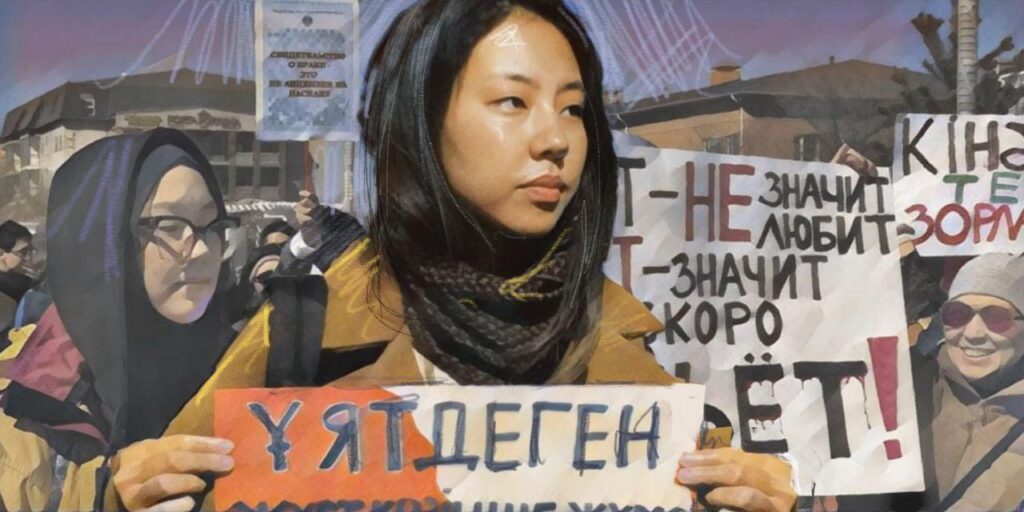
Conversely, in more traditional regions, particularly Turkestan, Zhambyl, and parts of western Kazakhstan, domestic violence often remains underreported. Here, entrenched patriarchal norms and the cultural concept of uyat (shame) discourage women from seeking legal help. Local police and community leaders sometimes view reporting abuse as a family disgrace and pressure women to resolve disputes privately.

In the Turkestan region, activists recount cases in which officers still advise couples to “make peace,” reflecting lingering beliefs that preserving family unity outweighs legal intervention. Human rights advocates describe this as “quiet obstruction”. While the law is uniform nationwide, its application hinges on regional urbanization and secularization levels.

Infrastructure Shortfalls

Another critical weakness lies in the support infrastructure. The law has increased penalties for perpetrators but has not adequately addressed the safety of victims before trial. Kazakhstan operates around 70–75 crisis centres, roughly 60 of which provide shelter beds. Experts and NGOs argue this is still an insufficient number for a population of 20 million. Shelter directors say that many women only seek help after repeated violence, often with children in tow, because they fear economic hardship or social ostracism, pressures that no criminal statute can override. Many shelters are NGO-run and depend on inconsistent grant funding. In rural areas, women often have no alternative but to remain in the same household as their abuser, placing them at further risk.

Cultural Shifts and Political Polarization

The law has also intensified political divisions. Conservative groups, including the Union of Parents of Kazakhstan, have voiced strong opposition, framing the law as a threat to traditional family values and an imposition of Western-style justice. These critics exploit societal fears, suggesting that minor disciplinary actions could result in the removal of children by the state. The government walks a fine line, championing human rights while seeking not to alienate its conservative base.

Yet, despite these challenges, the Saltanat Law marks a cultural turning point. For the first time in the country’s post-Soviet history, domestic violence is no longer a taboo subject. The law alone cannot eradicate abuse overnight, but it has dismantled a longstanding pillar of violence: the expectation of impunity. Officials have pushed back against conservative fears, noting that child-protection services have neither the mandate nor the capacity to “seize” children over minor discipline — a central claim of anti-law activists.

The Road Ahead

The future of this reform hinges not on further legal tweaks, but on long-term societal change. Encouragingly, a generational shift is underway. A growing number of women, especially younger ones, reject the notion of victim-blaming and are less tolerant of domestic violence. National surveys show that the share of women who justify a husband hitting his wife has fallen from 15% in 2015 to just 4% today, a dramatic shift in attitudes within a single decade.

In rural areas, the proportion of women who believe a husband has the right to use force has fallen from 20.6% to 6.8% over the past decade. Among urban women, the figure is just 2.6%. Notably, among women under 30, acceptance of domestic violence is practically non-existent.

While the Saltanat Law is not a panacea, it is a critical first step in breaking the cycle of silence, shame, and abuse. Its success will depend on continued societal transformation, expanded victim support, and the resilience of those pushing for justice.

AIIB Projects Win Awards as Uzbekistan Rises in Regional Infrastructure Finance

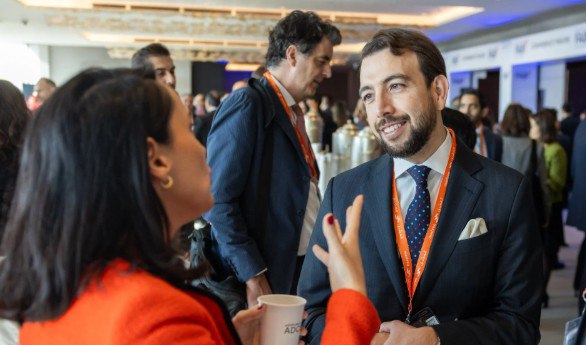
Three projects backed by the Asian Infrastructure Investment Bank (AIIB) were recognized at the Global Banking & Markets (GBM) Awards, Türkiye & Central Asia 2025, held in Istanbul. The accolades highlight AIIB’s expanding role in promoting commercially structured, investment-ready infrastructure projects in the region, a trend that is increasingly relevant for rapidly developing markets such as Uzbekistan.

At the awards ceremony, the Antalya Airport Expansion (Aspendos) received the Transport Finance Deal of the Year award. The Nakkaş-Başakşehir Motorway was named Infrastructure Finance Deal of the Year, and Ronesans Holding’s debut $350 million Eurobond received the Blended Finance Deal of the Year award.

Industry experts note that these projects reflect a broader shift toward blended finance and co-financing mechanisms in Turkey and Central Asia. These approaches are becoming increasingly important for Uzbekistan as it scales up infrastructure development and aligns new projects with international best practices.

Uzbekistan is now one of AIIB’s fastest-growing markets, with investments spanning energy, transport, digital infrastructure, and regional connectivity. The country’s recent rise into AIIB’s top ten borrowers reflects both its need for stable long-term financing and its intent to structure major infrastructure initiatives according to global standards.

Igor Popkov, Senior Investment Officer and Project Team Lead for the Antalya Airport project, said the awarded deals show how complex infrastructure financing is evolving. He noted that Türkiye remains AIIB’s second-largest borrower, with $6 billion in approved projects, while Uzbekistan is “rapidly climbing” the ranks. Development finance institutions, he added, continue to play a crucial role in making large-scale projects bankable and aligned with international norms.

Observers also pointed to the growing use of instruments such as A/B loan structures, guarantees, and long-term project financing in Uzbekistan, where multiple AIIB-supported projects are under preparation or implementation.

The GBM recognition follows the signing of a $500 million financing agreement between AIIB and the Government of Uzbekistan on November 28 to support the country’s Green and Resilient Market Economy Program. The initiative aims to help Uzbekistan transition to a more sustainable and climate-resilient economic model.

Journal Retracts Climate Study After Discovering Errors in Uzbekistan’s Economic Data

The scientific journal Nature has retracted a high-profile article on the economic impacts of climate change after significant inaccuracies were discovered in economic data related to Uzbekistan. The study, originally published online on April 17, 2024, examined how rising global temperatures could affect economic output by mid-century.

According to the retraction notice, the dataset contained serious errors in Uzbekistan’s economic indicators from 1995 to 1999, which substantially altered the study’s findings.

The authors acknowledged that the results were highly sensitive to the inclusion of Uzbekistan. Upon review, they found the country’s reported economic figures during that period were inaccurate. They also noted additional complications, including inconsistencies caused by transitions between data sources, and the failure to fully account for long-term economic trends.

Another methodological issue, spatial auto-correlation, which affects uncertainty estimates, had not been incorporated into the original analysis. Once the authors corrected the dataset and adjusted their methodology, the study’s conclusions changed significantly.

Specifically, the projected range of climate-related economic damages by 2050 shifted from 11-29% to a broader 6-31%. The statistical likelihood that damages would differ significantly under various emissions scenarios by mid-century also fell, from 99% to 90%. Due to the scale of these changes, the authors concluded that a simple correction was insufficient and opted for a full retraction.

A revised version of the study, updated with corrected data and improved methodology, has been made publicly available but has not yet undergone peer review. The authors plan to resubmit the article, and Nature has stated it will update the retraction notice if the revised version is accepted for publication.

The researchers thanked the members of the scientific community who identified the discrepancies, and emphasized the importance of transparent corrections in climate science.

EBRD and EU Allocate €43 Million to Modernize Tajikistan’s Power Grid

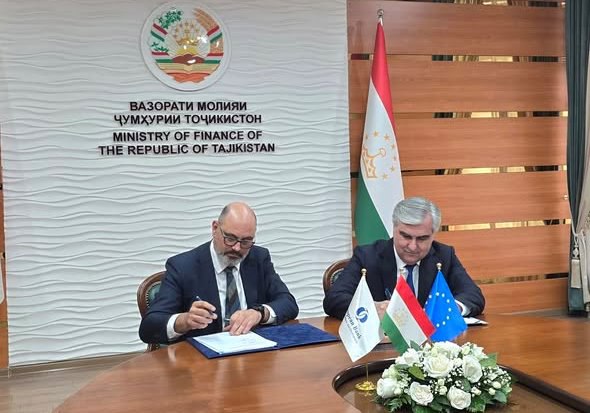
The European Bank for Reconstruction and Development (EBRD) and the European Union have announced a joint initiative to enhance the reliability and transparency of Tajikistan’s electricity distribution system.

Under the agreement, a €43 million financing package will support the state-owned electricity distributor Shabakahoi Taqsimoti Barq (STB). The funding aims to reduce technical losses and improve efficiency by upgrading essential infrastructure.

The “Energy Loss Reduction” project was officially signed on December 4 at Tajikistan’s Ministry of Finance. The agreement was endorsed by Minister of Finance Faiziddin Kahhorzoda and the EBRD’s permanent representative in Tajikistan, Holger Wiefel.

The project is backed by €28 million in sovereign loans from the EBRD and €15 million in EU grants via the Asia-Pacific Investment Fund.

Funds will be directed toward upgrading billing systems and installing new electricity metering equipment in nine cities across the Sughd and Khatlon regions. These areas are among the most affected by outdated infrastructure, which contributes to technical power losses, inaccurate metering, and the reduced financial viability of STB.

The modernization program includes digitizing STB’s core operations and implementing cybersecurity measures to safeguard the national power grid. Technical assistance from both the EU and EBRD will support the rollout of these reforms.

A key component of the initiative is human capital development. Specialized training programs on sustainable technologies and modern energy sector skills will be offered, with a focus on youth and women. This is intended to enhance the qualifications of local professionals and strengthen the regional labor market.

The EBRD remains one of Tajikistan’s most significant international investors. To date, the bank has invested more than €1 billion across 188 projects in various sectors. The new energy initiative reflects the continued strategic role of international partners in supporting the modernization of Tajikistan’s critical infrastructure.

Kazakhstan-China Agricultural Research Center to Open in Key Grain-Producing Region

A Kazakhstan-China Agricultural Research Center will be established in the North Kazakhstan region, one of the country’s top three grain-producing areas. The initiative was announced by region’s governor Gauez Nurmukhambetov following a business delegation’s visit to China.

“Last week, a business delegation from our region visited the People’s Republic of China and held meetings with leading Chinese investors. As a result, seven strategic memoranda were signed, opening new economic opportunities for our region. These agreements include the construction of new factories and the creation of a Kazakh-Chinese agricultural research center,” Nurmukhambetov said at a press conference.

The region continues to post record harvests. In 2025 it harvested 6.5 million tons of grain, nearly a quarter of Kazakhstan’s total gross harvest of 27.1 million tons.

Nevertheless, the region is actively diversifying its agricultural profile. Sugar beet cultivation is expanding, with experimental plots from Asyl Farms showing strong crop adaptation. Based on this success, plans are underway to build a processing facility capable of handling 1 million tons of raw material annually, producing up to 200,000 tons of sugar.

In the Kyzylzhar district, Salar Farm is building a plant for processing granulated alfalfa with an annual capacity of 60,000 tons. The main export markets include China and other Central Asian countries. The facility is scheduled to open in 2026. The region is also home to Maslo-Del, an oil extraction plant with an annual processing capacity of 370,000 tons of oilseeds and a production output of 120,000 tons, much of which is exported.

Alongside its growth in crop production, the region is making notable progress in livestock farming.

“SK Agro will construct the largest cattle farm in Central Asia, with a herd of 10,000 and a state-of-the-art Carousel milking system,” said Nurmukhambetov. “The farm is expected to increase milk production by 68 million tons annually. This will raise the share of milk produced by agricultural enterprises in Kazakhstan to 70%.”

He noted that in Belarus, modern farms account for 77% of milk production, in China around 70%, and in European countries more than 93%. North Kazakhstan region aims to boost its share of the country’s total milk output to 20%.

Meanwhile, 17 projects valued at $555.6 million are underway in the Qyzyljar special economic zone.

Agricultural cooperation with China continues to grow. Kazakhstan views China as a key export destination for its processed agricultural products. In November, QazTrade signed a partnership agreement with Optimize Integration Group, one of China’s largest food importers, responsible for 18% of the country’s frozen meat imports.

In a related development, a joint Kazakh-Chinese veterinary laboratory was opened in East Kazakhstan region in October 2025. The facility is designed to streamline and accelerate export procedures for agricultural goods.

Central Asian Countries Agree on 2026 Water Allocations from Amu Darya and Syr Darya

Central Asian states have reached an agreement on water allocations from the Amu Darya and Syr Darya rivers for 2026. The decision was made during the 91st meeting of the Interstate Coordination Water Management Commission (ICWC), held in Ashgabat on November 13, 2025, according to Kun.uz.

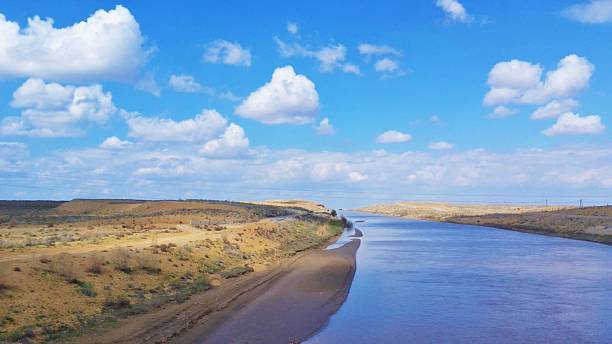
At the meeting, the countries agreed on how water resources will be managed during the 2025–2026 non-growing season, the period when agricultural demand is low. For the Amu Darya, the total allocation from October 2025 to October 2026 is set at approximately 55.4 billion cubic meters, with 15.9 billion cubic meters designated for the cold months from October through April. Under the agreement, Tajikistan will receive 9.8 billion cubic meters, while Turkmenistan and Uzbekistan will each receive 22 billion.

A key provision is that roughly 44 billion cubic meters of the Amu Darya’s flow must reach the Kerki hydrological station in Turkmenistan to sustain downstream areas. Additionally, 4.2 billion cubic meters is allocated to support the Aral Sea and the Amu Darya delta, with half to be delivered in winter and early spring. Another 800 million cubic meters will be used for irrigation in Dashoguz, Khorezm, and Karakalpakstan. These allocations are crucial for both communities living in water-scarce regions and for preserving fragile river ecosystems.

For the Syr Darya, the total allocation for the non-growing season is 4.219 billion cubic meters. Of this, Uzbekistan will receive the majority share, 3.347 billion cubic meters. Kazakhstan will receive 460 million cubic meters through the “Dustlik” canal, Tajikistan 365 million, and Kyrgyzstan 47 million. These figures are based on projected river inflows, reservoir capacities, and the need to maintain ecological flows.

The ICWC also approved operational plans for key reservoirs. In Tajikistan, the Nurek Reservoir is expected to enter the non-growing season with 10.5 billion cubic meters and decline to around 9.7 billion by spring. The Tuyamuyun reservoir, located on the Uzbekistan–Turkmenistan border, will start with 4.5 billion cubic meters and reduce to 3.4 billion. Both will gradually release water to support irrigation and sustain the Amu Darya’s flow.

In the Syr Darya basin, total water volume in the Toktogul, Andijan, and Charvak reservoirs at the beginning of the season is approximately 10.6 billion cubic meters, slightly below average. Tajikistan’s Bahri Tojik reservoir is expected to contain 2.6 billion cubic meters, while Kazakhstan’s Chardara reservoir will hold about 1.65 billion. Collectively, the Syr Darya basin will have around 14.9 billion cubic meters of water at the start of winter, roughly 90% of the long-term seasonal average.

The 92nd ICWC meeting is scheduled to take place in Dushanbe, where officials will assess reservoir performance and water usage during the 2025-2026 season. The agenda will also include strategies to strengthen regional water security in the face of escalating climate pressures.