• KGS/USD = 0.01144 0%
  • KZT/USD = 0.00211 0%
  • TJS/USD = 0.10460 0.19%
  • UZS/USD = 0.00008 0%
  • TMT/USD = 0.28490 0%
  • KGS/USD = 0.01144 0%
  • KZT/USD = 0.00211 0%
  • TJS/USD = 0.10460 0.19%
  • UZS/USD = 0.00008 0%
  • TMT/USD = 0.28490 0%
  • KGS/USD = 0.01144 0%
  • KZT/USD = 0.00211 0%
  • TJS/USD = 0.10460 0.19%
  • UZS/USD = 0.00008 0%
  • TMT/USD = 0.28490 0%
  • KGS/USD = 0.01144 0%
  • KZT/USD = 0.00211 0%
  • TJS/USD = 0.10460 0.19%
  • UZS/USD = 0.00008 0%
  • TMT/USD = 0.28490 0%
  • KGS/USD = 0.01144 0%
  • KZT/USD = 0.00211 0%
  • TJS/USD = 0.10460 0.19%
  • UZS/USD = 0.00008 0%
  • TMT/USD = 0.28490 0%
  • KGS/USD = 0.01144 0%
  • KZT/USD = 0.00211 0%
  • TJS/USD = 0.10460 0.19%
  • UZS/USD = 0.00008 0%
  • TMT/USD = 0.28490 0%
  • KGS/USD = 0.01144 0%
  • KZT/USD = 0.00211 0%
  • TJS/USD = 0.10460 0.19%
  • UZS/USD = 0.00008 0%
  • TMT/USD = 0.28490 0%
  • KGS/USD = 0.01144 0%
  • KZT/USD = 0.00211 0%
  • TJS/USD = 0.10460 0.19%
  • UZS/USD = 0.00008 0%
  • TMT/USD = 0.28490 0%

Kazakhstan and Germany Extend Business Partnership Program Through 2028

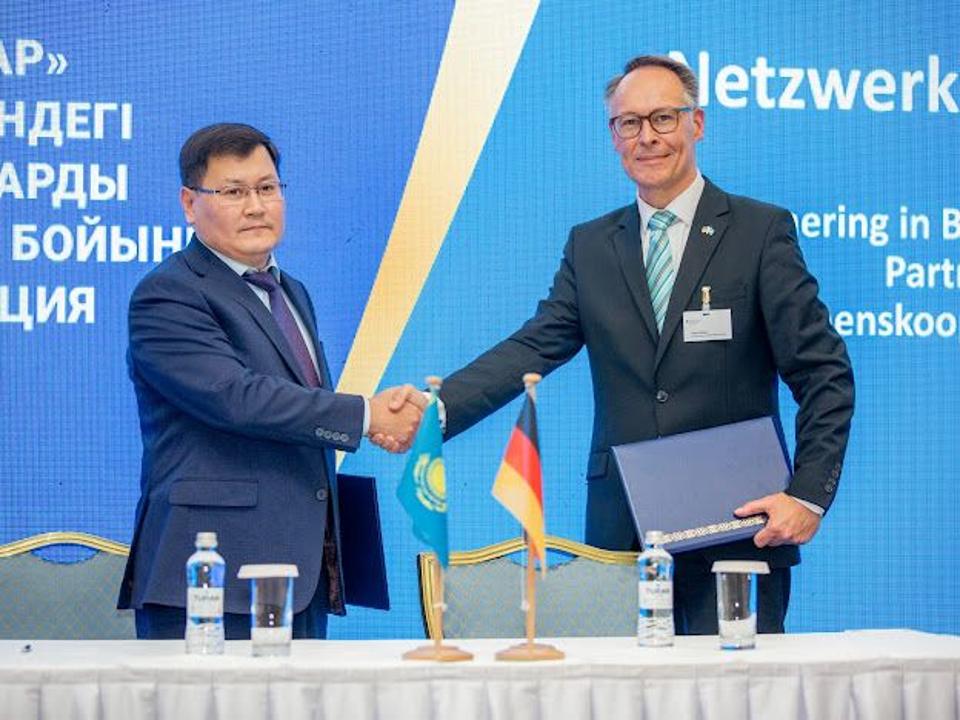
Kazakhstan and Germany have signed an agreement to extend their long-running “Partnering in Business with Germany” program until 2028, reinforcing bilateral economic cooperation with a particular focus on small and medium-sized enterprises (SMEs).

Jointly implemented by Kazakhstan’s Ministry of National Economy and Germany’s Federal Ministry for Economic Affairs and Energy, the program has been in operation for 15 years. More than 800 Kazakhstani entrepreneurs have participated, gaining hands-on training in Germany, learning best business practices, modernizing their operations, and securing contracts, licenses, and franchise agreements. In 2025, the German side will continue to fully cover costs for participants, including training, insurance, and accommodation.

Deputy Minister of National Economy Yerlan Sagnayev emphasized that the program not only fosters professional development among Kazakhstani entrepreneurs but also contributes to deepening long-term economic ties between the two nations.

Germany is Kazakhstan’s largest trading partner within the European Union. At the 16th Kazakhstan-German Business Council meeting held in Astana in May, it was revealed that Kazakhstan ranked 43rd among Germany’s global trade partners in 2024 and accounted for 83% of Germany’s trade volume with Central Asia.

Energy remains a central pillar of bilateral cooperation. Kazakhstan began exporting crude oil to Germany via the Druzhba pipeline in 2023, with volumes expected to rise to 1.5 million tons in 2025, up from 993,000 tons in 2023.

Kyrgyz Authorities Introduce Incentives for Businesses to Avoid Inspections

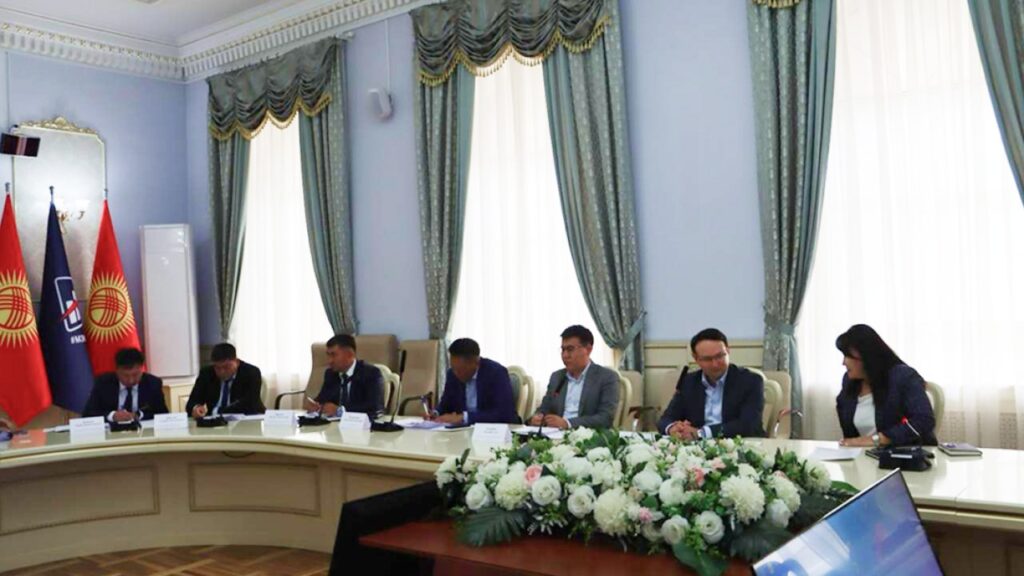
The Ministry of Economy and Commerce of Kyrgyzstan has announced that companies included in the newly created Register of Conscientious Entrepreneurs will receive a range of state-backed privileges, including financial incentives and regulatory relief.

“The Register of Conscientious Entrepreneurs is an official list of companies and businesspeople recognized by the state as reliable, honest, and socially responsible. In other words, it is a kind of ‘white list’ of businesses operating transparently and lawfully,” the ministry stated.

Officials explained that the register is designed to support ethical entrepreneurship, strengthen reputations, and increase trust from clients, partners, and the state. Inclusion is expected to encourage lawful conduct and promote contributions to Kyrgyzstan’s economic development.

Businesses listed in the register will be eligible for several benefits, including free advertising airtime on state television channels, priority service at tax authorities, and free participation in international exhibitions and trade fairs. Notably, they will also be exempt from inspections by supervisory bodies for a period of three years, except for certain audits conducted by the State Tax Service.

Additional incentives include access to preferential financing through state-backed lending programs, the right to display a government-issued quality mark, and official confirmation of reliability.

To qualify for the register, businesses must meet several criteria:

  • Operate for at least three years;
  • Pay taxes and insurance contributions fully and on time;
  • Have no debts to the state;
  • Provide decent wages to employees (no lower than the sector average);
  • Demonstrate annual growth of at least 5% in taxes and budget contributions;
  • Comply with labor rights regulations;
  • Have no convictions for economic crimes.

An interdepartmental commission met earlier this week to evaluate applications. Of the 48 businesses that applied, only a few were denied entry into the register.

Kyrgyz-Chinese Trade and Economic Cooperation Center Opens in Chongqing

A new Kyrgyz-Chinese Trade and Economic Cooperation Center has officially opened in Chongqing, one of southwest China’s largest industrial and transportation hubs.

According to Kyrgyzstan’s Ministry of Economy and Commerce, the 300-square-meter facility will serve as a platform for bilateral business cooperation. Kyrgyz entrepreneurs will be able to register their companies and conduct business activities in China free of charge.

Also on September 26, Chongqing hosted the opening of Kyrgyzstan’s Trade Pavilion, which will showcase and sell national products such as honey, alcoholic beverages, confectionery, and handicrafts.

China remains one of Kyrgyzstan’s most important trade partners, with an increasing share of transactions now carried out in Chinese yuan. Earlier this year, Kyrgyzstan’s state-owned Eldik Bank became the first bank in Central Asia to join China’s Cross-Border Interbank Payment System (CIPS). The system enables direct and instant settlements in yuan with Chinese partners and other participants, bypassing intermediaries and reducing transaction costs. Eldik Bank officials said the move would expand business opportunities and deepen bilateral economic ties.

Trade between Kyrgyzstan and China surged by 44.7% in 2024, reaching $5.3 billion, according to Kyrgyz government statistics. Exports from Kyrgyzstan to China grew dramatically to $2.04 billion, 93 times higher than in 2023. China also remained Kyrgyzstan’s largest foreign investor, accounting for 23.9% of total foreign direct investment (FDI) in 2024, valued at $872.6 million.

Uzbekistan Airways Plane in Near Miss with Business Jet Over Moscow

An Uzbekistan Airways passenger jet and a private business aircraft came dangerously close to colliding in Russian airspace near Serpukhov, south of Moscow, due to a radio miscommunication, according to reports from the Telegram channel Aviatorshina.

The incident occurred shortly after midnight on September 29, as both planes were descending toward Moscow’s Vnukovo Airport. The aircraft involved were an Embraer Legacy 650 business jet flying from Bodrum (registration RA-02753) and an Uzbekistan Airways Airbus A320 inbound from Samarkand (registration UK-32018).

According to Aviatorshina, the Embraer was cruising at 9,000 feet when air traffic controllers instructed the Airbus to descend to 10,000 feet. However, the A320 crew mistakenly read back the clearance as 9,000 feet and the error went unnoticed by both of the controllers on duty, despite overseeing only six aircraft at the time.

As a result, the Uzbekistan Airways jet descended below its assigned altitude, breaching minimum separation standards. The two aircraft reportedly passed each other with a horizontal gap of about three kilometers, less than the required five and a vertical distance of only 700 feet instead of the mandated 1,000 feet.

Although the ground-based conflict alert system was triggered, there were no reports that the onboard Traffic Collision Avoidance System (TCAS) was activated. Both aircraft landed safely without further incident.

Russia’s Federal Air Transport Agency (Rosaviatsiya) has classified the occurrence as an aviation incident and launched an investigation. The event marks the eighth reported safety-related incident in Moscow’s airspace this year, with two occurring in the past week alone, including another near-collision at Sheremetyevo Airport.

In response, the State Corporation for Air Traffic Management (GK ORVD) has demoted the entire management team of the Moscow Air Traffic Control Center for the month of September. Officials have warned that continued lapses in safety performance could lead to a complete overhaul of the branch’s leadership.

Mirziyoyev Secures Spotlight During U.S. Visit

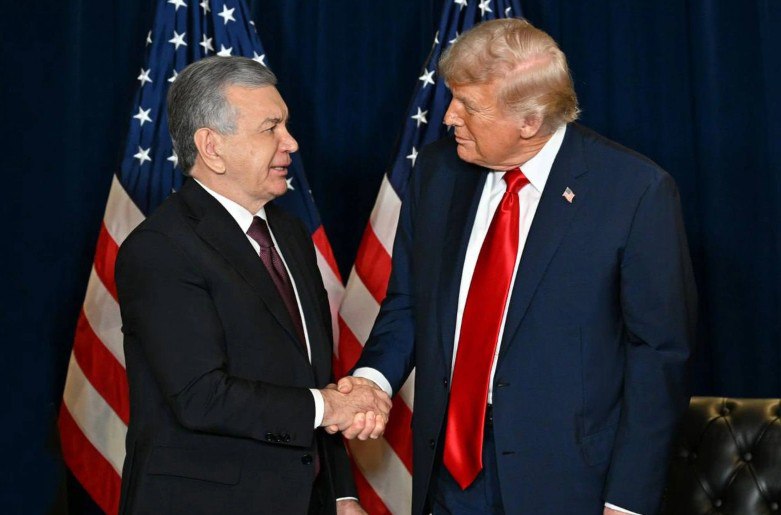
In a significant diplomatic breakthrough, Uzbekistan emerged as a standout player during this year’s United Nations General Assembly events in New York. President Shavkat Mirziyoyev not only secured a high-profile meeting with U.S. President Donald Trump, but also signed a landmark $8 billion deal with Boeing to purchase Dreamliner jets, a move that drew praise from Trump and captured the attention of the international business community.

Trump publicly endorsed the agreement on social media, calling Mirziyoyev “a man of his word” and noting the deal would create “over 35,000 jobs” in the United States.

Mirziyoyev’s visit included a high-level investment roundtable with executives from leading U.S. corporations and financial institutions. According to Forbes, trade between the two countries has quadrupled under Mirziyoyev’s leadership, with more than 300 American companies now active in Uzbekistan. Strategic sectors such as rare-earth metals and critical minerals took center stage during the discussions. Among the key meetings was one with the vice president of the Colorado School of Mines, who expressed support for establishing a research center in Uzbekistan.

Other topics included joint initiatives in banking, information technology, transportation, and energy infrastructure. The scale of the Boeing deal served as a symbolic anchor to broader efforts: positioning Uzbekistan as a key connector between Central Asia and the Western economy.

This aligns with a larger strategic pivot that analysts have long advocated. As U.S. engagement in Central Asia expands, countries like Uzbekistan are increasingly looking to diversify away from dependence on Russia and China.

Forbes noted that the Trump administration is building on foundations laid by its predecessor by promoting regional initiatives such as the Zangezur Corridor, referred to as the “Trump Corridor”, aimed at linking Central Asia to global markets without passing through Russian territory.

Mirziyoyev’s face-to-face meeting with Trump, followed by the public endorsement, also plays into shifting domestic narratives. It signals growing diplomatic credibility and a willingness to operate as an equal on the global stage. The convergence of political recognition and commercial investment may mark a turning point in Uzbekistan’s foreign policy, not just as a recipient of aid, but as a proactive economic actor.

With the Boeing order and growing support from U.S. business leaders, Uzbekistan is staking its future on deepening ties with the West. Coupled with ongoing domestic reforms, the country is making a strategic bet that modernization and diversified partnerships will yield long-term dividends.

Kazakhstanis Face Drug Shortages and Soaring Prices

Kazakhstanis are paying significantly more for medicines than residents of many other countries, and often struggle to find essential drugs at all. According to the Agency for Protection and Development of Competition (APDC), rising prices, supply disruptions, and an inefficient procurement system are driving a worsening healthcare crisis.

Price Hikes

Kazakhstan’s medicine procurement system is complex. In principle, essential drugs should be available to patients free of charge under the guaranteed volume of medical care and mandatory social health insurance. In practice, many face shortages or receive lower-quality substitutes. As a result, patients are often forced to buy medicines themselves, an increasingly unaffordable burden.

According to the APDC, inflated prices are caused by several factors. One is the lack of pricing transparency. Previously, drug prices were pegged to the highest prices in reference countries, figures submitted by suppliers without verification. As a result, generics sometimes cost nearly as much as original-brand drugs.

Another issue is procurement through intermediaries. Up to 45% of state-purchased medicines are bought not from manufacturers but from local distributors, who add their own markups.

Costs are also inflated by expensive inspections. To enter the market, companies must pay for production inspections, fees set independently by a state agency that can reach millions of tenge. These costs are passed on to consumers.

To address these problems, the APDC has recommended switching to average reference-country prices, limiting inspections on products from countries with stringent regulations, and transferring inspection services to a state monopoly with controlled rates. It also urges more direct procurement from manufacturers and better verification of supplier costs.

Tax Reforms Threaten Further Price Increases

Despite already high prices, medicines will soon be subject to new taxes. Under Kazakhstan’s revised Tax Code, beginning in 2026, medical services and the sale of medicines and medical products will be subject to value-added tax (VAT), initially at 5%, rising to 10% from January 1, 2027.

An exception will apply to medicines and services provided under the guaranteed medical care package and mandatory health insurance. However, as noted earlier, many patients struggle to access these programs in practice.

Pharmaceutical companies warn that these VAT changes will drive prices even higher and lead to fresh shortages. Industry leaders also point to the planned 16% VAT on pharmaceutical raw materials, equipment, and components, calling it a distortion of tax policy and a threat to the sector’s stability.

“The market is on the edge. Many drugs are already unprofitable and are being withdrawn. The introduction of VAT will accelerate the outflow. The number of registered medicines in Kazakhstan has already dropped from 12,000 to 6,900,” said Marina Durmanova, President of the Association for the Support and Development of Pharmaceutical Activity. “If no measures are taken, the country could face shortages of key drugs and further monopolization of the pharmacy sector,” she warned.

Kazakhstan produces few essential medicines domestically, meaning prices continue to rise month by month.

When Medicines Vanish, So Do Lives

Price increases are only part of the crisis. Vital medicines frequently disappear from the shelves entirely, including those guaranteed under state programs.

Kazakhstan imports around 14% of its medicines from Russia and about 15% from Germany. Since the start of the war in Ukraine, supply chains have been disrupted, leading to widespread shortages of insulin, Diprosalic, and essential cancer and epilepsy medications. The private sector, which handles roughly 70% of drug supplies, has been hit by high purchase prices, delayed imports, and limited stock.

In September, cancer patients in Almaty reported the disappearance of Tagrisso, a life-saving drug previously provided under a state benefits program. The Public Health Department attributed its absence to budget cuts. With a price tag of over 2 million tenge (more than $3,600), the drug remains far out of reach for most.

Following complaints, state distributor SK-Pharmacy said the drug would arrive in October, blaming the delay on documentation errors.

SK-Pharmacy has long faced criticism. In July 2025, the Prosecutor General’s Office launched a pre-trial investigation into the company over large-scale financial violations. A Supreme Audit Chamber report estimated the budgetary damage from medicine procurement at 35.8 billion tenge (over $63 million).

These failings have serious consequences. Delays in medicine delivery cost lives. Healthcare reform may no longer be optional, but an urgent priority for Kazakhstan’s government.