• KGS/USD = 0.01144 0%
  • KZT/USD = 0.00213 0%
  • TJS/USD = 0.10456 0.19%
  • UZS/USD = 0.00008 0%
  • TMT/USD = 0.28490 0%
  • KGS/USD = 0.01144 0%
  • KZT/USD = 0.00213 0%
  • TJS/USD = 0.10456 0.19%
  • UZS/USD = 0.00008 0%
  • TMT/USD = 0.28490 0%
  • KGS/USD = 0.01144 0%
  • KZT/USD = 0.00213 0%
  • TJS/USD = 0.10456 0.19%
  • UZS/USD = 0.00008 0%
  • TMT/USD = 0.28490 0%
  • KGS/USD = 0.01144 0%
  • KZT/USD = 0.00213 0%
  • TJS/USD = 0.10456 0.19%
  • UZS/USD = 0.00008 0%
  • TMT/USD = 0.28490 0%
  • KGS/USD = 0.01144 0%
  • KZT/USD = 0.00213 0%
  • TJS/USD = 0.10456 0.19%
  • UZS/USD = 0.00008 0%
  • TMT/USD = 0.28490 0%
  • KGS/USD = 0.01144 0%
  • KZT/USD = 0.00213 0%
  • TJS/USD = 0.10456 0.19%
  • UZS/USD = 0.00008 0%
  • TMT/USD = 0.28490 0%
  • KGS/USD = 0.01144 0%
  • KZT/USD = 0.00213 0%
  • TJS/USD = 0.10456 0.19%
  • UZS/USD = 0.00008 0%
  • TMT/USD = 0.28490 0%
  • KGS/USD = 0.01144 0%
  • KZT/USD = 0.00213 0%
  • TJS/USD = 0.10456 0.19%
  • UZS/USD = 0.00008 0%
  • TMT/USD = 0.28490 0%

Tokayev Sides with Trump in Criticism of UN After Escalator, Teleprompter, and Audio Failures
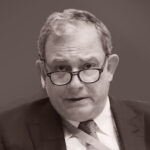
As reported by ULYS Media, Kazakhstan’s President Kassym-Jomart Tokayev publicly aligned with President Trump’s criticism of the United Nations after the poorly managed 80th-anniversary UNGA session. Tokayev, who was present in the hall during Trump’s speech when the failures occurred, lent particular weight to his comments given his long-standing institutional knowledge of the UN, having served as Director-General of the United Nations Office at Geneva (2011–2013) and representing Kazakhstan in various UN forums over his three decades of diplomatic service.

During his address to the General Assembly, President Trump recounted a series of technical incidents: an escalator carrying him and First Lady Melania stalled abruptly, nearly causing a fall; his teleprompter failed at the start of his speech, forcing him to improvise—a skill for which he is well known; and the sound system cut out, leaving much of the audience unable to hear him without interpreter earpieces. He condemned the breakdowns as symbolic of broader UN dysfunction, calling them “a REAL DISGRACE” and alleging “triple sabotage.” Trump urged a Secret Service investigation and preservation of security footage.

As reported in ULYS Media, Tokayev said: “I consider the incident that occurred at the UN exceptionally dangerous, an event that could have harmed the health of the President and his spouse. The decision to investigate has already been made and is correct.” He went on: “On the other hand, this is the most serious failure, one might even say a collapse, of the UN Secretariat, all employees of the relevant services and departments. To allow such a blunder during the anniversary session of the UN General Assembly is beyond negligence, unless, of course, it is a deliberate sabotage, which is also quite possible given the negative and even depressive sentiments among UN staff.”

Tokayev sharpened his critique further, describing the United Nations as suffering a “serious decline” in political effectiveness and managerial competence. He highlighted weakened public trust in the organization’s leadership, an ever more paralyzed Security Council incapable of addressing pressing issues, and an internal culture marked by indifference, fatigue, and low morale—even within the higher decision-making bodies.

Tokayev and Trump converge in their sharp criticism of the United Nations, pointing to mismanagement within the Secretariat, the erosion of credibility among its leaders, and the paralysis of the Security Council. Tokayev has even echoed Trump’s remarks approvingly, recognizing their shared view that the organization has drifted into inefficiency and neglect. At the same time, he underscores the urgency of bold reforms to restore the UN’s effectiveness and authority, reinforcing the common ground both leaders have staked out in calling for change.

Trump would have welcomed Tokayev’s additional words: “Several of my colleagues have expressed to me an accurate opinion: even the material condition of the UN’s main building [in New York], the common home of humanity, is in a state of decline. And it is hard to argue with President Trump here; he openly spoke about the mismanagement and indifference of the leaders of this global organization.”

Tokayev concluded by reiterating his call for sweeping change: “All this once again argues in favor of a total reform of the UN, which I mentioned in my speech on the first day of the general debates. The time of endless, abstract discussions is over; bold, smart reforms aimed at increasing the efficiency, reputation, and authority of the UN are needed.”

The UN was built to help nations find common ground—but at its 80th-anniversary session, the common ground between Donald Trump and Kassym-Jomart Tokayev turned out to be shared frustration with the organization itself. Trump blasted the technical glitches as proof of mismanagement, while Tokayev, speaking as a UN insider, called out deeper problems of low morale and weak leadership. Coming from two very different leaders, their agreement was blunt: the UN is struggling, and without serious reform, it risks losing the credibility it was created to uphold.


High Praise, Empty Pockets: Turkmenistan May Scrap Benefit Hikes

It seems that average Turkmen citizens will again have to find ways to ration their spending in 2026, and beyond, thanks to a proposal from a member of the country’s Council of Elders.

At a session of the Halk Maslahaty (People’s Council) on September 19, Elders’ Council member Yazmyrat Atamyradov, who, in fairness, probably drew the short straw before the session started, said that socio-economic conditions in Turkmenistan have reached such a high level that there is no longer a need for cost-of-living increases for salaries, pensions, stipends, and other benefits.

“You are bestowing such blessings upon our people, Hero Arkadag!” Atamyradov said in his address. “Our sons and daughters, grandchildren, and great-grandchildren go to school and work without a care in the world. A peaceful, carefree life itself is a priceless treasure and a great asset.”

Most of Turkmenistan’s people likely would not agree with Atamyradov’s suggestion, but his words were meant for only one person, Halk Maslahaty Chairman Gurbanguly Berdimuhamedov, who was in attendance and thanked Atamyradov for the recommendation.

Most of the effusive praise for Turkmenistan’s alleged astounding socio-economic achievements was also directed at Berdimuhamedov, who served as Turkmenistan’s president from late 2006 until March 2022, when he stepped down and his son Serdar took the helm. Changes to Turkmenistan’s constitution in early 2023 made the Halk Maslahaty chairman the highest post in the country.

A Deteriorating Economy

There is no basis for Atamyratov’s assertion that living conditions are improving in Turkmenistan. The suggestion to cut annual payment increases more likely means the authorities can no longer afford to continue funding cost-of-living increases.

Turkmenistan has the fourth largest reserves of natural gas in the world, and in the early years after independence, in late 1991, then-President Saparmurat Niyazov forecast the country would soon become a second Kuwait and everyone would be driving Mercedes.

It has not worked out like that at all.

Turkmenistan has a lot of gas, but only a few customers. The steep drop in gas prices in 2015 devastated Turkmenistan’s economy, which is about 80% dependent on revenue from gas sales, and has never recovered.

The first food shortages independent Turkmenistan had ever seen started in 2016. Flour, cooking oil, sugar, eggs, and other basic goods were often not available at state stores where goods are sold at a subsidized price, but have always been available at privately-owned stores and at bazaars, where the price is two or three times more expensive.

Eventually, rationing was introduced on bread. Customers were limited to two and sometimes only one churek (flat, round bread) per person. In some areas, police were tasked with monitoring sales to ensure no one bought more than their allotment.

Often, there were more customers than bread, and in many places, including the capital, Ashgabat, lines started forming outside state stores before the sun came up. The authorities responded by telling people to line up behind the store so they could not be seen from the street.

Fast forward to 2025, where in Turkmenistan’s cities, some people have resorted to rummaging through garbage bins looking for something to sell, usually plastic for recycling, or, less often, but more dire, for food scraps. Police are increasingly chasing away children, and recently, some elderly people who are begging near bazaars.

The State Giveth, and the State Taketh Away

For most of Turkmenistan’s years as an independent country, such incidents never happened. The government has always kept extremely tight control, but until the economic crisis started in 2015, most of the basic needs of the people, including sufficient amounts of food, were met.

Turkmen citizens once enjoyed an assortment of benefits. In 2008, Berdimuhamedov ordered that every citizen was eligible for up to 120 liters of gasoline per month for free. That lasted until the end of June 2014, when it was canceled. Shortly after independence, the Turkmen government began offering every citizen up to 50 cubic meters of gas, 35 kilowatt hours of electricity, and 250 liters of water per month, for free. Payment was required above those limits.

When Gurbanguly Berdimuhamedov was president, he often boasted about these benefits as proof of Turkmenistan’s success. Speaking to Turkmenistan’s Cabinet in January 2016, Berdimuhamedov said, “Our people, as before, enjoy free access to electricity, natural gas, drinking water, and table salt.”

During an unannounced, lightning trip to Berlin in September 2016 that some believed was to check on the rumored billions of dollars he had stashed in German banks, Berdimuhamedov briefly answered questions at a hastily arranged press conference. Asked about reported rights abuses in Turkmenistan, Berdimuhamedov responded that Turkmenistan’s people were supplied with free gas, electricity, and water, so how could the government be repressing them?

On October 9, 2017, at a session of the Council of Elders, Berdimuhamedov announced that free allotments of gas, electricity, and water would be phased out, since they were only given due to earlier hard economic conditions in the country. The country’s socio-economic situation had improved so much, he said, that there was no longer a need to give people free utilities.

On September 25, 2018, Berdimuhamedov told the Halk Maslahaty that starting January 1, 2019, there would no longer be any free gas, electricity, water, or salt.

Stretched Thinner

Turkmenistan continues to encounter difficulties finding new customers for its gas, meaning it is unlikely any additional revenue will be coming into the state’s coffers anytime soon.

Atamyratov’s proposal will probably be accepted. If Turkmenistan’s people are lucky, annual increases might only be reduced, and not cut entirely.

The official rate of Turkmenistan’s currency, the manat, is 3.5 to $1, but the rate on the black market, which many feel is a better reflection of the manat’s true value, is several times higher.

One report noted that the minimum monthly pension currently is 550 manat, which translates to some $27.50 at the real rate of the Turkmen currency. The price of meat is approaching 100 manat per kilogram. Inflation is running at more than 10%. If cost-of-living increases are canceled, 2026 will be a difficult year for many in Turkmenistan, with the prospect of every year after becoming even worse.

Lawyers for Crocus City Hall Victims Seek Agalarov Asset Seizure

Lawyers representing victims of the March 2024 terrorist attack at Crocus City Hall near Moscow have petitioned Russia’s Investigative Committee to freeze the assets of businessmen Araz and Emin Agalarov. Attorney Igor Trunov, who represents several victims, told RBC, a major Russian business news outlet, that the request targets companies under the Agalarovs’ Crocus Group: JSC Crocus, the private security firm Crocus Profi, and JSC Crocus International.

According to Trunov, JSC Crocus was responsible for the fire suppression system and evacuation mechanisms at the venue. Crocus Group organized cultural events at Crocus City Hall, while Crocus Profi provided security services. Lawyers argue that these companies failed to ensure adequate safety and should bear partial responsibility for the attack’s human toll.

“We are requesting data from the Unified State Register of Rights to identify remaining assets, as properties are being sold and funds moved abroad,” Trunov said. He added that the petition forms part of the broader criminal investigation, which includes two separate proceedings: one targeting the perpetrators of the attack, now in court, and another examining the actions of those responsible for managing the building.

The Crocus City Hall attack occurred on March 22, 2024, when armed assailants stormed the concert venue during a performance and set fire to parts of the building. The attack killed 146 people and injured hundreds more, making it one of the deadliest terrorist incidents in modern Russian history.

In addition to the terrorism charges, a parallel case was opened in March under Article 238 of Russia’s Criminal Code, which covers the provision of services that fail to meet safety standards when such violations result in deaths. Investigators concluded that the fire suppression system did not activate, allowing the blaze to spread rapidly. The use of highly flammable construction materials during renovation further intensified the disaster. According to Trunov, at least 45 people died directly from extreme heat and toxic smoke inhalation, deaths that might have been prevented had safety systems functioned properly.

The Agalarov family, long prominent in Russia’s business and entertainment spheres, has also faced scrutiny in Central Asia. In Uzbekistan, Araz Agalarov’s plans to develop the Sea Breeze Charvak resort complex near Tashkent sparked intense public backlash earlier this year. Environmental activists raised concerns about the potential destabilization of fragile clay soil along the Charvak reservoir and broader ecological risks. Despite widespread opposition, the Uzbek government approved the project, fueling national debates on transparency, environmental governance, and the role of foreign developers in the tourism sector.

RBC reported that it had requested comment from representatives of the Agalarovs regarding the asset seizure petition, but no official response has been issued.

For the victims’ legal teams, the central question is whether accountability for the Crocus City Hall massacre will be confined to the attackers themselves or extended to those responsible for ensuring the safety of one of Russia’s most prominent cultural venues.

Uzbekistan Launches $20 Million School Climate Resilience Project with Restituted Funds

Uzbekistan has launched a $20 million initiative to enhance climate resilience and improve water, sanitation, and hygiene (WASH) infrastructure in schools, marking the first major investment of restituted assets recovered from abroad.

The project, titled “Modelling Climate Resilience and WASH in Schools,” officially begins on October 1. It is part of a broader commitment made in April by the Ishonch Fund Management Committee, which outlined how recovered assets from Switzerland would be used to fund education and community development initiatives. The commitment was reaffirmed during the Namangan Poverty Reduction Forum in September.

Background: The Ishonch Fund

The Ishonch Fund was established under a restitution agreement between Uzbekistan and Switzerland, in accordance with the UN Convention Against Corruption (UNCAC). In February, Uzbek Minister of Justice Akbar Tashkulov and Swiss Ambassador Konstantin Obolensky signed an agreement in Tashkent for the return of $182 million in confiscated assets linked to Gulnara Karimova, daughter of former president Islam Karimov. These funds, seized in Switzerland, are being transferred via the UN Uzbekistan Vision 2030 Multi-Partner Trust Fund.

Project Scope and Impact

The $20 million project targets 45 rural schools across Uzbekistan. Planned upgrades include access to clean water, modern sanitation, improved heating systems, and renewable energy technologies. Officials say these improvements will reduce energy consumption by 30% and cut greenhouse gas emissions by 50%.

The initiative will directly benefit more than 31,500 students, particularly adolescent girls, who will have access to gender-sensitive facilities. Additionally, 2,700 teachers and administrators will be trained in climate resilience, WASH practices, and community engagement.

International Support and Oversight

Obolensky called the initiative a landmark achievement in the restitution process. “Switzerland is proud to see restitution resources being transformed into visible, corruption-resistant investments that directly benefit the Uzbek people,” he said. “With this project, we are ensuring that 31,500 children will learn in healthier, safer, and more dignified environments, a true symbol of restitution serving development.”

At the Namangan forum, Obolensky emphasized that the school modernization project reflects Switzerland’s long-term commitment to ensuring that returned assets support public interests.

Governance and Accountability

Uzbekistan’s Deputy Minister of Economy and Finance, Ilkhom Norkulov, underscored the project’s alignment with the national reform agenda. “By investing in climate-resilient schools and introducing new governance tools, we are building both infrastructure and accountability for generations to come,” he said.

UN Resident Coordinator Sabine Machl added, “By combining clean water, modern sanitation, and climate resilience with transparency and community oversight, we are not only investing in schools but also in trust, equity, and the future of every child.”

To ensure transparency, the initiative will be tracked via My Better School, a digital platform that allows communities to monitor budgets, contractors, and timelines in real time. A pilot Integrity Pact will also be used to safeguard procurement processes.

Officials say this model of restitution-financed development could guide future national school modernization efforts, while helping align Uzbekistan’s education system with international standards for climate adaptation and gender equality.

Uzbek Singer Concert Raided in Krasnoyarsk by Russian Guard

A concert by Uzbek singer Jaloliddin Ahmadaliyev in Russia’s Krasnoyarsk region was abruptly interrupted when officers from the Russian National Guard (Rosgvardiya) raided the venue with sniffer dogs and began conducting mass document checks.

According to Russian state media RIA Novosti, the raid took place on September 22 at the Korona banquet hall in the Yemelyanovo district. Authorities said the operation was aimed at identifying foreign nationals in violation of migration laws and individuals potentially linked to drug trafficking. More than 600 people attended the event, and officers reportedly checked the documents of 620 individuals, including 210 foreign citizens. Witnesses said some attendees were forcibly removed from the venue, but no illegal substances or contraband were discovered during the sweep.

Uzbekistan’s Ministry of Foreign Affairs confirmed the incident, stating that eight Uzbek nationals were found to be in violation of Russian migration regulations. Four were fined and ordered to be deported, while the remaining four were placed in a temporary detention facility for foreign citizens in Krasnoyarsk. The ministry stated that law enforcement actions must have a legal basis and should not disrupt cultural events.

The Consulate General of Uzbekistan in Novosibirsk is providing legal assistance to the detained individuals. In a statement published via its official Telegram channel, the consulate clarified that the concert had not been coordinated with local authorities. In contrast, a previous Ahmadaliyev performance in Novosibirsk was formally approved and took place without incident.

The consulate noted that the event in Krasnoyarsk was privately organized by Russian citizens in a venue not designed for large-scale cultural gatherings. While acknowledging that Russian authorities have the right to enforce migration regulations, the consulate urged that such operations not interfere with cultural events. It added that all required documentation has been submitted to local law enforcement in Krasnoyarsk for a legal review of the incident.

Korean Firm to Reduce Emissions from Bishkek Heating Plant

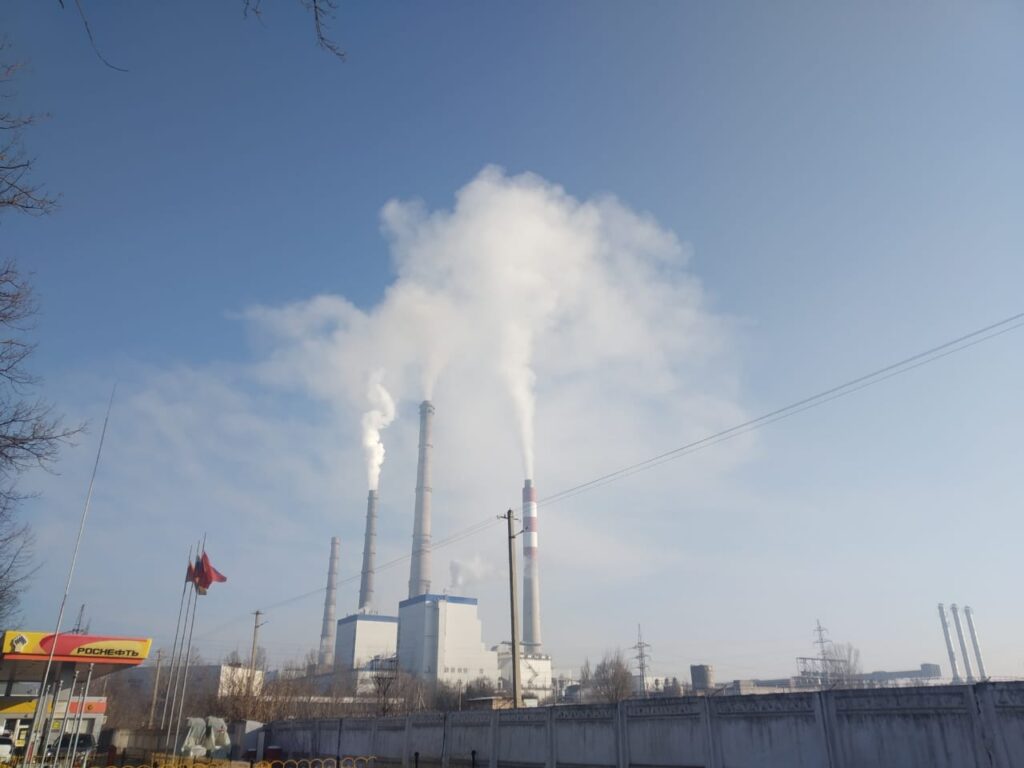
On September 24, the Bishkek city administration and South Korea’s EcoMotion signed a memorandum of understanding aimed at cutting air pollution in the Kyrgyz capital. The agreement focuses on the introduction of advanced High Voltage Power Supply (HVPS) air purification technologies at the Bishkek Thermal Power Plant (TPP).

The initiative begins with a preliminary feasibility study for installing high-voltage electrostatic precipitators, devices that use a strong electrostatic field to capture particulate matter such as dust and smoke from gas emissions. The technology is designed to reduce harmful pollutants produced by the thermal plant, which relies primarily on coal to generate electricity and heat for the city.

The project forms part of the Bishkek City Development Program, which prioritizes clean air and improved environmental conditions. As previously reported by The Times of Central Asia, emissions from the Bishkek TPP account for approximately 15% of the city’s air pollution.

The Bishkek thermal plant generates 13% of Kyrgyzstan’s electricity, the majority of which is otherwise supplied by hydropower, and provides heat and hot water to nearly two-thirds of the capital’s population.

Air quality remains a serious concern in Bishkek, a city of over one million residents. Pollution levels spike during winter months, when widespread coal burning for residential heating significantly increases emissions. Bishkek frequently ranks among the top 10 most polluted cities worldwide, according to IQAir’s global air quality index.