• KGS/USD = 0.01143 -0%
  • KZT/USD = 0.00192 -0%
  • TJS/USD = 0.10820 0.19%
  • UZS/USD = 0.00008 0%
  • TMT/USD = 0.28575 0%
  • KGS/USD = 0.01143 -0%
  • KZT/USD = 0.00192 -0%
  • TJS/USD = 0.10820 0.19%
  • UZS/USD = 0.00008 0%
  • TMT/USD = 0.28575 0%
  • KGS/USD = 0.01143 -0%
  • KZT/USD = 0.00192 -0%
  • TJS/USD = 0.10820 0.19%
  • UZS/USD = 0.00008 0%
  • TMT/USD = 0.28575 0%
  • KGS/USD = 0.01143 -0%
  • KZT/USD = 0.00192 -0%
  • TJS/USD = 0.10820 0.19%
  • UZS/USD = 0.00008 0%
  • TMT/USD = 0.28575 0%
  • KGS/USD = 0.01143 -0%
  • KZT/USD = 0.00192 -0%
  • TJS/USD = 0.10820 0.19%
  • UZS/USD = 0.00008 0%
  • TMT/USD = 0.28575 0%
  • KGS/USD = 0.01143 -0%
  • KZT/USD = 0.00192 -0%
  • TJS/USD = 0.10820 0.19%
  • UZS/USD = 0.00008 0%
  • TMT/USD = 0.28575 0%
  • KGS/USD = 0.01143 -0%
  • KZT/USD = 0.00192 -0%
  • TJS/USD = 0.10820 0.19%
  • UZS/USD = 0.00008 0%
  • TMT/USD = 0.28575 0%
  • KGS/USD = 0.01143 -0%
  • KZT/USD = 0.00192 -0%
  • TJS/USD = 0.10820 0.19%
  • UZS/USD = 0.00008 0%
  • TMT/USD = 0.28575 0%
13 December 2025

Ukrainian Children Arrive in Uzbekistan for Rest and Recovery

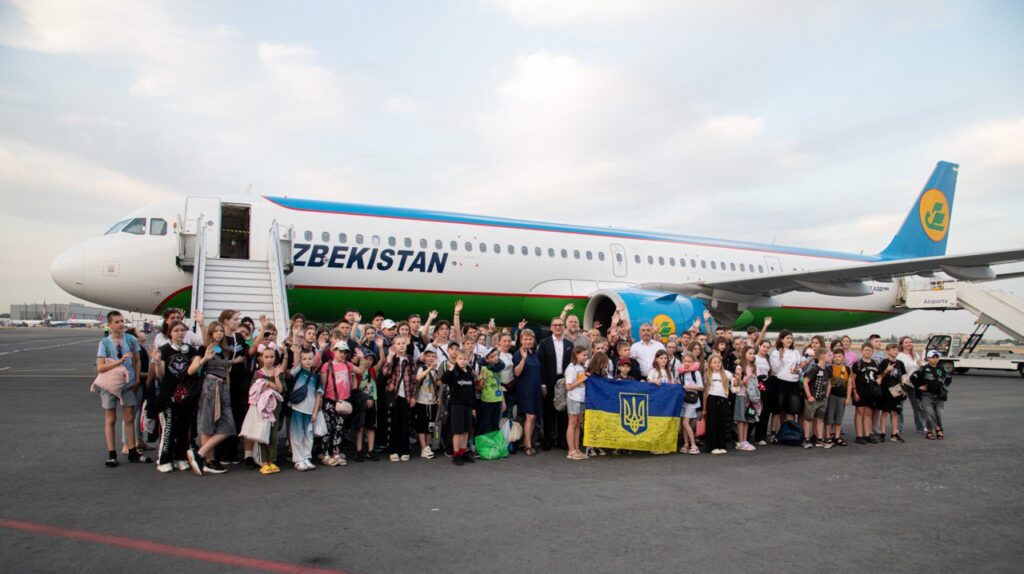
Just ahead of Eid al-Adha, a group of Ukrainian children have arrived in Tashkent for a 12-day program of rest and psychological rehabilitation. The Ukrainian Embassy in Uzbekistan reported that the visit was fully organized and funded by the Uzbek government.

The children, who come from war-affected regions including Kharkiv, Kherson, Mykolaiv, Zaporizhzhia, Sumy, Khmelnytskyi, Lviv, and Kyiv, received a warm welcome upon arrival at Tashkent International Airport. From there, they traveled to a mountain camp nestled in a valley near the Tien Shan range.

According to the embassy, the initiative was launched at the request of the Ukrainian side and is intended to help the children recover emotionally from the ongoing trauma of air raid sirens and missile strikes.

The camp offers a structured program of daily themed events, such as “National Values Day” and “Sports and Health Day,” along with creative competitions and excursions. Evenings are reserved for social gatherings. Ukrainian adults are present to supervise the children throughout their stay.

Nearly all major ministries and government agencies in Uzbekistan are participating in the effort, demonstrating strong coordination and compassion. The Ukrainian Embassy emphasized that the initiative reflects Uzbekistan’s genuine interest in supporting Ukrainian children during this difficult period.

The program aims not only to provide physical and emotional relief, but also to express solidarity and goodwill from the Uzbek people.

Uzbekistan previously provided similar humanitarian assistance to Palestinian civilians, evacuating 100 injured women and children, along with their guardians, from Rafah for medical treatment and care.

Uzbekistan’s response to Russia’s war in Ukraine has been cautious yet distinct, reflecting its careful balancing act in international diplomacy. Tashkent has refrained from openly condemning Moscow, a key economic and regional partner, but has also demonstrated a firm commitment to Ukraine’s sovereignty and territorial integrity within the framework of its foreign policy principles. Uzbekistan has supported UN General Assembly resolutions calling for an end to the conflict, signaling alignment with global norms, while urging a peaceful resolution through dialogue. Officials have consistently avoided taking sides but have voiced concerns about the war’s human cost and economic repercussions.

Beyond formal diplomatic statements, Uzbekistan’s humanitarian actions have highlighted its concern for those impacted by the war. The government’s decision to host Ukrainian children for rehabilitation reflects its broader efforts to provide tangible support to civilians in crisis zones.


Kazakhstan Launches First-Ever Cleanup of Astana Reservoir

For the first time in over half a century, Kazakhstan has begun a major cleanup of the Astana Reservoir, a key water source for the capital and surrounding villages.

Built in 1970, the reservoir has never undergone comprehensive dredging until now. According to the Ministry of Water Resources and Irrigation, the cleanup involves advanced equipment, including a large dredger equipped with a hydraulic ripper capable of processing up to 2,000 cubic meters per hour, and a self-propelled amphibious dredger with a capacity of up to 900 cubic meters per hour.

In 2025, authorities plan to remove 50,000 tons of sediment from the reservoir floor. The cleanup, which began in early June, is scheduled to continue annually for 13 years and is expected to significantly enhance the reservoir’s storage capacity.

Upon completion of this year’s work, the Astana Reservoir’s volume will increase by 47 million cubic meters, from its current capacity of 410.9 million cubic meters. This expansion will bolster the water supply for Astana and nearby communities.

“The Astana Reservoir is a strategic facility that plays a vital role in providing the capital with water,” said Minister of Water Resources and Irrigation Nurzhan Nurzhigitov. “The use of modern technology allows us to carry out the first cleanup of the reservoir in over 50 years both thoroughly and efficiently.”

The reservoir is located on the Yesil River. In 2010, a protective dam was constructed to shield the capital from spring floodwaters originating from the river.

Construction Begins on New British School Campus in Astana

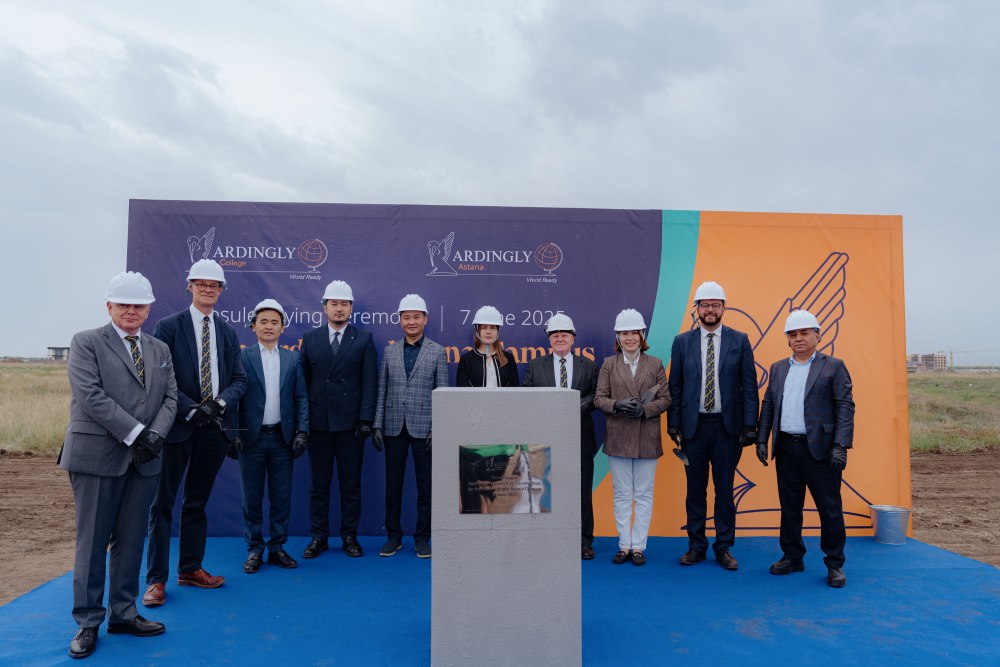
A capsule-laying ceremony on June 7 marked the official start of construction on the new Ardingly College campus in Astana, a major milestone in Kazakhstan-UK educational cooperation.

Ardingly Astana is a branch of Ardingly College, a prestigious British coeducational day and boarding school founded in 1858 in West Sussex, England. The Astana branch will follow the Cambridge curriculum, offering instruction in English and preparing students for A-Level examinations. The school’s faculty will include educators with international and UK-based teaching experience.

The first phase of the new campus is expected to open in 2026, with the capacity to accommodate up to 1,000 students. The campus will include state-of-the-art facilities such as a swimming pool, sports complexes, music and art studios, and science laboratories.

Designed as an educational hub for students from Kazakhstan and across Central Asia, Ardingly Astana aims to merge the British academic model with innovative teaching methods, equipping students for admission to leading universities worldwide. The project also seeks to attract international educators and promote cross-border knowledge exchange and educational integration.

The development is supported by Kazakh Invest, Kazakhstan’s national investment promotion agency. The capsule-laying ceremony was attended by representatives of the British Embassy in Kazakhstan, Ardingly College, Ardingly Astana, and Kazakh Invest.

Azamat Kozhanov, Deputy Chairman of Kazakh Invest, underscored the project’s significance: “The opening of a campus of one of the UK’s top educational institutions in the heart of Eurasia symbolizes trust, partnership, and a strategic vision for the future. It will be more than just a school, it will be an ecosystem for nurturing ideas and developing future leaders. Education remains a priority for investment, and we are ready to provide full support for such projects. We are confident that Ardingly Astana will attract talented students and educators from around the world.”

The project marks a significant step in advancing both educational and investment ties between Kazakhstan and the United Kingdom.

Watermelon Prices Plummet in Uzbekistan as Early Harvest Floods Market

Wholesale watermelon prices in Uzbekistan have dropped nearly threefold in just one week, marking the steepest weekly decline in at least five years, according to a report by EastFruit.

EastFruit analysts attribute the sharp drop to an early and abundant harvest. Between May 16 and 22, large volumes of freshly harvested watermelons entered the wholesale markets in Tashkent, about a week earlier than in 2024, resulting in a supply surge.

On May 23, the average wholesale price stood at 7,000 Uzbek sums per kilogram (approximately $0.54), the highest level for that time of year since 2021. By May 30, prices had fallen to just 2,500 sums per kilogram ($0.20), representing a near threefold decrease in just seven days.

Despite the dramatic drop, end-of-May prices were still 25% higher than the same period in 2023, though only half the price recorded in late May 2024.

Export Prospects Remain Strong

The price decline is expected to stimulate watermelon exports. Since 2020, fresh watermelons have become one of Uzbekistan’s key fruit and vegetable exports. In 2023, the country set a record by exporting 104,700 tons. Shipments remained robust in 2024, reaching 98,500 tons, just 6% below the all-time high.

As previously reported by The Times of Central Asia, Kyrgyzstan recently signed a trade agreement with a leading Uzbek dried fruit exporter, paving the way for regular food exports to Europe and the Persian Gulf.

Ecofruit, a major Uzbek agricultural producer, has also expressed strong interest in Kyrgyz nuts and dried fruits, citing their high quality and natural purity.

Kazakhstan Faces Scandal Over Drug Procurement System

A political and financial scandal is emerging in Kazakhstan following revelations from the Supreme Audit Chamber (SAC) concerning widespread violations in the country’s public drug procurement system.

Deputy Health Minister Ardak Amangeldiev has not ruled out legal action against the SAC after its findings were presented to parliament. SAC Chairman Alikhan Smailov, a former prime minister, said that some materials have already been referred to law enforcement, prompting several members of parliament to call for systemic reform.

Audit Uncovers Extensive Irregularities

Kazakhstan’s public drug procurement system was audited in both 2023 and 2024. According to Smailov, auditors identified the following violations:

  • Financial losses totaling KZT 741 million (approximately $1.4 million);
  • Inefficient use of KZT 32 billion ($62.7 million);
  • Lost profit amounting to KZT 58 billion ($113 million).

In total, 134 cases have been referred for administrative proceedings, with five cases passed to law enforcement agencies.

Among the most alarming findings was the discovery of more than 67,000 cases involving expired medications being dispensed, rendering them unusable and resulting in budgetary losses. Auditors also identified extreme price discrepancies, up to 600%, for 15 of the most expensive drugs when comparing public sector prices with those in the retail market. Smailov suggested that medicines intended for free outpatient care were being illicitly written off and sold through commercial pharmacies.

Delays in medication deliveries were cited as a major cause of treatment disruptions. Quarterly instead of monthly shipments caused shortages, forcing patients to buy medications out-of-pocket.

One particularly troubling case involved a private supplier delivering 62 million medical gloves in 2024 for KZT 8 billion ($15.6 million). Auditors noted the batch’s specifications matched those of products imported from Thailand during the same period, suggesting they were resold as “domestically produced” goods.

The SAC also questioned the rationale behind long-term procurement contracts. State-run distributor SK Pharmacy has signed agreements with domestic manufacturers for up to 10 years. Over the past five years, total purchases under such contracts increased from KZT 69 billion to KZT 112 billion (approximately $135 million to $220 million). However, the number of unique domestically produced drugs dropped from 968 to 507, indicating a growing reliance on basic medical devices rather than genuinely localized pharmaceutical production.

Ministry of Health Pushes Back

The Ministry of Health has disputed several of the audit’s conclusions. Deputy Minister Amangeldiev told journalists that the evidence cited in many of the findings was insufficient. The ministry has filed a pre-trial claim against the SAC.

“We have verified that the evidence is insufficient for a number of facts. We have sent a pre-trial claim. If we cannot reach an understanding, there will be a court case. As a state body, we have a constitutional right to defend our honor and dignity and to provide evidence on all points,” Amangeldiev stated at a parliamentary session.

Parliamentary Voices Demand Reform

Notably, no government agency in Kazakhstan has ever challenged an SAC audit in court. Still, some members of the Mazhilis have supported the chamber’s conclusions and are calling for sweeping changes.

Deputy Askhat Aimagambetov pointed to over-complicated and expensive drug registration procedures as one reason for the shortage of affordable but essential medicines. He cited the lack of oral penicillin in the country, explaining that its low cost deters companies from registering or importing it, forcing doctors to prescribe more expensive antibiotics.

Aimagambetov also criticized SK Pharmacy for sourcing up to 60% of its drugs through local distributors rather than directly from manufacturers, inflating procurement costs. He advocated for logistics reforms, direct purchasing, and restricting long-term contracts to companies that truly localize production in Kazakhstan.

As previously reported by The Times of Central Asia, Aimagambetov has also proposed amendments to the Tax Code that would exempt certain essential medicines from VAT and reduce the overall tax burden on healthcare institutions.

Ruins of a Burned Medieval City Unearthed in Southern Kazakhstan

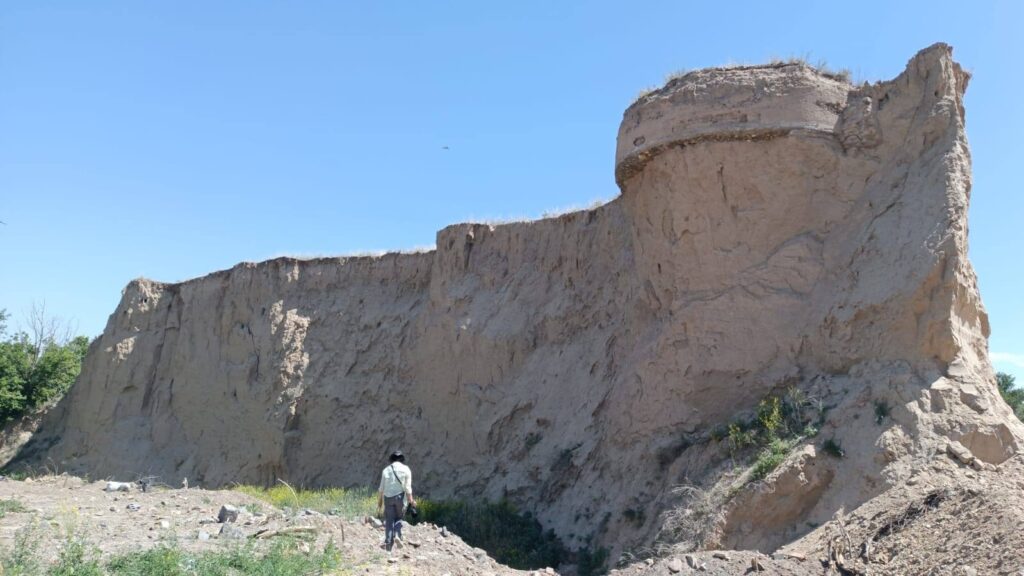
Archaeologists in Kazakhstan may have uncovered the ruins of a long-lost medieval city previously known only from historical texts. The discovery was announced by Olga Gumirova, executive director of the Petroglyph Hunters Foundation.

Tower, Masonry, and a Burned Past

The remains were found in the Zhetysu region, and experts believe the site could be as archaeologically significant as Talkhiz or Koylyk, both of which are included on the UNESCO World Heritage List.

“It looks like we’ve found the medieval city that everyone has been looking for! First, we saw the remains of brickwork in a quarry, a miraculously preserved tower, and then a wall… Medieval bricks protruded from the ground. The city was severely burned during the Mongol invasion,” Gumirova wrote on Facebook. Archaeologists have been informed, though analysis and discussion are just beginning.

Talkhiz, now part of the Almaty region, was established in the 8th century as a hub of trade and industry. Koylyk, also known as Antonovskoe, thrived from the 8th to 14th centuries. Both are recognized as cultural heritage sites of global significance.

Twenty-Five New Sites in the Saryarka Steppes

Meanwhile, archaeologists from the Saryarka Archaeological Institute made significant discoveries in the Shet district of Karaganda region. In May 2025, researchers uncovered 25 new historical and cultural sites, including burial mounds, necropolises, and complex structures from the Bronze, Iron, and Medieval Ages.

“Work is just beginning, but we can already confidently speak about the importance of the finds,” said Alexei Kukushkin, director of the institute. Dating and full excavation await official approval.

Eastern Kazakhstan’s “Golden Man”

A remarkable earlier discovery occurred in 2018 in the Tarbagatai district of East Kazakhstan. An expedition led by archaeologist Zeynolla Samashev uncovered a burial site containing nearly 3,000 gold artifacts dating back to the 7th-8th centuries BCE. Items included women’s earrings, gemstone necklaces, and ornate horse gear, highlighting the artistic and cultural richness of the era.

Buddhist Temple Found in Zhambyl Region

In another discovery underscoring Kazakhstan’s diverse historical legacy, archaeologists unearthed the remains of a Buddhist temple in the Ayranada Gorge, Merken district, Zhambyl region. Fragments of a structure and a partially buried stone sculpture of a Buddha were found, reinforcing the area’s importance along the Great Silk Road.

“The Buddhist temple and the head of Buddha could become interesting tourist attractions,” said Anna Krokosheva, senior researcher at the Museum of Ancient Taraz. However, the site remains difficult to access, located at over 3,000 meters above sea level with no existing infrastructure. Krokosheva noted that this inaccessibility has helped preserve the artifacts.

From steppe burial mounds to ancient ruins, Buddhist temples to gold-laden tombs, Kazakhstan continues to reveal a rich, multilayered historical narrative. The recently discovered city in Zhetysu may become a vital link in this story, an archaeological treasure of national and potentially global significance. What remains hidden beneath the soil may yet reshape our understanding of medieval Kazakhstan.