• KGS/USD = 0.01144 0%
  • KZT/USD = 0.00215 0%
  • TJS/USD = 0.10680 0.19%
  • UZS/USD = 0.00008 0%
  • TMT/USD = 0.28530 0%
  • KGS/USD = 0.01144 0%
  • KZT/USD = 0.00215 0%
  • TJS/USD = 0.10680 0.19%
  • UZS/USD = 0.00008 0%
  • TMT/USD = 0.28530 0%
  • KGS/USD = 0.01144 0%
  • KZT/USD = 0.00215 0%
  • TJS/USD = 0.10680 0.19%
  • UZS/USD = 0.00008 0%
  • TMT/USD = 0.28530 0%
  • KGS/USD = 0.01144 0%
  • KZT/USD = 0.00215 0%
  • TJS/USD = 0.10680 0.19%
  • UZS/USD = 0.00008 0%
  • TMT/USD = 0.28530 0%
  • KGS/USD = 0.01144 0%
  • KZT/USD = 0.00215 0%
  • TJS/USD = 0.10680 0.19%
  • UZS/USD = 0.00008 0%
  • TMT/USD = 0.28530 0%
  • KGS/USD = 0.01144 0%
  • KZT/USD = 0.00215 0%
  • TJS/USD = 0.10680 0.19%
  • UZS/USD = 0.00008 0%
  • TMT/USD = 0.28530 0%
  • KGS/USD = 0.01144 0%
  • KZT/USD = 0.00215 0%
  • TJS/USD = 0.10680 0.19%
  • UZS/USD = 0.00008 0%
  • TMT/USD = 0.28530 0%
  • KGS/USD = 0.01144 0%
  • KZT/USD = 0.00215 0%
  • TJS/USD = 0.10680 0.19%
  • UZS/USD = 0.00008 0%
  • TMT/USD = 0.28530 0%

Opinion: Kazakhstan’s Critical Minerals Promise Is Running Out of Time

Kazakhstan has long been defined by what lies beneath its soil. Oil, uranium, copper, zinc, lead, chromium, gold, and other minerals have shaped the country’s post-Soviet economy and supplied the budget, export revenues, and industrial base that supported three decades of state-building.

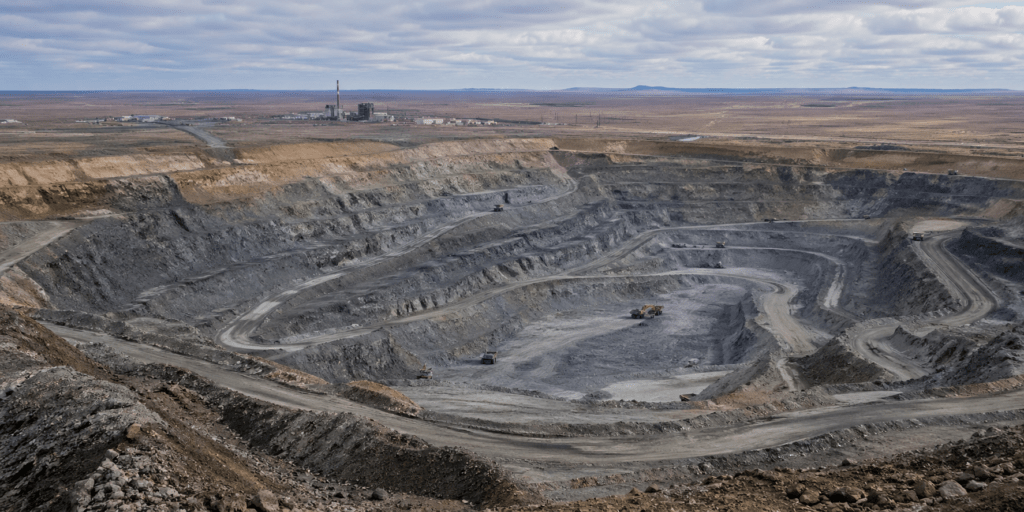
That model is now entering a more difficult phase. In the first quarter of 2026, Kazakhstan’s industrial output slipped as mining and quarrying fell by 11.4%, with crude oil production down 19.8%, natural gas output down 20%, and other mineral extraction down 15.1%, according to figures reported from the Bureau of National Statistics. The oil decline also reflected specific disruptions. Kazakhstan’s energy minister said oil and gas condensate production fell 20% year-on-year in the first quarter, while production at Tengiz had only recently resumed after an outage linked to a fire at a power unit. Reuters reported that the field’s restart was gradual.

Those short-term shocks should not be confused with the whole story. They expose a deeper vulnerability: Kazakhstan has been highly successful at extracting known deposits, but far less successful at replacing them. The World Bank’s mining sector diagnostic put the problem plainly. Kazakhstan is underexplored, greenfield exploration has been almost non-existent for about 30 years, and much of the geological data inherited from the Soviet period is incomplete or outdated.

This is not a story of geology alone. It is a story of institutions, incentives, and time. Deposits deplete whether governments plan for it or not. The difference between a mature resource economy and a vulnerable one is whether exploration, processing, regulation, and regional diversification keep pace with extraction.

The Arithmetic of Depletion

Kazakhstan still has one of the strongest mineral endowments in Eurasia. President Kassym-Jomart Tokayev has described rare and rare-earth metals as having “essentially become new oil,” and told the government to expand geological and geophysical exploration from 1.5 million square kilometers to at least 2.2 million by 2026, according to Akorda.

OECD analysis published in 2026 underlines why the stakes are high. Kazakhstan’s metals mining sector accounted for 12.1% of GDP in 2024. The country is the world’s largest uranium producer, can currently export 21 of the 34 critical raw materials on the European Union’s official list, and has some of the world’s largest reserves of chromium, zinc, and lead.

Yet reserve strength on paper does not remove the operational pressure at existing mines. In 2022, Kazakhstan’s prime minister warned that reserve growth for many minerals had not been compensated and that major metal deposits in eastern Kazakhstan, including Orlovskoye, Maleyevskoye, Tishinskoye, and Ridder-Sokolnoye, could be mined out within the next decade, according to the government’s own account of its 2023-2027 geology concept.

Gold shows a similar tension between headline potential and mine-level pressure. Industry reporting has linked a fall in Kazakhstan’s 2025 mining output targets partly to changes at Vasilkovskoye, one of the country’s largest gold deposits, where operations are shifting from open-pit to underground mining as easily accessible ore becomes harder to extract. MINEX Forum reported that the transition reduced production volumes and lowered the sector’s physical output index. Underground mining can extend a deposit’s life, but it changes the economics and raises costs.

Oil adds another layer. Kazakhstan remains heavily dependent on a small number of large fields and on export infrastructure that runs through Russia. The Caspian Pipeline Consortium remains the main artery for Kazakh crude exports, and The Times of Central Asia previously reported that Kazakhstan pumps roughly 80% of its oil exports through the CPC system. Geological concentration and route dependence, therefore, reinforce each other. When production or export infrastructure is disrupted, the effect reaches far beyond the energy sector.

Institutional Failure, Not Geological Fate

It would be easy to describe depletion as inevitable. That would be too simple. The sharper problem is that Kazakhstan spent much of the commodity boom extracting known reserves without building a sufficiently strong exploration pipeline for the next generation of deposits.

The World Bank diagnostic found that the country’s mining industry faces a double challenge: depleting reserves and insufficient exploration investment to replenish them. It also noted that few new mining projects had been developed over the previous 30 years, apart from open-pit copper and gold. In other words, the system became better at producing from known assets than at generating future ones.

Regulation has improved, but slowly. The 2017 Subsoil and Subsoil Use Code introduced a more modern licensing framework for solid minerals. EITI notes that the system moved mining licenses toward a first-come, first-served model, replacing earlier direct negotiations for many mineral rights. The World Bank also described the code as a major improvement because it separated solid minerals from hydrocarbons and uranium and simplified procedures.

Still, investors in exploration do not respond only to laws on paper. They respond to predictability. Frequent regulatory changes, uncertainty over taxes and royalties, limits on contract transparency, and uneven implementation all raise the perceived risk of long-cycle projects. Exploration may take years. Commercial extraction can take 15 to 20 years from the first serious geological work. A country that waits until depletion becomes visible has already lost valuable time.

The Critical Minerals Paradox

Kazakhstan is now being courted because the world needs exactly the minerals it may be best placed to supply. Copper, lithium, cobalt, nickel, tungsten, rare earths, uranium, and other inputs are central to electrification, batteries, defense industries, and clean-energy infrastructure.

Western interest has risen quickly. Kazakhstan joined the Minerals Security Partnership Forum in July 2024 alongside several other resource-rich states. In April 2025, Reuters reported that Kazakhstan had announced the discovery of a major rare earth metals deposit estimated at more than 20 million metric tons. The finding, if commercially developed, could strengthen the country’s claim to a larger role in global supply chains.

But critical minerals are not an opportunity simply because they exist underground. They become an opportunity only when a country can explore them accurately, certify reserves to international standards, finance development, process materials locally, and connect production to buyers. Kazakhstan’s weakness is not the absence of potential. It is the gap between potential and bankable, processed, export-ready supply.

That gap carries a familiar risk. Without more processing capacity, Kazakhstan will continue to export raw or semi-processed materials while other countries capture more of the value through refining, component manufacturing, and technology supply chains. The country can be a supplier of strategic minerals, or it can become a strategic industrial player. Those are not the same thing.

Reform Has Started, But the Clock Is Ticking

The government has begun to respond. The 2023-2027 geology concept focuses on replenishing the mineral resource base, digitizing geological information, improving infrastructure, and developing human resources. The government has also created the National Geological Service and the Kaznedra information platform to improve access to geological data.

Exploration investment is rising from a low base. The Times of Central Asia previously reported that Kazakhstan plans to invest more than $470 million over three years in the study of mineral resources, its most ambitious geological exploration program in more than 15 years. Government-linked reporting in April 2026 said new exploration activity had added reserves of 136 tons of gold, 152 tons of silver, 75,000 tons of copper, and 1.3 million tons of phosphorites, while around 3,000 solid-mineral exploration licenses had been issued. Qazinform also reported that companies including Rio Tinto, Teck, Fortescue, Barrick Gold, First Quantum, and Ivanhoe had been attracted to the sector.

These are real gains, but they do not erase the problem. New reserve additions help, but they do not instantly replace aging mines, solve processing bottlenecks, or shorten the long geological timetable between discovery and production. Nor do licenses alone guarantee investment. Companies will commit capital only if rules on taxation, royalties, environmental standards, infrastructure, and dispute settlement remain stable across political and budget cycles.

Fiscal reform is therefore not a technical side issue. The Mineral Extraction Tax has long been criticized by industry because it can penalize lower-grade and harder-to-recover deposits. A better-designed royalty system, combined with predictable incentives for technically difficult reserves, could make more deposits commercially viable. But any reform must be durable. Investors can adapt to strict rules more easily than to unstable ones.

The Social Risk Beneath the Geological One

The depletion debate is often conducted in the language of reserves, licenses, and tax codes. That misses the human geography of Kazakhstan’s resource economy. Mining regions are not abstract production zones. They contain towns where the mine is the dominant employer, the tax base, and often the anchor for roads, schools, hospitals, and local services.

When a mine in East Kazakhstan loses its reserve base, the issue is not only lost output. It is whether a local economy has any replacement. A production decline can become a municipal crisis, then a migration crisis, then a political one. Kazakhstan has already seen how labor disputes in resource regions can become national events, from Zhanaozen in 2011 to the unrest of January 2022. The link between resource employment, regional security, and political stability is not theoretical. It is part of the country’s recent history.

That is why geological policy cannot be separated from regional development policy. If Kazakhstan wants to avoid a managed decline in its mining regions, it needs more than new maps and more licenses. It needs retraining, local industrial diversification, infrastructure investment, and credible plans for single-industry towns before depletion forces the issue.

A Narrower Window Than It Looks

Kazakhstan still has advantages many countries would envy: mineral wealth, a strategic location between Europe and Asia, a growing critical-minerals profile, and rising international interest. But the strongest warning in the current moment is that geological potential is not the same as readiness. A deposit that is unmapped, uncertified, unfinanced, or unprocessed cannot support the budget, employ workers, or shift the country up the value chain.

The opportunity of the 2000s was to use high commodity revenues to finance a broad geological revival. Much of that opportunity was not converted into a sustained exploration revival. The task now is more urgent and less forgiving: to prevent today’s reserve pressure from becoming a deeper structural crisis in the 2030s and 2040s.

Kazakhstan does not lack resources. It lacks time. The next five years will determine whether the country turns its critical minerals potential into a new stage of industrial development or whether it continues to consume the inheritance that made it rich.


The views expressed in this article are those of the authors and do not necessarily reflect the official policy or position of the publication, its affiliates, their institution, or any other organizations mentioned.

Tajikistan Hosts Grand Slam Judo, Wins Three Golds

Tajikistan showcased its world-class judo skills during the Dushanbe Grand Slam over the weekend, picking up three gold medals in a competition that featured 240 judoka, or practitioners of the martial art, from about three-dozen countries.

While Russia topped the standings with three golds, three silvers and six bronze medals, Tajikistan’s second-place finish (three golds and one bronze) reflected the high priority of the sport in a country that is also promoting gushtingiri, a traditional form of Tajik wrestling that has some similarities to judo. Mongolia came third with two golds, two silvers and one bronze.

Tajikistan’s capital has become a fixture on the international judo circuit in the last few years. The city hosted the 2024 World Junior Championships, and the Dushanbe Grand Slam was upgraded from Grand Prix status, making it a more prestigious tournament that awards a greater number of ranking points.

Dushanbe will also host the World Judo Masters tournament on December 18-20, an event that Ismoil Mahmadzoir, president of the Tajikistan Judo Federation, has said will help Tajikistan’s judoka prepare for the Olympic Games in Los Angeles in 2028.

Tajikistan’s emergence as a world judo power reflects years of investment and youth training in the sport, setting an example for the development of other sports in a country with relatively limited resources. Rasul Boqiev won Olympic bronze, the country’s first judo medal at the games, in Beijing in 2008. At the Paris Olympics in 2024, judokas Somon Makhmadbekov (in the -81kg weight category) and Temur Rakhimov (+100kg) also won bronze medals in their weight classes.

The focus on judo in Tajikistan is sometimes associated with the legacy of gushtingiri, a traditional form of Tajik wrestling that has some similarities. In gushtingiri, a contestant tries to grab the belt of an opponent and execute a throw to the ground.

While the sport goes back thousands of years in the wider region and has different names, the International Gushtingiri Federation was registered in 2022 in Switzerland, an international hub of sports associations, to standardize the rules and broaden its appeal. President Emomali Rahmon of Tajikistan is the honorary president of the federation, a sign of support for gushtingiri at the highest political level.

At the May 1-3 Grand Slam in Dushanbe, Makhmadbekov – seventh in the world in his weight category – defeated Bernd Fasching of Austria for the gold, saying he was delighted to win in front of a home crowd. Makhmadbekov secured the world junior title in 2019.

Tajikistan’s other gold medal winners in Dushanbe were Muhiddin Asadulloev, who is fourth in the world in his -73kg weight category, and Nurali Emomali (-66kg). Emomali is ranked second in the world in his category, and another Tajik athlete, Obid Zhebov, is just behind him in third place.

Enthusiastic crowds at the Qasri Tennis area in Dushanbe delighted some of the athletes. Among them was Italian veteran Odette Giuffrida, who won gold in her -52kg category, according to tournament reports.

“I wanted to compete in Dushanbe before I retire because many people told me that there is nowhere like Tajikistan, and they were right!” said 31-year-old Giuffrida, whose career medal haul includes Olympic silver in Rio de Janeiro and Olympic bronze in Tokyo. “The atmosphere here gave me power.”

The Italian said she will be back in Dushanbe for the Masters in December.

U.S.-Kazakhstan Tungsten Venture Advances as Critical Minerals Cooperation Deepens

A U.S.-linked critical minerals venture in Kazakhstan is moving forward with plans to develop one of the world’s largest undeveloped tungsten resources, strengthening cooperation between Washington and Astana at a time of growing demand for secure mineral supply chains and greater Western interest in Central Asia’s strategic minerals base.

Skyline Builders Group Holding Ltd. and Cove Kaz Capital Group LLC have announced a merger agreement that would create Kaz Resources Inc., a Nasdaq-listed company focused on tungsten, rare earths, and other critical minerals. The combined company is expected to trade under the ticker symbol “KAZR,” subject to shareholder and regulatory approvals and other closing conditions.

The transaction builds on cooperation between Cove Kaz Capital and Kazakhstan’s national mining company, Tau-Ken Samruk. Cove Kaz has acquired a majority interest in Severniy Katpar LLP, which holds licenses for the Northern Katpar and Upper Kairakty tungsten projects in Kazakhstan’s Karaganda mining district, while Tau-Ken Samruk retains a minority stake, giving Kazakhstan’s state mining sector continued participation in the project.

The Financial Times has reported that Donald Trump Jr. and Eric Trump held indirect stakes in Skyline Builders, the Nasdaq-listed company that has agreed to combine with Cove Kaz Capital. The reported investments were made through a Dominari-affiliated vehicle before the business combination. The report has drawn scrutiny because of the project’s connection to U.S. critical minerals policy and potential U.S. government-backed financing.

The report cites no evidence that the Trump sons influenced the project award or the financing process. A spokesperson for Donald Trump Jr. said he is a passive investor, has no operational role, and does not engage with the federal government on behalf of companies in which he invests or advises. Eric Trump did not respond to requests for comment reported by the Financial Times.

The Export-Import Bank of the United States and the U.S. International Development Finance Corporation have issued letters of interest indicating potential financing support for the project. Such letters are preliminary expressions of interest, not final loan approvals, binding commitments, or government contracts, and any financing would remain subject to due diligence, agency approvals, and other conditions.

The projects are strategically significant because tungsten is widely used in defense, aerospace, industrial manufacturing, and advanced technologies. The United States has identified tungsten as a critical mineral and has sought to diversify supply chains amid heavy global dependence on China.

Kazakhstan’s tungsten deposits hold significant potential, but many remain at an early stage of development, requiring substantial investment and time before production can scale. Even so, the country has begun to emerge as a meaningful producer, with public and industry estimates pointing to Kazakhstan becoming a top-three producer in 2025 after the launch of the Boguty deposit, behind China and Vietnam. The Association of Mining and Metallurgical Enterprises has cited production of around 2,400 tons of tungsten in 2025.

The country’s rising role in the global market coincides with a sharp increase in tungsten prices. Following export restrictions imposed by China in February 2025, prices rose sharply through 2025 and into 2026, with market reporting describing record or near-record pricing for key tungsten products.

Kazakhstan also began exporting tungsten concentrates for the first time, shipping 3,700 tons worth $71 million in 2025, all of which was sent to China, underscoring both strong external demand, Kazakhstan’s exposure to a single downstream market, and Astana’s interest in developing more domestic processing capacity.

Russian and Chinese companies have previously sought to develop Kazakhstan’s tungsten deposits. Earlier efforts involving Russian and Chinese counterparties, including prior discussions tied to Xiamen Tungsten and a Tatneft-related memorandum, underscore broader international interest in Kazakhstan’s tungsten base and the strategic importance of the Severny Katpar area.

For Kazakhstan, the project supports efforts to attract international investment, develop its role as a supplier of strategic minerals, and expand value-added processing at home. For the United States, it offers a potential path to diversify critical mineral supply chains and reduce reliance on concentrated sources of tungsten.

The deal highlights Kazakhstan’s growing role in U.S. supply-chain strategy, the intensifying global competition over critical minerals, and the heightened public scrutiny surrounding the financing of strategic resource projects.

School Digitalization in Turkmenistan Increases Workload for Teachers

The rollout of electronic gradebooks in Turkmenistan, intended to streamline teachers’ work, has had the opposite effect, with educators reporting increased workloads, technical issues, and tighter oversight.

As part of a broader push toward digitalization, authorities have required school staff to use the eMekdep system to record grades, manage lesson plans, and generate analytics. According to its developers, the platform enables work “anytime, anywhere” and is designed to reduce paperwork. Teachers, however, say the reality is far less efficient.

Electronic journals can only be filled out with a stable internet connection, which remains unreliable even in the capital. “If two people log into our school’s network at the same time, it crashes,” a teacher in Ashgabat said.

As a result, many educators are forced to rely on mobile data or home internet at their own expense, an added burden given their relatively low salaries, which range from $175 to $275 per month. Teachers also report contributing financially to school needs, including repairs and equipment, and, in some regions, even covering costs related to hiring cotton pickers.

The main challenge, however, is not financial but administrative. Paper gradebooks have not been phased out, leaving teachers to maintain three parallel records: an official paper journal, a working notebook, and the electronic system. This duplication significantly increases the risk of errors.

To save data, many teachers first record grades by hand and later transfer them into the system at home, a process that often leads to delays and inaccuracies. Given that the majority of teachers are women, many must also balance these demands with family responsibilities.

At the same time, oversight has intensified. Moderators at both school and district levels monitor how teachers fill out gradebooks. Discrepancies between paper and electronic records require written explanations. Deadlines for entering data have also been tightened from up to 10 days previously to just two days, with the possibility of further reduction to 12 hours. Schools may be reprimanded if teachers fail to meet these deadlines.

Technical problems remain a major issue. Users report software bugs that can cause pages to take up to 30 seconds to load. “In that time, it’s faster to mark grades for an entire class with a pen,” one teacher noted.

Earlier reports have highlighted broader restrictions on access to certain services and efforts to control alternative communication channels, including the confiscation of Starlink satellite internet equipment. In such conditions, digital solutions remain heavily dependent on infrastructure that often struggles to handle the load.

Kazakhstan’s SMEs Face Severe Labor Shortage

Small and medium-sized enterprises (SMEs) in Kazakhstan have become one of the country’s main sources of employment, but are facing a severe labor shortage, according to a joint report by Mastercard and KPMG.

The report identifies workforce shortages as one of the most pressing challenges for SMEs, with nearly half of businesses reporting acute staffing deficits. The main reasons cited are the limited supply of qualified specialists and their high cost.

According to the report, SME executives say, “It is difficult to find qualified employees, especially production managers: candidates do not meet requirements, and staff are not motivated to develop, despite high salaries and good working conditions. Scaling up the business requires increasing the number of skilled employees, which is constrained by limited financial resources and labor shortages.”

At the same time, 90% of surveyed business leaders say they face high salary expectations from potential employees, which smaller firms struggle to meet. Around 70% of respondents also acknowledge that SMEs are widely perceived as less prestigious places to work.

Labor productivity in micro and small businesses remains more than twice as low as in medium and large enterprises. In 2025, a worker in a small business generated an average of about $10,100, compared with $34,300 in medium-sized firms, and the gap continues to widen.

Limited access to financing and the high cost of borrowing also remain major constraints for SMEs.

Additional factors hindering SME development include an unstable tax and regulatory environment, as well as broader macroeconomic volatility.

Despite these challenges, SMEs are a key source of employment in Kazakhstan. Over the past five years, employment in the sector has grown from 40% to 50% of the workforce. Today, around 4.7 million people out of 9.3 million employed nationwide work in SMEs, meaning roughly one in two workers is employed in this segment.

According to the report, SME employment has been growing at an average annual rate of 6%, while employment in other sectors has declined by about 3% per year.

“The concentration of employment in SMEs makes the labor market vulnerable to tax and regulatory changes: negative shocks in the sector could directly translate into rising unemployment,” the report notes.

As previously reported by The Times of Central Asia, SMEs currently account for about 40% of Kazakhstan’s GDP, a figure that remains below benchmark countries such as Turkey (41%), the United States (44%), and Uzbekistan (52%).

Kazakhstan to Develop Maritime Component of Trans-Caspian Transport Route

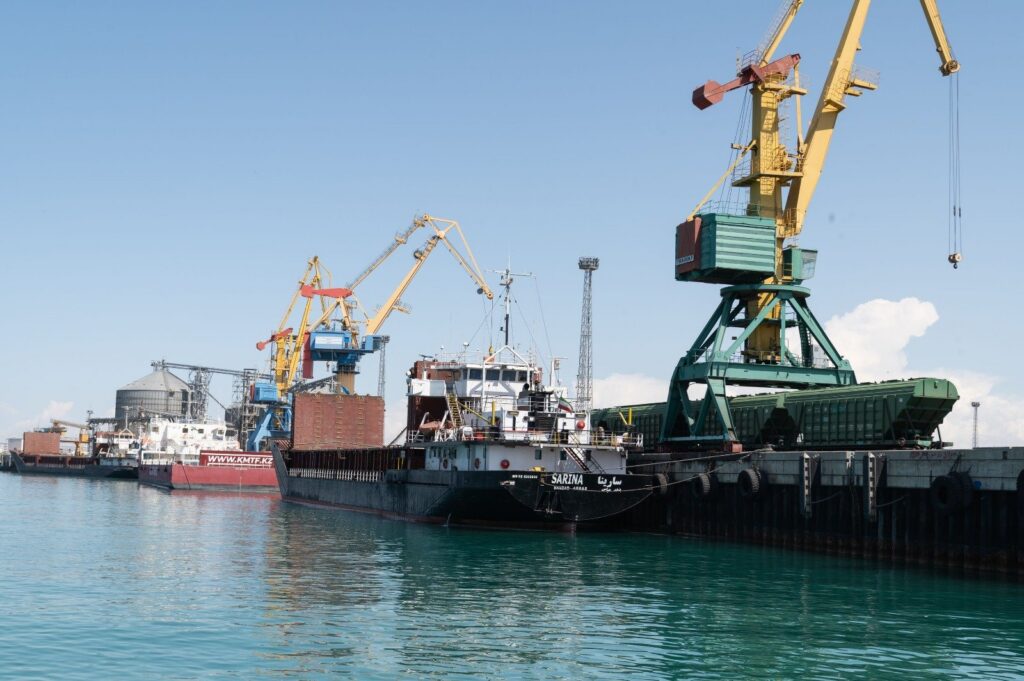
Kazakhstan’s national railway operator, Kazakhstan Temir Zholy (KTZ), is moving to build its own maritime fleet to expand the Trans-Caspian International Transport Route (TITR).

Also known as the Middle Corridor, the TITR is a multimodal transport corridor linking China and Europe through Central Asia and the South Caucasus, offering an alternative to routes that pass through Russia.

KTZ Express Shipping, a subsidiary of KTZ, has signed contracts for the construction of six general-purpose dry cargo container ships. Agreements have been concluded with China’s Jiangsu Haizhongzhou Shipping Industry Co., Ltd. for the construction of four vessels and with Azerbaijan’s Baku Shipyard for the construction of two.

The vessels will be river-sea ships with a deadweight of up to 9,900 tons and a capacity of up to 537 TEUs, adapted for operations on both the Caspian and Black Sea routes. This is expected to support the integration of the maritime segment into the TITR’s multimodal logistics chain.

The ships will be equipped with modern navigation systems in line with international requirements and environmental standards. Their safety, reliability, and environmental performance are expected to enhance their suitability for international routes and increase confidence among global shippers.

The project is intended to give Kazakhstan a larger role in the TITR by establishing a sustainable maritime component of the route.

Kazakhstan’s maritime transport sector has recorded steady growth in recent years. In 2025, maritime cargo volumes reached 8 million tons, a 7% increase compared to 2024. Container traffic through Kazakh seaports rose by 29% to 90,637 TEUs, while cargo volumes transported along the TITR increased by 36%.

Under the country’s comprehensive maritime infrastructure development plan for 2024-2028, Kazakhstan intends to establish a major transport and logistics cluster based on the ports of Aktau and Kuryk. The plan includes expanding container handling capacity, developing cargo terminals and international shipping logistics, and reducing administrative barriers. By 2028, total cargo throughput at the ports is expected to increase by 50%, while container handling volumes are projected to triple.

Plans are also in place to increase container traffic along the TITR, including the transit of 600 container trains from China through Kazakhstan this year.

As previously reported by The Times of Central Asia, freight volumes transported along the Middle Corridor through Kazakhstan have grown more than five times over the past seven years, increasing from 0.8 million tonnes to 4.5 million tonnes annually.