• KGS/USD = 0.01144 0%
  • KZT/USD = 0.00213 0%
  • TJS/USD = 0.10714 0.09%
  • UZS/USD = 0.00008 0%
  • TMT/USD = 0.28571 0%
  • KGS/USD = 0.01144 0%
  • KZT/USD = 0.00213 0%
  • TJS/USD = 0.10714 0.09%
  • UZS/USD = 0.00008 0%
  • TMT/USD = 0.28571 0%
  • KGS/USD = 0.01144 0%
  • KZT/USD = 0.00213 0%
  • TJS/USD = 0.10714 0.09%
  • UZS/USD = 0.00008 0%
  • TMT/USD = 0.28571 0%
  • KGS/USD = 0.01144 0%
  • KZT/USD = 0.00213 0%
  • TJS/USD = 0.10714 0.09%
  • UZS/USD = 0.00008 0%
  • TMT/USD = 0.28571 0%
  • KGS/USD = 0.01144 0%
  • KZT/USD = 0.00213 0%
  • TJS/USD = 0.10714 0.09%
  • UZS/USD = 0.00008 0%
  • TMT/USD = 0.28571 0%
  • KGS/USD = 0.01144 0%
  • KZT/USD = 0.00213 0%
  • TJS/USD = 0.10714 0.09%
  • UZS/USD = 0.00008 0%
  • TMT/USD = 0.28571 0%
  • KGS/USD = 0.01144 0%
  • KZT/USD = 0.00213 0%
  • TJS/USD = 0.10714 0.09%
  • UZS/USD = 0.00008 0%
  • TMT/USD = 0.28571 0%
  • KGS/USD = 0.01144 0%
  • KZT/USD = 0.00213 0%
  • TJS/USD = 0.10714 0.09%
  • UZS/USD = 0.00008 0%
  • TMT/USD = 0.28571 0%

EU Removes Three Tajik Banks from Sanctions List

The European Union has removed three financial institutions in Tajikistan from its sanctions list. The decision was adopted on April 23, as part of the EU’s 20th sanctions package, according to the National Bank of Tajikistan.

The move concerns Spitamen Bank, Dushanbe City Bank, and Commercebank of Tajikistan, which had previously been subject to restrictions introduced on November 12, 2025.

“As a result of productive dialogue and cooperation between the relevant authorities of the Republic of Tajikistan and European partners, a favorable basis has been created for reviewing previously imposed restrictions,” the National Bank said.

The National Bank also noted that the decision reflects strengthened cooperation between the regulator, government ministries, and the European Commission, as well as the consistent implementation of international compliance standards and improvements in anti-money laundering systems.

“The adoption of this decision is viewed as a direct result of expanded cooperation with the European Commission, the consistent implementation of international compliance standards, and the strengthening of mechanisms to combat money laundering,” the statement said.

The regulator believes the move will provide a strong boost to the development of the banking sector, increase investor confidence, and expand financial services in the country.

The sanctions against the three Tajik banks had originally been introduced under the EU’s 19th package of restrictions against Russia. According to the Council of the EU, the measures included a ban on transactions with certain banks and companies from third countries suspected of facilitating sanctions circumvention.

At the time, Brussels considered these institutions potential channels for bypassing restrictions imposed on Russia. The list also included financial entities from Kyrgyzstan, Kazakhstan, the United Arab Emirates, Hong Kong, China, and India.

However, specific cases or transaction volumes that led to the sanctions were not disclosed. The wording remained general, referring to “assistance in sanctions circumvention” and “support for the Russian economy.”

In response, Tajik authorities worked to secure the removal of the restrictions, providing additional guarantees and information to the EU demonstrating that the banks’ financial operations comply with international standards.

For its part, the EU showed readiness to reconsider the measures, taking into account changes in the banks’ financial practices and Tajikistan’s efforts to strengthen domestic financial regulation.

EU Sanctions Put Kyrgyzstan’s Transit Trade Under Scrutiny

The European Union has stepped up sanctions pressure on Kyrgyzstan by restricting supplies of sensitive technologies and imposing measures on the country’s financial institutions. The decision, adopted as part of the EU’s 20th sanctions package against Russia, reflects growing concerns in Brussels that the Central Asian republic may be used as a transit hub to circumvent restrictions.

The move marks a shift in the EU’s approach, from diplomatic warnings to tighter controls on trade and financial channels in third countries.

A key argument for Brussels has been trade data. According to European Commission materials, imports of sensitive goods from the EU to Kyrgyzstan surged by nearly 800% in 2025 compared to pre-war levels. Meanwhile, exports of similar goods from Kyrgyzstan to Russia rose by approximately 1,200%. European officials say this dynamic indicates a systemic pattern of re-exports.

As a result, the EU has added Kyrgyzstan to its list of countries posing a “systematic and persistent” risk of sanctions circumvention, a designation previously applied only selectively.

The restrictions primarily target dual-use goods. These include metalworking machinery and numerically controlled equipment, as well as a wide range of telecommunications devices, from routers and modems to data, voice, and image transmission equipment. According to the EU, these categories present the highest risk of being used by Russia’s defense-industrial complex.

European exporters will face tougher checks to show that sensitive goods are not likely to be re-exported to Russia. This creates an additional administrative barrier and raises risks for businesses. For many companies, the effect is a ‘presumption of guilt’ regime around trade with Kyrgyzstan.

The sanctions package also affects the country’s financial system. Keremet Bank and Capital Bank have been included in the restrictions, which are set to take effect in May 2026.

Particular attention has been paid to the cryptocurrency sector. The EU has sanctioned TengriCoin, a Bishkek-registered entity linked to the Meer platform, which European regulators say facilitated trading in a stablecoin affiliated with Russia’s Promsvyazbank. This move signals the EU’s expanding sanctions policy into digital financial instruments increasingly used to bypass traditional restrictions.

Additional measures affect the transport sector. Several Kyrgyz logistics companies have been restricted from accessing European infrastructure, including ports and transport networks. This is likely to increase shipping costs and complicate foreign trade operations, putting additional pressure on export-oriented businesses.

Analysts also warn of a potential shortage of European industrial equipment on the Kyrgyz market. The risk of secondary sanctions may lead EU suppliers to withdraw even from legitimate transactions.

The tightening of sanctions comes amid intensified foreign policy engagement by Kyrgyzstan. On the day the package was approved, President Sadyr Japarov reaffirmed a strategic partnership with Vladimir Putin during a visit to Moscow. At the same time, Bishkek is strengthening cooperation within the Shanghai Cooperation Organization (SCO), preparing to host a summit and receive high-level delegations, including Chinese Defense Minister Dong Jun.

Kyrgyz authorities have previously criticized EU sanctions policy. Japarov has described it as unjustified and as pressure that hampers economic development. Despite a series of consultations with the EU, including visits by the bloc’s sanctions envoy, Brussels concluded that the measures taken were insufficient.

For Kyrgyzstan, the EU’s decision represents not only increased external pressure but also a need to reconsider an economic model partly built on transit trade. The decision leaves Bishkek with a harder choice: preserve the benefits of transit trade, or risk becoming a more regular target of Western sanctions enforcement.

Varesh Airlines to Resume Some Tajikistan Flights during Uneasy Ceasefire

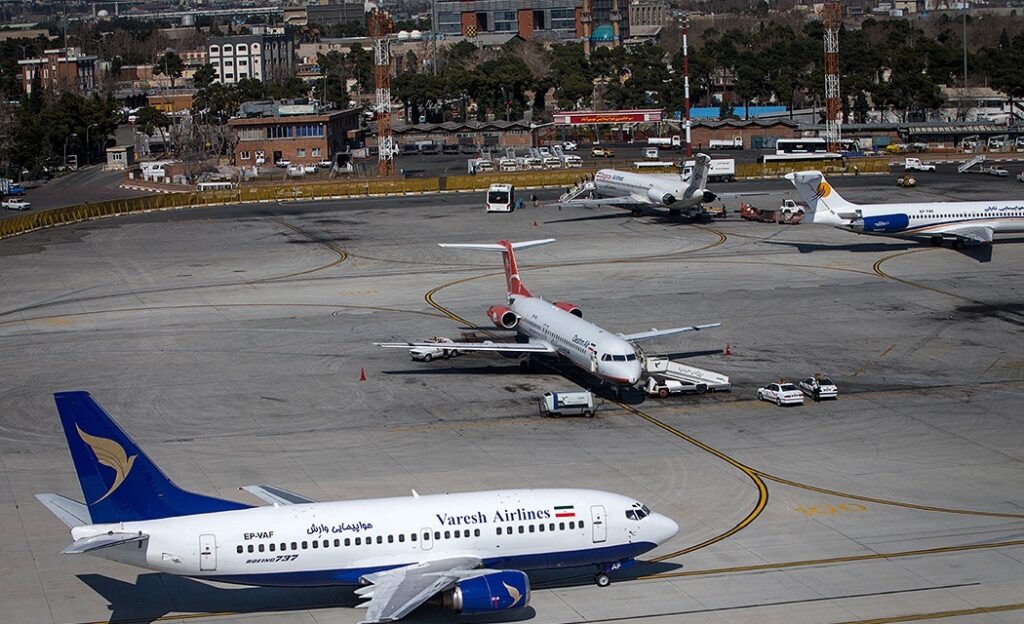
Iranian carrier Varesh Airlines says it will resume flights between the Iranian city of Mashhad and Dushanbe, Tajikistan´s capital, on Friday.

The planned resumption reflects a partial easing of tensions during a ceasefire between Iran and the United States, though uncertainty remains over any plans for peace talks as well as the prospects for safe shipping in the contested Strait of Hormuz.

Mashhad is a northeastern Iranian city near the border with Turkmenistan and a significant hub for trade with Central Asia, which has been disrupted by the Mideast fighting in the past weeks. The city is about 850 kilometers from Dushanbe.

“Mashhad – Dushanbe – Mashhad flights will operate from Friday, April 24,” Varesh Airlines said on Instagram. It announced similar plans to reopen the route between Tehran and Muscat, Oman.

The Iranian carrier also suspended flights during regional fighting last year.

Somon Air, a Tajikistan-based carrier, had said it was increasing the frequency of flights between Dushanbe and Tehran starting early last year. But it also had to suspend Iran flights last month because of the war.

Uzbekistan Expands Afghan Rail Capacity to Support Growing Trade

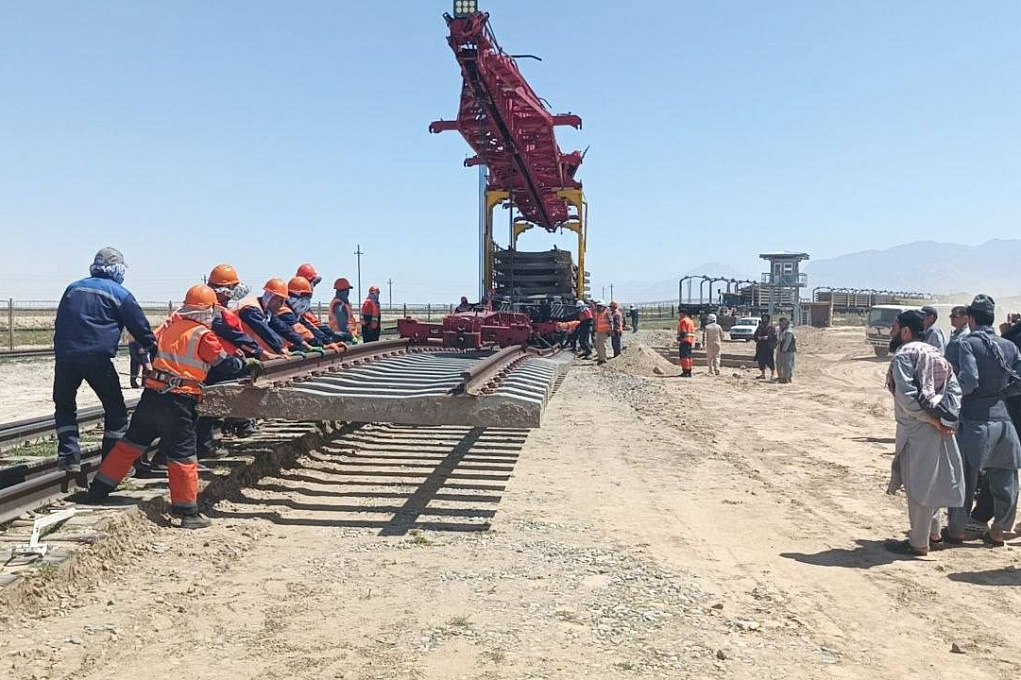
A new 1,000-meter siding track has been completed at Naibabad railway station in Afghanistan, aimed at increasing freight handling capacity and improving the efficiency of rail operations, according to Uzbekistan Railways.

The project was implemented by Uzbekistan Railways in cooperation with Sogdiana Trans. The additional track is expected to significantly expand the station’s throughput and accelerate loading and unloading processes, reducing delays and congestion along the route.

Afghanistan plays a key role in regional connectivity, linking Central Asia with South Asia through transport corridors that pass through its territory. Naibabad is expected to serve as an important hub for the movement of goods from countries such as Russia, Kazakhstan, and China to markets in Pakistan and India.

The development comes amid a steady increase in cargo volumes between Uzbekistan and Afghanistan. The Hayraton-Naibabad-Mazar-i-Sharif corridor has become an important route for regional trade, and infrastructure upgrades are seen as essential to maintaining stable freight flows.

According to project details, the new siding will enable more efficient processing of freight wagons and help prevent bottlenecks along the line. It is also expected to improve service quality for customers and support the long-term development of Naibabad station.

Uzbekistan Railways noted that the project reflects the country’s ongoing efforts to modernize railway infrastructure in Afghanistan and strengthen cross-border logistics links. Cooperation with Sogdiana Trans has further reinforced their position as long-term partners in the development of Afghanistan’s rail sector.

The expansion builds on earlier work at the station. In 2024, Uzbekistan Railways reported that the restored Naibabad station officially reopened on August 7, following reconstruction carried out in cooperation with the Termez regional railway hub and Sogdiana Trans. The arrival of the first freight cars marked the resumption of operations.

As freight traffic along the corridor continues to grow, Uzbekistan Railways and its partners, in coordination with Afghanistan’s Ministry of Public Works, are continuing efforts to modernize infrastructure along the route.

Kyrgyz Authorities Seek Review of Sovereign Credit Rating

Kyrgyzstan’s Minister of Economy and Commerce, Bakyt Sydykov, held talks with analysts in Washington on the sidelines of the Spring Meetings of the International Monetary Fund and the World Bank Group, where the country’s macroeconomic stability was discussed.

According to Sydykov, Bishkek is seeking an upgrade to its sovereign credit rating as part of the implementation of the National Development Program through 2030. He noted that engagement with Moody’s is aimed at strengthening international investor confidence and forms part of an ongoing institutional dialogue.

Sydykov said the country is meeting its obligations within the framework of cooperation with the agency and expects further constructive information exchange. He also recalled that last year Moody’s revised Kyrgyzstan’s outlook to “positive” while maintaining the rating at B3, which authorities interpreted as confirmation of ongoing reforms.

The minister added that the country’s economy has grown at an annual rate of 9.5-11% over the past four years, driven by investment, domestic demand, and activity in construction, services, and industry.

Following the meeting with Moody’s, Sydykov also held talks with representatives of U.S. businesses, presenting investment opportunities in logistics, transport infrastructure, and energy, including hydropower.

According to the National Statistical Committee of Kyrgyzstan, investment in fixed capital increased by 25% year-on-year in the first quarter, reaching 77.3 billion KGS ($883.4 million). Domestic investment rose by 20%, while foreign investment increased by 50%.

For comparative sovereign risk ratings on Central Asia see TCA’s Central Asia Balance Sheet.