• KGS/USD = 0.01144 0%
  • KZT/USD = 0.00211 0%
  • TJS/USD = 0.10460 0.19%
  • UZS/USD = 0.00008 0%
  • TMT/USD = 0.28490 0%
  • KGS/USD = 0.01144 0%
  • KZT/USD = 0.00211 0%
  • TJS/USD = 0.10460 0.19%
  • UZS/USD = 0.00008 0%
  • TMT/USD = 0.28490 0%
  • KGS/USD = 0.01144 0%
  • KZT/USD = 0.00211 0%
  • TJS/USD = 0.10460 0.19%
  • UZS/USD = 0.00008 0%
  • TMT/USD = 0.28490 0%
  • KGS/USD = 0.01144 0%
  • KZT/USD = 0.00211 0%
  • TJS/USD = 0.10460 0.19%
  • UZS/USD = 0.00008 0%
  • TMT/USD = 0.28490 0%
  • KGS/USD = 0.01144 0%
  • KZT/USD = 0.00211 0%
  • TJS/USD = 0.10460 0.19%
  • UZS/USD = 0.00008 0%
  • TMT/USD = 0.28490 0%
  • KGS/USD = 0.01144 0%
  • KZT/USD = 0.00211 0%
  • TJS/USD = 0.10460 0.19%
  • UZS/USD = 0.00008 0%
  • TMT/USD = 0.28490 0%
  • KGS/USD = 0.01144 0%
  • KZT/USD = 0.00211 0%
  • TJS/USD = 0.10460 0.19%
  • UZS/USD = 0.00008 0%
  • TMT/USD = 0.28490 0%
  • KGS/USD = 0.01144 0%
  • KZT/USD = 0.00211 0%
  • TJS/USD = 0.10460 0.19%
  • UZS/USD = 0.00008 0%
  • TMT/USD = 0.28490 0%

From Fairy Tales to Oxford: The Academic Path of Meruyert Bizhanova

Education can change the course of a person’s life, shaping dreams and opening new horizons. The story of Meruyert Bizhanova, a young scholar from Kazakhstan who entered a doctoral program at the University of Oxford at the age of 24, is a striking example of how curiosity, determination, and mentorship can lead to remarkable achievements.

A Passion for Learning from an Early Age

Bizhanova’s love for learning began in early childhood. She recalls that by the time she was five years old, she had already read every fairy tale available in her school library. Reading stories and writing short narratives fascinated her, and books soon became her closest companions.

Her academic development later flourished at Nazarbayev University, where supportive professors encouraged her intellectual curiosity and motivated her to pursue opportunities abroad. She particularly acknowledges the influence of mentors such as Vice-Provost Loretta O’Donnell and professors Tursonjan Tokay, Thomas Duke, Warren Rocco, and Marilyn Plumlee. According to Bizhanova, these mentors taught her the importance of discipline, dedication, and sincerity in academic work.

Graduate Studies in the United States

After completing her undergraduate education, Bizhanova decided to continue her academic journey internationally. She chose the University of Pennsylvania for her master’s studies, aiming to gain globally recognized academic training and deepen her research in the field of higher education.

The University of Pennsylvania is widely known for its strong academic tradition in higher education policy and leadership, which closely aligns with her research interests. During her master’s program in educational leadership, Bizhanova studied international education policy, governance of higher education systems, research methodology, and leadership strategies.

Beyond classroom learning, the university provided opportunities for internships, research collaborations, professional networking, and career development. Studying at one of the world’s leading universities also gave her access to a global academic community and opened new professional possibilities.

Image: personal archive

Why Oxford?

For Bizhanova, the University of Oxford had long symbolized academic excellence. From childhood, she had heard of it as one of the most prestigious universities in the world. Admission to Oxford’s doctoral programs is highly competitive, and thousands of candidates apply each year, but only a small number are admitted. For example, the DPhil in Education, which Bizhanova is studying for, has approximately 200 applications per year, out of which around 38 students are selected. 

Being accepted into Oxford’s doctoral program, Bizhanova says, is both an honor and a responsibility. When considering where to pursue her PhD, she realized that several Oxford scholars were conducting research closely related to her own academic interests. Her professors at the University of Pennsylvania were also familiar with these scholars and encouraged her to apply, recognizing Oxford as one of the leading centers for research on higher education.

Researching the Future of Universities

Bizhanova’s doctoral research focuses on universities in post-Soviet countries and how they attempt to balance teaching responsibilities with the development of scientific research. Many universities in this region inherited complex institutional traditions and governance structures from the Soviet era. Today, however, they face increasing pressure to meet international standards for research universities while maintaining high-quality teaching.

Her research investigates the institutional, cultural, and historical factors that influence this transformation. It also explores the strategies universities use to overcome these challenges, as well as the role of public policy, funding mechanisms, and academic culture. The goal of her work is to propose practical recommendations that could help universities in the region build sustainable research ecosystems and strengthen academic excellence.

The Oxford Research Environment

According to Bizhanova, one of the greatest advantages of studying at Oxford is the opportunity to work with globally recognized scholars. Professors at the university are leading experts in their respective fields and actively contribute to the development of new academic ideas and methodologies. While they maintain high expectations and rigorous academic standards, they also provide valuable guidance to doctoral students.

Bizhanova notes that the intellectual environment at Oxford is both challenging and highly supportive.

Learning in a Global Community

Oxford’s international academic environment allows Bizhanova to interact with researchers from different countries and academic traditions. These exchanges broaden her perspective and expose her to diverse research approaches and methodologies.

Her research also examines the challenges faced by research universities in Central Asia, particularly within the post-Soviet context. She studies how historical legacies affect universities’ research capacity and explores strategies that could strengthen academic development across the region.

Image: personal archive

Applying Knowledge at Home

Despite her international academic experience, Bizhanova emphasizes her commitment to contributing to the development of higher education in Kazakhstan.

She hopes that the knowledge and experience she gains abroad will help universities in Kazakhstan and neighboring countries transition toward stronger research-oriented models. Traditionally, many universities in the region have focused primarily on teaching. Today, however, they must also expand their research missions and play a more active role in society.

Bizhanova’s research aims to help institutions integrate research into their central mission, improve academic quality, and establish sustainable research systems.

Looking Ahead

Bizhanova believes that Kazakhstan’s education system is progressing in the right direction. Students are increasingly receiving high-quality training and developing strong English-language skills, allowing them to participate more actively in the global academic community.

At the same time, she stresses the importance of providing greater support, both financial and institutional, for young researchers.

“The future of science depends on investing in the next generation,” she says.

Bizhanova’s academic journey from a young girl captivated by fairy tales to a doctoral researcher at Oxford illustrates the transformative power of education and the growing global presence of scholars from Kazakhstan.


On International Women’s Day, Shakhnoza Mirziyoyeva Names Uzbekistan’s Female Athletes an “Inspiration”

For International Women’s Day on 8 March, Shakhnoza Mirziyoyeva, First Deputy Director of Uzbekistan’s National Agency for Social Protection, has shared comments with The Times of Central Asia in which she gives particular praise to the country’s sportswomen.

Mirziyoyeva said: “As we celebrate International Women’s Day, I would like to praise Uzbekistan’s female athletes for inspiring more girls and women and giving them the confidence to pursue their dreams.”

Fitness and active pursuits are increasingly at the forefront of government policy, as the country’s Soglom inson – soglom millat (“Healthy Person, Healthy Nation”) initiative – introduced by Mirziyoyeva’s father, President Shavkat Mirziyoyev – gains momentum.

Mirziyoyeva added that sport enables women and girls to become leaders, namechecking Olympic gold medalist judoka Diyora Keldiyorova and taekwondo athlete Svetlana Osipova among those who promote active lifestyles.

Mirziyoyeva was involved in establishing the Association of Adaptive Sports in Uzbekistan – a platform to unify and develop Uzbek parasports, and create opportunities for athletes with disabilities. She is First Deputy Chairperson of Uzbekistan’s Paralympic Committee, whose athletes are currently competing at the 2026 Paralympic Winter Games Milano Cortina.

“To the female athletes currently competing in Milano Cortina, your perseverance is an inspiration to us all,” her message to The Times of Central Asia continues, mentioning long-jumper Asila Mirzayorova and taekwondo athlete Guljonoy Naimova as Uzbek competitors carrying the country’s hopes at the Paralympics.

“May your performances in Italy continue to build a legacy of inclusion and excellence that inspires generations to come – not only in Uzbekistan, but around the world.”

Shakhnoza Mirziyoyeva’s message comes at the start of a standout year for Uzbek sports. The country’s football team will make its first appearance at a FIFA World Cup at the tournament in North America this summer. Samarkand will host the World Triathlon Championship Series on 25-26 April, then the 46th Chess Olympiad in September. The World Aquatics Swimming World Cup comes to Tashkent in October.

Kazakhstan Says Iranian President’s Statement is Step to Easing Mideast Tensions

Kazakhstan has welcomed a statement by Iranian President Masoud Pezeshkian about ending Iranian missile and drone attacks on neighboring countries, though some Gulf Arab states reported continuing attacks on Saturday.

President Kassym-Jomart Tokayev of Kazakhstan noted the statement by Pezeshkian, “who conveyed the decision of the Interim Governing Council to renounce attacks on neighboring countries,” said Aibek Smadiyarov, spokesman for Kazakhstan’s presidency.

Tokayev “considers this an important step aimed at easing tensions in the Middle East,” Smadiyarov said.

In a video message, Pezeshkian apologized “on my own behalf” for Iranian attacks on neighboring countries, including Azerbaijan, where two drones struck near an airport and a school. The Iranian president said Iran should not attack those countries unless they attack Iran.

Iran has been governed by an interim council since Supreme Leader Ali Hosseini Khamenei was killed in an air strike at the start of the war a week ago. U.S. and Israeli forces have kept up intense bombardments since then and President Donald Trump is demanding that the Iranian government unconditionally surrender. Pezeshkian rejected Trump’s demand in his message on Saturday.

Azerbaijan Orders its Diplomats to Leave Iran after Drone Attacks

Azerbaijan said on Friday that it is evacuating staff from its embassy in Tehran as well as its consulate in the Iranian city of Tabriz, one day after accusing Iran of drone attacks on its territory.

Azerbaijani Foreign Minister Jeyhun Bayramov said an order has been issued to evacuate the diplomatic missions in Iran because of safety concerns, the state news agency Azertac reported. Bayramov spoke at a briefing in Baku with Moldovan counterpart Mihai Popşoi.

Azerbaijan has also submitted a report to the International Civil Aviation Organization, a United Nations body, about the attack on the airport in the exclave of Nakhchivan, according to another outlet, the Azerbaijani Press Agency, or APA.

Another Iranian drone landed near a school in Nakhchivan. Several civilians were injured in the attacks. Iran has told Azerbaijan that it is investigating.

While the Azerbaijani military is on high alert, the government said social media reports that it had deployed heavy weapons along the border with Iran were false. Also, some cargo trucks are now crossing the border between Azerbaijan and Iran after a suspension because of the drone attacks.

Azerbaijan has thanked dozens of countries, including some in Central Asia, for expressions of support following the attacks.

The USSR Is Gone, the Story Isn’t: Joe Luc Barnes On the Road Across the Former Soviet Union

On a foggy but mild London evening, The Times of Central Asia joined journalist and contributor Joe Luc Barnes to celebrate the launch of his new book,  Farewell to Russia: A Journey Through the Former USSR. As the wine flowed, the conversation ranged from Silk Road cities to Soviet ghosts. It was exactly the sort of evening you might expect from a book that explores one of the world’s most complex regions with both political sharpness and a healthy sense of humor.

Barnes’ book begins with a deceptively simple question: What actually happened to the fifteen countries that emerged following the Soviet Union’s collapse in 1991? The clichés are familiar: snow, concrete, and the KGB. Nevertheless, Barnes’ depiction reveals that the real story is stranger, funnier, and far more human. In the years since Russia’s invasion of Ukraine, he has crossed the former Soviet states from Estonia’s tech hubs to Uzbekistan’s minarets and Azerbaijan’s flame towers, gathering stories from taxi drivers, activists, nomads, and anyone willing to converse over a drink.

The result is part travelogue and part political detective story, with a strong dose of dark comedy about life after empire. Barnes moves easily between epic scenery and the absurdities of everyday life. Georgian wine and Armenian brandy make an appearance alongside Silk Road bazaars, smoky bars, and long railway excursions. At times there is also the lingering suspicion that someone, somewhere, is still listening. It is a portrait of a region that the West often reduces to geopolitics but which, as Barnes shows, is full of resilience, generosity, and a distinctly post-Soviet sense of humor.

Image: TCA

Barnes is well placed to tell the story, as a journalist who has spent more than a decade working across China and the former Soviet space. Since the full-scale invasion of Ukraine in 2022, he has visited all fifteen former Soviet republics, a journey that has taken him from former gulag sites in Kazakhstan to Tajikistan’s notorious Anzob Tunnel and through the shifting political landscape of the region.

The book was released on March 5, a date heavy with Cold War symbolism. It marks the anniversary of Joseph Stalin’s death in 1953 and Winston Churchill’s Iron Curtain speech in 1946. With 2026 also marking thirty-five years since the collapse of the Soviet Union, Barnes’ journey arrives at a moment when questions about territory, independence, and Russia’s continuing influence feel newly urgent.

Farewell to Russia: A Journey Through the Former USSR by Joe Luc Barnes is available now in hardback, audiobook, and ebook.

Shell Signs New Exploration Deal in Kazakhstan Amid Legal Disputes

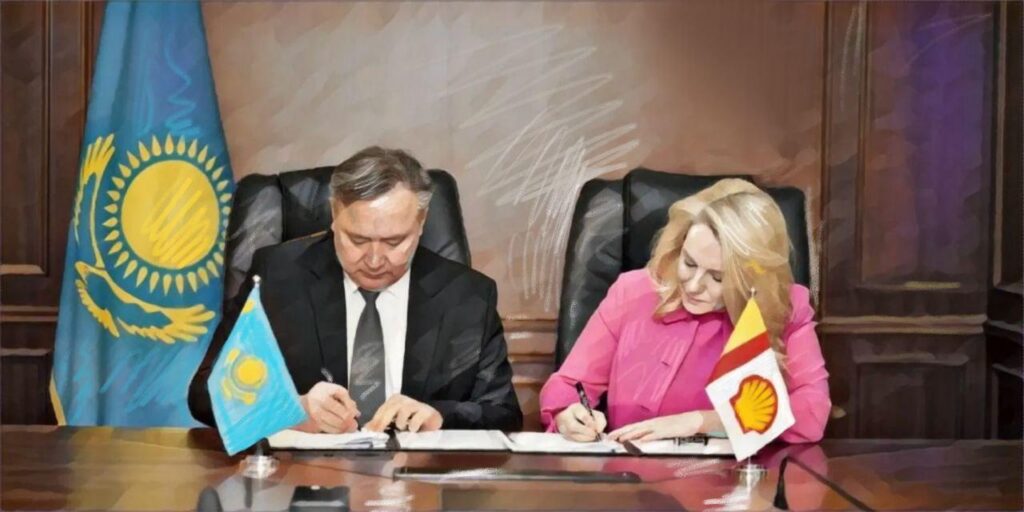
British energy company Shell has launched a new exploration project in Kazakhstan despite previously announcing that it would pause new investments in the country. On March 5, it was announced that Shell had signed a contract for geological exploration in the Aktobe region. The company has been involved in several legal disputes with Kazakhstan over subsoil use and had stated that it did not plan to invest further in the country’s energy sector.

Geological Exploration Contract

The Zhanaturmys site, which has attracted Shell’s interest, covers an area of 1,377 square kilometers and is located in one of Kazakhstan’s most actively developed oil and gas basins.

The document was signed by Kazakhstan’s Deputy Energy Minister, Yerlan Akbarov, and Shell’s Senior Vice President and Chair in Kazakhstan, Suzanne Coogan. The contract provides for seismic exploration, data collection, and technical assessments.

“The signing of today’s contract for geological exploration is further confirmation of Shell’s commitment to long-term cooperation with the Republic of Kazakhstan. Drawing on our global experience and advanced technologies, we intend to continue contributing to geological exploration and the expansion of the country’s resource base,” Coogan said.

The agreement will remain in force until 2032. The project will be implemented under the terms of an improved model contract. According to Kazakhstan’s Energy Ministry, the company will allocate at least 100 million tenge (about $200,000) to finance socio-economic development in the region where the site is located.

Shell is currently involved in three projects in Kazakhstan: the North Caspian Production Sharing Agreement (NCOC, 16.81% stake); the Karachaganak Production Sharing Agreement (29.25% stake); and the Caspian Pipeline Consortium (7.4% stake).

Kazakhstan produces around 1.8–1.9 million barrels per day and hosts some of the world’s largest offshore reserves in the Caspian Sea. Western energy majors, including Shell, Chevron, ExxonMobil, and Eni, have operated in the country for decades through complex production-sharing agreements.

Legal Disputes

In February, Shell CEO Wael Sawan said the company would suspend new investments in Kazakhstan while legal proceedings with the government were ongoing. Numerous lawsuits filed by Kazakhstan, with claims amounting to billions of dollars, have reduced the company’s willingness to invest in the country, he said.

“This affects our desire to continue investing in Kazakhstan. Although we see many opportunities for investment in the future, we will wait until we have a clearer picture of how things will turn out,” Sawan stated.

Karachaganak and Kashagan

Kazakhstan is currently involved in several legal disputes with Western oil companies, both in national courts and international arbitration. The cases concern two major oil and gas projects.

One of them is Karachaganak. In 2023, the Kazakh government filed a lawsuit against the field’s developers over cost deductions. The initial claim amounted to $3.5 billion but later increased to $6 billion after additional claims were filed.

The project is operated by a consortium led by Eni and Shell, each holding a 29.25% stake. Other partners include Chevron (18%), Lukoil (13.5%, which has agreed to sell its stake), and KazMunayGas (10%).

In January, it was reported that Shell and its partners, Eni, Chevron, and Lukoil, had lost a dispute over cost deductions. Payments to Kazakhstan could reach $4 billion, although the consortium still has the right to appeal the decision.

Previously, investors had proposed settling the dispute by building a gas processing plant to meet Kazakhstan’s domestic needs.

Another dispute concerns the Kashagan project. The Kazakh government has challenged the terms of the long-term agreement for the Kashagan field and filed arbitration claims related to the Kashagan project that together could amount to about $160 billion.

Kazakh officials have argued that under the current terms, oil companies involved in the project, including Shell, ExxonMobil, Eni, TotalEnergies, CNPC, Inpex, and KazMunayGas, receive up to 98% of the revenue from oil production at Kashagan, leaving the country with only symbolic royalties.

There is also an ongoing dispute over sulfur storage at the Kashagan field, which authorities say constitutes an environmental violation. According to some reports, Kazakhstan’s total claims related to this project may reach $13.5 billion.

Nevertheless, Shell’s management appears to be continuing to seek new projects in Central Asia. The region’s importance for Europe has increased significantly following the war in Ukraine and the reduction of energy supplies from Russia.