• KGS/USD = 0.01143 -0%
  • KZT/USD = 0.00192 -0%
  • TJS/USD = 0.10820 0.19%
  • UZS/USD = 0.00008 0%
  • TMT/USD = 0.28575 0%
  • KGS/USD = 0.01143 -0%
  • KZT/USD = 0.00192 -0%
  • TJS/USD = 0.10820 0.19%
  • UZS/USD = 0.00008 0%
  • TMT/USD = 0.28575 0%
  • KGS/USD = 0.01143 -0%
  • KZT/USD = 0.00192 -0%
  • TJS/USD = 0.10820 0.19%
  • UZS/USD = 0.00008 0%
  • TMT/USD = 0.28575 0%
  • KGS/USD = 0.01143 -0%
  • KZT/USD = 0.00192 -0%
  • TJS/USD = 0.10820 0.19%
  • UZS/USD = 0.00008 0%
  • TMT/USD = 0.28575 0%
  • KGS/USD = 0.01143 -0%
  • KZT/USD = 0.00192 -0%
  • TJS/USD = 0.10820 0.19%
  • UZS/USD = 0.00008 0%
  • TMT/USD = 0.28575 0%
  • KGS/USD = 0.01143 -0%
  • KZT/USD = 0.00192 -0%
  • TJS/USD = 0.10820 0.19%
  • UZS/USD = 0.00008 0%
  • TMT/USD = 0.28575 0%
  • KGS/USD = 0.01143 -0%
  • KZT/USD = 0.00192 -0%
  • TJS/USD = 0.10820 0.19%
  • UZS/USD = 0.00008 0%
  • TMT/USD = 0.28575 0%
  • KGS/USD = 0.01143 -0%
  • KZT/USD = 0.00192 -0%
  • TJS/USD = 0.10820 0.19%
  • UZS/USD = 0.00008 0%
  • TMT/USD = 0.28575 0%
13 December 2025

Kyrgyz Authorities Arrest Critic of Kyrgyzstan-Tajikistan Border Agreement

Kyrgyzstan and Tajikistan earned international praise last month when they signed a border agreement ending years of tension that had sometimes spilled into deadly violence. A recent arrest in Kyrgyzstan suggests that authorities are sensitive to any criticism of a deal that was widely hailed as a big step for closer ties among Central Asian countries. 

Kanyshai Mamyrkulova, who has been described by Kyrgyz media sources as a journalist and an activist, was arrested on March 20, a week after President Sadyr Japarov of Kyrgyzstan and Emomali Rahmon, Tajikistan’s leader, signed the peace agreement following painstaking negotiations over the delineation of the nearly 1,000-kilometer border between the two countries.

This week, a court upheld an earlier ruling that Mamyrkulova be held in pre-trial detention until May 19, in one of the latest cases in Kyrgyzstan that pits advocates of free speech against a government that increasingly views unfettered opinions and alleged disinformation as a threat to national stability. While critics warn that Kyrgyzstan is clamping down on free expression, the environment there is relatively looser than in Tajikistan, where the state exercises tighter controls over the media.

Mamyrkulova appears to have fallen foul of the authorities for critical posts on social media rather than any journalistic reports. 

She spread “false information regarding the Kyrgyzstan–Tajikistan border issue” on Facebook, the Bishkek city police department said last month.

“The individual made calls aimed at destabilizing the socio-political situation in the Kyrgyz Republic by inciting mass disorder and promoting interethnic hatred between citizens of Kyrgyzstan and neighboring countries,” the department said. It added that Mamyrkulova had “previously been held accountable for similar actions — spreading misinformation and escalating tensions during past incidents involving border issues between the Kyrgyz and Uzbek republics.” 

A review of some of Mamyrkulova’s Facebook posts reveals a stream of comments and barbs about alleged corruption, official wrongdoing, and prosecutions, often delivered with cheeky humor. Some are indirect or use metaphors to make a point. Several that refer to the border agreement suggest the Kyrgyz government was not transparent enough with its citizens and imply that Tajikistan got the better of the deal.  

In a letter released last week, Mamyrkulova said she hadn’t done anything wrong. 

“I did not kill anyone, did not steal from the state, and did not take bribes. I’ve only posted about legal, political, economic, and social issues affecting the public. Regarding the criminal charges brought against me under Article 278 (part 3) and Article 330 (part 1) of the Criminal Code of the Kyrgyz Republic — I have never committed, nor will I ever commit such crimes,” she said in the statement, which was posted on the Facebook account of supporter Amanbol Babakulov.  

“They spun a criminal case from thin air simply because I wrote what the public was thinking, in a way that struck a nerve. I know this well myself — as do the lawyers, the attorneys, and those who work closely with the justice system,” she said. 

The Media Action Platform of Kyrgyzstan, which represents journalists, called for Mamyrkulova to be freed, saying that “it is obvious that there are no calls for violence, riots or international division” in the social media posts that were flagged by authorities and that equating an opinion with a crime violates the Constitution. 

Separately, on Wednesday, Japarov pardoned 41 people who had been convicted of crimes, according to the Kloop news organization. Those who were pardoned include activist Zarina Torokulova and reporter Azamat Ishenbekov, both of whom got into trouble for social media posts and were sentenced to five years in prison after being convicted of calling for riots. They were detained in September 2023 and January 2024, respectively. 
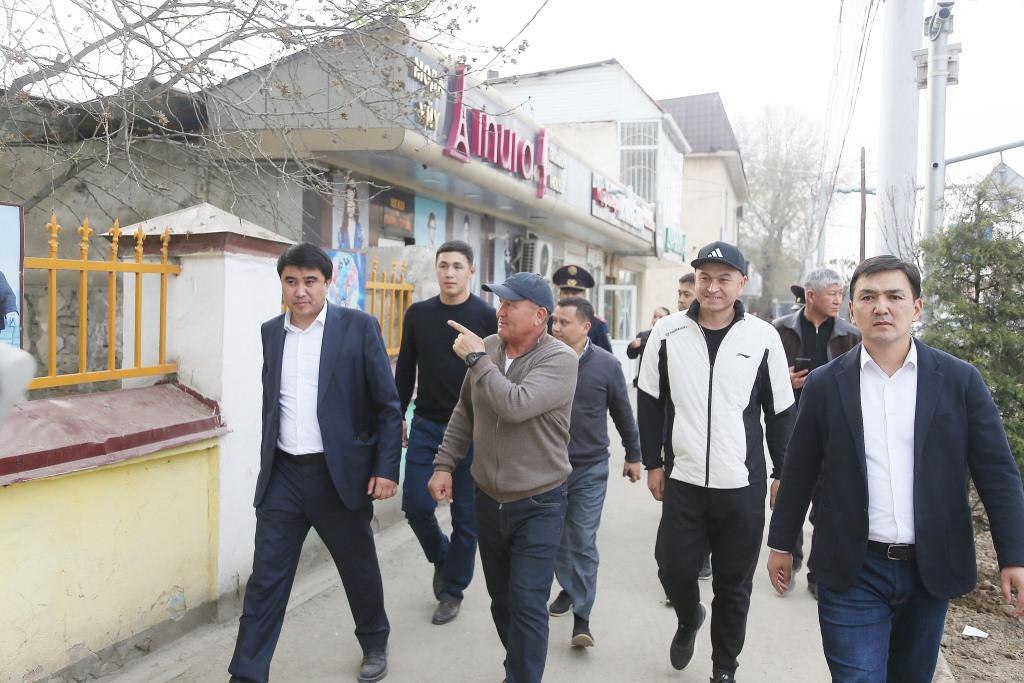
Kyrgyz Security Agency Condemns Osh Mayor’s City Toll Plan

Kyrgyzstan’s State Committee for National Security (SCNS) has sharply criticized a controversial proposal by the mayor of Osh, the country’s second-largest city, to introduce an entry fee for vehicles arriving from other regions.

Mayor Jenishbek Toktorbayev raised the idea earlier this week during a municipal meeting focused on identifying new sources of revenue for the city budget. Arguing that Osh cannot rely indefinitely on central government support from Bishkek, Toktorbayev floated the possibility of charging motorists for access to the city.

According to the mayor, Osh is home to over 500,000 residents, with the population exceeding 800,000 when accounting for daily inflows from neighboring areas. “About 56,000 vehicles enter Osh each day, leading to traffic jams, accidents, and air pollution,” he said.

Toktorbayev proposed charging 50–100 KGS (approximately $0.60-$1.15) per car and 100-150 KGS per truck, estimating that such fees could generate around 2 million KGS daily. This could add up to an additional 3 billion KGS (roughly $34.5 million) in annual revenue for the city budget.

However, the SCNS issued a strong rebuke, calling the idea unacceptable. In a statement cited by local media, the agency warned that the financial burden would disproportionately affect ordinary citizens, particularly low-income families. It added that higher delivery costs would likely be passed on to consumers, driving up prices for goods and services.

The Committee urged all mayors and local officials to refrain from proposing such “crazy ideas” and instead focus on addressing the real challenges facing their constituents​.

Following public backlash and the SCNS statement, the Osh municipal government’s Facebook page, which previously contained details about the mayor’s proposal, has become inaccessible.

The notion of charging vehicle entry fees is not new in Kyrgyzstan. Last year, a similar proposal was floated for Bishkek as a potential solution to the capital’s worsening traffic congestion. However, President Sadyr Japarov rejected the idea, instead ordering the expansion of road infrastructure and the construction of new parking facilities.

The Times of Central Asia has previously reported on Mayor Toktorbayev’s active economic agenda. Notably, his urban development plans have sparked public opposition, including from the head of the Russian Orthodox Church in Kyrgyzstan, who urged city authorities not to demolish a historic cemetery to make way for a new road​.

Kazakhstan’s Economy Receives Boost Amid Changing Tariff and Commodity Dynamics

Kazakhstan’s economy has recently navigated a series of external market shocks.

While the suspension of U.S. reciprocal tariffs by President Trump represents a positive development, its direct impact on Kazakhstan is minimal, as the 27% tariff applied to only a minor segment (4.8%) of the nation’s exports and excluded key commodities such as oil, uranium, and silver. Kazakhstan is still subject to the universal baseline rate of 10%.

However, the broader improvement in global market dynamics, spurred by increased demand for commodities that Kazakhstan predominantly produces, has provided a substantial boon to the country’s economic prospects. This shift underscores a more favorable outlook for Kazakhstan, with rising global demand aligning closely with its resource-driven economy.

On April 9, oil prices, in particular, rebounded strongly after hitting a four-year low earlier in the day. Brent crude rose by 4.23% to $65.48 per barrel.

Similar trends were observed in other key commodities. Copper prices jumped nearly 3%, and gold rose over 3%, marking its best performance since October 2023, as investors sought safe-haven assets.

U.S. natural gas futures, meanwhile, experienced a significant 8% increase, reflecting broader optimism spurred by the tariff suspension.

Uranium futures, another strategic export for Kazakhstan, edged up by 1.18% to $64.40.

Rare earth metals also showed exceptional growth, with a 12.5% gain highlighted by the VanEck Rare Earth and Strategic Metals ETF (REMX). This coincides with Kazakhstan’s recent discovery of over 20 million metric tons of rare earth deposits, consolidating its position as a potential global heavyweight in this critical market.

The timing of the tariff suspension aligns closely with domestic efforts to address the country’s economic challenges. On April 9, President Kassym-Jomart Tokayev convened a meeting to tackle the ongoing economic crisis triggered by global market collapses and declining oil prices. He stressed the importance of maintaining development priorities while implementing swift actions to mitigate the crisis’ impact. The rise in commodity prices following the tariff halt gives these initiatives fresh momentum and a more favorable outlook for executing recovery measures.

Opinion: Kazakhstan’s Tax Reform May Come as an Unpleasant Surprise

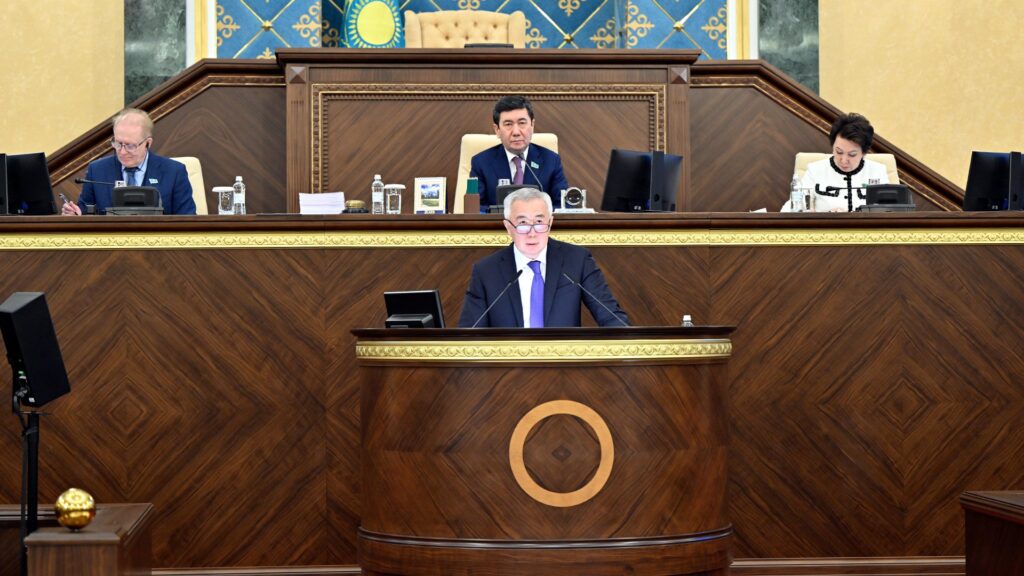
Kazakhstan’s tax reform has reached a critical juncture. This week, the Mazhilis, the lower house of parliament, approved the draft of the new Tax Code in its first reading. The sweeping document, comprising 822 articles, proposes the repeal of the current Tax Code along with the accompanying implementation law.

While the reform fulfils directives issued by President Kassym-Jomart Tokayev in his 2022 and 2023 state-of-the-nation addresses, skepticism abounds. Experts and business leaders have voiced concerns, and lawmakers themselves have offered mixed reviews, with many adopting a critical stance.

Concerns About Scope and Timing

Though tax professionals broadly agree on the need for tax reform, some warn that the current version may be the most stringent in over two decades. Critics argue that without addressing structural inefficiencies in government spending, raising taxes alone will not yield the desired outcomes. They emphasize the need for a balanced approach that supports both fiscal sustainability and economic resilience.

Adding to the unease is the timing. Kazakhstan, like many economies, faces mounting global pressures. The threat of a financial downturn, exacerbated by falling energy prices and international tariff disputes, has prompted urgent consultations at the highest level. Tokayev recently convened a closed-door meeting with the prime minister and the head of the National Bank, instructing them to finalize a government action plan to mitigate potential economic fallout and maintain investment flows.

A Mixed Bag of Reactions

Some analysts acknowledge that the existing Tax Code, adopted in 2008, is outdated. They argue that reforms are essential to address digitalization, evolving business models, and new global challenges. Calls for improved tax administration, especially the simplification of procedures and adoption of risk-based oversight, aim to ease pressure on law-abiding businesses while better targeting the informal sector.

The draft law also seeks to limit inefficient tax exemptions and make incentives more focused and transparent. These changes are framed as part of Tokayev’s broader economic transformation agenda, which prioritizes fair taxation, industrial processing, and innovation.

Nonetheless, many entrepreneurs remain uneasy. Economic instability, lingering post-pandemic effects, geopolitical risks, and sanctions-related supply disruptions have left businesses vulnerable. Critics worry that introducing a more demanding tax regime now may fuel uncertainty and discourage investment.

Additional concerns center on governance. Persistent issues of corruption, selective enforcement, and administrative overreach have eroded public trust. Without parallel reforms in public administration, experts argue that changes to tax policy alone may fall short.

Divided Political Reception

The draft Tax Code’s passage through its first reading does not guarantee smooth sailing. Even the ruling Amanat party, while supporting the bill, has voiced reservations. Its members have called for safeguarding small and medium-sized enterprises and enhancing investment incentives.

The opposition Ak Zhol party has been the most vocal critic. Its leader, Azat Peruashev, characterized the proposal as a fiscal crackdown rather than genuine reform. The faction demands greater transparency, public consultations, and a reconsideration of proposed VAT hikes and lower registration thresholds.

Meanwhile, the pro-business Respublica party supports the reform in principle but insists on greater simplification in business-tax authority interactions. The party advocates for the expanded use of digital tools, analytics, and a personalized approach to taxation.

An Uncertain Path Forward

The upcoming parliamentary hearings on the reform are expected to be contentious. While the Mazhilis has given preliminary approval, the Senate may take a different view and could demand revisions. Yet the biggest challenge may come after the law is passed, communicating the changes to the broader public.

For ordinary citizens, many of whom are disconnected from the technicalities of legislative debate, a rise in taxes could be perceived as an unwelcome surprise. Whether this reform delivers the intended benefits or stokes further discontent will depend largely on how it is implemented and whether the government can build trust in the system it is reshaping.

Kyrgyzstan Delays Opening of Alternative North-South Highway to 2026

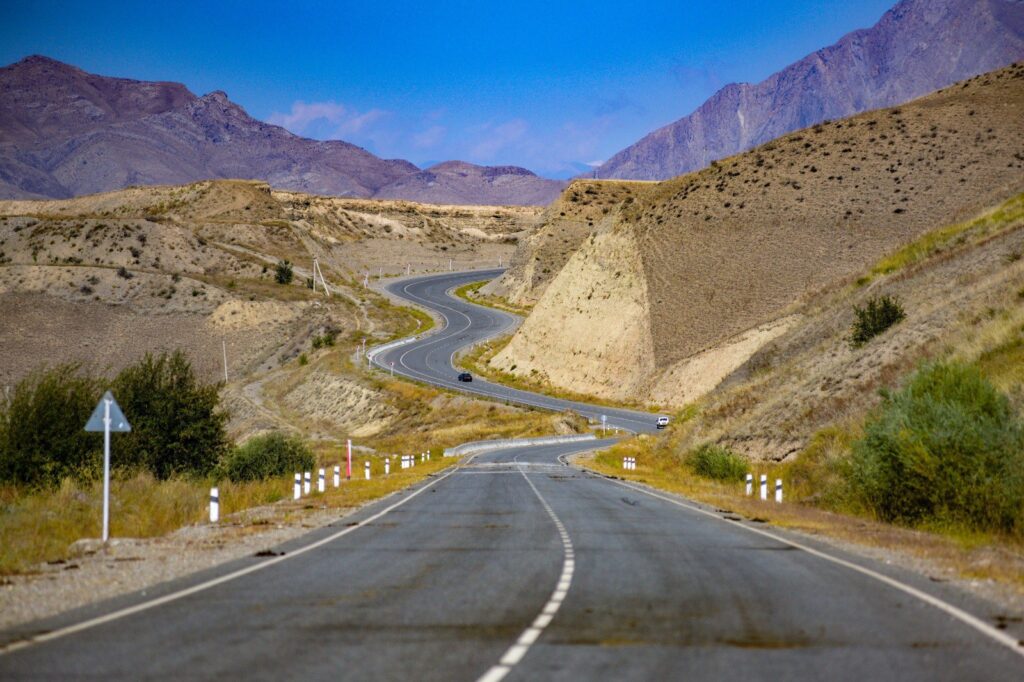
Kyrgyzstan has pushed back the opening of its long-anticipated alternative North-South highway to 2026, according to the Ministry of Transport and Communications. The route was originally slated to open in May 2025, but the timeline has been extended to accommodate additional infrastructure work.

The delay stems from plans to construct two avalanche protection galleries, three overpass bridges, and a 25-kilometer bypass section between the villages of Barpy and Safarovka. The ministry confirmed that all additional construction will be completed by 2026.

The 433-kilometer highway is a strategic transport corridor linking Balykchy in the Issyk-Kul region with Jalal-Abad in the south. Notably, approximately 200 kilometers of the route traverse areas where no roads previously existed.

Key engineering achievements along the route include Kyrgyzstan’s longest tunnel, located at the Kok-Art mountain pass, and two major overpass bridges. Once operational, the highway is expected to cut travel time between Jalal-Abad and Balykchy from 13 hours to just six.

Currently, the only existing route connecting Kyrgyzstan’s northern and southern regions is the Bishkek-Osh highway. The new North-South corridor is expected to dramatically enhance both passenger and freight transportation between the regions, especially in the absence of a direct railway connection.

Kazakhstan to Auction 50 Rare Metal Deposits in June 2025

Kazakhstan will grant exploration and development rights for 50 deposits of gold and rare metals through an electronic auction scheduled for June 2025, the Ministry of Industry and Construction has announced.

Almas Kushumov, Director of the Ministry’s Department of Subsoil Use, shared the details through MINEX Kazakhstan (Mining and Exploration Forum).

“We will auction off deposits with confirmed balance reserves, gold, coal, rare metals, and polymetals,” Kushumov said. “The information will be published soon on the Unified Platform of Subsoil Use, and in June we plan to hold the electronic auction. All participants will be able to submit their documents online.”

The auction will be hosted on the Unified Subsoil Use Platform: minerals.e-qazyna.kz. Licenses will be awarded for both exploration and production, with production licenses valid for 25 years. Companies from the United States, European Union, and China have already submitted applications, according to the ministry.

The full list of the 50 deposits will be made public in the coming days. Kazakhstan has prior experience with this auction format, between 2023 and 2024, 117 deposits were awarded through electronic auctions, generating over KZT29 billion ($55.9 million) in signing bonuses.

Kazakhstan currently holds over 9,000 registered deposits, including 987 classified as solid mineral sites. Many of these were surveyed more than three decades ago, which is why the government is now prioritizing not only production rights but also geological exploration, with strong interest from both domestic and foreign investors.

Kushumov noted that the introduction of the Code on Subsoil and Subsoil Use in 2018 significantly improved the investment climate, tripling the volume of private capital in the sector.

As previously reported by The Times of Central Asia, the state mining company Tau-Ken Samruk is advancing work at the Kuirektykol rare earth deposit, where exploration began in 2022. Recent studies have identified new promising zones which, if confirmed, could place Kazakhstan among the global leaders in rare earth metal reserves.