• KGS/USD = 0.01144 0%
  • KZT/USD = 0.00193 -0%
  • TJS/USD = 0.10811 -0.28%
  • UZS/USD = 0.00008 0%
  • TMT/USD = 0.28490 0%
  • KGS/USD = 0.01144 0%
  • KZT/USD = 0.00193 -0%
  • TJS/USD = 0.10811 -0.28%
  • UZS/USD = 0.00008 0%
  • TMT/USD = 0.28490 0%
  • KGS/USD = 0.01144 0%
  • KZT/USD = 0.00193 -0%
  • TJS/USD = 0.10811 -0.28%
  • UZS/USD = 0.00008 0%
  • TMT/USD = 0.28490 0%
  • KGS/USD = 0.01144 0%
  • KZT/USD = 0.00193 -0%
  • TJS/USD = 0.10811 -0.28%
  • UZS/USD = 0.00008 0%
  • TMT/USD = 0.28490 0%
  • KGS/USD = 0.01144 0%
  • KZT/USD = 0.00193 -0%
  • TJS/USD = 0.10811 -0.28%
  • UZS/USD = 0.00008 0%
  • TMT/USD = 0.28490 0%
  • KGS/USD = 0.01144 0%
  • KZT/USD = 0.00193 -0%
  • TJS/USD = 0.10811 -0.28%
  • UZS/USD = 0.00008 0%
  • TMT/USD = 0.28490 0%
  • KGS/USD = 0.01144 0%
  • KZT/USD = 0.00193 -0%
  • TJS/USD = 0.10811 -0.28%
  • UZS/USD = 0.00008 0%
  • TMT/USD = 0.28490 0%
  • KGS/USD = 0.01144 0%
  • KZT/USD = 0.00193 -0%
  • TJS/USD = 0.10811 -0.28%
  • UZS/USD = 0.00008 0%
  • TMT/USD = 0.28490 0%
10 December 2025

Kazakhstan to Establish Unified Innovation Cluster

Kazakhstan is set to create a unified national innovation cluster by merging two of its key technological institutions: the International Technopark of IT Startups, Astana Hub, and the Park of Innovative Technologies fund, also known as Tech Garden.

The merger bill has passed its first reading in parliament. Officials say the initiative is aimed at accelerating the development of Kazakhstan’s digital economy and enhancing its global competitiveness.

Merging Platforms for Greater Synergy

Astana Hub is currently Kazakhstan’s largest platform supporting IT entrepreneurs, offering tax incentives and accelerator programs. In contrast, Tech Garden is funded through mandatory contributions from subsoil users, 1% of their income, to support digital innovation in the industrial sector.

According to Member of Parliament Aituar Koshmambetov, the integration of these two entities will create powerful synergies.

“We’re combining infrastructure, finances, experts, mentors, support programs, and market access opportunities,” Koshmambetov said.

A Digital Marketplace for Innovation

At the heart of the merged structure will be a digital platform designed to link science, business, government, and startups.

“It will function as a marketplace for challenges and solutions. Residents can see where subsoil users’ contributions are being directed and propose technologies to meet those needs,” explained Minister of Digital Development Zhaslan Madiev.

Another component of the initiative is the expansion of the Single Window of the National Innovation System (SW NIS), which allows IT companies and scientists to directly access the development needs of industrial firms. The platform is already operating in pilot mode at astana-hub.com.

Expanded Benefits for Residents

Post-merger, participants from both institutions will retain all existing benefits. Tech Garden residents will gain access to Astana Hub’s startup acceleration programs, while Astana Hub startups will have new opportunities to secure contracts from major industrial players.

Officials also hope the consolidated cluster will attract greater interest from international corporations. Kazakhstan already collaborates with major tech players like Indrive and Google, and negotiations are ongoing with Telegram.

“Kazakhstan has the unique advantage of being able to engage comfortably with China, the U.S., and Russia,” Koshmambetov noted. “That’s a strategic asset we should fully leverage.”

Economic Impact and Future Prospects

Data from 2024 show that every 1 Kazakhstani tenge (KZT) invested in Astana Hub yields:

  • 3 KZT ($0.0060) in private investment
  • 14 KZT ($0.028) in resident company revenue
  • 3 KZT ($0.0060) in export earnings
  • A trade surplus 4.6 times the input

Notable successes include a Kazakh-developed game generating $18 million in annual revenue, a smart scooter management system used in 20 global cities, and Higgsfield AI, a startup ranked among Google’s global top 20.

Strategic Focus on Artificial Intelligence

President Kassym-Jomart Tokayev has repeatedly emphasized the importance of digital transformation and artificial intelligence (AI) in national development.

“The development of artificial intelligence must be accelerated and integrated into public services and Smart City projects,” Tokayev said during a recent government meeting.

Prime Minister Olzhas Bektenov has also highlighted the practical use of AI in sectors such as ecology, social protection, and industry. He has instructed ministries to digitalize systems for managing municipal and industrial waste.

The planned merger is more than an administrative measure, it is a strategic step toward creating a digital nation where science, industry, and innovation operate within a single, integrated ecosystem.

Kyrgyz Lawmaker Challenges $15 Tint Fee for Drivers Crossing into Uzbekistan

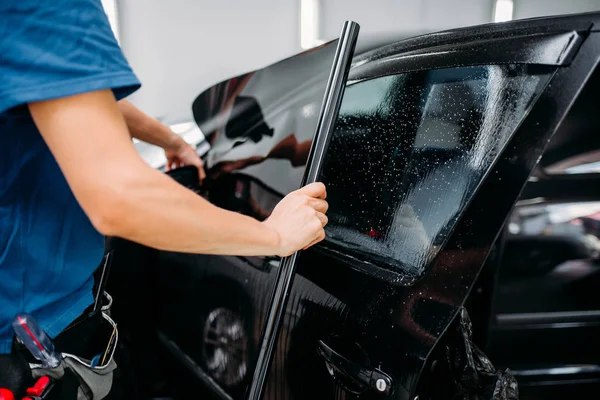
Kyrgyz drivers crossing into Uzbekistan are being charged a $15 fee if their vehicle windows are tinted, a policy that has drawn criticism from Kyrgyz lawmaker Dastan Bekeshev. Speaking during an April 2 session of the Jogorku Kenesh (Supreme Council of Kyrgyzstan), Bekeshev urged the government to either introduce a reciprocal fee for Uzbek vehicles entering Kyrgyzstan or to negotiate with Tashkent to eliminate the charge altogether.

Addressing Foreign Minister Jeenbek Kulubaev, Bekeshev explained that many Kyrgyz citizens regularly travel between Jalal-Abad and Batken, routes that often require passage through Uzbek territory. “They charge $15 for every car with tinted rear windows, almost every day. But we don’t charge them anything,” he said.

The fee is collected via Uzbekistan’s MBANK mobile application, streamlining payment for drivers. Many Kyrgyz citizens consider the charge unjustified and burdensome.

Tinting regulations differ significantly between the two countries. In Kyrgyzstan, individuals must pay 50,000 KGS (around $576) annually to tint their vehicle windows, while businesses pay 70,000 KGS (about $807). In Uzbekistan, rear window tinting is permitted at no cost, but tinting front windows costs approximately 3 million UZS (around $234) per year.

Kulubaev acknowledged that the issue had not been formally raised before but assured lawmakers that it would be examined. “We can discuss this on a mutual basis and bring it up at an intergovernmental commission meeting,” he stated.

Uzbekistan introduced the $15 fee in 2018 through a government decree aimed at regulating vehicle window tinting. Proceeds from the fee are directed to the state budget.

The debate now centers on whether Kyrgyzstan should adopt a reciprocal policy or seek a bilateral agreement to eliminate the fee, a decision that may set a precedent for broader discussions on regional transportation and cross-border regulations.

Three Spaniards, One Australian Detained at Baikonur Cosmodrome

The Baikonur Cosmodrome in a remote part of Kazakhstan has long held allure for people – trespassers included – who are intrigued by its storied role as a facility that pioneered early space exploration and remains a vital part of Russia’s space program.

Three Spanish citizens and one Australian were detained while trying to get into a restricted area housing old space infrastructure at Baikonur on Tuesday night, reported RIA Novosti, a Russian state-owned news agency. It cited an unidentified source. Another Russian media organization, Tass, later reported that the Spaniards had been released and that the Spanish embassy in Astana was working to help them. Tass did not report on the status of the Australian.

The attempted break-in at the Russian-run base occurred in the area of ​​the disused assembly and refueling complex of the Buran spacecraft, a space shuttle that was developed in the 1970s and 1980s by the Soviet Union, whose leaders were concerned that the U.S. space shuttle program posed a possible military threat. The Buran flew once in 1988, but the program was abandoned because of high costs and a lack of purpose.

In 2022, British YouTuber Benjamin Rich documented his trip to Baikonur, where he was also detained by Russian authorities. The journey involved walking with a companion for many hours across the desert, shielding themselves from the sun with umbrellas. They were able to enter the decrepit Buran hangar and see the space shuttle but got caught by guards as they were leaving the facility. Rich said he and his companion paid a fine of $50 each and were released.

Last year, RIA Novosti reported that two French citizens tried to reach Baikonur by the same method, but one died of dehydration during the arduous journey on foot.

The first man to go into space, Yuri Gagarin, and the first woman, Valentina Tereshkova, took off from the Baikonur cosmodrome, which is run by Roscosmos, the Russian space agency, under an agreement with the Kazakh government. Russia continues to launch spacecraft from there, sometimes in joint missions with NASA.

The first launch from Baikonur in 2025 occurred on Feb. 28, when a Soyuz rocket hoisted a Russian spacecraft carrying three tons of food, fuel and other supplies that were delivered to the International Space Station.

EU-Central Asia Summit Opens New Opportunities for Kazakhstan

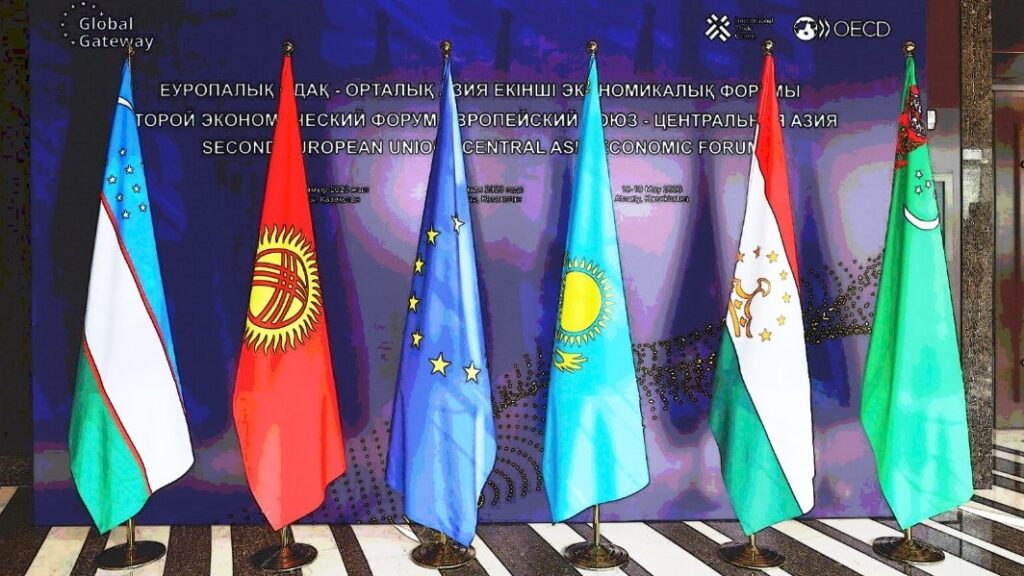
The first-ever summit between the European Union and the five Central Asian countries opened on April 3 in Samarkand, Uzbekistan. The meeting marks a milestone in regional diplomacy, as both sides seek to deepen cooperation amid growing geopolitical shifts.

Kazakhstan, in particular, is entering the summit with growing international clout, thanks to its stable economic performance and balanced foreign policy approach.

European Council President António Costa and European Commission President Ursula von der Leyen are representing the EU at the summit, which is being chaired by Uzbek President Shavkat Mirziyoyev. According to official sources, the summit aims to demonstrate mutual geopolitical interest and expand collaboration between Europe and Central Asia across key areas.

The agenda includes strengthening multilateral ties, addressing shared security threats, enhancing economic and investment cooperation, and advancing collaboration under the EU’s Global Gateway initiative. Focus areas also include energy, climate neutrality, connectivity, and green transition, along with mobility and cultural exchange.

The EU is already the region’s second-largest trading partner, accounting for 22.6% of Central Asia’s total foreign trade in 2023. It is also the largest source of foreign investment, responsible for over 40% of the region’s total inflows.

Kazakhstan’s President Kassym-Jomart Tokayev is attending the summit, following a bilateral meeting with President Mirziyoyev in Almaty on March 29. Also expected to participate are Kyrgyz President Sadyr Japarov, Tajik President Emomali Rahmon, and Turkmen President Serdar Berdimuhamedov.

At the summit, the EU is set to unveil a substantial investment package for Central Asia, with priority sectors including transportation infrastructure, critical raw materials, energy transmission, and digitalization.

European Commission President von der Leyen emphasized that Central Asia’s significant natural resources and industrial potential align with Europe’s sustainability goals. “Europe aims to create a complete value chain, not merely purchase raw materials. This is vital for generating local employment and upholding high environmental and social standards,” she said. Additional EU funding will be directed toward green energy projects and improvements to Uzbekistan’s water infrastructure.

According to Tair Nigmanov, an international relations expert, the EU’s increased engagement stems from heightened geopolitical rivalry. “We are situated between major powers like Russia and China. The EU, as another global player, wants Central Asia to remain neutral and not gravitate toward any single power center,” Nigmanov told Inform.kz. “To that end, it is offering investment, trade opportunities, and political assurances.”

For Kazakhstan, the summit presents a strategic platform to attract investment, reinforce its non-aligned stance, and leverage its growing geopolitical relevance in an increasingly multipolar world.

Trump’s Tariff Blitz Targets Global Imports, Kazakhstan Faces Harshest Impact in Central Asia

U.S. President Donald Trump has announced sweeping new tariffs on all goods imported into the United States, citing the need to protect American industry and jobs. Speaking at a White House press conference, Trump outlined a base tariff rate of 10% that will apply to 185 countries. However, several nations and blocs face significantly higher rates: China will see a 34% tariff, the European Union 20%, Switzerland 31%, and Israel 17%. The steepest tariffs were imposed on Vietnam (46%), Cambodia (49%), and Laos (48%).

Notably absent from the list are Russia, Belarus, Mexico, Iran, Canada, and Belarus. Ukraine, however, will face the base 10% rate.

Kazakhstan Hit with 27% Tariff

The new U.S. duties also target Central Asian nations. According to a comparative chart published by the White House, Uzbekistan, Turkmenistan, Tajikistan, and Kyrgyzstan will face 10% tariffs on their exports to the U.S. Meanwhile, Kazakhstani goods will be subject to a much higher rate of 27%.

The White House document notes that Kazakhstani imports currently face a 54% tariff in Kazakhstan, figures that surprised local analysts, who have questioned the methodology behind the calculations.

The rationale for the elevated rate on Kazakhstan remains unclear. However, the country’s Ministry of Trade and Integration has initiated consultations with his U.S. counterparts to explore options for exempting certain goods. According to a preliminary analysis, many of Kazakhstan’s key exports fall under exceptions outlined in U.S. regulations.

“In 2024, trade turnover between Kazakhstan and the United States amounted to $4.2 billion,” the ministry stated. “Kazakhstan’s primary exports to the U.S. – crude oil, uranium, silver, and ferroalloys – constitute 92% of total exports and are included in the exemption list under the U.S. President’s decree on reciprocal tariffs.”

Turning Tariffs Into Opportunities

Despite the steep new tariffs, some experts believe the impact on Kazakhstan will be limited. Financial analyst Rasul Rysmambetov argues that Kazakhstan’s marginal role in global trade dynamics shields it from major economic fallout.

“The real battle is between the U.S. and the world’s largest economies, China and the EU,” Rysmambetov wrote on his Telegram channel. “Our trade with the U.S. accounts for less than 1% of Kazakhstan’s total foreign trade. Even with a 27% tariff, the effect will be negligible.”

Rysmambetov noted that Kazakhstan exported over $2 billion worth of goods to the U.S. in 2024, while imports totaled $1 billion, maintaining a trade surplus for the tenth consecutive year. “We’re on the tariff list, but it’s mostly symbolic,” he added, emphasizing that Kazakhstan’s exports largely consist of strategic materials.

Rysmambetov also sees potential upsides: countries facing new duties may seek alternative markets, possibly offering Kazakhstan better terms on imports such as equipment, metals, vehicles, and construction materials. “Global trade tensions can open windows of opportunity, for strategic borrowing, better equipment deals, and expanded exports. But quick action is key,” he concluded.

International Backlash

The U.S. move drew swift condemnation from European Commission President Ursula von der Leyen, who called the policy a “severe blow to the global economy.”

“Uncertainty will increase, leading to heightened protectionism. Millions, especially in vulnerable countries, will be hit hardest by the highest tariffs. This move contradicts our international economic goals,” she wrote on X.

Von der Leyen made the remarks during a visit to Samarkand, Uzbekistan, where the first EU-Central Asia summit is taking place, a meeting Brussels has described as “historic.” Observers suggest that trade and tariffs could emerge as key topics at the summit.

Economists have also voiced concern. David Beckworth, a former U.S. Treasury economist, warned of possible “stagflation,” a scenario where inflation rises as growth stalls. Prolonged tariffs, he cautioned, could disrupt supply chains and raise consumer prices.

Olu Sonola, head of U.S. economic research at Fitch Ratings, added that extended trade barriers could push many economies into recession. “You can throw most forecasts out the window if these tariffs remain in place,” he said.

As global leaders and economists weigh the implications, one point is clear: the U.S. tariffs, and the international response they provoke, are reshaping the global trade order in profound and unpredictable ways.

Kazakhstan’s Oil Exports Uninterrupted Despite Caspian Pipeline Consortium Berth Suspensions

Despite the suspension of two out of three offshore berths operated by the Caspian Pipeline Consortium (CPC), Kazakhstan’s oil exports are proceeding without disruption, according to the Ministry of Energy of the Republic of Kazakhstan.

The ministry stated that there are currently no restrictions on the receipt or shipment of oil through the CPC system. Transshipment is being carried out on schedule via VPU-3, the third remote mooring unit, which has been in operation since 2014.

“Shipments are proceeding normally and according to schedule through the VPU-3 offshore mooring device, which remains operational,” the Ministry of Energy announced.

Temporary Suspension of VPU-1 and VPU-2

Earlier, CPC announced the temporary suspension of VPU-1 and VPU-2 following an unscheduled inspection conducted by Russia’s Rostransnadzor. The inspections are part of a broader review of marine infrastructure safety across the Azov-Black Sea basin, launched in the wake of an oil product spill in the Kerch Strait in December 2024.

Following the inspection, regulatory authorities issued protocols and directives mandating the temporary shutdown of the two berths until the violations identified are addressed. In the meantime, all CPC shipments have been consolidated through VPU-3. Consortium shareholders have been formally notified of the developments.

Similar Measures at Transneft Facility

The crackdown on safety violations has extended beyond the CPC. The eighth oil-loading berth operated by JSC Novorossiysk Commercial Sea Port (NCSP Group), part of Russia’s Transneft, has also been suspended for 90 days. The suspension followed the identification of safety violations related to the handling of hazardous cargo. Transneft has been ordered to correct the deficiencies by June 30.

Strategic Significance of CPC

The CPC is Kazakhstan’s most critical export route for crude oil, linking the giant Tengiz Field with the Yuzhnaya Ozereyevka Terminal on the Black Sea. The pipeline stretches 1,510 kilometers, including 452 kilometers within Kazakhstan, and has an annual capacity of up to 81.5 million tons. In 2024, Kazakhstan exported 54.9 million tons of oil via CPC, accounting for approximately 80% of the country’s total oil exports.

Security Concerns: Drone Attacks Raise Alarms

Security concerns continue to loom over the CPC infrastructure. In February, the Kropotkinskaya station was targeted by seven drones. While the Ministry of Energy reassured that oil deliveries remained unaffected, the incident heightened concerns about operational stability. Although Russia and Ukraine later agreed not to target CPC facilities, Russia alleges that its air defense systems intercepted another drone attack on March 24, the third such incident in a month.

Oil market analyst Olzhas Baidildinov voiced skepticism about the durability of the ceasefire arrangement.

“We shouldn’t count on an end to attacks on CPC infrastructure,” Baidildinov said. “There’s unwarranted optimism in Kazakh media and among some experts, especially against the backdrop of record oil output in February-March. A decline in both oil production and exports seems inevitable, along with a drop in KazMunayGas’ dividend income from CPC and budget revenues.”

He also warned that irregular operations could damage infrastructure designed for continuous, stable use. “Oil pipelines are engineered for consistent operational modes, not for emergency shifts, stop-start adjustments, or ad hoc capacity changes,” he concluded.