• KGS/USD = 0.01144 0%
  • KZT/USD = 0.00212 0%
  • TJS/USD = 0.10456 0.19%
  • UZS/USD = 0.00008 0%
  • TMT/USD = 0.28490 0%
  • KGS/USD = 0.01144 0%
  • KZT/USD = 0.00212 0%
  • TJS/USD = 0.10456 0.19%
  • UZS/USD = 0.00008 0%
  • TMT/USD = 0.28490 0%
  • KGS/USD = 0.01144 0%
  • KZT/USD = 0.00212 0%
  • TJS/USD = 0.10456 0.19%
  • UZS/USD = 0.00008 0%
  • TMT/USD = 0.28490 0%
  • KGS/USD = 0.01144 0%
  • KZT/USD = 0.00212 0%
  • TJS/USD = 0.10456 0.19%
  • UZS/USD = 0.00008 0%
  • TMT/USD = 0.28490 0%
  • KGS/USD = 0.01144 0%
  • KZT/USD = 0.00212 0%
  • TJS/USD = 0.10456 0.19%
  • UZS/USD = 0.00008 0%
  • TMT/USD = 0.28490 0%
  • KGS/USD = 0.01144 0%
  • KZT/USD = 0.00212 0%
  • TJS/USD = 0.10456 0.19%
  • UZS/USD = 0.00008 0%
  • TMT/USD = 0.28490 0%
  • KGS/USD = 0.01144 0%
  • KZT/USD = 0.00212 0%
  • TJS/USD = 0.10456 0.19%
  • UZS/USD = 0.00008 0%
  • TMT/USD = 0.28490 0%
  • KGS/USD = 0.01144 0%
  • KZT/USD = 0.00212 0%
  • TJS/USD = 0.10456 0.19%
  • UZS/USD = 0.00008 0%
  • TMT/USD = 0.28490 0%

Kazakhstan’s Surge in Metallurgical Output Raises Alarm in Russia

Kazakhstan is poised to double its copper ore production to 300 million tons by 2030, with the Aidarly, Koksay, and Benkala deposits leading the expansion. This ambitious plan was announced by Deputy Minister of Industry and Construction Olzhas Saparbekov during a recent government meeting.

A Strategic Shift Toward Processing

Alongside copper, Kazakhstan plans to expand iron ore production by 40%, aiming for 52 million tons. This increase will be driven by enterprise modernization and new projects producing hot-briquetted iron.

In 2024, metallurgical ore production grew by 7.8%, while total metal output rose by 6.9%. Authorities are shifting focus from raw extraction to deep processing and the development of medium- and high-tech industries. By 2025, copper processing is expected to double, aluminum processing will increase by 50%, lead processing will more than double, and zinc output will rise by 11%.

According to Saparbekov, these efforts will allow Kazakhstan to “utilize domestic production capacities and expand the output of finished products,” including wire rod, cable and wire products, batteries, window profiles, fittings, and bimetallic radiators. New projects also aim to produce brass components and industrial batteries.

Economic Impact and Investment Plans

The mining and metallurgical sector currently contributes 8% to Kazakhstan’s GDP, generating over $26.4 billion annually. The industry employs approximately 224,000 people. In 2024 alone, more than $3.2 billion was invested in metallurgy, while labor productivity increased by 9.4%, reaching $102,000 per worker.

In 2025, Kazakhstan plans to implement 190 industrial projects worth a combined $3 billion. Of these, 28 projects in the mining and metallurgical sector, valued at $837 million, are expected to create 6,500 new jobs. Priority initiatives include the production of seamless pipes and aluminum radiators in Karaganda, aluminum profiles in the Turkestan Region, ferroalloys in Pavlodar, and cathode copper in the Zhambyl Region.

Rising Tensions with Russia

However, Kazakhstan’s rapid metallurgical growth is stirring concern in neighboring Russia. In the first half of 2025, domestic steel demand in Russia fell by 14-15%, with the machine-building and energy sectors seeing a sharper decline of 25%.

Severstal CEO Alexander Shevelev told Kommersant that increasing supplies from Kazakhstan, alongside imports from China, are straining Russia’s market and may force plant closures.

He identified particularly intense competition in Siberia and the Russian Far East. Severstal has warned that, without protective measures under the Eurasian Economic Union (EAEU), pressure from Kazakh imports could spread to other Russian regions.

In response, Russia is considering launching an anti-dumping investigation into Kazakh steel imports. Such a move could significantly impact Kazakh exporters, who are looking to increase shipments amid weak domestic demand in neighboring markets.

According to the World Steel Association, Russia’s steel production declined by 5.2% between January and May 2025. The drop is attributed to low global prices, high interest rates, rising production costs, and sluggish industrial activity.

In Kyrgyzstan, 13,000 Low-Income Families Receive Funds to Launch Businesses

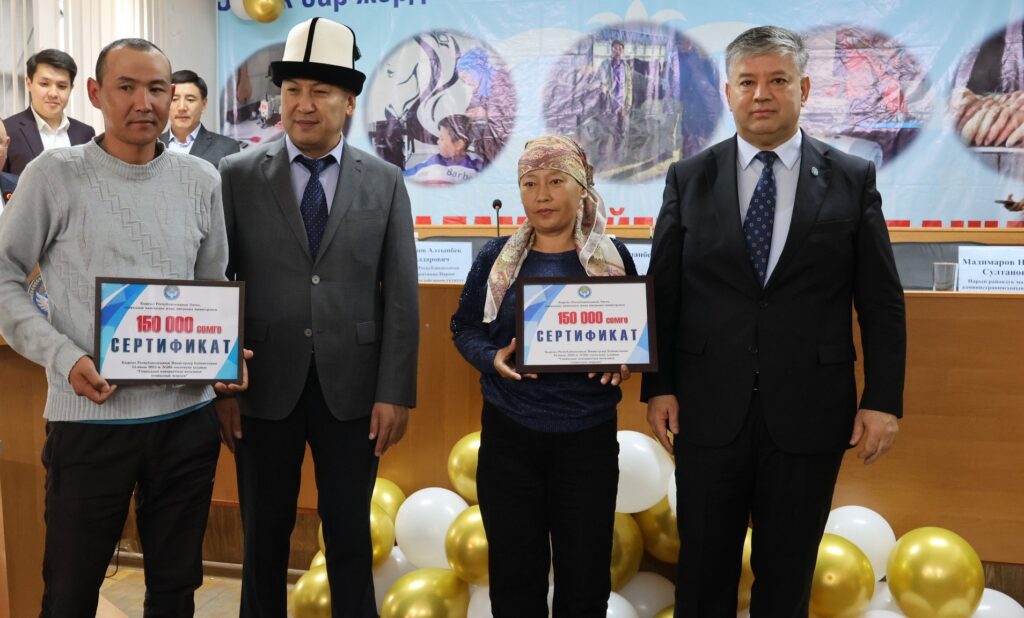
Over the past two years, 13,333 families in Kyrgyzstan living below the subsistence level have signed social contracts with the state. Through this initiative, each family received an interest-free loan of $1,700 to start a small business.

According to the Ministry of Labor, the social contract program is designed to help families break the cycle of poverty by providing both start-up capital and practical support. Recipients use the funds to establish businesses, engage in subsistence farming, or purchase tools and equipment. In addition to financial assistance, the program offers training and consulting in sustainable agriculture and income-generating practices.

How the Program Works

Participants can use the funds to acquire equipment, materials, and other business essentials. The initiative has supported the creation of sewing workshops, food production facilities, apiaries, and small-scale poultry farms. Many recipients now produce honey, natural juices, felt goods, and meat products. The program is open to both new ventures and the expansion of existing microbusinesses.

Specially trained consultants guide participants through the process of launching and managing their businesses, helping to increase long-term viability.

Results and Regional Reach

Although the social contract program was launched five years ago, its most significant impact has been seen in the past two years. More than 13,000 families have become self-sufficient and no longer require government aid.

The majority of successful projects have emerged in Kyrgyzstan’s southern provinces, particularly Jalal-Abad and Osh, where rural entrepreneurship has rapidly expanded.

Government data indicates that over 280 different products have been developed through the program. While most are sold domestically, a small number are now being exported abroad.

This social contract initiative is a cornerstone of the government’s strategy to combat poverty and promote self-employment. Authorities emphasize its role in stimulating economic activity in rural areas and encouraging entrepreneurship among vulnerable populations.

Netflix Documentary ‘Off Road’ Showcases Kyrgyzstan to the World

A new documentary series, Off Road, filmed in Kyrgyzstan by Faraway Road Productions, has premiered on the global streaming platform Netflix.

The project was produced in collaboration with Kyrgyzstan’s Ministry of Economy and Commerce, the Department of Tourism, and the Tourism Development Support Fund, all of whom played key roles in facilitating filming across the country.

Off Road takes viewers on a thrilling automotive adventure across some of Kyrgyzstan’s most breathtaking landscapes from the capital Bishkek to the high mountain valleys of Issyk-Kul, Karakol, and other iconic destinations. Over six episodes, the series immerses audiences in the country’s natural beauty, vibrant culture, and the renowned hospitality of the Kyrgyz people.

Edil Baisalov, Deputy Chairman of the Cabinet of Ministers of Kyrgyzstan, emphasized the significance of the series:

“Thanks to the release of Off Road, millions of viewers around the world will discover the stunning nature of Kyrgyzstan and the traditional warmth of our people. We are grateful to the production company and Netflix for choosing Kyrgyzstan as a filming location. Next year, several additional films and series are expected to launch, further promoting our country’s tourism potential on Netflix and other international platforms.”

More than a backdrop, Kyrgyzstan emerges as the true protagonist of Off Road, inviting global audiences to experience its rugged terrain, rich traditions, and unspoiled beauty.

Kazakhstan and Russia to Expand Rail Freight Volumes, Including China-Europe Transit

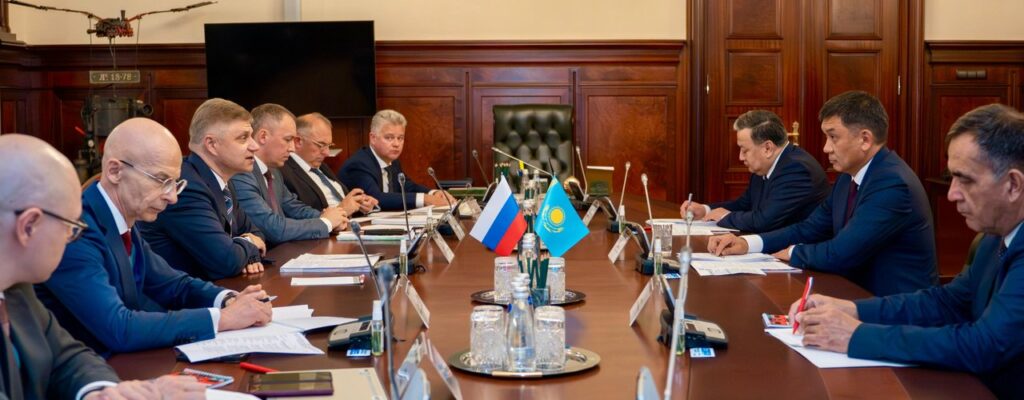
Kazakhstan Temir Zholy (KTZ), the national railway operator, and Russian Railways (RZD) are preparing to boost cargo transportation volumes in the second half of 2025 and into 2026, according to a statement released by KTZ.

On July 21, KTZ Chairman of the Board Talgat Aldybergenov met in Moscow with Oleg Belozerov, CEO and Chairman of the Board of Russian Railways, to assess the implementation of their Strategic Partnership Agreement, signed in November 2024 in Astana.

The agreement outlines plans to modernize railway infrastructure at nine key border crossings, expand capacity, and introduce a unified digital logistics system aimed at improving efficiency and cross-border freight operations.

Boosting Rail Throughput

During the July 21 meeting, the two sides signed a protocol to enhance operations at interstate junction points. Under the new framework, train throughput is expected to rise by 30%, from 65 to 85 train pairs per day, beginning in the second half of this year.

They also discussed increasing freight volumes along the eastern branch of the North-South International Transport Corridor, which traverses Kazakhstan and connects Russia with Turkmenistan and Iran. With a current annual cargo capacity of 10 million tons, the corridor is gaining prominence as a strategic trade route.

Advancing China-Europe Rail Transit

KTZ and RZD further agreed to accelerate the automation of rail transit between China and Europe. Key upgrades will include the automatic registration of transit declarations and integration with the information systems of Russian and Belarusian railway operators.

According to KTZ, freight volumes have continued to rise steadily. In the first half of 2025, total rail cargo volume surpassed 45 million tons, representing a 4.1% year-on-year increase. Container transit reached 273,300 twenty-foot equivalent units (TEU), marking an 18% rise compared to the same period in 2024.

Azerbaijan’s Aliyev: Uzbekistan’s First Gift Helped Rebuild Karabakh

At a major media forum held in Khankendi, Azerbaijani President Ilham Aliyev expressed gratitude to Uzbekistan for its contribution to the reconstruction of Nagorno-Karabakh.

Speaking at the event, Professor Sherzodhon Kudratkhodja, Rector of Uzbekistan’s University of Journalism and Mass Communications, congratulated Aliyev on successfully hosting the 17th Summit of the Economic Cooperation Organization (ECO) in Khankendi. He noted that while Uzbek journalists had visited Karabakh over the past three years, this was their first visit to Khankendi, marking a symbolic step toward reconciliation and renewal.

Kudratkhodja praised the recent meeting between Aliyev and Armenian Prime Minister Nikol Pashinyan in Abu Dhabi, calling it “historic” and “a beacon of friendship” amid global uncertainty. He also asked about the strategic importance of the Zangezur corridor, not just for Azerbaijan and Armenia, but for the wider Turkic world.

“The corridor will serve as a bridge, reconnecting once-separated lands,” he said. Commending the reconstruction of roads, buildings, mosques, and churches in Karabakh, he added: “This shows the world your tolerance and noble spirit.”

Uzbekistan’s First Contribution

In response, Aliyev highlighted Uzbekistan’s role in the early phases of Karabakh’s reconstruction following the 2020 Second Karabakh War. He cited the construction of a school for 960 students in Fizuli, initiated by Uzbek President Shavkat Mirziyoyev and named after the renowned Uzbek scholar Mirzo Ulugbek.

“Uzbekistan made the first gift in restoring Karabakh,” Aliyev said. “A few days ago, I visited the school again. Over 500 children are already studying there, even though refugees are only just beginning to return to Fizuli. We deeply appreciate this brotherly gesture by the President of Uzbekistan.”

Rebuilding Efforts in Karabakh

The Second Karabakh War, also known as the 44-day war, ended in November 2020 with a ceasefire agreement restoring Azerbaijani control over formerly occupied territories. By mid-2024, Azerbaijan had spent more than USD $7 billion on reconstruction, including demining, infrastructure development, industrial revitalization, and tourism initiatives.

Aliyev emphasized the symbolism of hosting the ECO Summit at Khankendi’s new congress center, built on the site of the former separatist parliament. Leaders from eight ECO member states attended the event, underscoring normalization in the region. Nearby, reconstruction continues at a Soviet-era hotel and Victory Square, the former site of the communist party headquarters, which is being transformed with the construction of a new Victory Museum.

Zangezur Corridor and Regional Connectivity

Aliyev also underlined the strategic significance of the Zangezur corridor, which is intended to link mainland Azerbaijan with its exclave of Nakhchivan and further to Turkey. He cited billions of dollars in national infrastructure investment, including the Caspian Sea’s largest port, expanded roadways, and the Baku-Tbilisi-Kars railway-now capable of handling 25 million tonnes of freight annually.

“During President Mirziyoyev’s visit, we discussed increasing freight traffic through this corridor,” Aliyev said. He also referenced the development of the China-Kyrgyzstan-Uzbekistan-Turkmenistan railway, which will provide an additional route across the Caspian Sea and enhance regional connectivity.

“These links are proof that our region can grow stronger together,” Aliyev stated.

A Shared Legacy

Both speakers highlighted the historical bonds between Azerbaijan and Uzbekistan. Kudratkhodja recalled the friendship between Aliyev’s father, Heydar Aliyev, and former Uzbek leader Sharaf Rashidov, a legacy still honored in Uzbekistan.

Aliyev concluded on a personal note: “I hope my father could see today’s Karabakh. Fulfilling his dream and the dreams of all those who never lived to see justice restored has been an immense honor and source of pride for me and for all Azerbaijanis.”

Closed Court Begins for 19 Suspects in Crocus City Hall Attack

The Second Western District Military Court in Moscow has begun preliminary closed-door proceedings for 19 suspects charged in the March 22, 2024, terrorist attack at Crocus City Hall in Krasnogorsk, according to Russian state agency TASS. The attack left 149 people dead and caused an estimated 6 billion rubles in damages.

Court spokesperson Irina Zhirnova stated that the session would follow Article 234 of the Russian Criminal Procedure Code, meaning a single judge will preside over the preliminary hearing, which is not open to the public. “We will take unprecedented security measures,” she added. Federal security personnel are tasked with guarding the courtroom.

The case will be heard by a three-judge panel. The evidence dossier spans more than 470 volumes and includes forensic materials and the results of over 200 expert examinations. A key issue still to be resolved is the trial venue: facilities at Moscow City Court are under renovation and cannot accommodate all parties involved in the high-profile case.

The court has not yet determined whether the main trial will be open to the public and the media. Under Russian law, that decision will be made when the main hearing opens and the indictment is formally read. The court retains the right to close any session in the interest of security.

The Prosecutor’s Case

According to TASS’s summary of the prosecution’s case, two wanted Tajik nationals and several unidentified individuals allegedly acted “in the interests of Ukraine’s political leadership.” They are accused of organizing three cells of the extremist group “Vilayat Khorasan,” affiliated with the Islamic State (ISIS), and of recruiting 19 Tajik citizens, appealing to their religious beliefs.

The defendants include Shamsiddin Fariduni, Dalerjon Mirzoev, Muhammadsobir Faizov, and Saidakram Muradali Rachabalizoda, all of whom are on Russia’s official list of banned terrorists.

Prosecutors allege that Rachabalizoda, Faizov, Mirzoev, and Fariduni were instructed to carry out the armed assault and arson at Crocus City Hall. Other defendants, such as the Islomov brothers and Alisher Kasimov, allegedly provided financial and logistical support, including accommodations and vehicles. Hussein Medov, Jabrayil Aushev, and others are accused of manufacturing and delivering weapons and ammunition. The Soliev brothers, along with suspects Ismoilov, Gadoev, and Hamidov, reportedly helped transport arms to the attackers. Prosecutors say Rachabalizoda’s cellmates also contributed funds.

Following the attack, the four main perpetrators attempted to flee to Ukraine but were apprehended in Russia’s Bryansk Region and later transferred to Moscow for trial. 

Security and Legal Implications

The Crocus City Hall attack shocked the whole of Russia. In response, the military court is conducting the preliminary phase behind closed doors amid heightened security.

The upcoming full trial will establish a timeline for the presentation of evidence by both the defense and prosecution. It will culminate in verdicts and, if found guilty, sentences under Russia’s anti-terrorism laws.