• KGS/USD = 0.01144 0%
  • KZT/USD = 0.00213 0%
  • TJS/USD = 0.10456 0.19%
  • UZS/USD = 0.00008 0%
  • TMT/USD = 0.28490 0%
  • KGS/USD = 0.01144 0%
  • KZT/USD = 0.00213 0%
  • TJS/USD = 0.10456 0.19%
  • UZS/USD = 0.00008 0%
  • TMT/USD = 0.28490 0%
  • KGS/USD = 0.01144 0%
  • KZT/USD = 0.00213 0%
  • TJS/USD = 0.10456 0.19%
  • UZS/USD = 0.00008 0%
  • TMT/USD = 0.28490 0%
  • KGS/USD = 0.01144 0%
  • KZT/USD = 0.00213 0%
  • TJS/USD = 0.10456 0.19%
  • UZS/USD = 0.00008 0%
  • TMT/USD = 0.28490 0%
  • KGS/USD = 0.01144 0%
  • KZT/USD = 0.00213 0%
  • TJS/USD = 0.10456 0.19%
  • UZS/USD = 0.00008 0%
  • TMT/USD = 0.28490 0%
  • KGS/USD = 0.01144 0%
  • KZT/USD = 0.00213 0%
  • TJS/USD = 0.10456 0.19%
  • UZS/USD = 0.00008 0%
  • TMT/USD = 0.28490 0%
  • KGS/USD = 0.01144 0%
  • KZT/USD = 0.00213 0%
  • TJS/USD = 0.10456 0.19%
  • UZS/USD = 0.00008 0%
  • TMT/USD = 0.28490 0%
  • KGS/USD = 0.01144 0%
  • KZT/USD = 0.00213 0%
  • TJS/USD = 0.10456 0.19%
  • UZS/USD = 0.00008 0%
  • TMT/USD = 0.28490 0%

Halyk Bank Buys 49% Stake in Uzbekistan’s Click in Landmark Fintech Deal

Almaty – Kazakhstan’s Halyk Bank has announced it will acquire a 49% stake in Uzbek digital payments company Click for $176.4 million, marking one of the largest cross-border banking investments in Central Asia to date.

The deal values Click at approximately $360 million, highlighting the growing importance of digital finance in the region’s rapidly evolving financial landscape. With over 20 million customers, Click is one of Uzbekistan’s most widely used payment providers.

As part of the agreement, Click will also take a 49% stake in Tenge Bank, Halyk’s Uzbek subsidiary, for $60.76 million. The reciprocal structure of the deal is designed to foster tighter operational integration and shared technological infrastructure between the two institutions – a significant step toward regional financial harmonization.

“This is a historic moment for Click. Partnering with Halyk Bank and expanding our capabilities through Tenge Bank represents a major step forward in delivering world-class digital financial services to millions of users,” said Ulugbek Rustamov, CEO of Click. “At the same time, the structure of the deal ensures Click retains its independence, continues to shape its strategic vision, and remains a proud national brand.”

Strategic Push Toward Integration

The announcement comes as both Kazakhstan and Uzbekistan continue efforts to modernize their financial systems and ease cross-border payments. Regional trade between the two nations has grown steadily in recent years, with bilateral trade turnover reaching $4.22 billion in 2024, up from $2.9 billion in 2020.

Halyk Bank, already Kazakhstan’s dominant financial institution with a 29% market share and more than 10.9 million active retail clients, views the investment as a strategic step towards capturing Uzbekistan’s booming digital economy. Click, meanwhile, gains regulatory grounding via Tenge Bank and access to Halyk’s technology and ability to raise capital from its public listing on the London Stock Exchange.

Uzbekistan, whose GDP grew by 7.2% in the first half of 2025, continues to open its financial sector to foreign capital – a key pillar of President Shavkat Mirziyoyev’s economic reform program.

Competing Power Structures?

This fintech alliance also throws an intriguing light on Central Asia’s most influential business families. Halyk Bank is majority-owned by Timur Kulibayev and his wife Dinara, the daughter of former Kazakh president Nursultan Nazarbayev, widely viewed as Kazakhstan’s most powerful couple.

Their expanding presence in Uzbekistan via Click and Tenge Bank may once have had the potential to ruffle feathers amongst Uzbekistan’s elite. The fact that the deal has been allowed to proceed this far is in itself an acknowledgement of the shared interests of regional powerbrokers.

A Shift in Regional Strategy

The deal represents a strategic reversal for Halyk Bank. In recent years, the bank has divested from its Kyrgyz and Tajik operations, selling 100% of its Kyrgyz subsidiary to oligarch Aidan Karibzhanov in 2024 and liquidating its Tajik entity in 2022. The Click acquisition signals a renewed focus on Uzbekistan, with the potential to make the country Halyk’s primary external growth market.

This renewed push comes as Halyk cements its dominance in Kazakhstan, where it controls nearly one-third of all banking assets and processes 90% of its retail loans through digital channels, including via its popular Halyk Super-App.

The Future of Banking in Central Asia

Click’s prominence in Uzbekistan’s digital economy, now backed by Halyk’s financial infrastructure, positions the partnership to pioneer a regional payments ecosystem, long hindered by incompatible systems and protectionist government policy.

It represents further evidence of Central Asian integration, which has gathered pace since Mirziyoyev came to power in 2016, and has accelerated since the Russian invasion of Ukraine. The deal comes on the back of Kyrgyzstan, Tajikistan, and Uzbekistan signing a joint border agreement earlier in 2025, the establishment of a regional civil aviation authority, and regular summits in the C5+1 format, through which post-Soviet Central Asian states regularly engage with the outside world.

The deal is pending approval by regulators in both countries and is expected to close by the end of 2025. Joint product launches and integrated financial platforms are already under discussion.

This is a developing story…

Bridging Empires: A Japanese Historian on Kazakh-Qing Relations

Last year, I came across Professor Jin Noda’s research from the Tokyo University of Foreign Studies: The Kazakh Khanates Between the Russian and Qing Empires: Central Eurasia International Relations during the 18th–19th Centuries. As it explores Kazakh history, particularly letters written by Khan Ablai and other sultans to the Qing emperor, I reached out to Professor Noda to ask a few questions.

TCA: What inspired you to write this book?

Noda: I thought there was a great divide between studies of Central Asia from the Russian side and those from the Qing Chinese side. To bridge this gap, I decided to research Kazakh history using both Russian and Chinese sources.

TCA: You published letters from 1779 related to Ablai Khan. What is their social significance?

Jin Noda: While the “social significance” isn’t entirely clear to me, the letters are important for Kazakhs as evidence of relations with the Qing Dynasty. They also reflect Ablai’s authority — sending letters to the Qing emperor signified his direct contact with the imperial court.

TCA: Were these letters originals? What challenges did you face studying them?

Jin Noda: I accessed microfilmed versions at the First Historical Archive in Beijing. The poor image quality made them difficult to read, and some texts were unreadable.

TCA: How much did you rely on Chinese sources, and how reliable are they?

Jin Noda: For my PhD and the book, I used many Manchu documents. While they have their biases, they also offer valuable new information on the Kazakhs. I cross-referenced them with Russian sources from the same era.

TCA: Are there many historical records about Kazakhs in Japan? How should they be studied?

Jin Noda: Some records exist, particularly from the Japanese military’s interest in Xinjiang after the Russo-Japanese War. For Kazakhs under Russian rule, one rare case is the Kazakh politician Marsekov contacting the Japanese government during the revolution. His letter’s translation is preserved in a Japanese archive and was recently studied by Prof. Uyama and Mr. Ono.

TCA: Apart from Sultan Gubaidolla’s well-known letter, did you find other sources related to him?

Jin Noda: I collected Russian archival documents on his activity around 1824 in Almay and Omsk. He is known for his role in protesting Russian colonisation.

TCA: As a foreign researcher, how do you assess Kazakh-Qing political relations?

Jin Noda: Traditionally, Chinese discourse portrayed the Kazakhs as distant vassals. However, Qing sources place them closer to the empire, like the Mongols or the Torghuts. I believe the Kazakh khans understood the strategic advantage in their relations with the Qing. These ties held unique importance for both sides.

TCA: You’ve also used Manchu archives. What did they reveal?

Jin Noda: Manchu documents are rich sources — essentially direct reports from Xinjiang officials to the emperor. While they reflect the officials’ own motivations, they offer a vivid picture of the Kazakhs’ contact with the Qing.

TCA: Have you received proposals to translate your book into Kazakh?

Jin Noda: I’ve recently received a proposal to translate it into Russian. If it resonates with readers in Kazakhstan, I hope it might eventually be translated into Kazakh as well.


Timur’s Birthplace Languishes on UNESCO List of Endangered Sites

Bukhara, Samarkand, Khiva. Uzbekistan’s cultural heritage draws visitors from around the world, but the troubled modern history of another ancient site, Shakhrisabz, is a reminder that development and mass tourism sometimes overshadow preservation.

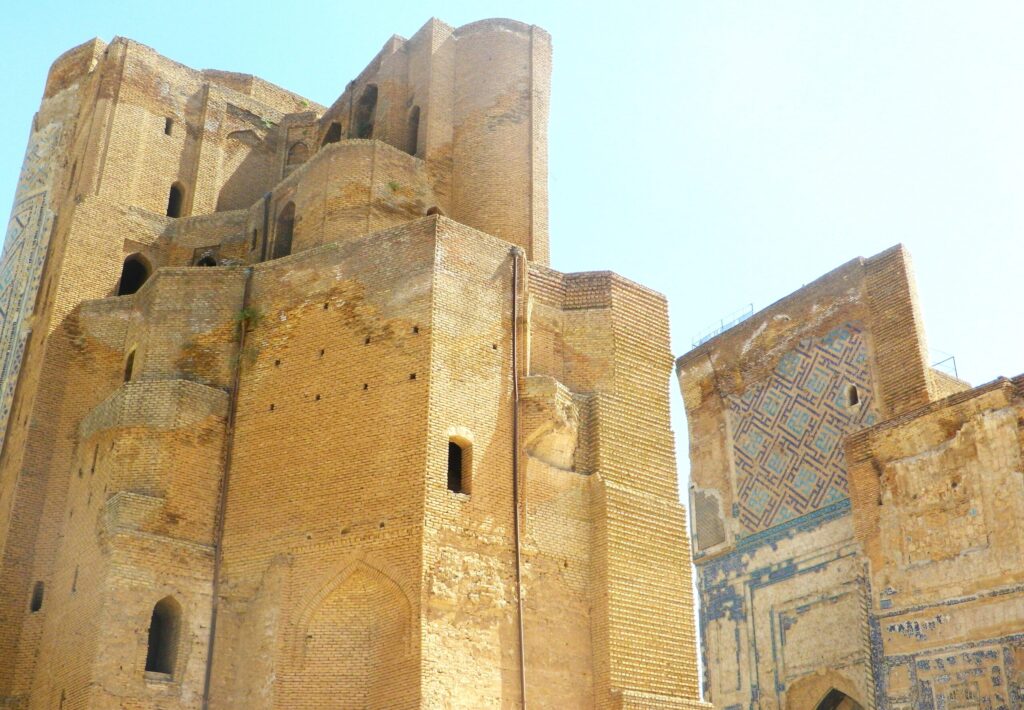
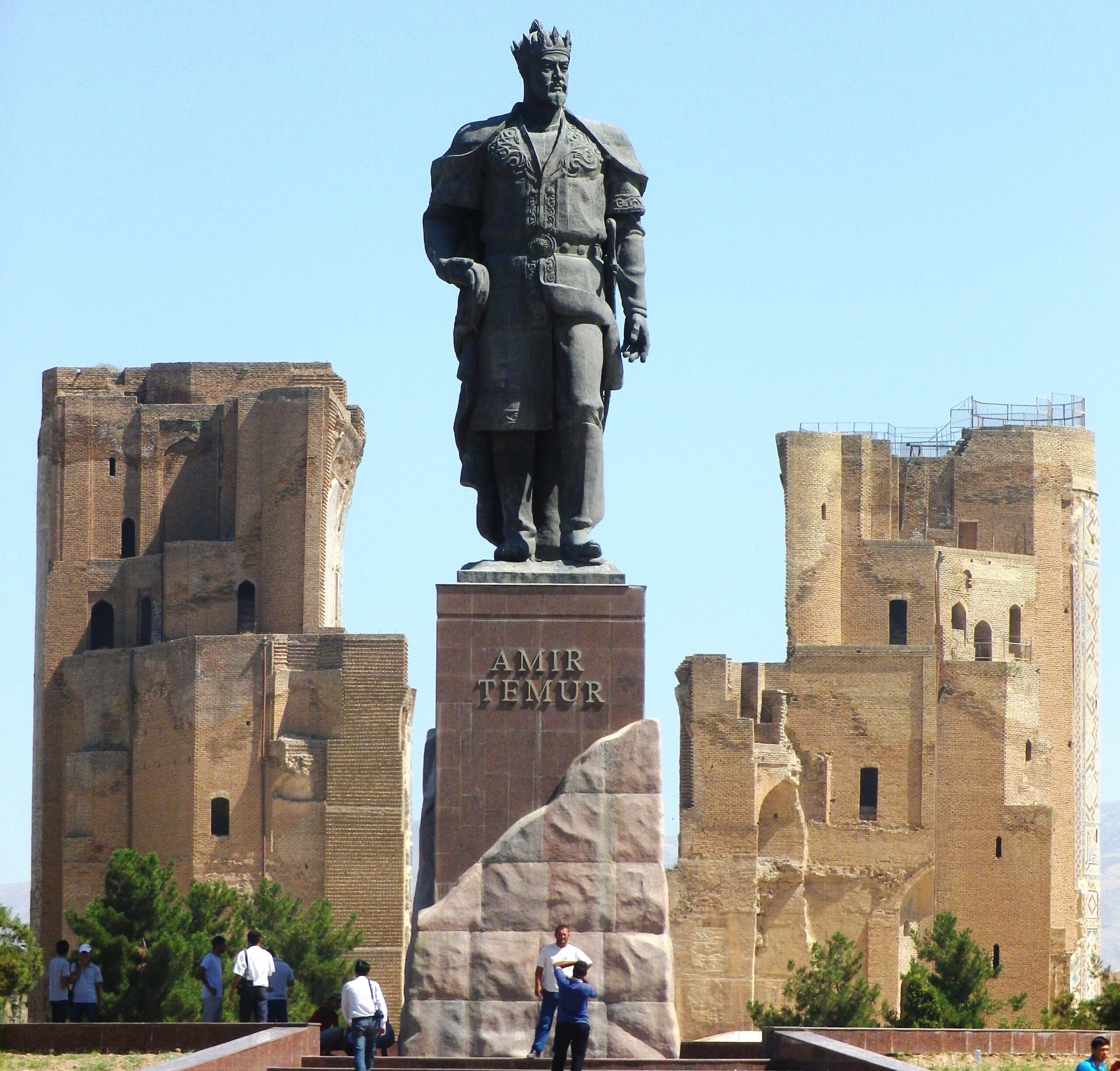
Shakhrisabz, or Green City, is less known than some other tourist destinations in Uzbekistan that were part of the Silk Road network linking cultures across Asia, Europe, and Africa many centuries ago. Yet the old urban core is more than 2,000 years old and contains spectacular monuments and other structures, some dating from the heyday of the city during the rule of the Turco-Mongol conqueror Timur, also known as Tamerlane, and the Timurids in medieval times.

Timur Statue; image: TCA, Stephen M. Bland

UNESCO declared it a world heritage site in 2000. But the historical center of Shakhrisabz, previously called Kesh, was placed on the U.N. cultural agency´s list of world heritage sites in danger in 2016 after large sections were razed to make way for a park and tourist facilities. It has stayed on the danger list ever since as officials in Uzbekistan, assisted by international advisers, try to figure out a way to prevent it from losing its United Nations status altogether. A total of 53 locations around the world are on UNESCO’s danger list.

The Fayzullah Ravnakhi Museum B&B, one of many buildings demolished to make way for tourist facilities; image: TCA, Stephen M. Bland

A solution in Uzbekistan’s case appears to be in the works. At a meeting in Paris this month, the UNESCO World Heritage Committee tentatively approved an Uzbek proposal that would restore Shakhrisabz in southern Uzbekistan to the regular heritage list but in reduced form – only four key Timurid monuments would be included, while the rest of the historical center would be labeled as a buffer zone.

“The main focus is expected to shift from the concept of a ´complete historic city´ to the conservation of the ensemble of monuments, including the Ak-Saray Palace, while preserving their urban context,” reported Gazeta.uz, a media organization in Uzbekistan.

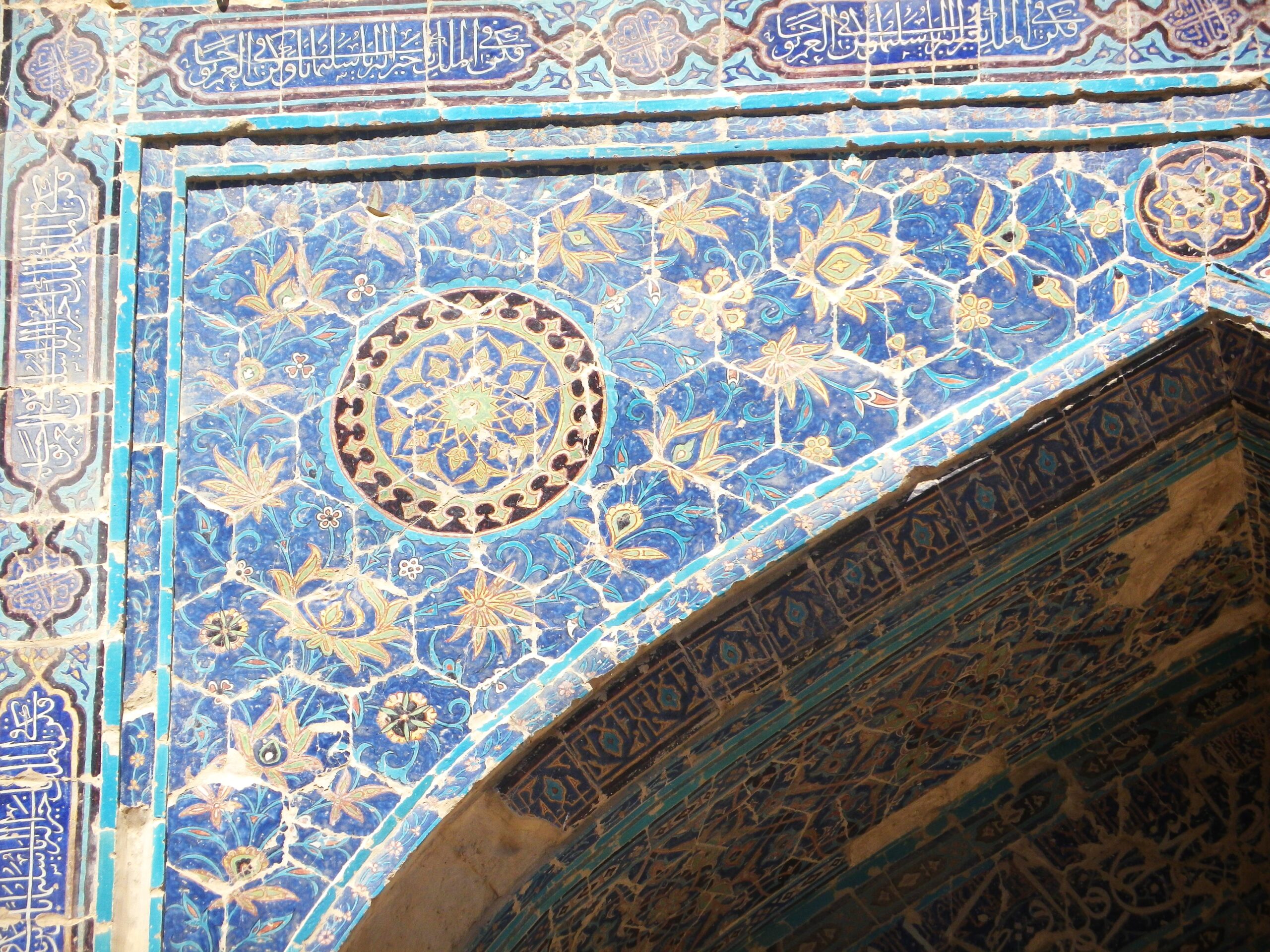
Ak-Saray Palace; image: TCA, Stephen M. Bland

Uzbekistan must conduct archaeological studies, prepare a restoration plan, and take other measures in order for the proposal to succeed, according to Gazeta.uz. Uzbekistan must update UNESCO on its progress in February 2026, and the process could still take several years.

Construction of the Ak-Saray Palace began in 1380 after a military victory by Timur, who was born in the city, according to UNESCO. The agency said that not one of the many Timurid monuments in Samarkand, north of Shakhrisabz, can rival the Ak-Saray Palace.

“The foundations of its immense gate have been preserved: this architectural masterpiece is outstanding in its dimensions and bold design,” UNESCO said.

While Shakhrisabz has less tourist infrastructure than nearby Samarkand, there are efforts to raise its profile. Last year, the Economic Cooperation Organization, whose ten members include Central Asian countries, declared it the tourism capital for 2024.

Uzbekistan’s other cultural sites have also faced development pressures as tourism booms in the country, alarming conservationists who warn that some of the most striking remnants of Central Asia’s ancient heritage are at risk.

Kazakhstan to Launch “School for Philanthropists” to Support Endowment Sector

Kazakhstan is set to establish a “school for philanthropists” at one of its universities, a specialized training center for professionals working in endowment funds. The initiative was announced by Gulzat Kobenova, Deputy Minister of Science and Higher Education.

Currently, 22 endowment funds operate in Kazakhstan. These targeted financial structures support the long-term development of education, healthcare, and cultural institutions through private donations. Unlike traditional charitable organizations, endowments invest the principal and use only the investment income to fund their programs, ensuring financial sustainability over time.

A significant step toward institutionalizing the sector came in June 2025 with the enactment of the Law on Endowment Funds. The legislation established a regulatory framework requiring independent audits, the publication of financial statements, and strict accounting standards. Endowments must also form a governance structure, including a board of trustees, an executive body, and an internal audit service.

For endowments with assets exceeding USD 75,000, management must be transferred to a licensed professional asset management company. The law also caps administrative and operational costs at 15% of investment income, or 0.5% of average asset value if there is no income.

Kobenova stressed that the development of this sector demands a new class of skilled professionals both fund managers and financial investors. To address this need, the ministry is launching a “school of philanthropy” based on international best practices, with input from Indiana University (USA).

“The school will train endowment fund employees, prospective investors and donors, and professional fund managers. There are also plans to create a professional community, including an endowment fund association,” Kobenova stated.

The creation of the school is part of the Ministry of Science and Higher Education’s roadmap through 2029. As part of this plan, five pilot university-based endowment funds will be launched by the end of 2029, with a total targeted capitalization of approximately USD 94 million.

According to Kobenova, these efforts aim to reduce universities’ dependence on the state budget and tuition fees, helping to ensure long-term financial independence.

As previously reported by The Times of Central Asia, Kazakhstan’s investment in research and development (R&D) nearly tripled over the past five years, reaching USD 430 million in 2024. However, science continues to contribute only 0.16% to the national GDP.

Embezzlement Scandal at Kazakh Charity Fund Implicates Influential Officials

A high-profile scandal is unfolding in Kazakhstan involving the alleged embezzlement of billions of tenge from the Biz Birgemiz Qazaqstan (“We Are Together”) charity fund. Testimony from the fund’s embattled director, Perizat Kairat, alongside ongoing press investigations, has implicated several prominent officials.

The Rise and Fall of Perizat Kairat

Charitable giving in Kazakhstan remains underdeveloped, with many humanitarian organizations struggling to secure adequate funding. The Biz Birgemiz Qazaqstan fund, however, stood out. Backed by donations from large banks, business leaders, and individuals, it quickly amassed substantial sums.

Established in June 2021, the fund came under scrutiny after Kairat’s arrest in November 2024. She was initially charged with embezzling more than KZT 1.5 billion ($2.8 million) raised during the spring 2024 floods, the worst to hit Kazakhstan in 80 years, affecting twelve regions and leaving thousands homeless.

Subsequent investigations raised the alleged embezzled amount to KZT 2.9 billion ($5.4 million). The authorities claim Kairat and her mother, Gaini Alashbaeva, used the funds to purchase luxury real estate, vehicles, designer goods, and pay for lavish travel. Funds collected for humanitarian aid to Gaza residents were also reportedly misappropriated.

Additional allegations include collecting over KZT 105 million ($200,000) for festivals such as Central Asia Fest and Almaty Uni, which were never held, and for a rehabilitation center, which was never built.

Support for the fund was boosted by advertising through Kazakhstan’s largest financial platform, Kaspi.kz, which promoted it within its mobile app. During court proceedings, Kaspi.kz confirmed transferring KZT 620 million ($1.2 million) to the fund. Another major contributor, Jusan Bank (now Alatau City Bank), reportedly also donated KZT 300 million ($560,000).

Misplaced Trust

Public trust in the fund was bolstered by the widespread belief that it was affiliated with the state. For instance, an elderly woman from Pavlodar testified that she donated KZT 1 million, believing it was a government initiative. Parents from Nazarbayev Intellectual Schools (NIS) who transferred KZT 901,000 are now demanding its return to assist a seriously ill teacher. Witnesses claim Kairat collected cash through intermediaries using large market-style bags.

Political Connections and Allegations

Perizat Kairat’s defense has drawn high-level political figures into the spotlight. On July 14, she requested the court summon Bauyrzhan Baybek, former mayor of Almaty and ex-first deputy chairman of the ruling Amanat Party (formerly Nur Otan), for questioning. Kairat alleges that the fund was “created under the leadership of Baybek,” claiming all its founders, except herself, were current or former party employees.

Amanat, Kazakhstan’s dominant political party, has publicly denied any connection to Kairat or the foundation. Though President Kassym-Jomart Tokayev resigned from the party leadership in April 2022, Amanat remains politically influential and retains close ties to many government officials.

Kazakh outlet Orda.kz examined Kairat’s social media to explore potential links between the fund and state institutions. It found the foundation’s founders had associations with the BizBirgemiz volunteer movement, launched during the COVID-19 pandemic under a state initiative of the same name.

Just a month after its registration, the foundation hosted a charity gala at which apartments were distributed and boxing gloves belonging to Kazakh champion Gennady Golovkin were auctioned. Kairat later issued public thanks to several officials, including former Minister of Culture Askhat Oralov, Astana Deputy Mayor Yesset Baken, Amanat party official Yerlan Kanalimov, and others.

The trial of Perizat Kairat and her mother continues. Both face charges of large-scale fraud.

Kazakhstan’s Surge in Metallurgical Output Raises Alarm in Russia

Kazakhstan is poised to double its copper ore production to 300 million tons by 2030, with the Aidarly, Koksay, and Benkala deposits leading the expansion. This ambitious plan was announced by Deputy Minister of Industry and Construction Olzhas Saparbekov during a recent government meeting.

A Strategic Shift Toward Processing

Alongside copper, Kazakhstan plans to expand iron ore production by 40%, aiming for 52 million tons. This increase will be driven by enterprise modernization and new projects producing hot-briquetted iron.

In 2024, metallurgical ore production grew by 7.8%, while total metal output rose by 6.9%. Authorities are shifting focus from raw extraction to deep processing and the development of medium- and high-tech industries. By 2025, copper processing is expected to double, aluminum processing will increase by 50%, lead processing will more than double, and zinc output will rise by 11%.

According to Saparbekov, these efforts will allow Kazakhstan to “utilize domestic production capacities and expand the output of finished products,” including wire rod, cable and wire products, batteries, window profiles, fittings, and bimetallic radiators. New projects also aim to produce brass components and industrial batteries.

Economic Impact and Investment Plans

The mining and metallurgical sector currently contributes 8% to Kazakhstan’s GDP, generating over $26.4 billion annually. The industry employs approximately 224,000 people. In 2024 alone, more than $3.2 billion was invested in metallurgy, while labor productivity increased by 9.4%, reaching $102,000 per worker.

In 2025, Kazakhstan plans to implement 190 industrial projects worth a combined $3 billion. Of these, 28 projects in the mining and metallurgical sector, valued at $837 million, are expected to create 6,500 new jobs. Priority initiatives include the production of seamless pipes and aluminum radiators in Karaganda, aluminum profiles in the Turkestan Region, ferroalloys in Pavlodar, and cathode copper in the Zhambyl Region.

Rising Tensions with Russia

However, Kazakhstan’s rapid metallurgical growth is stirring concern in neighboring Russia. In the first half of 2025, domestic steel demand in Russia fell by 14-15%, with the machine-building and energy sectors seeing a sharper decline of 25%.

Severstal CEO Alexander Shevelev told Kommersant that increasing supplies from Kazakhstan, alongside imports from China, are straining Russia’s market and may force plant closures.

He identified particularly intense competition in Siberia and the Russian Far East. Severstal has warned that, without protective measures under the Eurasian Economic Union (EAEU), pressure from Kazakh imports could spread to other Russian regions.

In response, Russia is considering launching an anti-dumping investigation into Kazakh steel imports. Such a move could significantly impact Kazakh exporters, who are looking to increase shipments amid weak domestic demand in neighboring markets.

According to the World Steel Association, Russia’s steel production declined by 5.2% between January and May 2025. The drop is attributed to low global prices, high interest rates, rising production costs, and sluggish industrial activity.