• KGS/USD = 0.01144 0%
  • KZT/USD = 0.00193 -0%
  • TJS/USD = 0.10811 -0.28%
  • UZS/USD = 0.00008 0%
  • TMT/USD = 0.28490 0%
  • KGS/USD = 0.01144 0%
  • KZT/USD = 0.00193 -0%
  • TJS/USD = 0.10811 -0.28%
  • UZS/USD = 0.00008 0%
  • TMT/USD = 0.28490 0%
  • KGS/USD = 0.01144 0%
  • KZT/USD = 0.00193 -0%
  • TJS/USD = 0.10811 -0.28%
  • UZS/USD = 0.00008 0%
  • TMT/USD = 0.28490 0%
  • KGS/USD = 0.01144 0%
  • KZT/USD = 0.00193 -0%
  • TJS/USD = 0.10811 -0.28%
  • UZS/USD = 0.00008 0%
  • TMT/USD = 0.28490 0%
  • KGS/USD = 0.01144 0%
  • KZT/USD = 0.00193 -0%
  • TJS/USD = 0.10811 -0.28%
  • UZS/USD = 0.00008 0%
  • TMT/USD = 0.28490 0%
  • KGS/USD = 0.01144 0%
  • KZT/USD = 0.00193 -0%
  • TJS/USD = 0.10811 -0.28%
  • UZS/USD = 0.00008 0%
  • TMT/USD = 0.28490 0%
  • KGS/USD = 0.01144 0%
  • KZT/USD = 0.00193 -0%
  • TJS/USD = 0.10811 -0.28%
  • UZS/USD = 0.00008 0%
  • TMT/USD = 0.28490 0%
  • KGS/USD = 0.01144 0%
  • KZT/USD = 0.00193 -0%
  • TJS/USD = 0.10811 -0.28%
  • UZS/USD = 0.00008 0%
  • TMT/USD = 0.28490 0%
10 December 2025

Kyrgyzstan Begins Domestic Printing of National Currency Banknotes

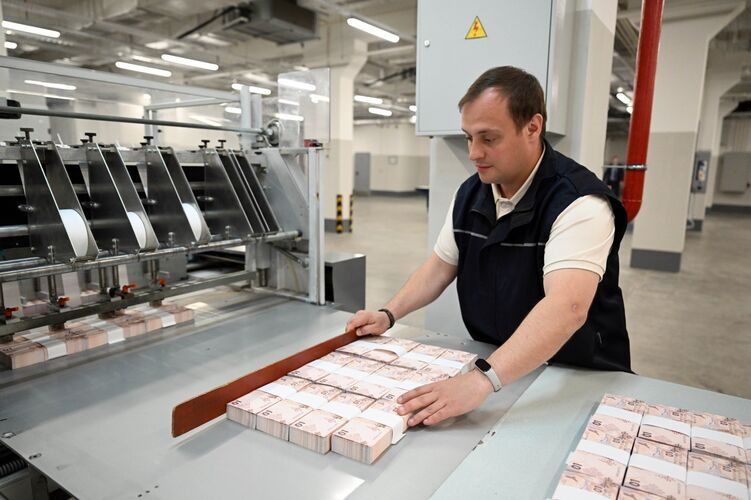
For the first time since gaining independence, Kyrgyzstan has begun printing its national currency, the som, within the country. Previously, Kyrgyz banknotes were produced in various European countries.

The new notes are produced by the Bishkek-based Open Joint Stock Company Uchkun.

Starting with Small Denominations

Chairman of the National Bank Melis Turgunbayev announced that production has begun with small-denomination bills. This approach will enable a quicker replacement of worn or damaged notes scheduled for withdrawal from circulation.

Turgunbayev stressed that the new banknotes adhere to the highest international standards for counterfeit protection.

A Modernized National Printing Facility

Uchkun has recently undergone a major modernization effort, acquiring state-of-the-art printing equipment. In addition to currency, the facility now produces passports, excise stamps, and educational materials.

According to Uchkun’s Director Bakytbek Sultanov, the enterprise has already begun printing passports and excise stamps. He stated that in his opinion the security features of Kyrgyz passports rank among the top ten globally for protection against counterfeiting.

In 2024 alone, Uchkun produced over 770,000 passports and nearly one million books, marking a significant step forward in Kyrgyzstan’s self-reliance in secure printing technologies.

Uzbek Minister: Afghans Have the Right to Amu Darya Water Too

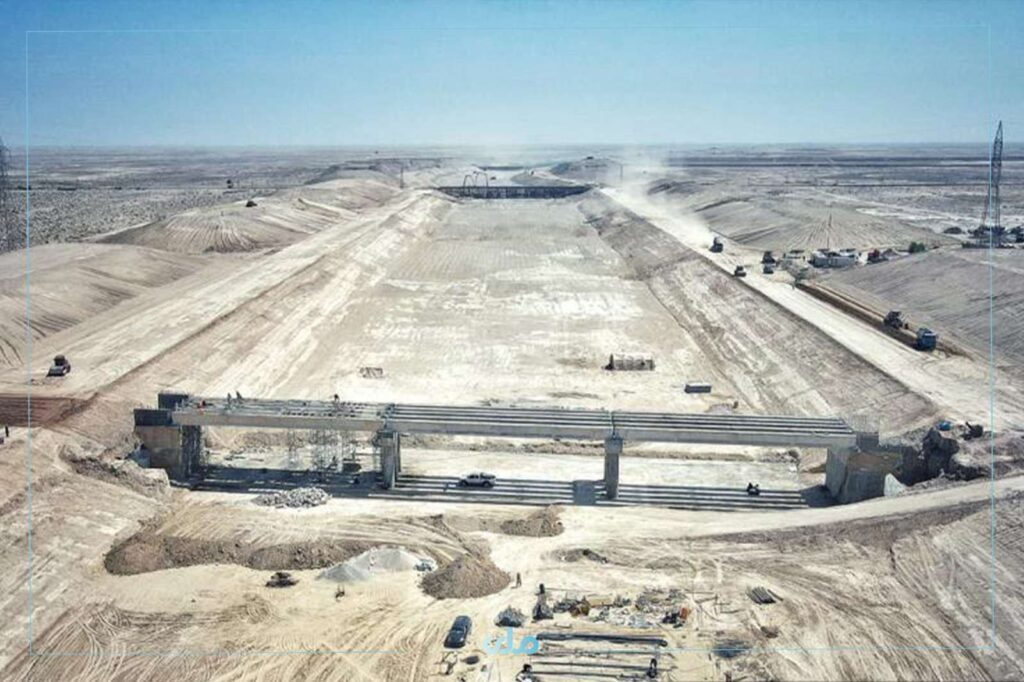
The construction of the Qosh Tepa Canal in northern Afghanistan has attracted growing attention from neighboring countries, particularly Uzbekistan. The ambitious project, initiated by the Taliban to divert water from the Amu Darya River, is expected to be completed by 2028. Uzbekistan’s Minister of Water Resources, Shavkat Khamraev, addressed the issue during a public meeting on March 18, according to Gazeta.uz.

When asked about the canal’s potential impact on Uzbekistan, Khamraev emphasized that Afghanistan has a legitimate right to access the Amu Darya’s waters. He dismissed speculation that the project represents a hostile act, urging a focus on diplomacy and cooperation.

“Afghans are our relatives. They also have the right to take water from the Amu Darya. Should we take up arms and fight? No, we are building better relations,” said Khamraev.

He urged the public not to be swayed by rumors or misinformation, comparing such speculation to gossip that turns neighbors against each other. Khamraev also noted that he had visited Afghanistan multiple times recently and was warmly received, which he sees as a sign of improving bilateral relations.

Rising Concerns About Regional Water Security

Despite the minister’s reassurances, experts warn that the canal could exacerbate water shortages across Central Asia. Over 80% of the region’s water resources are used for agriculture, but nearly 40% is lost due to outdated and inefficient infrastructure. If water availability from the Amu Darya decreases, greater pressure may be placed on the Syr Darya River, potentially deepening existing water disputes.

Strategic and Geopolitical Implications

The canal project has also drawn attention from international observers. A report by the Center for the National Interest, a Washington, D.C.-based think tank, suggests that the United States could leverage the project to expand its influence in the region.

Stretching 287 kilometers with a depth of 8.5 meters and a width of 100 meters, the Qosh Tepa Canal aims to irrigate over 1.2 million acres of farmland and create approximately 200,000 jobs in Afghanistan’s northern provinces.

As construction progresses, the canal’s environmental, political, and economic impacts are likely to remain a key topic in regional diplomacy.

Chinese Investor to Launch $400 Million Cotton Cluster in Southern Kazakhstan

Chinese company Xinjiang Lihua (Group) Co., Ltd. plans to invest nearly $400 million to establish a cotton-textile cluster in Kazakhstan’s Turkestan region. The announcement was made by Zhang Qihai, Chairman of the Board of Directors of Xinjiang Lihua, during a meeting with Kazakhstan’s Prime Minister Olzhas Bektenov.

The large-scale investment project will be implemented within the TURAN Special Economic Zone, located in southern Kazakhstan. It envisions a vertically integrated cotton agro-industrial complex, from cultivation to the production of finished textile goods, including yarn, fabric, and clothing.

More than 50,000 hectares of land have been allocated for cotton cultivation. The project also includes the construction of ten factories. Two of these will manufacture drip irrigation systems using modern water-saving technologies. Four others will handle the primary processing of cotton near the fields. The remaining four facilities, including garment, dyeing, and finishing factories, will produce the final textile products.

The total investment exceeds 200 billion tenge (approximately $398 million), and the cluster is expected to create 3,000 permanent jobs in the region.

To support the project’s needs, a plant for producing polyvinyl chloride (PVC) pipes has already been launched, and construction of the textile factories is underway. Xinjiang Lihua is also developing an irrigation system, including a canal network fed by a dedicated pumping station.

Chairman Zhang Qihai praised Kazakhstan’s favorable investment climate and the region’s suitable agricultural conditions. He noted that the first finished products from the cluster are scheduled for release by October this year.

“The creation of a cotton-textile cluster in Turkestan Region contributes to increasing the added value of domestic products, promoting agricultural development through processing, and enhancing the country’s export potential,” said Prime Minister Olzhas Bektenov. “The government will provide all necessary support for this initiative.”

As previously reported by The Times of Central Asia, China also plans to support the establishment of a Scientific and Technical Innovation Center for Hydrogen Energy in Kazakhstan.

Uzbekistan Looks to Nuclear Power for Energy Security

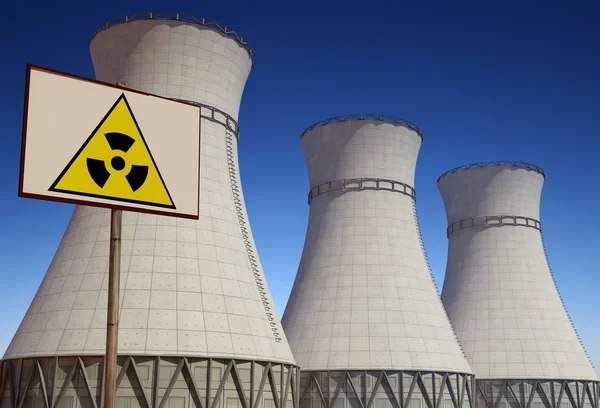
Uzbekistan is moving forward with plans to build its first nuclear power plant, a project that officials say is critical to the country’s long-term energy security. In an interview with the Alter Ego YouTube project, Azim Akhmadkhodjaev, head of Uzbekistan’s Atomic Energy Agency, argued that nuclear power is the only viable alternative to continued reliance on imported fossil fuels.

“Let’s continue to import high-calorie coal, burn it, and poison our environment. Let’s import tens of billions of cubic meters of gas and spend money on it. Or we can build a few nuclear power plants, reduce the cost of electricity, and become energy independent. Will we achieve energy independence? Undoubtedly, yes,” Akhmadkhodjaev said.

A Strategic Partnership with Global Players

The nuclear power project is being developed with Russian technical support, but Akhmadkhodjaev emphasized that this does not compromise Uzbekistan’s sovereignty. The plant will be fully owned and operated by Uzbekistan, with local specialists overseeing daily operations.

“The nuclear island will be Russian because this technology is the most reliable and proven. However, the automated control system will be based on European technology, and the turbine equipment will be made in Europe or China,” he explained.

In addition to Russian expertise, Uzbekistan is engaging with several French companies. Negotiations are ongoing with Assystem for technical support, Bureau Veritas for training specialists, and Framatome for managing key technical aspects of the project.

Balancing Energy Sources

While pursuing nuclear energy, Uzbekistan is also working to boost the share of renewables in its energy mix, from 16% today to 54% by 2030. Energy analysts say that a diversified portfolio, combining nuclear and renewable sources, will help the country meet its energy needs while minimizing environmental harm.

Kyrgyz Drivers to Face On-the-Spot Traffic Rule Tests During Stops

Beginning September 1, drivers in Kyrgyzstan may be required to demonstrate their knowledge of traffic regulations during routine stops by traffic police. The directive aims to reduce road accidents by ensuring that motorists are familiar with basic driving rules.

The new policy was announced by government spokesperson Askat Alagozov on his Facebook page.

Oral Exams During Traffic Stops

Under the initiative, drivers found violating traffic rules may be asked to take an oral exam on the spot. Those who fail will have their driver’s license temporarily suspended until they pass the test.

According to Alagozov, the fee for the first retest attempt will be 500 Kyrgyz som (approximately $5.70). The cost increases with each failed attempt, 1,000 KGS ($11.50) for the second, 2,000 KGS ($23) for the third, and 4,000 KGS ($46) for the fourth try.

The entire testing process will be recorded on video to help prevent corruption. Drivers will regain their licenses immediately upon successfully passing the exam.

A Response to Rising Road Fatalities

Alagozov said the initiative responds to the country’s high number of traffic accidents, which have claimed hundreds of lives. He attributed many of these incidents to drivers lacking basic knowledge of road safety rules.

“Because of those who do not know the rules of the road, children become orphans, parents lose their sons and daughters, experiencing terrible tragedies. Many become disabled,” he said.

He added that prior to 2020, driver’s licenses were routinely sold for 15,000 to 20,000 KGS ($80 to $150), with only 20-30% of motorists having actually passed the required exams.

Mixed Reactions From the Public

The initiative has sparked heated debate on social media. While some citizens support the move as a necessary step toward improving road safety, others fear it could open the door to new forms of corruption and extortion by traffic police.

Authorities maintain that the video-recorded testing procedure will act as a safeguard against abuse, and insist the new policy is a serious step toward safer roads in Kyrgyzstan.

Britain’s Victoria Oil & Gas Files Multimillion-Dollar Lawsuit Against Kazakhstan

British company Victoria Oil & Gas has filed a multimillion-dollar lawsuit against the government of Kazakhstan under the Energy Charter Treaty. The development was reported by Energy Monitor, a Telegram channel focused on Kazakhstan’s energy sector.

Dispute Centers on Kemerkol Oil Field

The legal proceedings are registered with the International Centre for Settlement of Investment Disputes (ICSID), a World Bank-affiliated body.

The case stems from a longstanding dispute over the Kemerkol oil field in Kazakhstan’s Atyrau region. In 2005, Victoria Oil & Gas acquired a 100% stake in the field from Saga Creek Gold Ltd for $8.5 million. After drilling several wells, the company estimated the field’s geological reserves at approximately 15 million tons of oil.

Unexplained Contract Termination

In 2008, Kazakhstan’s authorities terminated the subsoil use contract without providing an official explanation. That same year, Kazakh company Bakyt Tau purchased the rights to the field from Saga Creek Gold Ltd for 360 million tenge (approximately $3 million at the 2008 exchange rate).

In 2016, Bakyt Tau transferred the development license to Up-Nafta Operating for 1.36 billion tenge (nearly $4 million at the 2016 rate). The company continued exploration and drilling operations. By 2022, the State Reserves Commission reported the following:

  • C1 category geological reserves: 2.35 million tons; recoverable: 588,000 tons
  • C2 category reserves: 652,000 tons; recoverable: 29,000 tons

As of 2023, actual oil production totaled just 14,700 tons, with 12 active wells and an average water cut of 79%.

Legal Strategy or Political Statement?

Given the field’s modest reserves and limited output, some experts suggest the lawsuit may be more political than economic. Energy Monitor noted:

“The field is clearly not worth hundreds of millions of dollars, unlike the Stati case involving the Borankol and Tolkyn fields. Most likely, the lawsuit has a political context rather than an economic one.”

Victoria Oil & Gas first raised the prospect of arbitration in April 2021. The case has now been officially registered under ICSID case number ARB/25/13, signaling the start of formal legal proceedings.

Implications for Kazakhstan

While the precise amount of the claim has not been disclosed, Victoria Oil & Gas is expected to seek compensation for lost investments and projected profits. However, given the field’s limited commercial viability, many industry observers question the likelihood of a favorable ruling.

The case adds to Kazakhstan’s growing docket of international arbitrations, including the high-profile Stati brothers’ case. Analysts warn the dispute could affect the country’s investment climate and its bargaining position in future energy negotiations.