• KGS/USD = 0.01144 0%
  • KZT/USD = 0.00196 -0%
  • TJS/USD = 0.10899 -0%
  • UZS/USD = 0.00008 -0%
  • TMT/USD = 0.28490 0%
  • KGS/USD = 0.01144 0%
  • KZT/USD = 0.00196 -0%
  • TJS/USD = 0.10899 -0%
  • UZS/USD = 0.00008 -0%
  • TMT/USD = 0.28490 0%
  • KGS/USD = 0.01144 0%
  • KZT/USD = 0.00196 -0%
  • TJS/USD = 0.10899 -0%
  • UZS/USD = 0.00008 -0%
  • TMT/USD = 0.28490 0%
  • KGS/USD = 0.01144 0%
  • KZT/USD = 0.00196 -0%
  • TJS/USD = 0.10899 -0%
  • UZS/USD = 0.00008 -0%
  • TMT/USD = 0.28490 0%
  • KGS/USD = 0.01144 0%
  • KZT/USD = 0.00196 -0%
  • TJS/USD = 0.10899 -0%
  • UZS/USD = 0.00008 -0%
  • TMT/USD = 0.28490 0%
  • KGS/USD = 0.01144 0%
  • KZT/USD = 0.00196 -0%
  • TJS/USD = 0.10899 -0%
  • UZS/USD = 0.00008 -0%
  • TMT/USD = 0.28490 0%
  • KGS/USD = 0.01144 0%
  • KZT/USD = 0.00196 -0%
  • TJS/USD = 0.10899 -0%
  • UZS/USD = 0.00008 -0%
  • TMT/USD = 0.28490 0%
  • KGS/USD = 0.01144 0%
  • KZT/USD = 0.00196 -0%
  • TJS/USD = 0.10899 -0%
  • UZS/USD = 0.00008 -0%
  • TMT/USD = 0.28490 0%
08 December 2025

Chinese Company to Help Build Central Asia’s Longest Bridge in Tajikistan

Tajikistan is set to begin construction on the longest highway bridge in Central Asia, a key component of the third phase of the Obigarm-Nurabad highway project.

The implementation agreement was signed between Tajikistan’s Ministry of Transport and the Tajik branch of the Chinese company Zhejiang Communications Construction Group Co. Ltd. (CCCC). The document was signed by Tajik Minister of Transport Azim Ibrohim and CCCC representative Li Mingkun.

The bridge, spanning 920 meters (1,500 meters including access roads), will cross the Surkhob River in Nurabad district, making it the largest infrastructure project of its kind in the region.

“The construction of the bridge should be completed with high quality and within the stipulated time frame, but we hope the work can be finished even earlier,” Ibrohim said.

The project, estimated at CNY 427.5 million (approximately $59.8 million), is scheduled for completion within four years, with both local and international experts involved.

Design and feasibility studies were prepared by South Korean firms Dong Maeng Engineering Company, Seng Engineering Company, and Susang Engineering Company, in collaboration with the Institute of Transport Facilities Design under Tajikistan’s Ministry of Transport.

Li Mingkun emphasized that CCCC has prior experience in Tajikistan, having participated in the construction of roads and bridges. This project aligns with the country’s strategy to overcome transport isolation and establish itself as a key regional transit hub.

Kazakh and Kyrgyz Prime Ministers Discuss Trade, Transport, and Water Cooperation

On February 24, Kazakhstan’s Prime Minister Olzhas Bektenov held talks in Astana with Adylbek Kasymaliyev, Chairman of the Cabinet of Ministers of Kyrgyzstan. The visit marked Kasymaliyev’s first official foreign trip since his appointment as Kyrgyzstan’s prime minister in December last year.

Expanding Trade and Economic Cooperation

The discussions covered trade, transit, water and energy cooperation, investment, and cultural ties, according to the Kazakh government’s press service.

Bektenov noted that bilateral trade reached $1.7 billion last year, underscoring Kazakhstan’s role as one of Kyrgyzstan’s key trading partners. Kasymaliyev reaffirmed both governments’ commitment to raising trade volume to $3 billion by 2030, a goal set by the presidents of both countries. He also revealed that Kazakhstani companies invested nearly $49 million in Kyrgyzstan’s economy in the first nine months of 2024.

New Industrial Trade and Logistics Complex

Kasymaliyev emphasized the importance of the Industrial Trade and Logistics Complex at the Kyrgyz-Kazakh border, which aims to streamline cargo transportation and enhance trade efficiency.

The complex, located near the Karasu and Ak-Tilek road checkpoints, will be one of the largest cargo hubs in Central Asia, facilitating consolidation, processing, and distribution of goods. Land plots have already been allocated, and the Alatau industrial zone has been established in Kazakhstan’s Zhambyl region to support the project.

Energy Cooperation and Food Security

Kasymaliyev highlighted the potential duty-free supply of Kazakh oil to Kyrgyzstan, which would bolster Kyrgyzstan’s energy security and lower fuel costs for consumers.

Additionally, both sides discussed building a trade and logistics warehouse in Kazakhstan’s Almaty region to store and distribute fruits and vegetables, ensuring stable fresh produce supplies and improving food security. Kasymaliyev stressed that these initiatives would create jobs, attract investment, and strengthen economic cooperation.

Improving Transport and Border Infrastructure

In the transit and transport sector, both governments focused on modernizing automobile checkpoints to boost cargo capacity at the Kazakh-Kyrgyz border.

Water Cooperation

Water resource management was another key topic, particularly irrigation water supplies from Kyrgyzstan to Kazakhstan for the upcoming growing season. Discussions centered on the Shu (Chu) and Talas rivers, which are crucial for agriculture in both countries.

Tourism and Education

The talks also explored expanding cross-border tourism, including:

  • Developing eco-routes
  • Improving active tourism infrastructure
  • Attracting investment in the hotel industry

Additionally, the two leaders discussed preparations for opening branches of Kazakh universities in Kyrgyzstan to enhance educational cooperation.

The meeting underscored Kazakhstan and Kyrgyzstan’s commitment to deepening economic, energy, and infrastructure ties, while also addressing key water and environmental concerns. The successful implementation of these initiatives will boost regional integration and economic growth for both nations.

Japanese Musician Yutaka Kikuchi Captivated by the Turkmen Dutar

Japanese musician and shamisen performer Yutaka Kikuchi visited Ashgabat recently as part of a cultural exchange program, and shared his admiration for Turkmen musical traditions.

According to Kikuchi, the richness and diversity of Turkmenistan’s musical instruments left a strong impression on him.

“I consider it my duty to emphasize that during the master classes, I gained invaluable knowledge about Turkmenistan’s unique culture and feel deeply grateful for this experience,” he said.

Kikuchi noted striking similarities between Turkmen and Japanese musical instruments, particularly in their design and construction. He observed parallels between Turkmen instruments and the Japanese Koto and Biwa. However, what astonished him the most was the Dutar, which he compared to the shamisen, an instrument he has mastered.

With two decades of experience teaching music, Kikuchi was especially pleased to engage with students and faculty at the Turkmen National Conservatory. He praised the enthusiasm and dedication of Turkmen students.

“It is a great honor for me to hold a master class for talented Turkmen youth and introduce them to the traditions of Japanese culture,” he said.

Alongside Japanese folk dance master Ueda Chiho, Kikuchi conducted a series of master classes at specialized secondary and higher educational institutions in Ashgabat. The visit concluded with a performance at a reception celebrating the birthday of Emperor Naruhito of Japan, a vibrant display of the strengthening cultural ties between the two nations.

Washington Signals Interest in Uzbekistan’s Nuclear Energy Sector

The United States has expressed interest in cooperating with Uzbekistan on civil nuclear energy investments, U.S. State Department spokesperson Tammy Bruce stated following a February 21 phone call between Uzbek Foreign Minister Bakhtiyor Saidov and U.S. Secretary of State Marco Rubio.

“Secretary Rubio spoke with Foreign Minister Saidov to reaffirm U.S. support for Uzbekistan’s independence, sovereignty, and territorial integrity. They discussed ongoing cooperation through the C5+1 platform to promote stability and economic growth in Central Asia. Secretary Rubio also thanked Uzbekistan for its efforts in controlling illegal migration and counterterrorism cooperation. The U.S. looks forward to exploring investment opportunities in critical minerals and civil nuclear energy technologies,” the statement read.

U.S. Expands Nuclear Energy Engagement in Central Asia

The United States has previously shown interest in participating in nuclear energy projects in Central Asia, including the construction of a nuclear power plant (NPP) in Kazakhstan.

During an October 2024 visit to Almaty, Khush Choksi, Senior Vice President of the U.S. Chamber of Commerce, emphasized America’s readiness to take part in Kazakhstan’s nuclear energy sector.

“The U.S. has the best technologies for nuclear power plants, and we hope there will be an open tender allowing American companies to participate,” Choksi told reporters.

Strategic Energy Cooperation

Washington’s interest in nuclear energy partnerships with Uzbekistan and Kazakhstan reflects its broader strategy to expand energy cooperation in Central Asia. The region’s growing demand for energy security, technological development, and investment in clean energy solutions aligns with U.S. efforts to strengthen economic ties and counterbalance the influence of other global energy players.

Uzbekistan and Taliban Agree on Hairatan-Herat Railway Project

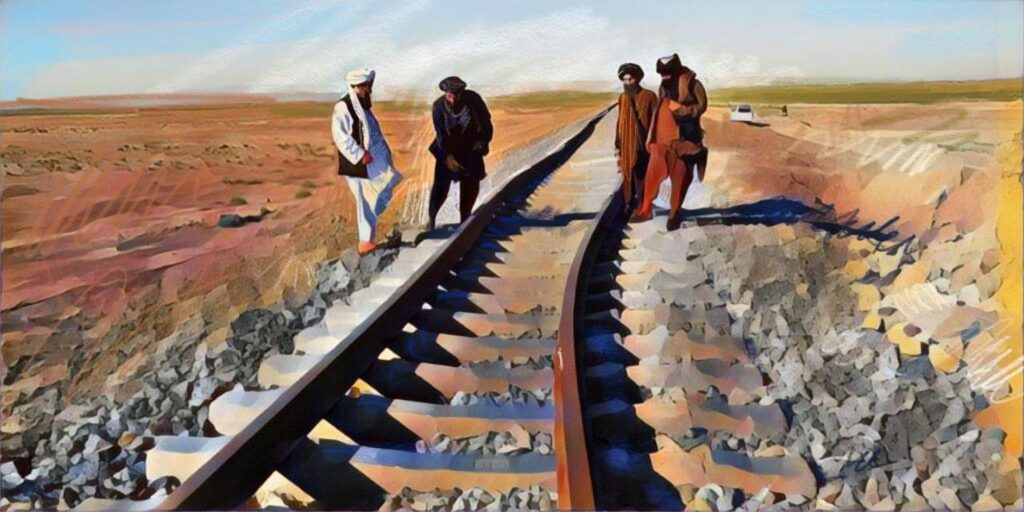
Taliban Deputy Chief Minister Abdul Ghani Baradar announced that construction on the planned Hairatan-Herat railway would begin within 10 days of a feasibility study, which Uzbekistan will finance. He also stated that Uzbekistan had agreed to reduce the cost of a power transmission line project to Afghanistan by $30 million, lowering the total to $222 million, Amu TV reports. The announcement followed Baradar’s two-day visit to Uzbekistan.

The railway project aims to extend the existing line from Hairatan, a key trade hub on the Uzbekistan-Afghanistan border, through Mazar-e-Sharif and on to Herat. The first phase, a 75-kilometer section from Hairatan to Mazar-e-Sharif, was completed in 2010 with funding from the Asian Development Bank. The planned extension is expected to enhance trade links between Central Asia and the Middle East.

During the visit, Baradar and his delegation met with Uzbek Prime Minister Abdulla Aripov and Deputy Prime Minister Jamshid Khodjayev to discuss trade, energy, aviation, and infrastructure. Baradar stated that Uzbekistan had agreed to increase electricity exports to Afghanistan during the summer and reduce tariffs.

Taliban Commerce Minister Nooruddin Azizi added that discussions also covered trade and banking cooperation, as well as a potential railway extension from Hairatan to Spin Boldak. Additionally, Uzbekistan will lift restrictions on Afghan agricultural exports and establish four trade centers in major cities across both countries.

Aripov visited Kabul last August for talks focused on boosting trade, strengthening energy cooperation, and collaborating on copper, iron, oil, and gas projects. Both sides agreed that trade between Uzbekistan and Afghanistan could reach $1 billion in 2024 and expand to $3 billion in the near future.

Report Addresses Cross-Border Challenges in Irtysh River Basin

The Eurasian Development Bank (EDB) has released a report titled “The Irtysh River Basin: Transboundary Challenges and Practical Solutions”, analyzing the water resources of the transboundary Irtysh River basin, shared by China, Kazakhstan, and Russia. The report highlights growing water demand in all three countries and proposes practical solutions to address cross-border challenges.

Strategic Importance of the Irtysh River

The Irtysh River, the world’s longest transboundary tributary, stretches 4,248 km and, together with the Ob River, forms Russia’s longest waterway, the second longest in Asia and the seventh longest globally. Flowing from China through Kazakhstan into Russia, the river is crucial for all three countries, necessitating strategic cooperation in its management.

The Irtysh River Basin; image: eabr.org

Key Challenges in Each Country

China

In China, the upper Irtysh River is essential for the Xinjiang Uygur Autonomous Region (XUAR), where the population has surged from 15.2 million in 1990 to 25.87 million in 2022. Rapid regional development has made water stress a pressing issue. Research forecasts that annual water withdrawals from the Irtysh could more than triple, from the current 1.5 – 2.0 km³ to 7 km³, out of an average natural flow of 8.3 km³.

Kazakhstan

In Kazakhstan, the Irtysh and its tributaries support 30% of the population and contribute 45% of the country’s total agricultural output. The Irtysh HPP Cascade accounts for 10% of Kazakhstan’s electricity generation and 80% of its hydropower capacity. Increased water withdrawals by China pose significant risks to Kazakhstan’s water security.

Russia

For Russia, upstream water policies in China and Kazakhstan are major concerns. Excessive Chinese withdrawals could reduce Kazakhstan’s downstream flow, impacting Omsk and the surrounding Omsk Municipal District. Changes in water availability and quality over the next decade present serious socio-economic challenges for the region.

Key Recommendations from the Report

The EDB report outlines four major recommendations for managing transboundary water challenges:

Expanding Bilateral and Trilateral Cooperation

The report urges stronger water agreements between Kazakhstan and Russia, as well as between Kazakhstan and China, incorporating international water management principles. Recommended cooperation areas include:

  • Ensuring international navigation on the Irtysh-Ob River system
  • Controlling water pollution
  • Regulating safe water usage
  • Improving efficiency during floods, droughts, and low-water periods

This groundwork would help establish a future trilateral water management agreement between the three countries.

Strengthening Water Management Infrastructure

The report calls for soft infrastructure development, such as:

  • Creating an interstate river flow monitoring system with open data access
  • Developing joint training programs for water management specialists
  • Expanding interdisciplinary water research involving experts from all three nations

Coordinating Hydraulic Infrastructure Operations

The report stresses the importance of joint management of existing and future hydropower plants, dams, reservoirs, and irrigation canals to ensure stable water supplies without harming other nations’ resources. Priority projects include:

  • Shulbinsk HPP (Phase 2) in Kazakhstan
  • Semipalatinsk HPP in Kazakhstan
  • Modernization of the Satpayev Irtysh-Karaganda Canal in Kazakhstan
  • Construction of the Krasnogorsk hydro-system near Omsk, Russia

Developing a Multimodal Transport Corridor

The report proposes a multimodal transport corridor linking Russia, Kazakhstan, and China, utilizing the Irtysh-Ob waterway to connect:

  • The Northern Sea Route (Arctic shipping lane)
  • The Silk Road (Eurasian trade route)

This corridor would enhance global connectivity, providing landlocked Central Asian nations and northwestern China with access to Russian inland regions and Arctic ports.

The report underscores the urgent need for coordinated water management to balance economic growth, environmental sustainability, and regional stability. With China’s rising water demand, Kazakhstan’s agricultural dependence, and Russia’s downstream concerns, enhanced bilateral and trilateral cooperation is essential for securing the future of the Irtysh River Basin.