• KGS/USD = 0.01144 0%
  • KZT/USD = 0.00213 0%
  • TJS/USD = 0.10456 0.19%
  • UZS/USD = 0.00008 0%
  • TMT/USD = 0.28490 0%
  • KGS/USD = 0.01144 0%
  • KZT/USD = 0.00213 0%
  • TJS/USD = 0.10456 0.19%
  • UZS/USD = 0.00008 0%
  • TMT/USD = 0.28490 0%
  • KGS/USD = 0.01144 0%
  • KZT/USD = 0.00213 0%
  • TJS/USD = 0.10456 0.19%
  • UZS/USD = 0.00008 0%
  • TMT/USD = 0.28490 0%
  • KGS/USD = 0.01144 0%
  • KZT/USD = 0.00213 0%
  • TJS/USD = 0.10456 0.19%
  • UZS/USD = 0.00008 0%
  • TMT/USD = 0.28490 0%
  • KGS/USD = 0.01144 0%
  • KZT/USD = 0.00213 0%
  • TJS/USD = 0.10456 0.19%
  • UZS/USD = 0.00008 0%
  • TMT/USD = 0.28490 0%
  • KGS/USD = 0.01144 0%
  • KZT/USD = 0.00213 0%
  • TJS/USD = 0.10456 0.19%
  • UZS/USD = 0.00008 0%
  • TMT/USD = 0.28490 0%
  • KGS/USD = 0.01144 0%
  • KZT/USD = 0.00213 0%
  • TJS/USD = 0.10456 0.19%
  • UZS/USD = 0.00008 0%
  • TMT/USD = 0.28490 0%
  • KGS/USD = 0.01144 0%
  • KZT/USD = 0.00213 0%
  • TJS/USD = 0.10456 0.19%
  • UZS/USD = 0.00008 0%
  • TMT/USD = 0.28490 0%

Bright Objects in the Sky? Nothing to Worry About, Kazakhstan Says

Witnesses in Kazakhstan reported seeing bright objects streaking through the sky late Thursday, prompting defense officials to say that there have been no reported violations of the country’s airspace and that there is no threat to the population.

“This phenomenon resembles the debris of spacecraft entering the atmosphere or a meteor shower. Such objects usually burn up in the dense layers of the atmosphere and do not reach the ground,” the Kazakh Ministry of Defense said in a statement.

“We ask citizens to remain calm and not spread unconfirmed information. The competent authorities are investigating this phenomenon and will provide an official explanation if necessary,” the ministry said.

Videos posted on social media platforms showed clusters of what appeared to be fiery objects over parts of central and northern Kazakhstan, including the capital Astana.

Uzbekistan Qualify for the FIFA World Cup

On June 5, history was made in Uzbekistan as the national football team qualified for the 2026 FIFA World Cup. A nervy 0-0 draw against the United Arab Emirates in Abu Dhabi was enough to secure them a place at next year’s tournament in North America.

It marks the first time that the 34-year-old nation will appear in the final stages of the competition. They become only the third nation from the former USSR, after Russia and Ukraine, and the first from Central Asia, to do so.

A Night of Nerves

The final hurdle was not an easy one. The Uzbeks faced an intimidating atmosphere even before kick-off, with long airport screening processes meaning over 100 fans were detained for between 7-9 hours at Sharjah airport.

Then there was the weather, even at 8pm, the Al Nahyan Stadium in Abu Dhabi sweltered in 31-degree heat.

Nevertheless, the team was helped by an Uzbek away support that did not cease all match. The away section was full well before kick-off, and the chants of “Oz-Bek-Is-Ton!”, accompanied by the pounding of drums, could be heard around the stadium.

The Uzbeks, with just one loss in their nine-match qualifying campaign, have built their play around a solid defense. In six out of their nine qualifying matches, they did not concede a goal.

The team’s star player, Manchester City’s Abdukodir Khusanov, has been the lynchpin of that formidable rearguard, but this is not a side of individuals. The whole team worked tenaciously for each other, and even when their protection was breached, the impressive Uktir Yusupov was on hand to make a few smart saves.

Towards the end, the Uzbek fans and coaching staff were screaming at the referee to blow the final whistle after he added ten minutes of additional time. But when time was finally up, well-earned and long-awaited joy was plain to see on every face. Several players broke out sobbing.

Celebrations

The elation was shared not only by the players. The Uzbek media present in the stadium were seen jumping around the press box in delirium.

Back home in Uzbekistan, where half the country had stayed up to watch the match, there was similar joy.

“The feeling is indescribable. We’ve been waiting for this day for thirty-four years!” said Diyor Mirpolatov, a 19-year-old student from Tashkent told The Times of Central Asia.

Xojiakbar Xamdamov, a graphic designer from Andijan, also could not hide his relief at finally making the tournament. “The failure had even become part of Uzbek pop culture,” he said. “It gets mentioned by standup comedians, in movies, on talk shows… now I think everything will change.”

Mirpolotov says that he plans to go to the United States for the tournament: “I’m also going to apply as a volunteer for the World Cup, so I can get more access to matches.”

His dream is to see his country play against Portugal. “It would be amazing for Cristiano Ronaldo to play against Uzbekistan,” he said.

Xamadov is more circumspect. “Uzbekistan is one of those countries from whom it will be difficult to obtain a U.S. visa. Moreover, it will cost way too much for the average Uzbek to visit a tournament in the U.S.,” he said.

The time difference with North America will make watching games difficult, but fans are prepared to stay up until whatever time to watch their team.

“Everyone will be watching the games,” said Xamadov firmly.

The Long Road to Success

No-one is mentioning that the tournament has become much easier to qualify for now that it has been expanded from 32 to 48 teams.

The country’s president, Shavkat Mirziyoyev, was quick to lavish praise on the side after the match. “Without a doubt, such a brilliant result, which will be written in golden letters in the annals of our national sport, has been the dream of millions of football fans in our country, of our entire people, for many years,” he said.

Indeed, successive governments do deserve credit for improving the country’s sporting infrastructure. This is perhaps best symbolized by the 34,000-seater, $270 million, Milliy Stadium in Tashkent, which opened in 2012. However, far more impactful has been the investment in youth and grassroots football.

In the past, it was believed that Uzbek football could be improved from the top down. This involved the importing of superstars – Brazilian legends Zico and Rivaldo were lured to Tashkent on huge salaries to respectively coach and play for one of the capital’s largest clubs, Bunyodkor. Neither had much impact, and they soon returned home.

Now, however, the coaching of young players is more professional. Astroturf technology has also helped, meaning children can grow up playing at a higher level on smooth surfaces rather than on grass or dirt pitches in a notoriously hot and dry country.

The fruits of this have seen more players gain experience in the top leagues in Europe. Eldor Shomurodov, who plays for Italian side A.S. Roma, was for so long the country’s talisman, but now he has been joined by the likes of Khusanov and the younger generation.

Perhaps this is just the start; playing at the World Cup is certainly likely to inspire even more young Uzbeks to take up the sport. For now, the country can just savor the moment. The qualification took place on the night of Eid al-Adha, a key festival in the Islamic calendar, so public celebrations in Tashkent were muted.

Still, they have next year to make plenty of noise. As their fans have been waiting to say for so long: Salom, Mundial!

Kazakhstan to Slash Extraction Tax for Processing Man-Made Mineral Waste

Kazakhstan’s new draft Tax Code proposes a tenfold reduction in the mineral extraction tax (MET) for companies processing man-made mineral formations (MMF), a move expected to boost investment in mining waste reclamation and reduce environmental burdens.

Currently, Kazakhstan taxes the processing of MMF, mineral residues left in waste dumps after the primary extraction of solid minerals, at standard MET rates. These rates range from 21.06% for chromite ore to 2% for mineral raw materials containing technical stones. The application of these standard rates to waste materials has discouraged subsoil users from reprocessing them.

As a result, an estimated 55 to 60 billion tons of MMF have accumulated in dumps, tailing ponds, and storage facilities across the country’s mining enterprises, according to Gulnara Bizhanova of the Atameken Chamber of Entrepreneurs. She presented this data at the AMM-2025 Mining and Metallurgical Forum.

In Kazakhstan, only 11% of MMF is currently being processed, compared to 70-80% in many developed countries, where such waste is either exempt from MET or subject to significantly reduced rates.

“The draft Tax Code introduces a reduction coefficient of 0.1 for MET on the processing of MMF. The bill is still under consideration in the Senate,” Bizhanova stated.

Bizhanova noted that this change would benefit both the government and the private sector. For instance, Qarmet, a leading Kazakh steel and mining firm, plans to launch 10 projects worth $137 million if the tax reduction is approved.

“There are many investors interested in this area of MMF processing. It is also important to highlight that increasing waste processing will reduce the operational burden on active mines,” she added.

Previously, The Times of Central Asia reported that Aibar Dautov, head of the Kazakhstan Mining Industry Association, urged reforms to the MET framework to enhance state revenue from both oil and solid mineral extraction.

Uzbektelecom Responds to Arbitration Case Filed by Humans Mobile

Following the news that Humans Mobile Ltd has launched an international arbitration case against Uzbekistan, state-owned telecom operator Uzbektelecom has publicly denied any wrongdoing and accused the company of failing to pay its contractual debts.

On June 3, the International Centre for Settlement of Investment Disputes (ICSID), part of the World Bank Group, registered the case filed by Humans Mobile Ltd, a subsidiary of the Singapore-based Humans Group. The company alleges that Uzbekistan violated a 2003 bilateral investment treaty between the two nations. According to Humans Mobile, actions taken by Uzbek authorities disrupted its business operations and undermined the investment climate.

In response, Uzbektelecom issued a detailed statement rejecting the accusations. The company stated that Humans Mobile has been using Uzbektelecom’s infrastructure since 2020 without developing its own network, unlike other mobile operators in the country.

“Humans continues to earn money by using our mobile network but delays payment for the services,” Uzbektelecom said.

The operator claimed that repeated warnings were issued to Humans about possible service disconnection due to unpaid debts. In turn, Humans filed a complaint with the Committee on Competition, alleging unfair treatment.

Some media outlets have suggested that Uzbektelecom may be leveraging its dominant market position to exert pressure on the Humans Group. Uzbektelecom dismissed these claims, asserting that Humans Group is free to contract with other providers such as Ucell, Beeline, or Mobi.uz. The company emphasized that no legislation mandates virtual mobile operators to exclusively use Uzbektelecom’s infrastructure.

Uzbektelecom also highlighted its broader contributions to national digital development. Between 2017 and 2024, the company claims it reduced the cost of 1 Mbps of internet bandwidth for local providers by a factor of 40.

Despite what it describes as repeated contractual violations by the group, Uzbektelecom says it continued to provide service in order to avoid disruption for end-users, including those who are not direct customers.

On May 8, the Tashkent Economic Court ruled in favor of Uzbektelecom, ordering Humans Group to settle its outstanding debt. The company said it may pursue additional legal action to protect its reputation should misinformation continue to circulate.

Uzbektelecom concluded its statement by reaffirming its commitment to fair competition, transparency, and open dialogue with all market participants, including Humans Mobile,  provided contractual obligations are met.

Expanding Preschool Education Boosts Women’s Employment in Uzbekistan

Expanding access to preschool education has emerged as a key factor in increasing women’s employment in Uzbekistan, according to a recent study by World Bank economists Chiyu Niu and Avralt-Od Purevjav, along with Central European University researcher Dilnovaz Abdurazzokova.

Covering the years 2018 to 2022, the study examines how public investment in early childhood education has influenced female labor force participation. In regions with the most substantial growth in preschool availability, women’s employment rose by 12%, equivalent to a 3.3 percentage point increase.

From Reform to Results

In 2017, less than 30% of Uzbek children aged 3 to 7 were enrolled in preschool, one of the lowest rates globally. In response, the government launched sweeping reforms: within four years, the number of kindergartens tripled, significantly expanding access in both urban and rural areas.

The researchers analyzed data from the “Listening to the Citizens of Uzbekistan” survey, which samples approximately 1,500 households monthly, alongside official labor market and education statistics.

Not Just Childcare, But an Investment

In many Uzbek households, childcare is traditionally provided by extended family members such as grandmothers, aunts, and older siblings. However, the study found that access to formal preschool services offers a more sustainable and consistent impact on women’s employment.

One striking finding was a cultural shift in how kindergartens are perceived: once seen primarily as childcare, they are now increasingly viewed as investments in a child’s development. Despite preschool costs ranging from 25% to 200% of a woman’s monthly income, many families are willing to pay, recognizing the long-term value.

“The expansion of kindergartens motivates families to work, it’s not just about time, but about purpose,” the researchers noted. Many women return to work not only because they have more time, but also to help cover the cost of preschool.

A Multigenerational Effect

The study also observed a broader labor market ripple effect: once children are enrolled in preschool, not only mothers but also grandmothers and aunts often seek employment. This illustrates a critical dynamic, when childcare responsibilities are shared more evenly, the overall economic participation of women increases.

Yet, access to preschool alone cannot close all gender gaps. In 2021, Uzbekistan’s gender gap in labor force participation stood at 28 percentage points. Youth unemployment among women was 15.5%, compared to 10% for men, and 42% of young women (ages 15-24) were not in employment, education, or training (NEET), compared to just 8.8% of young men.

Women also earned 34% less than men on average, well above the global average gender wage gap of 20%.

These figures highlight that while childcare reform is foundational, it must be accompanied by broader efforts to create meaningful employment opportunities for women.

A Model for Conservative Societies

Uzbekistan’s experience offers valuable lessons for other nations with strong family traditions. It demonstrates that investing in childcare infrastructure can lead to measurable improvements in economic participation, even in traditionally conservative societies.

As The Times of Central Asia previously reported, this topic was also discussed at the IV International Legal Forum “Tashkent Law Spring,” held on May 30. The Forum explored practical strategies to support women in traditionally male-dominated sectors such as law, energy, and public service, underscoring the need for policy reform backed by both government and business to create real opportunities for women.

Kyrgyzstan Prepares for Rapid Growth in E-Commerce

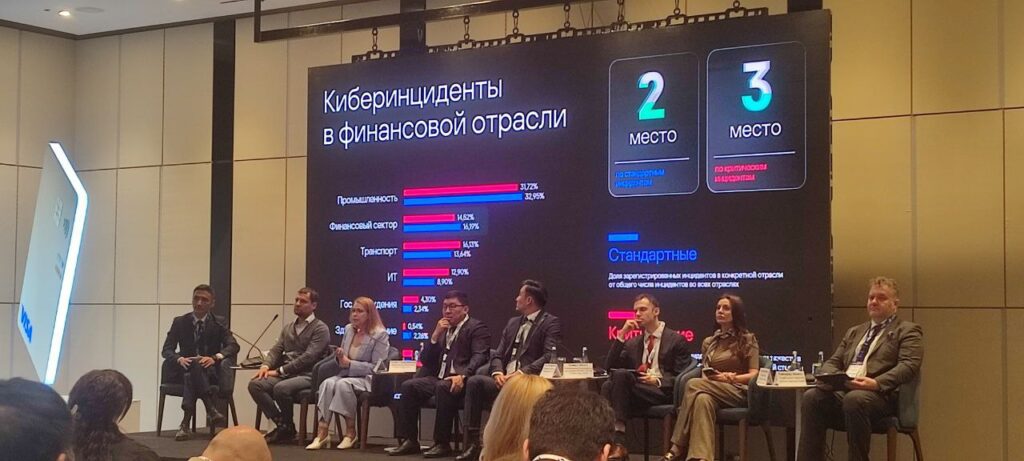
Speaking at the 11th Bishkek International Finance Forum (BIFF 2025), Prime Minister Adylbek Kasymaliyev stated that Kyrgyzstan is open to cooperation in digital finance, welcomes investment in the banking sector, and seeks to exchange expertise with international partners.

Kasymaliyev emphasized that digital transformation is integral to the global sustainable development agenda and that Kyrgyzstan is steadily implementing digital solutions to build a modern, trust-based financial ecosystem.

“Today, we stand at the threshold of a new digital era, where data processing technologies are transforming not only the financial system but also the foundations of public administration and socio-economic development. That is why digitalization is a strategic priority of the Kyrgyz Republic’s state policy,” said the head of the Cabinet.

Since 2023, Kyrgyzstan has actively promoted a cashless payment system using QR codes integrated with bank cards, e-wallets, and mobile applications. QR code payments have become routine for many citizens. The government is also developing digital platforms to support small and medium-sized businesses and expanding infrastructure for fintech startups.

Kasymaliyev noted that the introduction of the digital som will mark a key milestone in the country’s digital transformation. “After President Sadyr Japarov signed the law introducing the digital som, the implementation of this strategic initiative began. It will affect virtually all sectors of the economy and represents a significant step in developing the national digital economy,” he said.

Banking sector representatives stressed that forums like BIFF are essential not only for advancing electronic finance but also for addressing cybersecurity challenges. The forum has emerged as a platform for discussing innovative strategies to combat digital fraud.

Anna Kulashova of the Russian cybersecurity company, Kaspersky Lab, highlighted that the widespread adoption of digital financial technologies also increases exposure to cyber threats. “We are ready to share our knowledge and experience in the field of cybersecurity. We are open to developing cooperation in this area,” she said.

Visa representatives praised Kyrgyzstan’s pace of digitalization. According to Visa’s Evgeny Lesnyak, the country is frequently used as a testbed for innovative financial solutions. “In many countries, paying for public transport with contactless methods is still difficult. In Kyrgyzstan, this service has been available for four years via QR codes using Visa cards. That’s rare even in developed markets. We see Kyrgyzstan as a platform for testing innovations. Your solutions are exportable and help launch new services in other countries,” he said.

Aibek Kurenkeev, President of the E-Commerce Association and moderator of the forum, told The Times of Central Asia that Kyrgyzstan has gained valuable experience in modernizing its financial system. However, he stressed that rapid technological development requires greater openness and regional knowledge exchange.

“We heard engaging presentations on the stock market, Kyrgyzstan’s entry into international capital markets, protection against cyber threats, new payment solutions, and mechanisms such as the self-prohibition system for issuing loans. The forum brought together diverse experts, and I believe we’ve laid a solid foundation for a sustainable, transparent, and inclusive digital future,” he said.

Kurenkeev noted that fintech is one of Kyrgyzstan’s fastest-growing sectors, with cashless transactions now accounting for over 50 percent of all payments, and the trend is continuing to grow.

“For comparison, Kazakhstan’s share of non-cash payments is about 87%, a strong indicator. But in Kazakhstan, they can hardly imagine the speed of development we’re showing. We adopt and adapt quickly. We’re confident we’ll reach those figures faster than many neighbors,” he concluded.

Kurenkeev also expressed confidence that Kyrgyzstan will see significant growth in various sectors, including e-commerce, over the next two years.