• KGS/USD = 0.01144 0%
  • KZT/USD = 0.00212 0%
  • TJS/USD = 0.10456 0.19%
  • UZS/USD = 0.00008 0%
  • TMT/USD = 0.28490 0%
  • KGS/USD = 0.01144 0%
  • KZT/USD = 0.00212 0%
  • TJS/USD = 0.10456 0.19%
  • UZS/USD = 0.00008 0%
  • TMT/USD = 0.28490 0%
  • KGS/USD = 0.01144 0%
  • KZT/USD = 0.00212 0%
  • TJS/USD = 0.10456 0.19%
  • UZS/USD = 0.00008 0%
  • TMT/USD = 0.28490 0%
  • KGS/USD = 0.01144 0%
  • KZT/USD = 0.00212 0%
  • TJS/USD = 0.10456 0.19%
  • UZS/USD = 0.00008 0%
  • TMT/USD = 0.28490 0%
  • KGS/USD = 0.01144 0%
  • KZT/USD = 0.00212 0%
  • TJS/USD = 0.10456 0.19%
  • UZS/USD = 0.00008 0%
  • TMT/USD = 0.28490 0%
  • KGS/USD = 0.01144 0%
  • KZT/USD = 0.00212 0%
  • TJS/USD = 0.10456 0.19%
  • UZS/USD = 0.00008 0%
  • TMT/USD = 0.28490 0%
  • KGS/USD = 0.01144 0%
  • KZT/USD = 0.00212 0%
  • TJS/USD = 0.10456 0.19%
  • UZS/USD = 0.00008 0%
  • TMT/USD = 0.28490 0%
  • KGS/USD = 0.01144 0%
  • KZT/USD = 0.00212 0%
  • TJS/USD = 0.10456 0.19%
  • UZS/USD = 0.00008 0%
  • TMT/USD = 0.28490 0%

Kazakhstan Extends Border Crossing Closure with Uzbekistan Until September

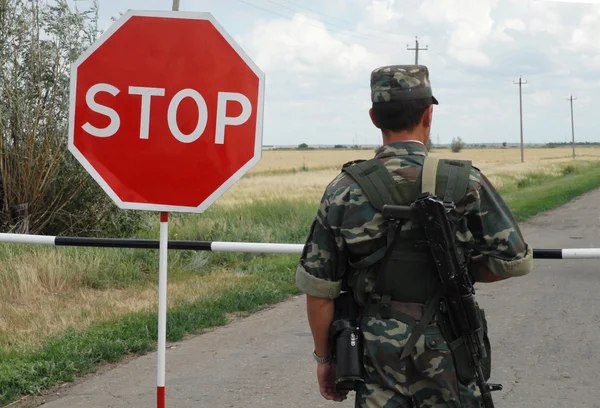
The Tajyen-Daut Ata border checkpoint between Kazakhstan and Uzbekistan will remain closed to pedestrians, passenger vehicles, buses, and light cargo transport until September 1. The extension was agreed upon by both governments, according to Kazinform, citing Kazakhstan’s State Revenue Committee under the Ministry of Finance.

Officials explained that the continued closure is necessary to ensure traveler safety and facilitate the progress of major construction and renovation work at the site. Ongoing repairs include the installation of metal structures, engineering systems, and the comprehensive refurbishment of buildings.

In parallel, from May through August, Kazakhstan’s national road company, KazAvtoZhol, will construct a new road in the neutral zone separating the Tajyen (Kazakhstan) and Daut Ata (Uzbekistan) checkpoints. Uzbekistan is expected to carry out similar infrastructure upgrades on its side of the border.

The checkpoint was originally closed on February 1, to accommodate the reconstruction project. Kazakhstan subsequently proposed extending the closure for an additional four months, a request that was supported by Uzbek authorities.

Officials have advised citizens of both countries to factor in the closure when planning their travel and transport routes.

This development aligns with broader efforts by Kazakhstan and Uzbekistan to upgrade regional transport and trade infrastructure. As previously reported by The Times of Central Asia, both nations are investing in projects aimed at enhancing regional connectivity, including transit links to Pakistan. Kazakhstan is also positioning itself as a key player in the Middle Corridor, part of the larger Trans-Caspian International Transport Route connecting Central Asia with South Asia and Europe.


Maternal Mortality Continues to Decline in Kazakhstan

Kazakhstan has ranked among the top 10 countries globally in terms of reducing maternal mortality rates, according to the World Health Organization.

Over the past decade, Kazakhstan’s maternal mortality rate has dropped significantly, reaching 10.1 deaths per 100,000 live births in 2024. This progress comes despite a temporary spike in maternal deaths during the COVID-19 pandemic.

Three regions — Pavlodar (northeast), Mangistau (west), and North Kazakhstan — reported zero maternal deaths in 2024. Additionally, 99.9% of births across the country were attended by qualified medical personnel, reflecting widespread access to professional maternal healthcare.

Steady Progress with Regional Disparities

The Ministry of Health reported the following annual maternal mortality figures:

  • 2020: 200 cases
  • 2021: 70 cases
  • 2022: 45 cases
  • 2024: 37 cases

Despite the national downward trend, 10 regions have seen a slight rise in maternal deaths over the past six years. In 2024, 54% of maternal deaths occurred in urban areas, with 46% in rural settings. A troubling development is the rise in mortality among women with four or more children, which left 97 children orphaned last year.

Nonetheless, the current maternal mortality rate is the lowest recorded in Kazakhstan’s post-Soviet history. In 1992, the rate stood at 76.8 deaths per 100,000 live births.

Regional Leadership in Maternal Health

As previously reported by The Times of Central Asia, Kazakhstan is actively sharing its expertise in maternal and child health with neighboring countries, contributing to broader regional health development efforts.

Kazakh Women Increasingly Turn to IT Careers, but Face Persistent Pay Gaps

In Kazakhstan, a growing number of women are entering the IT sector, yet their salaries continue to lag behind those of their male counterparts.

Women in STEM: Statistics and Trends

According to a study by Ranking.kz, the number of female students enrolled in IT disciplines has more than tripled between 2019 and 2024. At the start of the 2019/2020 academic year, only 4,500 women were studying IT at universities across the country. By 2024, that number had surged to 15,300. Interest in information security has been particularly strong, with female enrolment rising 5.8-fold over this period.

Despite this growth, the proportion of women among all IT students has actually declined, from 31.7% in 2019 to 24% in 2024. This shift reflects a sharp increase in male enrolment, which has skewed the overall gender balance.

Women in Kazakhstan are also showing increasing interest in STEM (science, technology, engineering, and mathematics) more broadly. In the most recent academic year, they made up the majority in several scientific disciplines. In physical and chemical sciences, women represented 75% of all students, growing 6.2 times to reach 7,100. In mathematics and statistics, 61.7% of students were women.

Labor Market Disparities

On the employment front, progress has been less marked. From 2019 to 2024, the share of women working in the information and communications sector remained steady at around 42%. In absolute numbers, female employment in the sector rose from 68,000 to 79,100, a 16.3% increase over five years.

Nearly half of these women (35,500) work in Kazakhstan’s two largest cities, Almaty and Astana, reflecting the concentration of IT firms and economic activity in these hubs. However, some regions show stronger female representation: in the Aktobe region, women account for 71.1% of information and communications sector employees; in the Kyzylorda region, the figure stands at 56.9%.

The scientific research landscape has also evolved. The number of women in research and development (R&D) increased by 43.6% over the past five years, reaching 12,900. Of these, 2,600 are in engineering and 3,600 in the natural sciences. Gender parity has nearly been achieved in these fields: women constitute 45.4% of engineering researchers and 54.3% in the natural sciences.

Gender Pay Gap Persists

High wages remain a key draw to the IT sector. In 2024, the average monthly salary in IT stood at $1,395, nearly double the national average of $790. Yet, a significant gender pay gap persists: on average, men in ICT earn 45.4% more than women. For instance, in the field of computer programming, male professionals earn an average of $1,930, compared to $1,327 for women.

Global Context and Local Barriers

Kazakhstan is not unique in facing gender inequality in IT. Globally, as of 2024, 70% of men and 65% of women had internet access. The United Nations has called for equal opportunities in digital education and careers across genders. In Kazakhstan, the gender gap in internet access is minimal, 96.6% for men and 95.9% for women aged 16-74, but entrenched social stereotypes and cultural norms still hinder women’s entry into tech fields.

Kazakhstan Establishes New Special Economic Zone in Kyzylorda Region

Kazakhstan has launched a new special economic zone (SEZ) named “Korkyt Ata”, located in the Kyzylorda region. Spanning 550 hectares, the SEZ is strategically positioned near the international transport corridor Western Europe-Western China, enhancing its potential as a hub for industrial growth and regional trade.

According to the project’s developers, the SEZ aims to foster competitive industrial production, attract both domestic and foreign investment, and facilitate the introduction of advanced technologies. Its proximity to the major transport artery is expected to improve access to Central Asian markets and beyond.

Korkyt Ata will operate under a special legal regime offering tax and customs incentives to investors. By 2049, it is projected to attract over 150 billion KZT ($290 million) in investment, including 80 billion KZT ($155 million) in foreign capital.

Currently, Kazakhstan hosts 15 special economic zones, each with distinct industrial priorities. These include the Aktau Seaport SEZ, strategically located along the Trans-Caspian International Transport Route (TITR), also known as the Middle Corridor, which connects China to Europe through Kazakhstan.

Additionally, two key SEZs are positioned along the Kazakh-Chinese border:

  • Khorgos International Center for Border Cooperation (ICBC), facilitating cross-border trade and joint ventures;
  • Khorgos-Eastern Gate SEZ, a logistics hub featuring industrial complexes and a dry port that links China with Central Asia and the Middle East.

The establishment of Korkyt Ata underscores Kazakhstan’s ongoing strategy to strengthen its economic infrastructure through diversified SEZs. By leveraging its geographic advantages and investor-friendly policies, the country aims to solidify its role as a vital link in Eurasian trade and industrial networks.

Kyrgyzstan Prepares National Development Program Through 2030

On May 19, Adylbek Kasymaliyev, Chairman of Kyrgyzstan’s Cabinet of Ministers, chaired a government meeting to review a draft of the country’s National Development Program until 2030, a strategic framework outlining Kyrgyzstan’s medium-term development priorities.

The draft program encompasses broad initiatives across healthcare, education, social protection, public security, civil service, and environmental sustainability. Its overarching goal is to improve the quality of life for Kyrgyz citizens and ensure long-term national development.

Kasymaliyev emphasized that the program aims to create “decent conditions for our citizens and improve their well-being.” The strategy is built around four key development vectors: industrialization, positioning Kyrgyzstan as a regional hub, strengthening agriculture and tourism, and advancing green energy. These priorities are designed to capitalize on the country’s comparative advantages while aligning with global development trends.

Targets for 2030

The program sets the following economic and social benchmarks to be achieved by 2030:

  • Gross Domestic Product (GDP) of at least $30 billion
  • GDP per capita of $3,900
  • Annual GDP growth of 11-12%
  • External public debt at 40-60% of GDP
  • Unemployment rate capped at 5%
  • Kyrgyzstan’s entry into the top 100 countries in the Human Development Index (HDI)

Four Strategic Pillars

To meet these goals, the program is structured around four key areas:

  1. Industrialization: Expansion of mining and manufacturing, increased domestic production, and job creation.
  2. Regional Hub Development: Positioning Kyrgyzstan as a central node for logistics, trade, and financial flows in Central Asia.
  3. Agriculture and Tourism: Enhancing agricultural competitiveness and actively developing the tourism sector.
  4. Green Energy: Promoting renewable energy technologies and ensuring national energy security.

The Boston Consulting Group (BCG), a global leader in strategic management and business analytics, played a key role in drafting the program. BCG’s involvement underscores the government’s commitment to international best practices in planning and policy development.

Detention Extended for Four Suspects in Moscow Crocus City Hall Attack

The Moscow City Court has extended the detention of four Tajik citizens accused of participating in the deadly terrorist attack at Crocus City Hall in March. According to the court’s press service, the suspects will remain in custody for an additional three months and 28 days.

The individuals, Fariduni Shamsiddin, Saidkrom Rachabalizoda, Dalerjon Mirzoev, and Muhammadsobir Faizov, have been named by Russian authorities as the primary perpetrators. They reportedly opened fire and set the concert venue ablaze on the evening of March 22. All four have been officially added to Russia’s federal list of terrorists and extremists.

The attack, which occurred during a live performance at Crocus City Hall in Krasnogorsk, just outside Moscow, left 146 people dead. The gunmen used automatic weapons and later ignited a fire in the main concert area, making it one of the deadliest terrorist incidents in Russia in recent history.

Russia’s Investigative Committee has charged 27 individuals in total in connection with the attack. Committee Chairman Alexander Bastrykin confirmed that all have been formally charged and that the investigation is ongoing. So far, 12 people have been arrested, with the principal suspects all identified as Tajik nationals.

As previously reported by The Times of Central Asia, Turkish prosecutors are also pursuing charges related to the attack. The Istanbul Prosecutor’s Office is seeking prison terms ranging from 7.5 to 15 years for five Central Asian nationals believed to be connected to the same network.

Investigations in both Russia and Turkey are continuing as authorities work to uncover the full scope of the group responsible for the massacre.