• KGS/USD = 0.01144 0%
  • KZT/USD = 0.00194 -0%
  • TJS/USD = 0.10844 0%
  • UZS/USD = 0.00008 0%
  • TMT/USD = 0.28490 0%
  • KGS/USD = 0.01144 0%
  • KZT/USD = 0.00194 -0%
  • TJS/USD = 0.10844 0%
  • UZS/USD = 0.00008 0%
  • TMT/USD = 0.28490 0%
  • KGS/USD = 0.01144 0%
  • KZT/USD = 0.00194 -0%
  • TJS/USD = 0.10844 0%
  • UZS/USD = 0.00008 0%
  • TMT/USD = 0.28490 0%
  • KGS/USD = 0.01144 0%
  • KZT/USD = 0.00194 -0%
  • TJS/USD = 0.10844 0%
  • UZS/USD = 0.00008 0%
  • TMT/USD = 0.28490 0%
  • KGS/USD = 0.01144 0%
  • KZT/USD = 0.00194 -0%
  • TJS/USD = 0.10844 0%
  • UZS/USD = 0.00008 0%
  • TMT/USD = 0.28490 0%
  • KGS/USD = 0.01144 0%
  • KZT/USD = 0.00194 -0%
  • TJS/USD = 0.10844 0%
  • UZS/USD = 0.00008 0%
  • TMT/USD = 0.28490 0%
  • KGS/USD = 0.01144 0%
  • KZT/USD = 0.00194 -0%
  • TJS/USD = 0.10844 0%
  • UZS/USD = 0.00008 0%
  • TMT/USD = 0.28490 0%
  • KGS/USD = 0.01144 0%
  • KZT/USD = 0.00194 -0%
  • TJS/USD = 0.10844 0%
  • UZS/USD = 0.00008 0%
  • TMT/USD = 0.28490 0%
10 December 2025

Kazakh Blogger, Jailed After Filming at Azerbaijan Airlines Crash Site, is Freed

A Kazakh blogger, who was sentenced to 10 days in prison after using a drone to film wreckage, emergency responders and bodies covered with tarps at the site of the Azerbaijan Airlines passenger plane crash in Kazakhstan, has been released.

Azamat Sarsenbayev was convicted of disobeying a police order not to film and photograph at the Dec. 25 crash in a quickly held, late-night trial in a court in Fort-Shevchenko, more than 100 kilometers from Aktau, the Caspian Sea city where the plane hit the ground and burst into flames, killing 38 of the 67 people on board. He had disputed the charge, arguing that there were procedural violations and that, by law, he should have received a fine instead of a prison sentence.
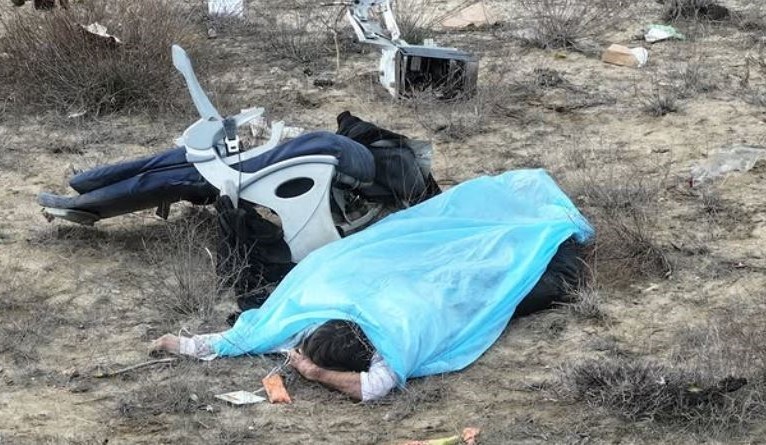
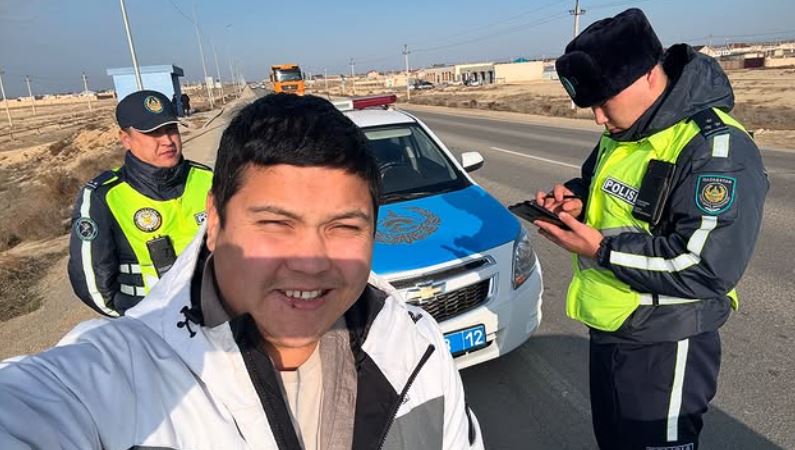
Footage from the crash site; Azamat Sarsenbayev

The prosecution of Sarsenbayev partly shows the tension between periodic government efforts to monitor and restrict information, not just in Kazakhstan but also in other Central Asian countries, and the efforts of some bloggers, journalists and others to widen the scope for reporting, often at risk of prosecution and jail time. Regional governments sometimes warn of the threat of provocateurs spreading disinformation, though Sarsenbayev’s actions on the day of the crash appeared to be more in line with reporting the facts of a major international disaster.

Drones enhance the reporting ability of some journalists, though there can be accompanying ethical, legal and security concerns about their use. The Embraer 190 plane crash is particularly sensitive because it involves criminal investigators and a delicate international backdrop. Azerbaijan says Russian ground fire hit the plane as it was trying to land at its planned destination in Russia-controlled Chechnya. Russia has apologized without directly confirming the Azerbaijani account. Kazakhstan is leading the investigation and preliminary findings are expected to be released later in January.

On social media posts this weekend, Sarsenbayev provided details about his testimony to the judge during his trial, saying he had received calls from international news organizations and other outlets asking for help in covering the crash. He said he reached the scene at around 11 a.m. and deployed his drone about one kilometer away, without having any contact with police, and then approached a cordoned-off area to interview a representative from the Ministry of Emergency Situations who was giving official comments.

Sarsenbayev said he told the judge that the media organizations that had contacted him did so “for paid collaboration to capture authentic, exclusive materials for their platforms” and that he had not taken any “explicit” images of crash victims, since their bodies were covered.

“If there had been even the slightest hint of a breach of ´ethics´ or ´moral norms´ in my photographs, platforms like Instagram would have automatically blocked my posts, let alone news outlets that published my images. In that case, should we hold everyone accountable for photographing or filming incidents like car accidents or other similar events?” Sarsenbayev said he told the judge.

President Kassym-Jomart Tokayev has promised more openness in society. But a media law passed this year lets the Kazakh government have tighter control over media accreditations, a measure that press freedom advocates believe could make it harder for journalists to work. Elsewhere in Central Asia, Kyrgyzstan is a focus of particular concern among international media watchdogs because of legal cases against media groups and individual reporters there.
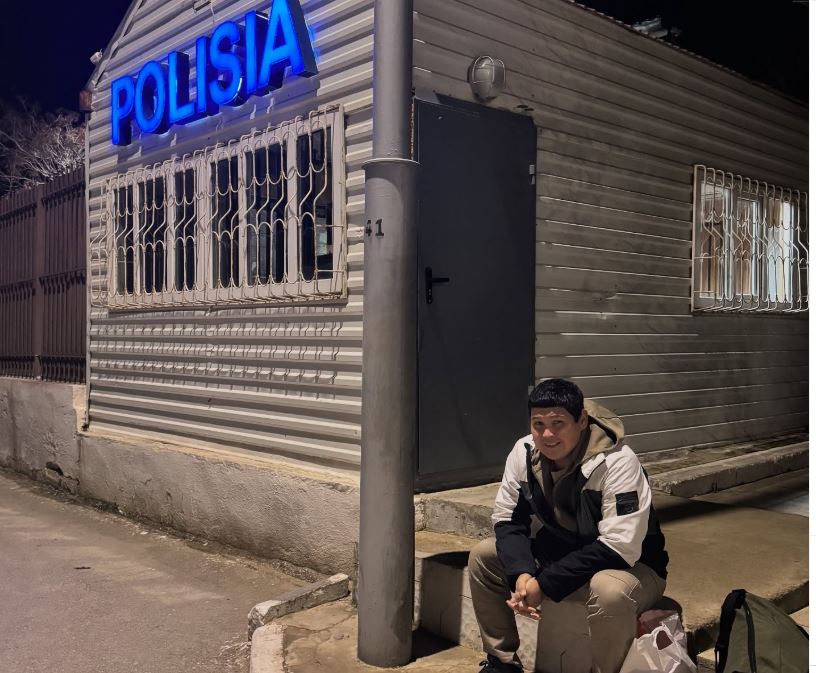
Sarsenbayev following his release; image Azamat Sarsenbayev

Sarsenbayev, the blogger, posted a photo on Instagram of himself sitting outside a police station in the dark after his release. He said the experience had made him “more unyielding” in his principles and that he had more to say.

“But first, he said, “I want to kiss my wife, hug my kids tightly, take a hot shower, and get a good night’s sleep in a warm, cozy environment.”
Kazakhstan Crash: In Air and on Ground, Some Did What They Could

When an Azerbaijan Airlines passenger plane crashed in Kazakhstan on Dec. 25, Junior Sgt. Nurlan Botagarin reacted quickly. He raced to the wreckage in his car and frantically pushed past debris into the fuselage to help survivors.

“The rear part of the plane had overturned, and the people inside were tangled together, unable to get out,” the Kazakh military serviceman said. “At that moment, I broke through the obstructing parts and equipment of the plane and entered inside. I started rescuing the passengers.”

Was Botagarin a hero for what he did, possibly risking his own life in the event of an additional explosion and fire while he was scrambling through the wreckage of Flight J2-8243? Some people say yes. He doesn’t think so.

Heroes or not, some people showed courage and compassion on the day of the Embraer 190 plane crash that killed 38 people and left 29 survivors in Aktau, Kazakhstan, marking a bright spot in the fog of grief and international intrigue over how the disaster unfolded. Azerbaijan says the plane was accidentally hit by Russian ground fire before its planned landing in Russia-controlled Chechnya; President Vladimir Putin of Russia, which is at war with Ukraine, has apologized without confirming Azerbaijan’s account. Kazakhstan is leading the investigation.

The human loss in such a calamity and the alleged responsibility of any perpetrators can overshadow the exemplary conduct of some of those involved in the moment. But here are some of the people who did what they could and will be remembered for it:


THE FLIGHT CREW:

Capt. Igor Kshnyakin, co-pilot Aleksandr Kalyaninov and flight attendant Hokuma Aliyeva died in the crash.

Aviation analysts say the pilots’ struggle to steer the badly damaged aircraft hundreds of kilometers across the Caspian Sea to a landing on flat terrain near Aktau airport was critical to the survival of some of those aboard as well as the likelihood that what exactly happened will be learned in the investigation. Kazakhstan sent the plane’s flight recorders to Brazil, where Embraer aircraft are made, for assessment. The cockpit voice recordings, if they are released, will reveal more to the world about the desperate efforts of the pilots to control the plane and get their passengers to safety.

“This particular aircraft is equipped with a recorder that captures two hours of crew and aircraft activity. The investigation will have a nearly complete picture of events,” said Talgat Lastaev, Kazakhstan’s vice transport minister. He was quoted by the Kazinform news agency.

At a ceremony in Baku, the three crewmembers who died were awarded with the title “National Hero of Azerbaijan.” Two surviving flight attendants, Zulfugar Asadov and Aydan Rahimli, also received honors.

“I must specifically acknowledge the female crew members. They themselves were in a state of stress, but look how humanely they acted to calm the passengers and prevent chaos inside the plane,” Azerbaijan’s President Ilham Aliyev said. In a video taken by a passenger, a flight attendant is heard trying to assure people on the plane that things will be OK, though tension in her voice is evident.


THE BLOOD DONORS:

About 1,500 people gave a total of 800 liters of blood across Kazakhstan in response to an emergency appeal to help injured survivors of the Azerbaijan Airlines crash.

They included some 600 donors in Astana and another 490 in Aktau, the Ministry of Health said.

It said “ordinary citizens and compatriots from different regions responded immediately and compassionately to the tragedy.”

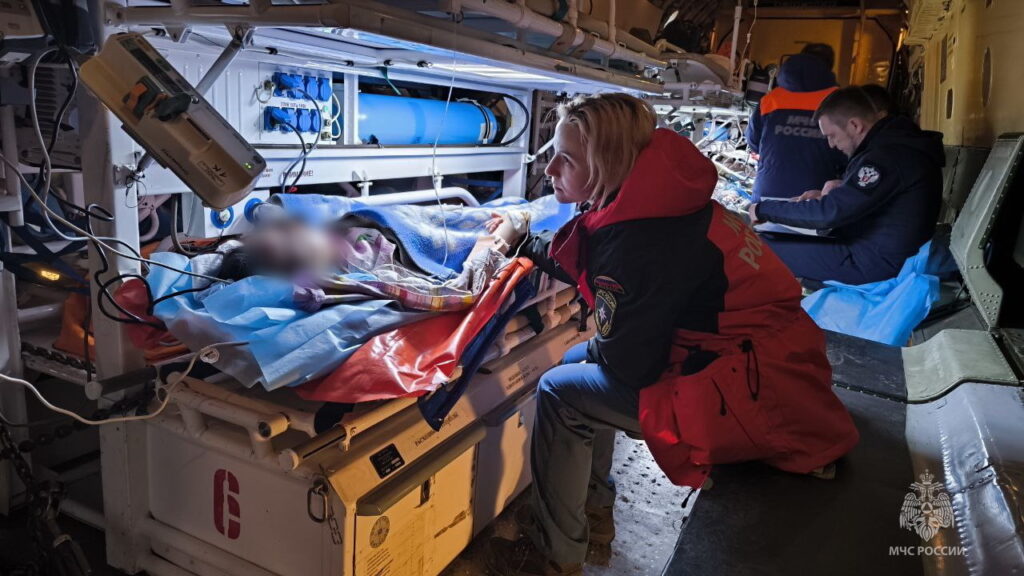
Injuries suffered by the survivors included head, brain and chest injuries. But many medical teams got to the crash site within 10 minutes of the impact and their fast response time appears to have played a key role in saving lives.

Bundled against the cold, people also left flowers and prayed outside the Azerbaijani embassy in the Kazakh capital of Astana, a gesture of empathy that was appreciated in Azerbaijan, a country in mourning.

“We are together with you,” read a sign left at the embassy fence.


THE SERVICEMAN:

Botagarin, a junior sergeant at an air force base in Aktau, was the first person to arrive at the scene of the crash near the city’s airport, Kazakhstan’s Ministry of Defense said.

In an interview posted on Telegram by the ministry, Botagarin described how he was on duty when he and his colleagues saw the plane passing directly over their work area, flying erratically and moving up and down before it crashed.

When he arrived at the crash site, Botagarin saw a young, bleeding passenger who was walking and appeared to be in stable condition. He directed the passenger toward a nearby emergency vehicle that had just pulled up. Then he continued running and clambered into the wreckage to get people out and hand them off to other responders.

“After rescuing several individuals, I was completely exhausted. I kept working until I could no longer continue,” Botagarin said. “I realized that the people trapped under heavy debris needed larger equipment for their rescue. I then moved toward the burning part of the plane for the first time, hoping to find any survivors.”

However, he didn’t find any survivors in the front part of the plane that had burst into flames when it hit the ground. The serviceman went about collecting the belongings and ID documents of the dead.

“I don’t consider myself a hero for what I did,” said Botagarin, who has served in the military since 2017 and has two children. “In my opinion, every citizen of Kazakhstan, especially every military servicemember, has the duty to act in such situations.”

After medical teams and other emergency workers took over at the crash site, the military man quietly returned to his post

A Dozen Injured in 100-Car Accident in Winter Weather in Kazakhstan

Nearly 100 vehicles were involved in a massive pile-up on a highway while driving in blizzard conditions in northern Kazakhstan on Friday, according to authorities. About a dozen people were injured. 

The accident happened on the Astana-Petropavlovsk route after escorts from the police and KazAvtoZhol, the government agency that oversees the country’s highways, had organized the movement of traffic toward the capital Astana, KazAvtoZhol said on Telegram. Traffic had been restricted for all vehicles early in the morning after warnings of deteriorating weather, including heavy snowfall, blizzard, high wind, poor visibility and ice.

“However, according to preliminary data, due to drivers failing to comply with the speed limit and safe distance, a mass collision involving approximately 95 vehicles occurred” in the early afternoon near the village of Zhanatalap, the highway agency said. 

Videos of the accident showed multiple vehicles jammed up against each other while snow swirls around, as well as a traveler wrapped in a blanket climbing into an evacuation vehicle. A metal road divider was removed to let emergency responders clear the road more easily. Authorities began towing some vehicles involved in the pile-up, while other the drivers of other cars were able to leave on their own. 

Kazakhstan’s Ministry of Emergency Situations said on Telegram that it also helped with rescues and evacuations and that a total of 152 people and 68 units of equipment were involved in the operations.

Some 71 people, including eight children, were evacuated, taken to a staging area and provided with hot meals, the ministry said. Another 10 people were hospitalized. The highway agency said a total of 12 people were injured. 

Authorities urged motorists to follow announcements about weather conditions and traffic restrictions on highway, and adjust travel plans accordingly. 


Kyrgyzstan’s SCNS Head Proposes Ban on “Fights Without Rules”

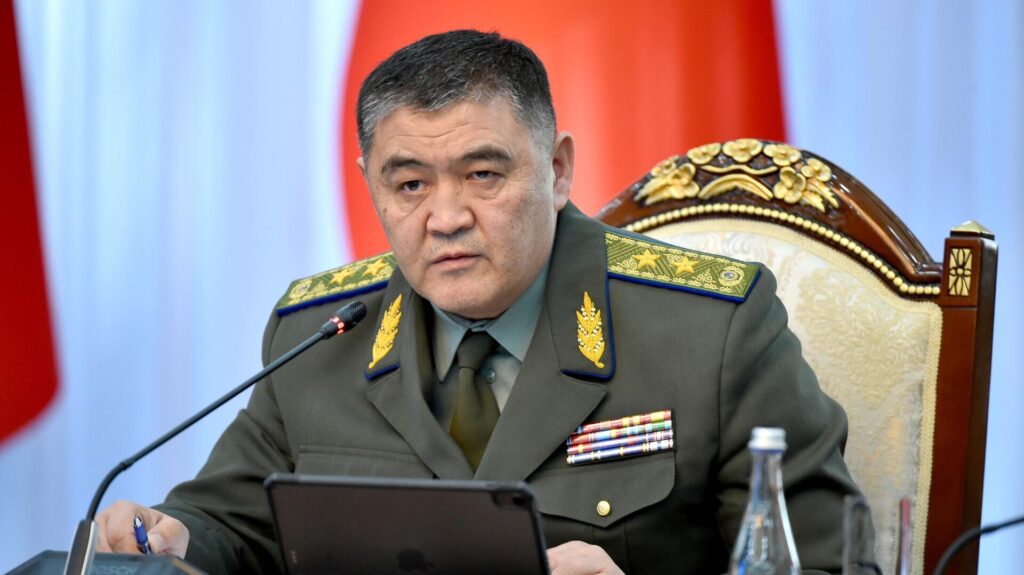
Kamchybek Tashiyev, the head of Kyrgyzstan’s State Committee for National Security (SCNS), has proposed banning “fights without rules,” citing their negative influence on youth and society. Tashiyev expressed these concerns during a live broadcast on Facebook, urging a national reevaluation of such activities.

Tashiyev argued that these fights create a misleading notion among young people that success in life can be achieved through violence and coercion. “Fighting without rules is not a sport, but a type of brawling. Such competitions form a false belief in young people that success can be achieved by force and aggression. We need to raise a generation that relies on education and science,” Tashiyev said.

He further highlighted the dangers associated with these events, emphasizing their harmful effects on both moral guidance and physical health. According to Tashiyev, many participants suffer severe injuries, with some becoming disabled by the age of 40.

To address these concerns, Tashiyev urged athletes and young people to focus on Olympic sports, which he described as fostering physical development and receiving state support.

Tashiyev also rejected the argument that the global popularity of unrestricted fighting justifies its practice in Kyrgyzstan, emphasizing that the country should prioritize its own values and traditions over external influences.

From an Islamic perspective, Tashiyev stressed the incompatibility of such activities with moral principles, stating that “Even from the point of view of Islam, such actions are wrong – beating and maiming each other has no place in our values,”

Tashiyev concluded by appealing to sports associations to take measures to restrict fights without rules and guide Kyrgyzstan’s youth toward healthier and more constructive activities.

Kazakhstan Will Not Extend Wheat Import Ban

Kazakhstan’s Ministry of Agriculture has announced that the country will not extend the ban on wheat imports, which was in effect from August 21 to December 31, 2024. However, officials have not ruled out the possibility of reintroducing such measures in the future to safeguard the interests of domestic grain producers.

“From August 21 to December 31, 2024, there was a ban on the import of wheat into the territory of the Republic of Kazakhstan (RK) from third countries and from the EAEU countries by all means of transport, except for the transit of wheat through the territory of Kazakhstan. Thus, from January 1, 2025, the ban on imports of wheat into Kazakhstan and imports will be carried out without restrictions,” stated the Ministry of Agriculture.

The ministry noted that future decisions on non-tariff measures regulating wheat imports would depend on the situation in the grain market. This leaves open the possibility of reintroducing temporary bans on imported wheat if necessary.

The current ban was introduced to stabilize domestic grain prices. In October, Deputy Prime Minister Serik Zhumangarin explained that earlier attempts to regulate imports through less restrictive measures had failed. Wheat continued to enter Kazakhstan through unofficial channels at prices lower than the cost of domestically produced grain, disrupting the local market.

“We needed this ban to determine the price on the domestic market, to give a message to the domestic market on price,” Zhumangarin stated.

He added that the authorities have now stabilized prices and plan to monitor wheat pricing at the border to avoid the need for future blanket bans.

The ban had a significant impact on wheat imports from Russia. In the first half of 2024, 1.3 million tons of Russian wheat were imported, often labeled as feed for poultry farms or raw materials for Kazakhstan’s flour milling industry. This figure sharply contrasts with Kazakhstan’s annual grain consumption of 1.7 million tons, based on per capita consumption of 64 kg annually.

Kazakhstan entered the ban period with robust grain reserves of 5.1 million tons and anticipated a record harvest of 25 million tons in 2024. In reality, the harvest exceeded expectations, reaching 26.5 million tons, according to the Ministry of Agriculture. Despite these gains, the competitiveness of domestic grain within the country remains a concern.

The Times of Central Asia previously reported Kazakhstan’s ambitious export plans, aiming to ship up to 12 million tons of grain from the new harvest to international markets. However, competition with Russian wheat has complicated these efforts.

In response to Kazakhstan’s ban, Russia imposed partial restrictions on importing Kazakh agricultural products in October 2024. More critically, Russia began redirecting its wheat exports to third countries that have traditionally been key markets for Kazakh farmers.

Kyrgyz Authorities Postpone Fines for Lack of Compulsory Car Insurance

The Cabinet of Ministers of Kyrgyzstan has announced another postponement of fines for motorists without a Compulsory Motor Liability Insurance Policy (CMLIP). Initially set to take effect on January 1, 2025, the penalties will now be delayed until July 1.

This is not the first time the implementation of this regulation has been deferred. Authorities concluded that citizens need clearer information about the requirements for mandatory auto insurance.

“Currently, changes have been initiated to allow the CMLIP policy to automatically transfer to the new owner of the car when it is sold, which will greatly simplify the insurance process for citizens. We strongly recommend car owners issue a policy in advance to avoid penalties and ensure the protection of their liability on the roads,” stated the Cabinet’s official message.

Under the amended law, individuals who fail to secure a CMLIP will face fines of KGS 3,000 ($35), while legal entities will be fined KGS 13,000 ($150). Notably, fines for legal entities have been enforceable since spring 2023.

As previously reported by The Times of Central Asia, every motorist in Kyrgyzstan is required to purchase an insurance policy when re-registering a vehicle. However, compliance remains a significant challenge.

Despite efforts by the State Insurance Organization to promote compulsory insurance – including warnings about fines – results have been underwhelming. Only around 100,000 vehicles in Kyrgyzstan are insured, out of the 1.6 million cars registered in the country.

The Cabinet’s decision to delay penalties aims to provide additional time for public awareness campaigns and to address logistical issues, such as enabling automatic policy transfers during vehicle sales. Officials hope these measures will encourage more motorists to comply with the law before fines are enforced in mid-2025.