• KGS/USD = 0.01144 0%
  • KZT/USD = 0.00193 -0%
  • TJS/USD = 0.10866 0.55%
  • UZS/USD = 0.00008 0%
  • TMT/USD = 0.28490 0%
  • KGS/USD = 0.01144 0%
  • KZT/USD = 0.00193 -0%
  • TJS/USD = 0.10866 0.55%
  • UZS/USD = 0.00008 0%
  • TMT/USD = 0.28490 0%
  • KGS/USD = 0.01144 0%
  • KZT/USD = 0.00193 -0%
  • TJS/USD = 0.10866 0.55%
  • UZS/USD = 0.00008 0%
  • TMT/USD = 0.28490 0%
  • KGS/USD = 0.01144 0%
  • KZT/USD = 0.00193 -0%
  • TJS/USD = 0.10866 0.55%
  • UZS/USD = 0.00008 0%
  • TMT/USD = 0.28490 0%
  • KGS/USD = 0.01144 0%
  • KZT/USD = 0.00193 -0%
  • TJS/USD = 0.10866 0.55%
  • UZS/USD = 0.00008 0%
  • TMT/USD = 0.28490 0%
  • KGS/USD = 0.01144 0%
  • KZT/USD = 0.00193 -0%
  • TJS/USD = 0.10866 0.55%
  • UZS/USD = 0.00008 0%
  • TMT/USD = 0.28490 0%
  • KGS/USD = 0.01144 0%
  • KZT/USD = 0.00193 -0%
  • TJS/USD = 0.10866 0.55%
  • UZS/USD = 0.00008 0%
  • TMT/USD = 0.28490 0%
  • KGS/USD = 0.01144 0%
  • KZT/USD = 0.00193 -0%
  • TJS/USD = 0.10866 0.55%
  • UZS/USD = 0.00008 0%
  • TMT/USD = 0.28490 0%
11 December 2025

Animal Protection Activists’ Voice Concern Over Dog Meat Dishes in Uzbek Cafes

Uzbekistan’s animal protection society, Mehr va Oqibat, has raised concerns after receiving numerous complaints from locals and foreign visitors about cafes and restaurants in Uzbekistan offering dog meat dishes on their menus.

Controversial Supply and Health Concerns
According to Mehr va Oqibat, Uzbekistan lacks specialized farms for raising dogs for meat, unlike some other Asian countries. The organization suggests that state services responsible for capturing stray animals might be the primary suppliers of dog meat.

Activists argue that the purported medicinal benefits of dog meat remain scientifically unproven. Additionally, they warn that dog meat can transmit viruses during preparation and consumption, posing potential health risks.

Mehr va Oqibat has officially contacted Uzbekistan’s State Veterinary Committee and the Sanitary-Epidemiological Service to clarify whether dog meat consumption is permitted in Uzbekistan. The organization has also inquired as to whether cafes and restaurants have obtained official authorization to serve dog meat dishes.

Cultural and Historical Context
The consumption of dog meat in Uzbekistan, as well as in neighboring Kazakhstan and Kyrgyzstan, is primarily linked to the Korean minorities residing in these countries. This practice is not widespread and is generally followed by small groups of ethnic Koreans and others, including Russians, Uzbeks, Kazakhs, and Kyrgyz, who consider it an “exotic” culinary choice.

Ethnic Koreans were forcibly deported to Central Asia from the Russian Far East in the late 1930s under Joseph Stalin’s regime. Uzbekistan is now home to the largest Korean minority in Central Asia. As of 2023, over 200,000 ethnic Koreans lived in the country, according to the Uzbek Embassy in South Korea, making it the fifth-largest Korean diaspora in the world after the United States, China, Japan, and Canada.

A Shift in Perspective
The issue of dog meat consumption has garnered increasing attention globally. In January 2024, South Korea’s National Assembly passed a law banning the production and sale of dog meat, with the ban set to take effect in 2027.

While dog meat consumption remains a niche practice in Uzbekistan, activists hope that raising awareness about ethical and health implications will encourage the authorities to address the issue comprehensively.

300th Container Train Departs Along Trans-Caspian International Transport Route

Kazakhstan Temir Zholy (KTZ), the national railway company of Kazakhstan, announced on December 2 the departure of the 300th container train of the year from the Kazakh-Chinese terminal in Xi’an, China, along the Trans-Caspian International Transport Route (TITR). This milestone highlights the growing strategic importance of the TITR, also known as the Middle Corridor, as a vital transport artery for fast and efficient cargo transportation between China and Europe.

Expansion of the Middle Corridor
The Kazakh-Chinese terminal in Xi’an, launched on February 28, 2024, has become a key logistics hub for the region, consolidating cargo from across China and streamlining logistics operations. This development has provided a significant boost to the TITR, which saw only 11 container trains traverse the route in 2023.

The 300th train, bound for Azerbaijan, was organized by KTZ in collaboration with ADY Express (Azerbaijan) and Xi’an Free Trade Port (China). This partnership underscores the cooperative efforts between countries along the route to enhance connectivity and efficiency.

Strengthening Regional Cooperation
On November 12, Kazakhstan, Azerbaijan, and China signed an agreement to establish an inter-modal cargo terminal in the Port of Alat in Baku, Azerbaijan. This new facility aims to further facilitate the smooth flow of goods and boost trade along the TITR.

Kazakhstan’s Ministry of Transport has outlined ambitious goals for the corridor, aiming to increase cargo traffic to 600 container trains per year in both 2025 and 2026. The target rises to 1,000 trains in 2027 and 2,000 by 2029, reflecting the corridor’s growing role in global trade logistics.

British Citizen Becomes First Holder of Kazakhstan’s New Neo Nomad Visa

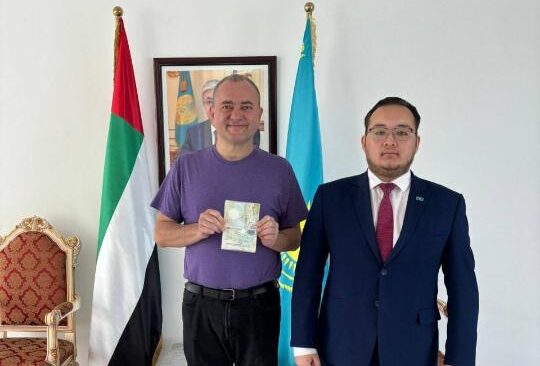
Kazakhstan’s Ministry of Tourism and Sports has announced that Sertac Yener, a British citizen, has become the first foreign national to receive the new Neo Nomad Visa. Kazakhstan introduced updated visa regulations on November 18, 2024, to attract business immigrants, skilled professionals, and tourists. Among the new offerings is the Digital Nomad Visa, which provides long-term residence options for IT specialists, and the Neo Nomad Visa, designed for “neo-nomads” with a verified monthly income of at least $3,000. Applicants for the Neo Nomad Visa are required to provide health insurance and a clean criminal record.

The first Neo Nomad Visa was issued at Kazakhstan’s embassy in the UAE.

Sertac Yener brings 30 years of experience in the energy sector, focusing on project development, financing, and corporate partnerships. In addition to his professional pursuits, Yener has a deep interest in Kazakhstan’s language, culture, natural landscapes, and gastronomy. His daughter completed studies in Kazakh language and Central Asian studies at the University of Chicago.

“Kazakhstan is an amazing country!” Yener said. “With the Neo Nomad Visa program, I have the opportunity to stay in this country for up to one year. The visa will allow me to work remotely in my company and get to know Kazakhstan, immersing myself in nature, a friendly atmosphere, cuisine, music, traditions, and language. Thanks to my daughter, I ‘ve been enjoying the melody and richness of the Kazakh language for some time now.”

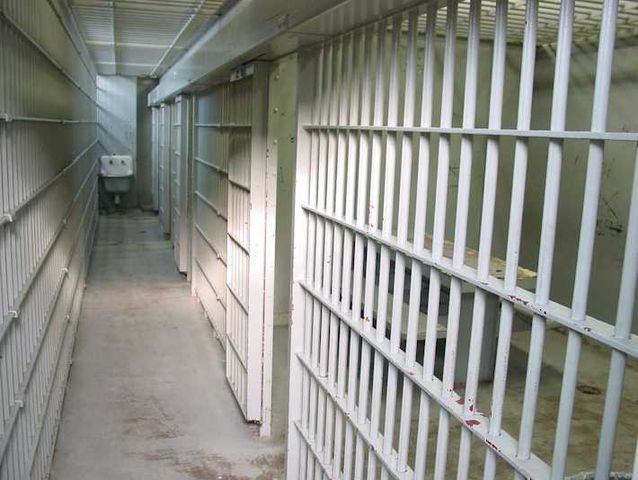
Tajik Lawyer Jailed After Exposing Alleged Corruption in Prosecutor’s Office

In Tajikistan, 74-year-old lawyer Faizi Oli, also known as Faizali Yuldoshev, has been sentenced to 2.5 years in prison after raising allegations of corruption within the prosecutor’s office. The Sino District Court in Dushanbe delivered its verdict on November 29.
Oli was found guilty of “knowingly making a false denunciation” against employees of the prosecutor’s office. However, he asserts that he merely exercised his right to file complaints with anti-corruption bodies, the Security Council, and the presidential administration, detailing what he described as evidence of corruption.

A Controversial Case
According to Oli’s lawyer, his complaints should have prompted an investigation, not legal proceedings against him. The court considered his advanced age when issuing the sentence, which fell below the minimum term of five years prescribed under Article 346 of the Tajik Criminal Code. The prosecution had sought a six-year prison term.

Oli was arrested immediately after the verdict. Over the course of the five-month trial, he consistently maintained that the charges were baseless, and that filing complaints with the authorities is a legal right.

This is not the first time Oli has been involved in a high-profile case; he previously defended his colleague, Saidnuriddin Shamsiddinov, who was sentenced to 8.5 years in prison on similar charges of false denunciation. At that time, Oli stressed the right of citizens to address grievances directly to the president and the Prosecutor General’s Office, a principle he believes is now being criminalized.

Broader Context
International human rights organizations have frequently criticized Tajikistan for targeting lawyers and human rights defenders. Many prominent figures, including Buzurgmehr Yorov, are serving lengthy prison sentences under controversial circumstances.

Oli, known for his outspoken social media presence and comments on government operations, believes his activism may have influenced the court’s decision. He has announced plans to appeal the verdict after receiving the court’s written decision.

The Prosecutor General’s Office declined to comment on the case.

Tajikistan Seeks to Reduce the List of Prohibited Professions for Women

Tajikistan is taking steps to further reduce the list of professions prohibited for women, cutting the number from 334 to 194 in 2024. This initiative aims to expand women’s access to employment opportunities in industries previously deemed unsuitable.

According to Shakhnoza Nodiri, Deputy Minister of Labor, Migration, and Employment of Tajikistan, the decision aligns with efforts to modernize production, automate processes, and enhance workplace safety, thereby making previously restricted jobs accessible to women.

The list of banned professions was initially established to protect women’s health from the risks of heavy and hazardous work. However, it is increasingly viewed as a barrier to women’s professional growth. The recent changes are informed by international standards and the recommendations of the European Union, particularly to align with GSP+ preferences, which promote gender equality in the labor force.

“By revising this list, we are enabling women to access new opportunities and strengthen their economic position,” Nodiri emphasized.
Previously, the list included 336 prohibited professions, such as work in underground mines and other roles involving hazardous conditions. With advancements in technology, automation, and improved workplace conditions, 142 professions have been deemed safe for women. However, restrictions remain for roles involving particularly heavy or harmful work.

Data from the Labor and Employment Agency show that in 2024, 29,296 women were employed, marking a 1.4% increase compared to the same period in 2023. This reflects growing opportunities for women in the labor market.

The government plans to continue reducing the list of prohibited professions, aiming to allow women to participate fully in all sectors of the national economy.

Article 216 of the Labor Code of Tajikistan prohibits women from working in heavy and underground industries. Employers who violate these regulations face administrative fines.

Ongoing labor law reforms seek to strike a balance between safeguarding women’s health and ensuring their right to work. As Tajikistan modernizes its labor policies, the country moves closer to achieving a more inclusive and equitable workforce.

Kyrgyzstan Unveils Record-Breaking Collector Coin

The National Bank of Kyrgyzstan has unveiled the most expensive collector coin in its history – a gold coin titled “Aikol Manas.” The initiative aims to promote oral folk traditions and preserve the cultural heritage of the Kyrgyz people. The coin was officially released on December 2.

The National Bank emphasized the cultural significance of the epic Manas, which holds a central place in Kyrgyz’s spiritual life and is recognized as a global masterpiece of oral folk art. The epic narrates the story of the legendary warrior Manas, who, through his courage and leadership, united the Kyrgyz tribes to secure independence and freedom for their native land.

The coin’s obverse features an intricate depiction of Manas in battle armor astride his horse, Akkula, set against the snowy peaks of the Ala-Too mountains. Above, the inscription “Aikol Manas” is engraved, with details of the gold’s purity (Au 999) and weight (15.55g) on the right. At the bottom are the coin’s face value (200 KGS) and the symbol of the Kyrgyz currency.

On the reverse, the coat of arms of the Kyrgyz Republic is framed by traditional national ornaments symbolizing Kyrgyz warriors. Along the circumference, the text “National Bank of the Kyrgyz Republic” is engraved, with the year of issue, 2024, displayed at the bottom.

The coin is an official means of payment in Kyrgyzstan, packaged in an acrylic capsule within a protective case and accompanied by a certificate of authenticity. Priced at 123,400 KGS ($1,420), it is available for purchase at the National Bank’s cash desks.

Since gaining independence, Kyrgyzstan has issued several gold collector coins celebrating its cultural heritage. The first was released in 1995 to honor the 1,000th anniversary of the Manas epic. In 2015, the National Bank introduced the “Snow Leopard” coin, featuring diamond inlays. For the 30th anniversary of independence in 2021, a gold coin with a face value of 100 KGS was issued.