• KGS/USD = 0.01144 0%
  • KZT/USD = 0.00194 -0%
  • TJS/USD = 0.10844 0%
  • UZS/USD = 0.00008 0%
  • TMT/USD = 0.28490 0%
  • KGS/USD = 0.01144 0%
  • KZT/USD = 0.00194 -0%
  • TJS/USD = 0.10844 0%
  • UZS/USD = 0.00008 0%
  • TMT/USD = 0.28490 0%
  • KGS/USD = 0.01144 0%
  • KZT/USD = 0.00194 -0%
  • TJS/USD = 0.10844 0%
  • UZS/USD = 0.00008 0%
  • TMT/USD = 0.28490 0%
  • KGS/USD = 0.01144 0%
  • KZT/USD = 0.00194 -0%
  • TJS/USD = 0.10844 0%
  • UZS/USD = 0.00008 0%
  • TMT/USD = 0.28490 0%
  • KGS/USD = 0.01144 0%
  • KZT/USD = 0.00194 -0%
  • TJS/USD = 0.10844 0%
  • UZS/USD = 0.00008 0%
  • TMT/USD = 0.28490 0%
  • KGS/USD = 0.01144 0%
  • KZT/USD = 0.00194 -0%
  • TJS/USD = 0.10844 0%
  • UZS/USD = 0.00008 0%
  • TMT/USD = 0.28490 0%
  • KGS/USD = 0.01144 0%
  • KZT/USD = 0.00194 -0%
  • TJS/USD = 0.10844 0%
  • UZS/USD = 0.00008 0%
  • TMT/USD = 0.28490 0%
  • KGS/USD = 0.01144 0%
  • KZT/USD = 0.00194 -0%
  • TJS/USD = 0.10844 0%
  • UZS/USD = 0.00008 0%
  • TMT/USD = 0.28490 0%
10 December 2025

Kazakhstan’s Caspian Sea Ports Increase Cargo Transportation

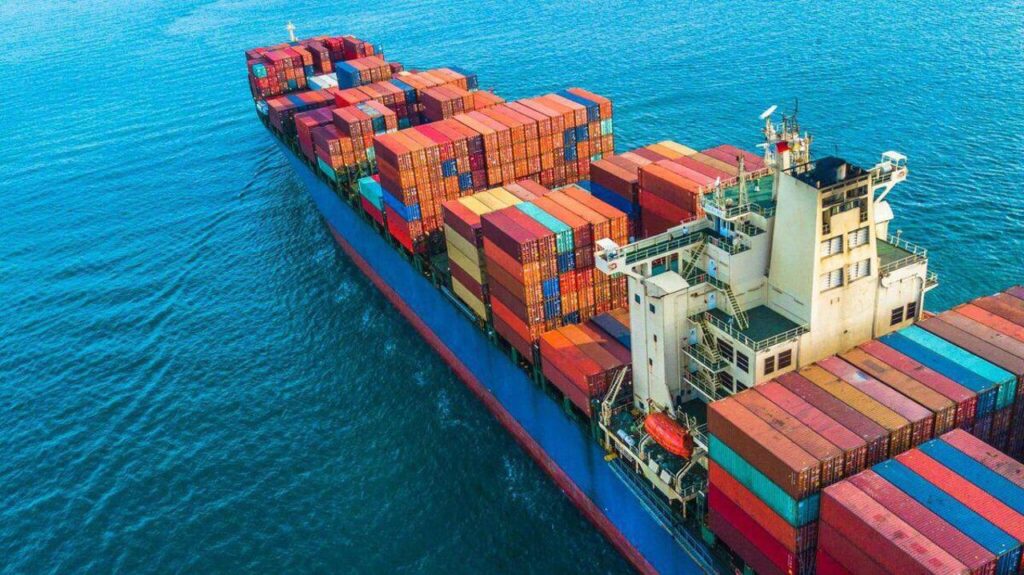
Kazakhstan’s Ministry of Transport has announced that from January to October 2024, the country’s Caspian Sea ports transported 6.2 million tons of cargo, reflecting a 3% increase compared to the same period last year. Transit cargo shipments saw even stronger growth, rising by 18%.

Truck transshipment via the Kuryk port’s ferry complex increased by 22%, while container transportation through the Aktau port surged by 84%, with approximately 27,000 containers moved along the East-West transit route.

During the same period, the Sarzha terminal at Kuryk port handled 55,000 tons of cargo, including non-ferrous metals, fertilizers, and barley, destined for Turkey and Iran. In October, a new grain terminal with an annual capacity of 1 million tons was inaugurated at the Kuryk port.

Efforts to enhance the port’s capacity continue. The Times of Central Asia previously reported that Kazakhstan’s Ministry of Transport has undertaken dredging operations at the Kuryk port to ensure sufficient depth for ship access, bolstering the capacity of the Trans-Caspian International Transport Route (TITR).

The dredging project will support further expansion of Kuryk’s terminal capacity, currently set at 6 million tons annually—4 million tons through its railway terminal and 2 million tons via its automobile terminal.

Kyrgyzstan’s High Technology Park Confirms Indefinite Preferential Tax Regime

Kyrgyzstan’s President Sadyr Japarov has signed amendments to the Law “On the High Technology Park of the Kyrgyz Republic,” extending the Park’s preferential tax regime indefinitely.

Established in 2011, the High Technology Park was designed to foster IT businesses by drastically reducing or eliminating tax burdens for companies exporting digital goods and services.

Previously, the High Technology Park offered tax exemptions for export-oriented IT companies for a 15-year period, set to expire in 2026. Under the new amendments, this regime is now permanent.

Currently, resident companies of the Park benefit from exemptions on sales tax, profit tax, and value-added tax (VAT). Employees of these companies enjoy a reduced income tax rate of 5%, while the social insurance tax is 12% of their average monthly wage.

The amendments also grant the Park’s supervisory board the authority to independently elect its chairperson, a change expected to enhance the Board’s efficiency.

This move significantly boosts the Park’s appeal to both domestic and international IT businesses. Kyrgyzstan’s IT sector is among the country’s fastest-growing industries.

In 2021, Kyrgyzstan established the Ministry of Digital Development, tasked with advancing e-government initiatives and expanding the range of government services available online.

Chinese Companies to Purchase Uranium Concentrates from Kazatomprom for $2.5 Billion

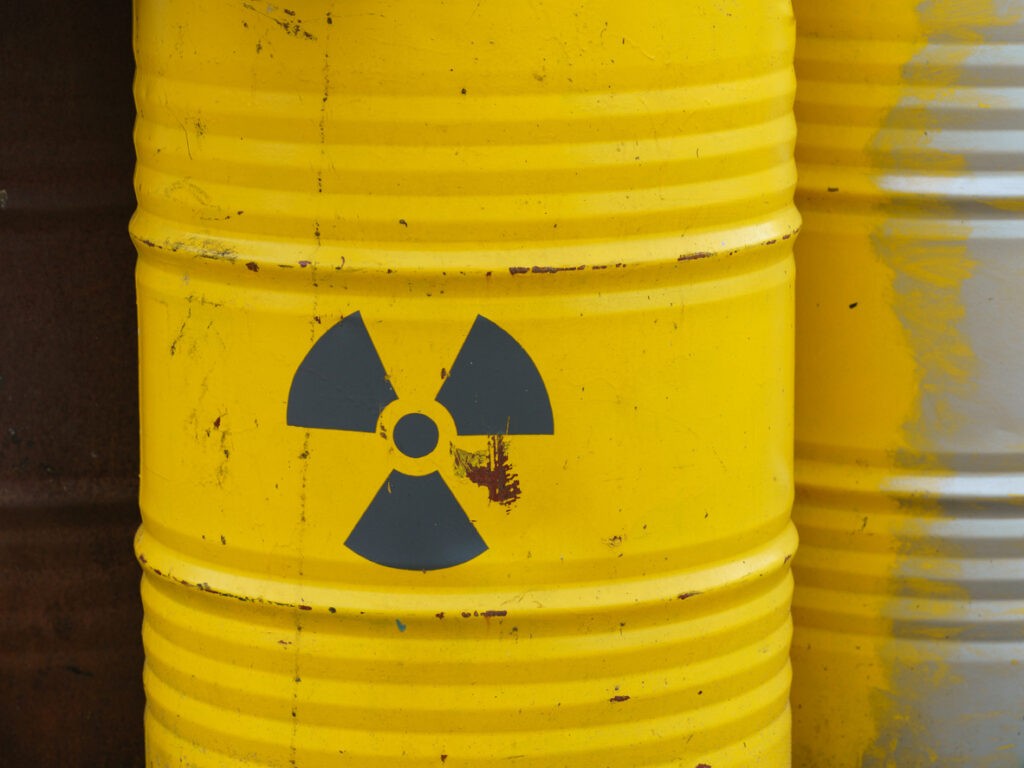
Shareholders of Kazatomprom, Kazakhstan’s national uranium producer, have approved agreements with two Chinese partners: CNNC Overseas and China National Uranium Corporation (CNUC). These agreements include a spot contract with CNNC Overseas and a long-term contract with CNUC.

Under the terms of these deals, Kazatomprom plans to supply uranium concentrates to China valued at approximately KZT1.25 trillion (around $2.5 billion). While the company has not disclosed specific delivery timelines or volumes, the agreements mark a significant development in Kazakhstan-China nuclear energy cooperation.

CNNC Overseas registered in Hong Kong, and CNUC, based in China, are both subsidiaries of the China National Nuclear Corporation, a state-owned entity responsible for operating nuclear power plants across China.

Kazatomprom has been deepening its ties with China in the nuclear energy sector. In May 2023, a ceremony at the Fangchenggang Nuclear Power Plant marked the acceptance of fuel assemblies produced by Ulba-TVS LLP, a Kazakh-Chinese joint venture in Ust-Kamenogorsk. These assemblies, made from Kazakhstani uranium feedstock, are destined for use in Chinese nuclear power facilities.

Kazakhstan to Create Horse Breeding Institute

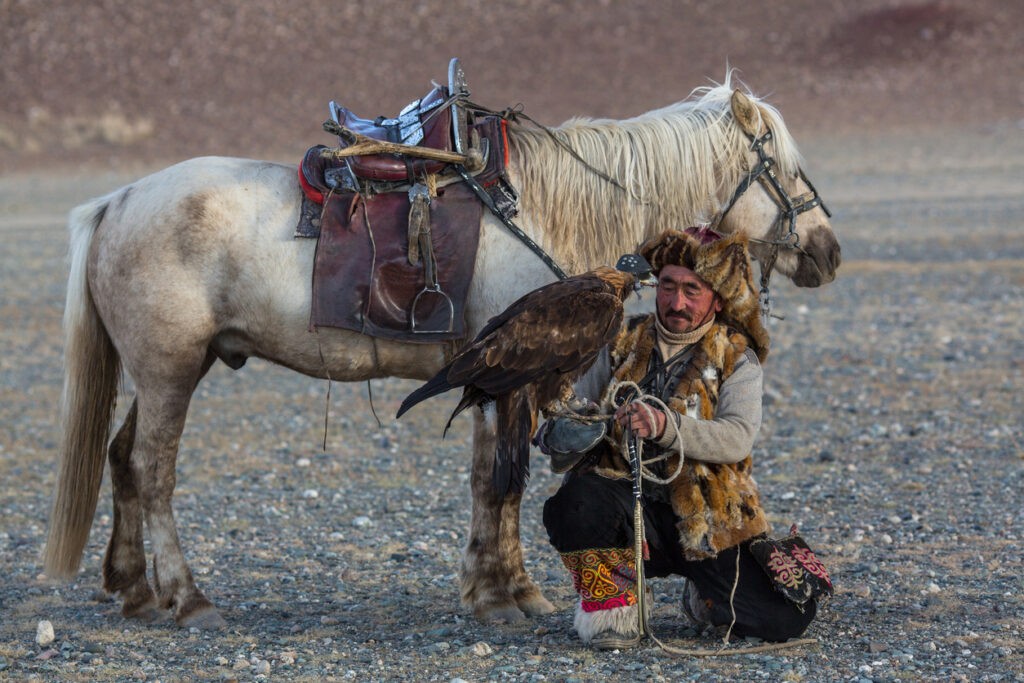
Kazakhstan’s President, Kassym-Jomart Tokayev, has directed the government to establish and fund a Horse Breeding Institute to boost the horse population and advance the breeding of traditional Kazakh breeds.

Speaking at the inaugural Forum of Agricultural Workers of Kazakhstan, Tokayev highlighted the steady growth in the country’s horse population. According to the Bureau of National Statistics, as of January 1, Kazakhstan had 4 million horses—a 5.4% increase from the previous year. This number has since risen to 4.2 million. However, only 1% of the total population comprises purebred horses, with approximately 40,000 being thoroughbreds. Tokayev stressed the importance of prioritizing the breeding and development of thoroughbred horses alongside overall population growth.

“I instruct the government to create the Institute of Horse Breeding. The issue of its establishment has long been raised by experts. Relevant authorities must urgently address this matter and identify funding sources for the institute,”said Tokayev.

The president underscored the significance of several horse breeds in Kazakhstan’s cultural and historical heritage. The Jabe breed, for instance, has a history deeply intertwined with the lives of the Kazakh people, spanning thousands of years. Known for its resilience in harsh environments, the Jabe was historically used as a draft animal, as well as a source of meat and milk. Modern Kazakhstan is also home to other notable breeds, including the Kostanai, Kushum, and Imugaljar breeds, which were developed locally.

Tokayev also praised the Adai breed, calling it a “priceless treasure of Mangystau.” He recounted his earlier directive to promote this breed globally. “Today, the Adai breed has received official recognition and represents our country proudly in races and competitions,” he noted. However, he expressed concern over the dwindling population of the Kostanai horse, with only 280 remaining. “The key task, alongside increasing the horse population, is to enhance their breeding and productive qualities,” Tokayev concluded.

In November 2022, during a public meeting in Mangystau, Tokayev recognized the Adai horse as a unique asset of the region. He instructed the government to begin work on achieving scientific recognition for the Adai as an independent breed and to ensure its reproduction as a breeding animal. By January 2024, the Ministry of Agriculture and the Ministry of Justice awarded the Association of Legal Entities and Individual Entrepreneurs “Adai Breed of Horse” a certificate granting exclusive rights to use the Adai horse brand.
Kazakhstan has also taken legislative steps to protect and preserve its domestic breeds. A law passed in the summer of 2024 facilitates the acquisition of foreign sport stallions by local breeding centers, supports selective breeding efforts, and reimburses related expenses. This law aims to foster the development of Kazakh sport horse breeds and promote traditional equestrian sports, including kokpar, audaryspak, zhambi atu, and tenge alu.

The law also establishes strict compliance standards for horse breeding. Only purebred animals that meet the breed standard and are registered under Kazakhstan’s livestock legislation are classified as breeding animals. Experts, however, have advocated for the creation of an independent institute to oversee compliance and enhance breeding standards, as these responsibilities currently exceed the capacity of the Ministry of Agriculture.

Horse meat production is another area of focus for the institute. In 2023, Kazakhstan produced 167,400 tons of horse meat—a 6.4% increase from the previous year. The Turkestan region led production with 20,800 tons, followed by the Abay region (19,900 tons) and the Pavlodar region (14,500 tons).

Despite surplus domestic supply, exports of horse meat remain limited. According to Askar Zhubatyrov, Executive Director of the Meat Union of Kazakhstan, horse meat faces low demand in major markets like Russia and China, while in Europe, Kazakhstani exports struggle to compete on price with meat from Latin America. Addressing these economic challenges, in addition to breeding goals, will likely form a key part of the Horse Breeding Institute’s mission.

Kazakhstan and EU Address Common Security Concerns

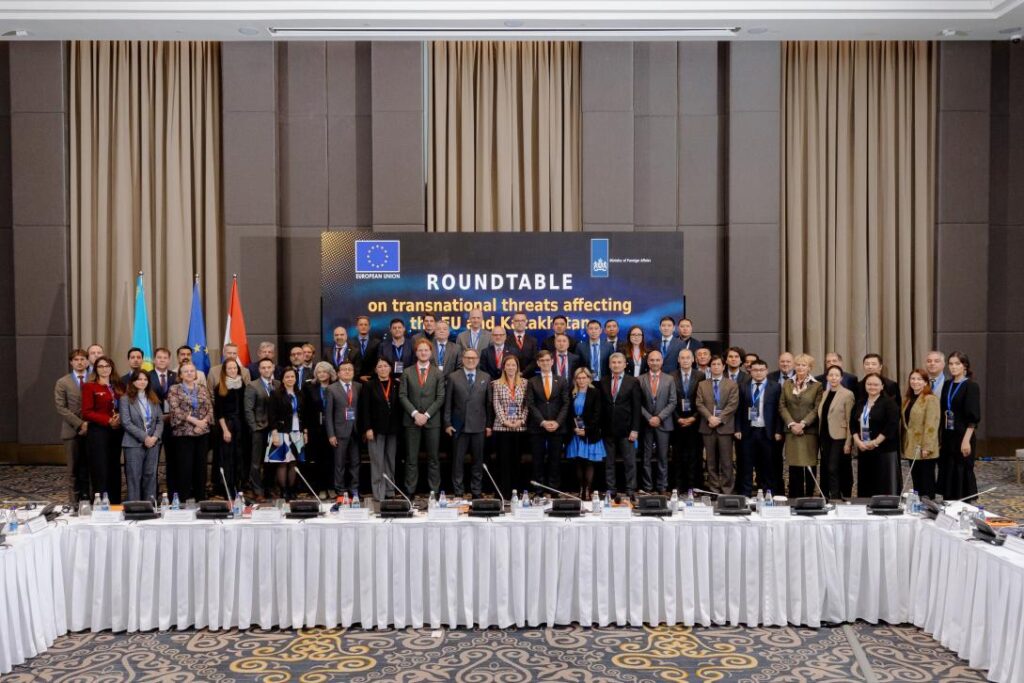
On November 14, the European Union Delegation to Kazakhstan, the Embassy of the Netherlands, and the Kazakh government convened a roundtable in Astana to address critical transnational threats impacting both the EU and Kazakhstan.

The event gathered more than 70 experts, government officials, and international representatives to discuss pressing issues such as terrorism, human trafficking, migrant smuggling, and other security concerns. Particular attention was given to the interconnected nature of international extremism, border protection, critical infrastructure, drug trafficking, and arms trafficking.

Participants underscored the growing level of cooperation between the EU and Kazakhstan, exchanging insights and experiences to enhance joint responses to these multifaceted threats.

Kazakhstan’s Deputy Minister of Foreign Affairs, Roman Vassilenko, emphasized that transnational threats disregard borders and national sovereignty, posing a global challenge. “No country is immune from such issues as cyberattacks, organized crime, terrorism, trafficking in persons, or illegal migration,” he stated. Vassilenko noted that Astana has ratified all 19 UN universal counter-terrorism conventions and protocols, demonstrating its active engagement with the international community, including the EU.

EU Ambassador to Kazakhstan Aleska Simkic hailed the roundtable as a significant milestone in security collaboration. “Today’s global security threats are neither confined by borders nor limited to single regions; they affect us all, underscoring the need for a united and coordinated response. The European Union and Kazakhstan are bound by shared interests and mutual challenges—whether addressing extremism, human trafficking, or organized crime. This roundtable offers an essential platform for exchanging insights and best practices, strengthening our common security and resilience, and creating better coordination between actions that both sides are already implementing. By working together, we build not only a safer Central Asia and Europe but also contribute to broader regional stability and peace,” Simkic said.

Dutch Ambassador to Kazakhstan Nico Schermers echoed this sentiment, emphasizing the importance of collaboration. “Only by working together and learning from each other’s perspectives and insights can we tackle transnational threats affecting the European Union and Kazakhstan,” he remarked.

The roundtable concluded with both the EU and Kazakhstan reaffirming their commitment to combat terrorism, trafficking, and organized crime, paving the way for deeper and more effective cooperation in the future.

In the Wake of Bishimbayev: From Politicians to Felons – Part One

Eight days ago, a scandal shook Kazakhstani society: Kuandyk Bishimbayev allegedly escaped from the penal colony where he was serving his sentence. Bishimbayev is a former high-ranking official of the government of Nursultan Nazarbayev’s era, who was sentenced to 24 years in prison for the brutal murder of his wife. The Interior Ministry’s Criminal Correctional System Committee immediately denied this information and said that a criminal case had been opened over the dissemination of this misinformation.

This is not the first time Bishimbayev has become a resident of a penal colony. In 2017, as the Minister of National Economy of Kazakhstan, he was arrested on suspicion of large-scale bribery and embezzlement. In 2018, he was sentenced to a ten-year term with the confiscation of property and deprivation of the right to hold public office for the rest of his life. However, he was released on parole in 2019.

Kazakhstan has been shaken by Bishimbayev’s new crime. The trial, which was broadcast live online for the first time in the country’s history, was watched by millions of citizens, not only within the Republic, but also abroad in other post-Soviet countries, and even in the West.

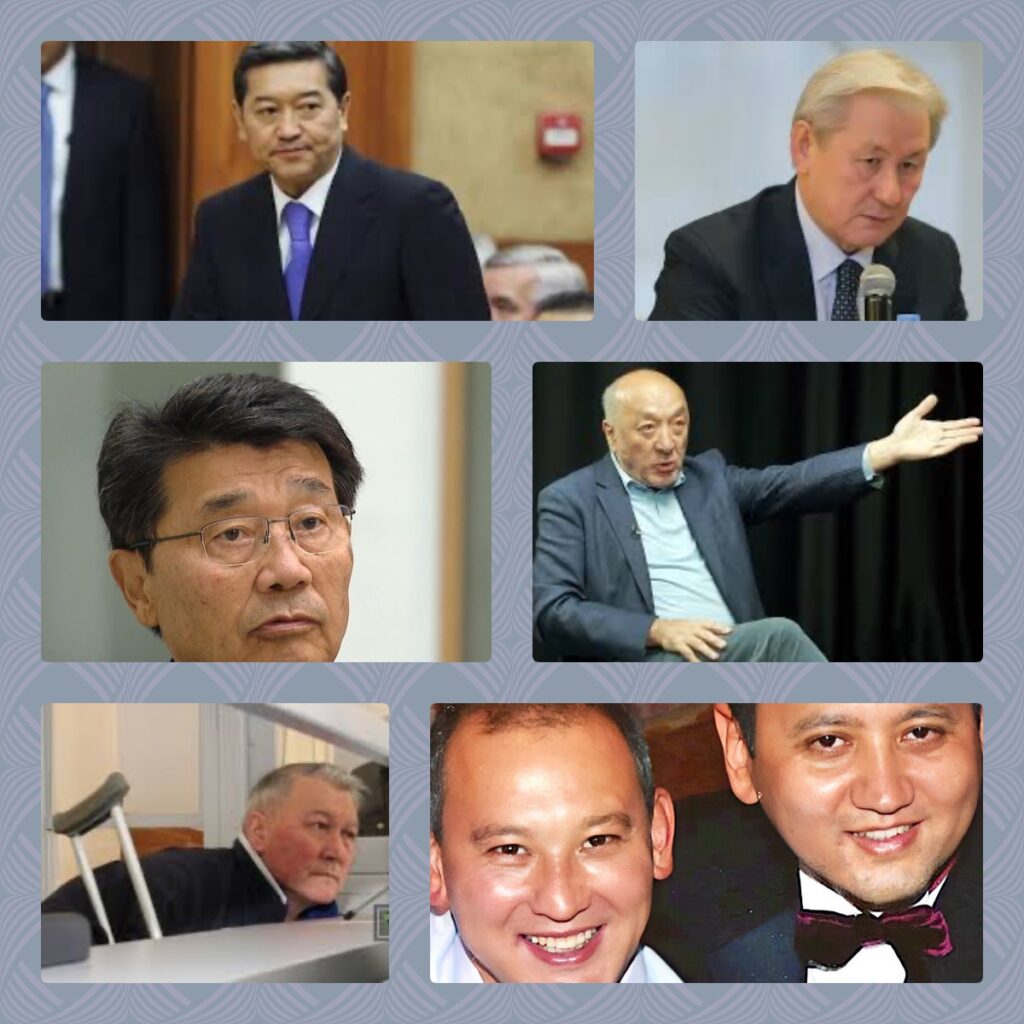
However, this is not the first and, in all likelihood, not the last sensational case in which a former high-ranking official becomes a defendant. The long list of convicted ministers and akims can be divided chronologically into three parts: the Nazarbayev era, the transition period, and the so-called “New Kazakhstan,” which started after the January Events – the failed coup in 2022. This article discusses the most notorious court cases from each of these periods.

Akezhan Kazhegeldin

Former Prime Minister Akezhan Kazhegeldin was a politician known not only in Kazakhstan, but also in the West. He led the Government of Kazakhstan from 1994 to 1997. After falling into disfavor, in 1998 he attempted to challenge Nazarbayev in the upcoming presidential election. Kazhegeldin was not allowed to participate and had to leave Kazakhstan under the pretense of receiving medical treatment in Switzerland for unspecified health problems.

In 1999, Kazhegeldin was put on an international wanted list, and in 2001 he was found guilty in absentia by the Supreme Court of Kazakhstan of abuse of power and authority, extortion and repeated bribes of millions of dollars, illegal acquisitions, the storage and transfer of weapons and ammunition, and tax evasion. Kazhegeldin was sentenced to ten years in prison, but has not returned to the country since. He continued to influence Kazakhstan’s domestic politics from abroad until 2001 through the Republican People’s Party of Kazakhstan, which he organized for this purpose.

It was alleged that Kazhegeldin received kickbacks from a contract awarded to Tractebel in 1996 to run Almaty’s electric company and power grid. A year later, the Belgian company also won a concession to manage gas pipelines in the south and west of Kazakhstan. In the U.S., meanwhile, the DOJ investigated claims Kazhegeldin received illegal payments of $6 million as part of a bribery scandal known as ‘Kazakhgate’. This came as part of a probe into bribes paid by James Giffen to Nazarbayev on behalf of oil companies.

From the sidelines, Kazhegeldin continues to espouse his opinions on the direction his homeland is taking.

Mukhtar Ablyazov and Company

In November 2001, Kazakhstan was shaken by a political crisis, the main manifestation of which was the démarche of a number of young ministers and regional officials of the then government. The prime minister at the time was Kassym-Jomart Tokayev, who gave the president an ultimatum to dismiss the “kinder surprises,” as he then called the rebellious officials, or he would resign himself.

The political confrontation continued with the criminal prosecution of the alleged instigators of a riot in the oil town of Zhanaozen – Mukhtar Ablyazov, who was fired from the post of Minister of Energy, and Galymzhan Zhakiyanov, who at the time was in charge of the Pavlodar region. The charges were standard – bribes, abuse of power, and so on. In 2002, both were arrested. The former was sentenced to six years in prison, whilst the latter received seven years.

A year later, Ablyazov was released having addressed a penitential letter to Nazarbayev and promised never to return to politics. Zhakiyanov, meanwhile, served his full term.

Ablyazov fled Kazakhstan in 2008, accused of embezzling money from BTA Bank – the largest retail bank in Kazakhstan at the time – where he was serving as Chairman. Since then, he has been living in exile, periodically attempting to organize political unrest in the Republic. In 2018, he was sentenced to life imprisonment in absentia for organizing the murder of his BTA Bank partner, businessman Yerzhan Tatishev back in 2004. Ablyazov denies his guilt, but relatives of the deceased remain concinved that he was the one who ordered the “accident” during a hunting trip. Moreover, it was after Tatishev’s death that Ablyazov took BTA under his full control. Operating as a bank within a bank from a separate high security section of BTA’s head office, between 2005 and 2009 Ablyazov oversaw the approval of at least $8 billion worth of loans, largely to mailbox entities with no collateral, based in tax havens in which Ablyazov held a significant but almost exclusively anonymous ownership interest.

One cannot help but recall another high-profile case which many associate with Ablyazov – the imprisonment of Mukhtar Dzhakishev.

In 2010, Dzhakishev, the longtime president of state-owned Kazatomprom JSC, was found guilty of misappropriation or embezzlement of “entrusted property” and taking bribes. A court sentenced him to 14 years imprisonment in a high-security penal colony. Two years later, there was another trial on charges of misappropriation of other’s property, fraud, forgery of documents, and abuse of power, which saw Dzhakishev receive another ten years. However, according to Kazakhstani law, the lesser sentence was absorbed by the greater one, meaning the original sentence remained unchanged.

Many at the time believed Dzhakishev had paid the price for vouching for Ablyazov when he promised to stay out of politics. However, after fleeing the country in 2008, Ablyazov admitted he had not stopped secretly funding opposition groups and media. The second case against Dzhakishev followed the aftermath of the attempted uprising in Zhanaozen in Mangistau Oblast, which was organized through Ablyazov’s structures. Another Ablyazov associate, “opposition” politician Vladimir Kozlov spent just under four years in prison for having “provoked” the Zhanaozen tragedy “at the instruction” of Ablyazov.

By 2015, Ablyazov had judgments against him totaling $4.4 billion in the British courts alone, from where he fled to avoid three concurrent 22-month sentences for contempt of court. In December 2022, the Southern District Court in New York ruled against Ablyazov and his associates in the amount of $218 million. In total, Ablyazov stands accused of having embezzled up to $10 billion.

Meanwhile, the former Mayor of Almaty, Viktor Khrapunov, alongside his wife Leila and their son Ilyas – Ablyazov’s son-in-law – have faced allegations of embezzling over $300 million, with legal proceedings taking place in both the UK and U.S. Since fleeing to Switzerland in 2008 with a significant collection of art and valuables, the Khrapunovs have been accused of using shell companies to launder money through international real estate deals. Despite their claims of political persecution, investigations continue in multiple countries, highlighting complex global financial networks and loopholes in anti-money laundering laws, particularly in Switzerland and the Netherlands. In September 2018, a UK court fined Ilyas Khrapunov $500 million for helping Ablyazov breach an asset freezing order.

Further Ministers Fall

In 2008 and 2009, there were a spate of high-profile arrests of acting ministers and other high-ranking government officials. During that period, Nursultan Nazarbayev called on law enforcement agencies to fight corruption uncompromisingly, regardless of positions and connections.

In April 2008, Zhaksybek Kulekeev, head of the national railroad company, Kazakhstan Temir Zholy, was arrested and later sentenced to three years for taking bribes and abusing his authority. In the same year, Serik Burkitbayev, head of KazMunayGas – the state-owned oil and gas company of Kazakhstan – and one-time advisor to Nazarbayev, was arrested and convicted of abuse of power, misappropriation of property, and embezzlement.

In 2009, there were the trials of the chairman of the Committee on Water Resources of the Ministry of Agriculture, Anatoly Ryabtsev, and the Deputy Minister of Defense of Kazakhstan, Kazhimurat Maermanov. The latter was initially sentenced to eleven years “for abuse of office when concluding the contract on weapons modernization with an Israeli company.” Maermanov’s sentence was later extended by an additional four years.

The so-called fight against corruption in the highest echelons continued in the following years. In 2010, charges were filed against the head of the Ministry of Health, Zhaksylyk Doskaliyev, which resulted in him apparently suffering a stroke, though investigators claimed he faked the event. Doskaliyev ostensibly fainted when he was accused of embezzling funds allocated for buildings for a medical academy, as well as fraud. He was released under house arrest after several months spent in a pre-trial detention center.

In August 2011, a court sentenced the former minister to seven years in a general security penal colony. In February 2012, President Nazarbayev pardoned Doskaliev, reducing his sentence to two years, but he walked free after just one month.

Another high-ranking prisoner of the Nazarbayev era was the former head of the Government of Kazakhstan, Serik Akhmetov. His case involved 21 people, 12 of whom appealed the court’s decision, including Akhmetov himself. Akhmetov was charged with the embezzlement or misappropriation of entrusted property. In 2015, a trial was held, wherein a sentence of ten years was handed down. Following an appeal and the payment of compensation for damages, the sentence was reduced to eight years. In 2017, Akhmetov was released due to the “replacement of imprisonment with the restriction of freedom.”

Rumors surrounding his sentence suggested that Akhmetov’s arrest and imprisonment were the result of his conflict with the influential Nurlan Nigmatulin, who was part of Nazarbayev’s inner circle. Nigmatulin was First Deputy for the Nur Otan party and served as Chairman of the Mazhilis from January 2012 to April 2014, and again from June 2016 until February 2022. These rumors have never been refuted.

Part two of this TCA special focuses on high-profile cases from the so-called transition period, when, in fact, there was a dual power structure in Kazakhstan. Read it here.