• KGS/USD = 0.01144 0%
  • KZT/USD = 0.00213 0%
  • TJS/USD = 0.10456 0.19%
  • UZS/USD = 0.00008 0%
  • TMT/USD = 0.28490 0%
  • KGS/USD = 0.01144 0%
  • KZT/USD = 0.00213 0%
  • TJS/USD = 0.10456 0.19%
  • UZS/USD = 0.00008 0%
  • TMT/USD = 0.28490 0%
  • KGS/USD = 0.01144 0%
  • KZT/USD = 0.00213 0%
  • TJS/USD = 0.10456 0.19%
  • UZS/USD = 0.00008 0%
  • TMT/USD = 0.28490 0%
  • KGS/USD = 0.01144 0%
  • KZT/USD = 0.00213 0%
  • TJS/USD = 0.10456 0.19%
  • UZS/USD = 0.00008 0%
  • TMT/USD = 0.28490 0%
  • KGS/USD = 0.01144 0%
  • KZT/USD = 0.00213 0%
  • TJS/USD = 0.10456 0.19%
  • UZS/USD = 0.00008 0%
  • TMT/USD = 0.28490 0%
  • KGS/USD = 0.01144 0%
  • KZT/USD = 0.00213 0%
  • TJS/USD = 0.10456 0.19%
  • UZS/USD = 0.00008 0%
  • TMT/USD = 0.28490 0%
  • KGS/USD = 0.01144 0%
  • KZT/USD = 0.00213 0%
  • TJS/USD = 0.10456 0.19%
  • UZS/USD = 0.00008 0%
  • TMT/USD = 0.28490 0%
  • KGS/USD = 0.01144 0%
  • KZT/USD = 0.00213 0%
  • TJS/USD = 0.10456 0.19%
  • UZS/USD = 0.00008 0%
  • TMT/USD = 0.28490 0%

NASA Discovers ‘Ghost’ Island in the Caspian Sea

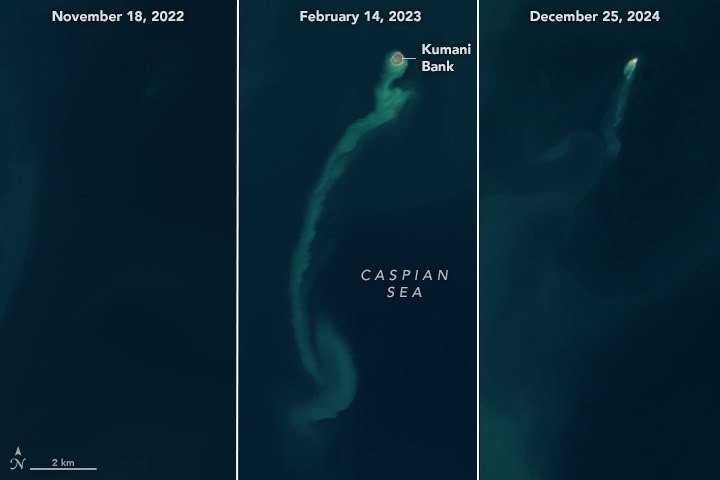
NASA satellites have detected a fascinating phenomenon in the Caspian Sea: the temporary formation of an island following the eruption of the Kumani mud volcano. According to data from NASA’s Earth Observatory, the island emerged in early 2023 but had almost completely disappeared by the end of 2024, earning it the nickname “ghost island.”

The island was first observed using Landsat 8 and 9 satellite imagery in January 2023, shortly after the volcano erupted. It measured up to 400 meters wide and was accompanied by a visible sedimentary plume extending from its surface. However, by late 2024, the island had diminished significantly, leaving only faint traces of its existence.

The Kumani mud volcano, located 25 kilometers off the eastern coast of Azerbaijan, is no stranger to such occurrences. Since its first recorded eruption in 1861, the volcano has periodically created temporary islands, which vanish after short periods. Mud volcanoes like Kumani are common in regions with active tectonic activity. They eject high-pressure mixtures of water, gas, and sediment, forming landmasses that are often unstable and short-lived.

The Caspian region is notable for its high concentration of mud volcanoes, with more than 300 such formations in Azerbaijan and on the Caspian Sea shelf. Many of these volcanoes emit combustible gases, particularly methane, which has drawn the interest of scientists and geologists. The connection between these mud volcanoes and the hydrocarbon systems of the South Caspian Basin makes them critical subjects for research.

The emergence and disappearance of this “ghost” island in the Caspian Sea highlight how much remains to be understood about mud volcanoes. These transient landforms demonstrate the dynamic forces of nature and underscore the need for further exploration of geological processes occurring on the seafloor.


Former Kyrgyz Presidential Aide Detained in Moldova

Aidar Khalikov, a former public aide to the president of Kyrgyzstan, has been detained in Moldova under an Interpol warrant on charges of large-scale fraud.

Investigative journalist Bolot Temirov was the first to report Khalikov’s detention, raising the possibility of his extradition to Kyrgyzstan. The report was later confirmed by the General Inspectorate for Migration under Moldova’s Ministry of Internal Affairs. According to their statement, the detention was carried out as part of efforts to locate individuals wanted internationally for evading criminal responsibility.

Charges Against Khalikov

The Kyrgyz Ministry of Internal Affairs stated that Khalikov, born in 1965, is being prosecuted under Article 209 of the Kyrgyz Criminal Code, which pertains to fraud. He is accused of stealing a significant sum of money from a Kyrgyz citizen identified solely as S.D. Investigators suspect Khalikov may also be involved in other similar crimes. The General Prosecutor’s Office of Kyrgyzstan is now working on his extradition.

Background

Khalikov was a prominent member of the “Mekenchil” party and played an active role in Kyrgyzstan’s political landscape, particularly during the political upheavals of 2020. Following those events, he was appointed as an aide to President Sadyr Japarov. However, in 2024, Khalikov left Kyrgyzstan and began publicly criticizing Japarov and his inner circle.

Khalikov’s arrest in Moldova underscores ongoing efforts by the Kyrgyz authorities to track and prosecute high-profile individuals facing criminal charges. His extradition process will likely attract significant attention in both Kyrgyzstan and Moldova in the coming weeks.

Differentiated Tariffs Lead to Significant Drop in Water Consumption Across Kazakhstan

Water consumption has significantly decreased in eleven regions of Kazakhstan following the implementation of differentiated tariffs for water supply in 2024.

The new tariff system, introduced at the start of last year, applies an increasing coefficient based on the principle of “the more you consume, the more you pay.” The system features four levels of tariffs for individuals:

  • Up to 3 cubic meters per month: Consumers continue to pay the original tariff, which varies by region but averaged 82.66 KZT ($0.16) per cubic meter nationwide when the system was introduced. This group accounts for 49% of the population in the eleven regions.
  • 3 to 5 cubic meters per month: A 20% increase in the tariff applies, covering 20% of the population.
  • 5 to 10 cubic meters per month: The tariff rises by 50%, affecting another 20% of the population.
  • Over 10 cubic meters per month: The tariff doubles, impacting 11% of the population.

The introduction of these “social norms of consumption” has led to an average water savings of 1.65 million cubic meters per month in six regions — Akmola, Aktobe, Turkestan, Ulytau oblasts, and the cities of Almaty and Shymkent.

According to official data, the average monthly water consumption in these regions dropped from 21.1 million cubic meters to 19.5 million cubic meters after the implementation of the new tariff system. As of December 1, 2024, the “social consumption norms” were extended to the Zhambyl region, with plans to roll out the system in Mangistau, East Kazakhstan, West Kazakhstan, and North Kazakhstan regions in 2025.

“Additional funds generated from increased tariffs for high-consumption users will be directed toward the modernization and reconstruction of water supply and wastewater infrastructure,” stated the press service of the anti-monopoly committee. These investments aim to improve service quality and enhance the sustainability of the water supply system. The Ministry of the National Economy estimates the additional revenue from the tariff increases at approximately 13 billion KZT (around $25 million) annually.

Previously, The Times of Central Asia reported that nearly 10 million people, or 14% of Central Asia’s population, lack reliable access to safe drinking water. The Eurasian Development Bank (EDB) has estimated that addressing this issue will require over $12 billion between 2025 and 2030, or roughly $2 billion per year.

Uzbekistan to Launch “Eco-Active Citizen” Project for a Greener Future

The Ministry of Ecology, Environmental Protection, and Climate Change of Uzbekistan, in collaboration with the Ministry of Digital Technologies, has announced plans to launch the “Eco-Active Citizen” project by June 1, 2025.

This initiative is part of the nationwide “One Million Green Families” movement and integrates with the “Healthy Lifestyle” platform. It is outlined in the draft Presidential Decree “On the State Program for the Implementation of the Strategy ‘Uzbekistan – 2030,’” which places significant emphasis on environmental protection and fostering a “green economy.”

The project seeks to promote an ecological lifestyle and enhance environmental awareness among the population. Citizens will be encouraged to take actions such as planting trees, using public transportation, walking 10,000 steps daily, reducing waste, and transitioning to electric vehicles. Additional recommended measures include installing solar panels, utilizing energy-saving materials, and conserving electricity, gas, and water. Active participation in public environmental activities will also be key.

Participants in the “Eco-Active Citizen” program will qualify for public service discounts, lower interest rates on consumer loans, and may even receive environmentally friendly vehicles such as bicycles or scooters. Families in which all members achieve “eco-active” status will be recognized as “Green Families” and will have the opportunity to participate in an annual lottery to win an electric car.

Neighborhoods (mahallas) with over 50% of households classified as “Green Families” will earn the title of “Green Neighborhoods” and will receive additional environmental benefits, such as designated waste collection sites, tree planting initiatives, and green public parks. Cities or villages with more than 50% “Green Neighborhoods” will be officially recognized as “Green Cities,” “Green Villages,” or “Green Auls” (fortified villages).

The Ministry of Ecology underscored the environmental impact of individual actions. For instance, one car emits an estimated 4.6 tons of carbon dioxide annually, whilst walking 10,000 steps per day can prevent up to 1.5 tons of waste. Additionally, conserving 100 cubic meters of natural gas can prevent 2 tons of carbon dioxide emissions. These efforts aim to establish sustainable “green cities” while promoting environmentally responsible tourism.

In a related development, The Times of Central Asia previously reported that Uzbekistan is preparing a draft national program to reduce plastic pollution for 2025-2027.

Uzbek Businessman Salim Abduvaliyev Released from Prison Due to Illness

Salim Abduvaliyev, a well-known Uzbek businessman commonly referred to as “Salimboy,” was released from prison on January 12 due to health complications. According to Kun.uz, Abduvaliyev has been battling a serious illness for an extended period.

Born in Tashkent in 1950, Abduvaliyev was previously active in Uzbekistan’s sports administration, serving as deputy chairman of the National Olympic Committee and chairman of the Uzbekistan Sports Wrestling Association.

Abduvaliyev was detained in early December 2023 on charges of illegal possession of firearms. On March 19, 2024, the Mirabad District Court of Tashkent City found him guilty under Article 248, Paragraph 2 of Uzbekistan’s Criminal Code, which pertains to the illegal possession of firearms, ammunition, and explosives. He was sentenced to six years in prison.

His release this week was granted under Article 75 of the Criminal Code, which allows for the early release of prisoners suffering from severe illnesses that make it impossible for them to serve their sentences.

While serving his sentence in August 2024, the State Committee for National Security of Kyrgyzstan issued an arrest warrant against Abduvaliyev. Reports alleged that he had financed an organized criminal group led by Kamchybek Kolbaev. Kolbaev, a notorious figure linked to heroin trafficking and a member of the international criminal network known as the “Brothers’ Circle” (Bratva), was a wanted individual by the U.S. Department of State. Kolbaev was killed during a security operation in Bishkek in October 2023 at the age of 49.

Kazakhstan Again Leads Central Asia in Military Strength

Global Firepower (GFP) has released its Military Strength Ranking for 2025, evaluating the military capabilities of 145 countries based on 60 factors, including resources, financial stability, logistics, and geographic considerations.

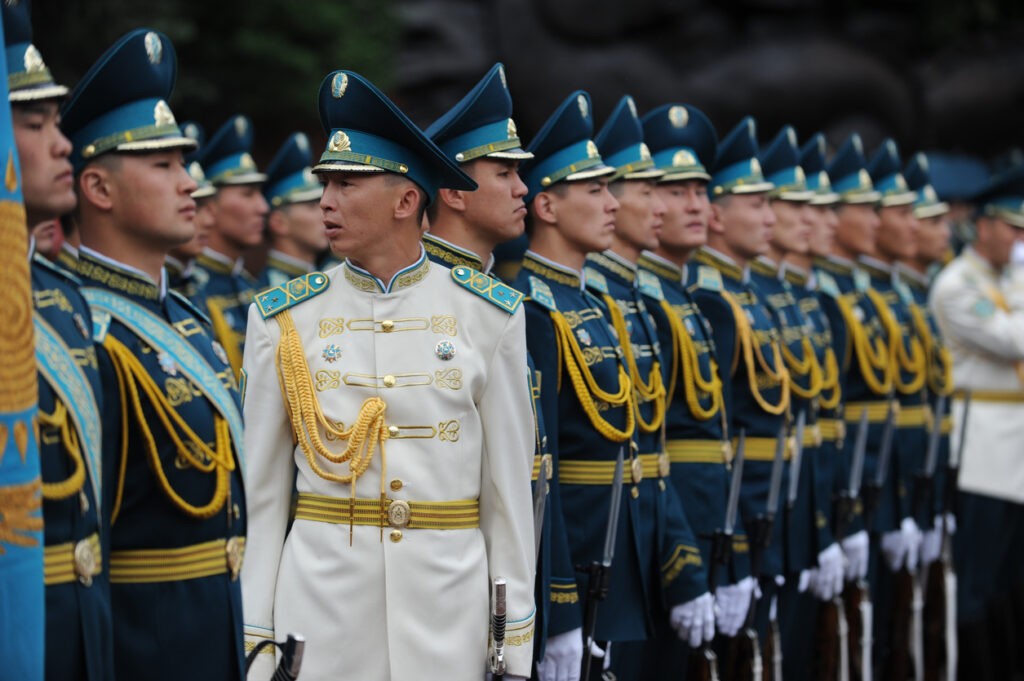
In Central Asia, Kazakhstan continues to lead the region in military strength, ranking 57th globally, an improvement from its 58th position in 2024. Uzbekistan follows closely in 58th place, climbing seven spots from the previous year.

Turkmenistan also made notable progress, rising from 83rd in 2024 to 77th this year. Kyrgyzstan saw a modest improvement, advancing to 100th from 105th, while Tajikistan moved up one spot to 107th this year.

The GFP ranking evaluates around 60 criteria, such as troop levels, financial resources, logistics, and the availability of specific military assets. Kazakhstan performed particularly well in heavy weaponry, ranking 17th globally for the number of multiple-launch rocket systems (407 units) and 21st for self-propelled artillery. These strengths have significantly bolstered its defense indicators.

Globally, the United States remains the top-ranked military power, supported by the world’s largest defense budget of $800 billion. Russia and China maintain their positions in second and third place, respectively. Bhutan, ranked 145th, is the weakest army on this year’s list.