• KGS/USD = 0.01144 0%
  • KZT/USD = 0.00193 -0%
  • TJS/USD = 0.10838 -0.09%
  • UZS/USD = 0.00008 0%
  • TMT/USD = 0.28490 0%
  • KGS/USD = 0.01144 0%
  • KZT/USD = 0.00193 -0%
  • TJS/USD = 0.10838 -0.09%
  • UZS/USD = 0.00008 0%
  • TMT/USD = 0.28490 0%
  • KGS/USD = 0.01144 0%
  • KZT/USD = 0.00193 -0%
  • TJS/USD = 0.10838 -0.09%
  • UZS/USD = 0.00008 0%
  • TMT/USD = 0.28490 0%
  • KGS/USD = 0.01144 0%
  • KZT/USD = 0.00193 -0%
  • TJS/USD = 0.10838 -0.09%
  • UZS/USD = 0.00008 0%
  • TMT/USD = 0.28490 0%
  • KGS/USD = 0.01144 0%
  • KZT/USD = 0.00193 -0%
  • TJS/USD = 0.10838 -0.09%
  • UZS/USD = 0.00008 0%
  • TMT/USD = 0.28490 0%
  • KGS/USD = 0.01144 0%
  • KZT/USD = 0.00193 -0%
  • TJS/USD = 0.10838 -0.09%
  • UZS/USD = 0.00008 0%
  • TMT/USD = 0.28490 0%
  • KGS/USD = 0.01144 0%
  • KZT/USD = 0.00193 -0%
  • TJS/USD = 0.10838 -0.09%
  • UZS/USD = 0.00008 0%
  • TMT/USD = 0.28490 0%
  • KGS/USD = 0.01144 0%
  • KZT/USD = 0.00193 -0%
  • TJS/USD = 0.10838 -0.09%
  • UZS/USD = 0.00008 0%
  • TMT/USD = 0.28490 0%
10 December 2025

Islamic State Khorasan Province as Part of the Struggle for Central Asia

Following the high-profile terrorist attack at Moscow’s Crocus City Hall in March and reports that eight Tajik immigrants were arrested in the U.S., the media spotlight has once again fallen on Islamic State Khorasan Province (ISKP), also known as “Wilayat Khorasan“, and the “Khorasan Project.”

Many observers link ISKP to the countries of Central Asia, even though the terrorist organization, as it has been designated for a long time, has purely Afghanistani roots. In addition, there is a lot of talk about its geopolitical ambitions for “recreating” the state of “Khorasan.” Where this region’s boundaries lie is the subject of debate. The most expansive definitions include northeastern Iran, western and northern Afghanistan, eastern Turkmenistan, and parts of Tajikistan and Uzbekistan. It is important to understand, however, that clear boundaries have never existed, and neither has a state with that name. In modern times, the term “Khorasan” has only historical and cultural connotations, with no political meaning attached to it.

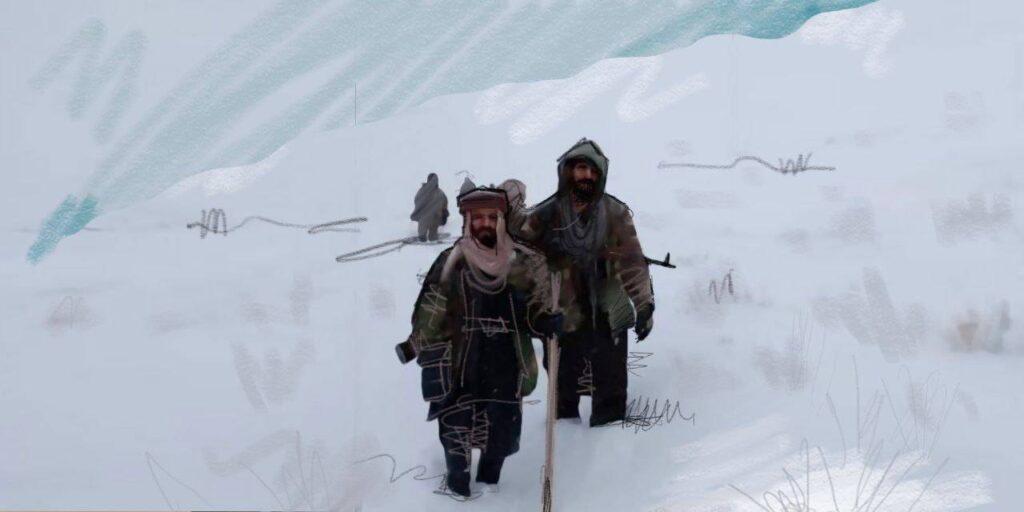
ISKP has suffered a clear military defeat in the borderlands of Afghanistan and Pakistan, and faces significant opposition there. Still, weakening and even destroying the Taliban remains an important goal for the organization. It continues to fight in several regions of Afghamistan, which has prompted the Taliban to intensify their counter-terrorism efforts.
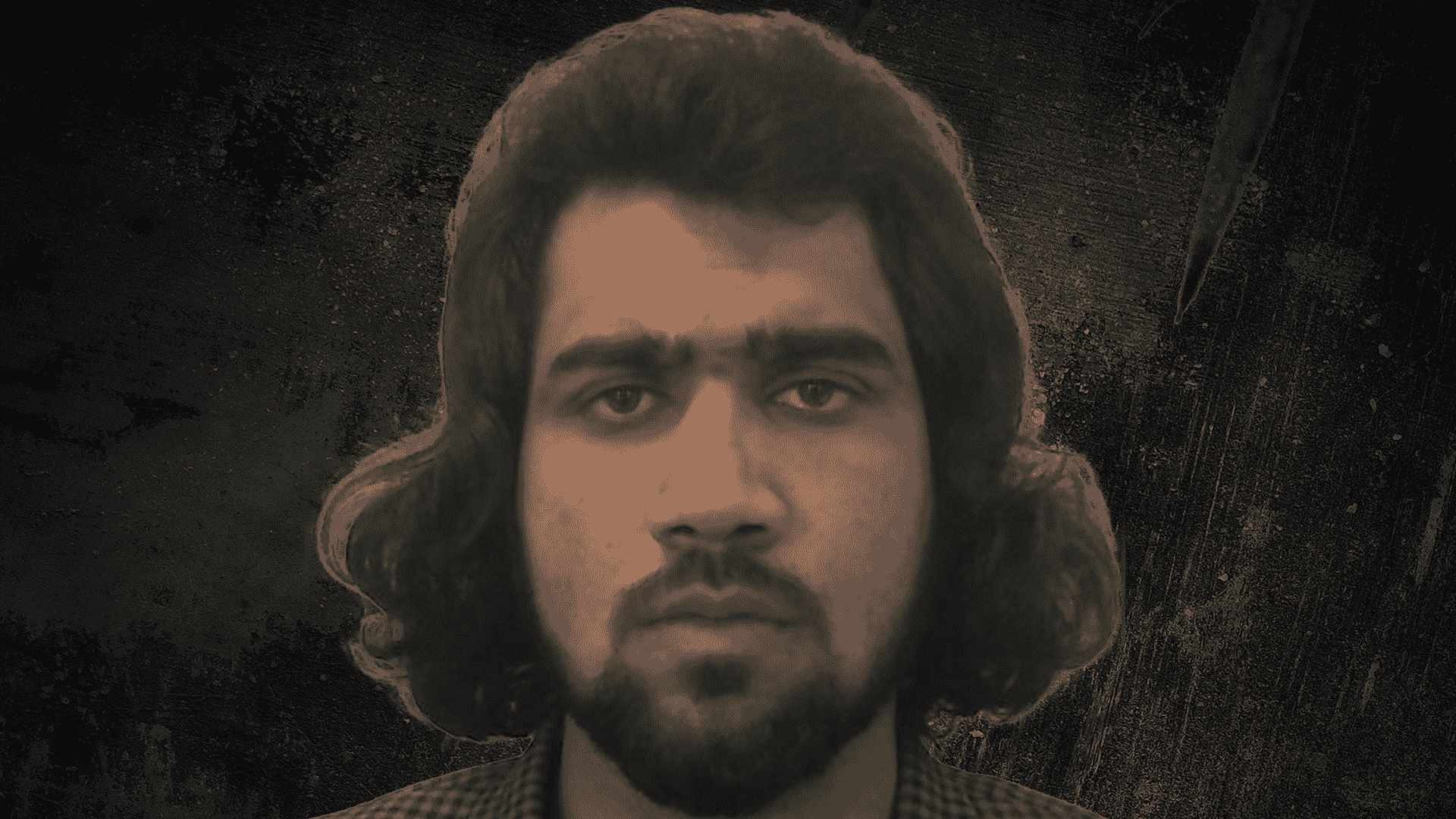
Sanaullah Ghafari, Emir of ISIS-K has a U$10 million bounty on his head; image: rewardsforjustice.net

The countries of Central Asia, having emerged out of the Soviet Union, are attractive for ISKP ideologists in the sense that they share a common historical and cultural past, while there are even linguistic similarities with Afghanistan (between the Persian languages).

The Russian internet portal and analytical agency, TAdviser, points out that ISKP, through its online propaganda publication, announced the start of a new campaign against the countries of the post-Soviet space in April 2022. In June of that year, the ISKP publication, written in the Uzbek language, declared that the countries of Central and South Asia would be united under the flag of the “Islamic Caliphate.”

TAdviser highlights that Turkmenistan has a special place in ISKP propaganda because according to the group a large part of what is now Turkmenistan was previously part of “Greater Khorasan,” while the foreign policy of the Turkmen authorities of actively cooperating with the Taliban is wholly at odds with the core goals of ISKP. The Lapis Lazuli corridor linking Afghanistan to Turkey, along with the Turkmenistan-Afghanistan-Pakistan-India gas pipeline (TAPI) which is being developed, are identified as priority targets for ISKP.

But what in fact is ISKP? As previously noted by The Times of Central Asia, the answer to this question is known by only a very narrow circle. Indeed, no one can provide objective data on the qualitative and quantitative composition of ISKP. Nevertheless, the group is taking on real dimensions in the media.

The threat to Central Asia from ISKP looks more virtual than real at this point. Any small group of terrorists can declare themselves part of ISKP, and, without any proof, the press will often accept this as truth, with ISKP presented as a “formidable regional entity.” However, in the Central Asian republics, there are not and will not be the relatively comfortable conditions that the ISKP has in Afghanistan.

The countries of Central Asia have developed both individual and collective experience in combating radical groups. In addition, significant measures are being taken within the framework of the Regional Anti-Terrorist Structure of the Shanghai Cooperation Organization (SCO) and the Collective Security Treaty Organization (CSTO).

Of course, there is a basis in Central Asia upon which religious-ethnic radicalism can be cultivated, such as low living standards and a shortage of social justice. Other factors, such as territorial claims, ethnic divisions, issues around water usage, and the risk of so-called “color revolutions,” have also not gone anywhere.

A cow grazes by the shell of a burnt-out bus in the Pyanj River separating Tajikistan and Afghanistan; image: TCA, Stephen M. Bland

It stands to reason that ISKP ideologists will focus on these vulnerabilities. Currently, Tajikistan looks to have been chosen as the main pressure point – the information space in recent months has been replete with reports about the involvement of Tajiks in the activities of the Islamic State. This is understandable given the difficult economic situation in the country, high labor migration, the lasting effects of the civil war, and strict state control over the religious sphere. Among the five Central Asian republics, Tajikistan, with its Persian language and cultural differences from its Turkic neighbors, appears rather isolated. In addition, about 5% of Tajikistan’s population is Ismaili Shia; this “feature” does not and cannot play any role whatsoever in modern interstate relations in the region, but, according to some experts, it may be cultivated by Islamic State ideologists.

In any case, the situation with movements such as ISKP requires the countries of Central Asia to have shared views and common approaches in countering the politicization of Islam and its use as a tool in geopolitical games.
Iranian Cooperation with Kazakhstan on New Terminal at Bandar Abbas Port

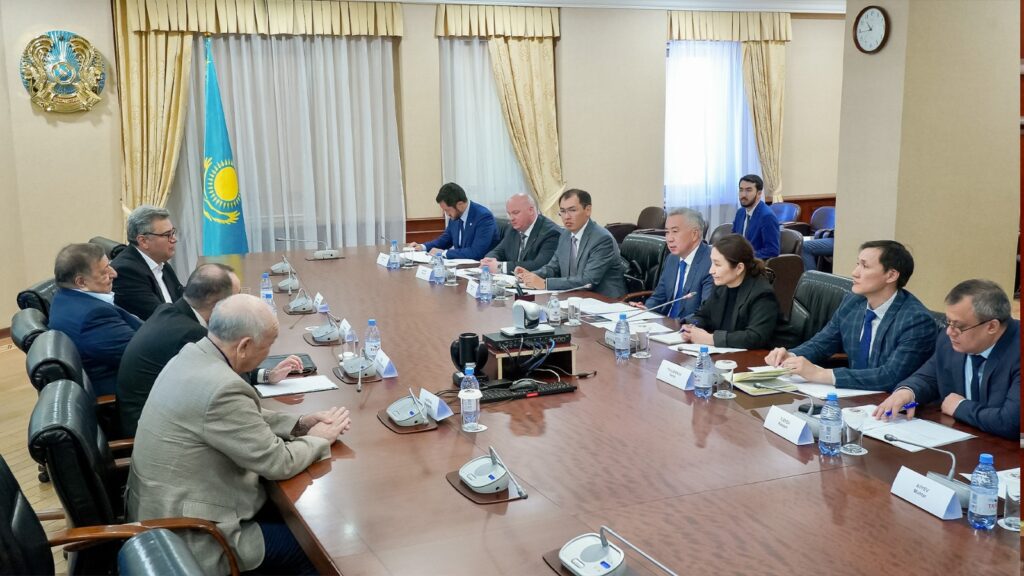
On June 29, Deputy Prime Minister of Kazakhstan Serik Zhumangarin held a meeting with founder and president of the Iranian shipping company Golden Line, Ali Akbar Ehsani.

Golden Line provides services for handling shipping containers and logistics in the port of Caspian on Iran’s Caspian coast.

As reported by the Kazakh government’s press service, the Iranian company is interested in expanding its services for the export and transit of various cargoes from Kazakhstan, other Central Asian countries, Russia and Azerbaijan, to ports in the Persian Gulf, Indian Ocean, Asia and Africa.

The Iranian port of Caspian, where the company’s main loading and unloading facilities and ships are located, was recently connected to the Iranian railway network, providing direct connections between ports in the Caspian Sea and the Persian Gulf. Regarding the above, the head of the shipping company proposed cooperating with Kazakhstan on the construction of a Kazakh terminal in the port of Bandar Abbas.

“We have 25 hectares of container area at our disposal in the port of Bandar Abbas. We are also ready to allocate another 30 hectares in a convenient location for the Kazakh terminal in the port and invest in its construction,” said Ali Akbar Ehsani.

In response, Deputy Prime Minister Zhumangarin invited the Iranian company to participate in the first international transport and logistics forum “North – South”, scheduled for the end of July in Aktau (Kazakhstan), to discuss the project with potential Kazakh partners.


Construction Starts on Kyrgyzstan’s Latest Hydropower Plant

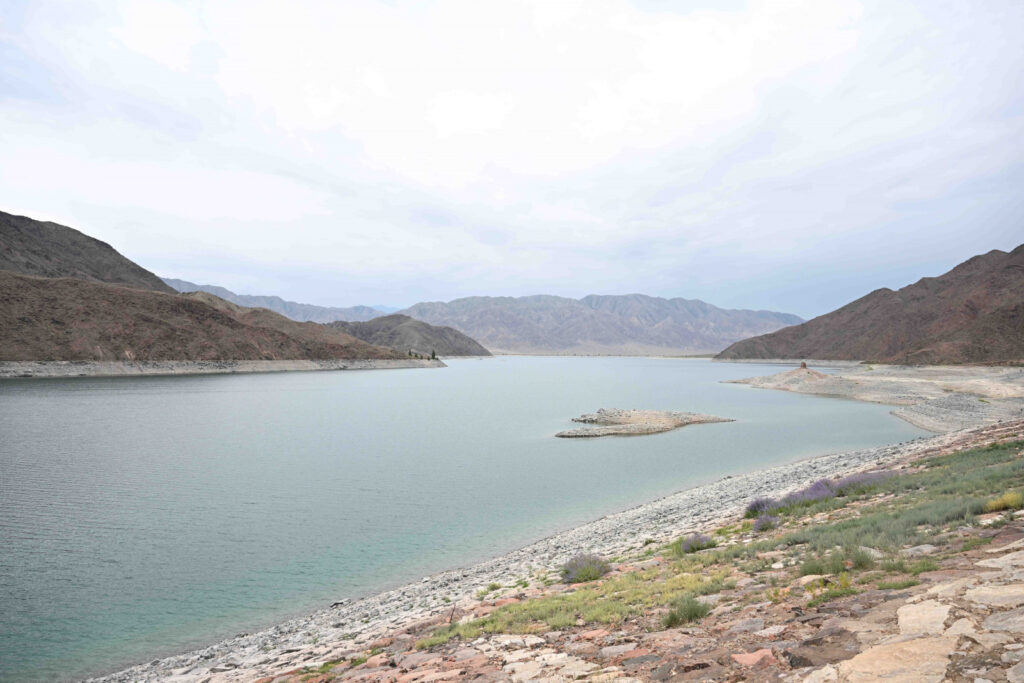
On June 29, Chairman of the Cabinet of Ministers of the Kyrgyz Republic, Akylbek Japarov, attended the opening ceremony of the construction of a small hydroelectric power plant at the Orto-Tokoy reservoir in the Issyk-Kul region.

Constructed by the China National Machinery Industry Corporation, the new plant will have a capacity of 21 MW and provide electricity to more than 14 thousand consumers of the city of Balykchy.

In his address at the launch, the president referencing the recent launch of the Bala-Saruu hydroelectric power plant and the imminent construction of a hydro power plant on the Papan reservoir, announced: “We are taking confident steps towards energy independence. The national project of Kambarata HPP-1 is gaining momentum, with a committee of representatives of international organizations and financial institutions created [for its construction]. The implementation of these projects will provide an opportunity for Kyrgyzstan to become a major hydropower nation.”

U.N. Chief to Deliver Peace Message during Central Asia Tour

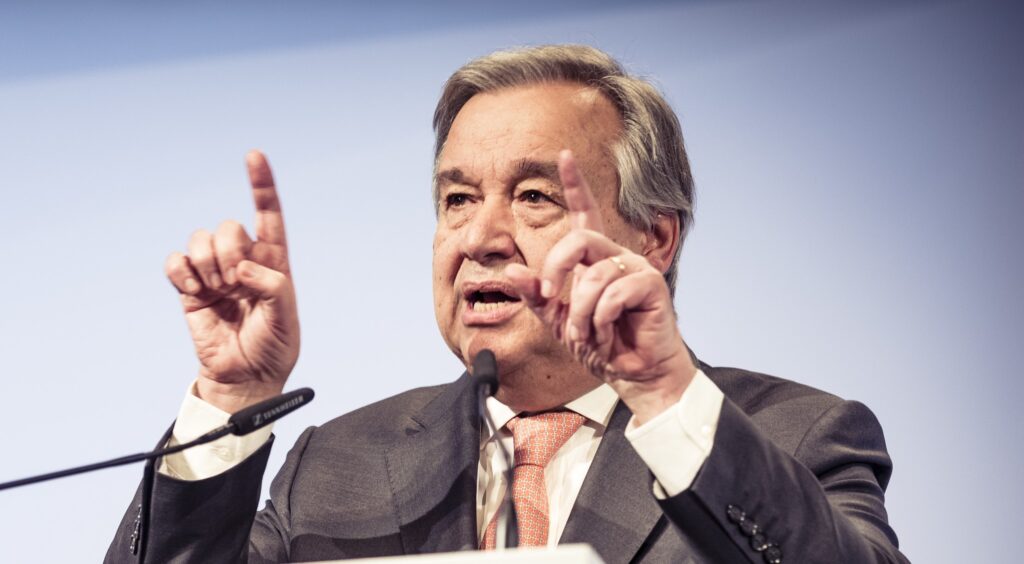
This week, U.N. Secretary-General Antonio Guterres is in Central Asia, where he will call for peace at a time of heightened international tension.

Guterres arrived in Uzbekistan on the weekend and will also travel to Kyrgyzstan, Kazakhstan, Tajikistan and Turkmenistan. He´ll be in the Kazakh capital of Astana on Thursday to address the summit of the Shanghai Cooperation Organization (SCO), a regional group that was founded in 2001 by China, Russia and several Central Asian countries.

The SCO is a forum for discussion of security, economic and political issues that is viewed in some circles as a counter to Western power and alliances, although Central Asian countries also have longstanding ties with Europe and the United States.

Guterres will highlight “our common commitment” to multi-lateralism, international law and human rights, and is ”also expected to underscore that today’s deep global divisions are preventing countries from coming together to resolve the two serious threats emerging from climate change and digital technologies,” United Nations spokesman Stéphane Dujarric said in New York on Friday.

Guterres delivered a similar message at last year’s SCO meeting, which was hosted via video-conference by India. The U.N. chief said divisions and geopolitical tensions were growing even as the need for countries to work together was becoming more urgent.

Delegates at last year’s SCO meeting mostly avoided direct references to Russia’s war against Western-backed Ukraine, a major source of geopolitical tension that has disrupted food and fuel supplies to many countries. China-West tensions are also on the rise.

The SCO’s members are China, Russia, Kazakhstan, Kyrgyzstan Tajikistan, Uzbekistan, Iran, India and Pakistan. Belarusian President Alexander Lukashenko, a close ally of Russian President Vladimir Putin, has said he expects Belarus to become a new member of the group at the Astana meeting.

Children Among Nine Killed in Mudflows in Kyrgyzstan

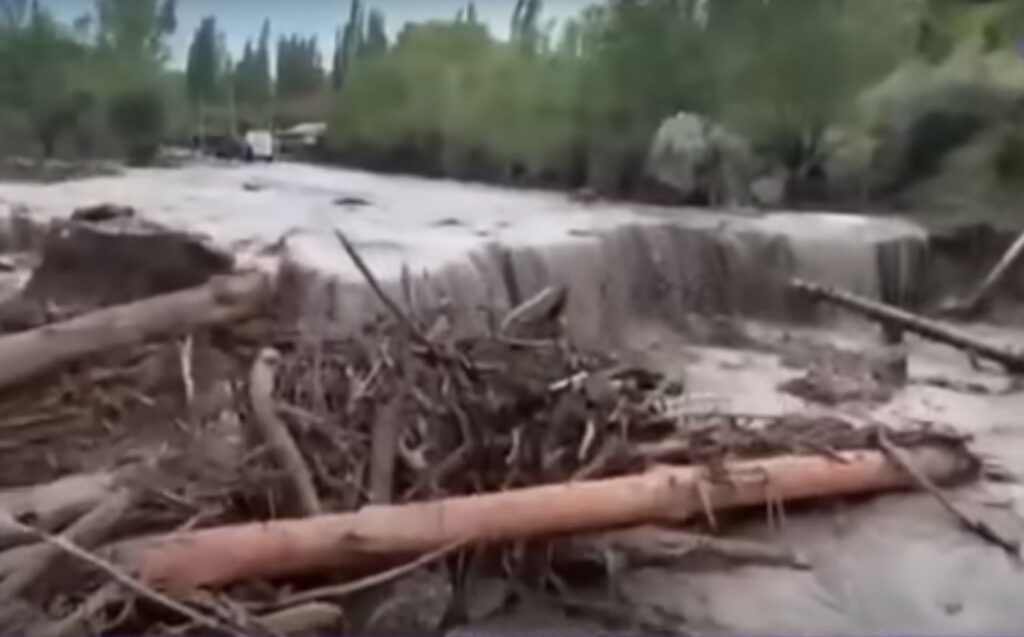
Mudflows caused by heavy rains have killed at least nine people, including four Kazakh children, in an area of southwestern Kyrgyzstan that is popular among tourists for its natural scenery. Search operations were continuing on Sunday.

Kyrgyz authorities declared a state of emergency in the Nookat district of the Osh region after the downpours on Friday. Roads, bridges and power lines were damaged and several hundred emergency responders, including police and military personnel, were deployed to help with searches and evacuations.

Photos and video posted on Telegram by Kyrgyzstan’s Ministry of Emergency Situations showed rescuers, some in military uniforms, escorting people alongside a fast-flowing river in a ravine. Some carried young children and held onto a rope fixed alongside the ravine wall as they walked.

Citing Kyrgyz officials, Kazakhstan’s Ministry of Foreign Affairs said the bodies of four Kazakh children had been found and that its diplomats are helping relatives of the victims. The bodies of the children will be returned to Kazakhstan in “the near future,” the ministry said on Telegram.

Akylbek Japarov, chairman of Kyrgyzstan´s Cabinet of Ministers, flew over Nookat district on Sunday to assess the damage and said the government will provide “all-round support” to help those affected, the official Kabar news agency reported.

Nookat is popular among trekkers and hikers who enjoy its mountain and forest scenery, particularly in the summer months.

Kazakhstan, UNDP, and Eurasian Development Bank Unite in Water Management

On 28 June, the Ministry of Water Resources and Irrigation of Kazakhstan, the United Nations Development Programme (UNDP) in Kazakhstan, and the Eurasian Development Bank (EDB) signed a letter of intent to cooperate on joint development projects in multi-purpose water resources management.

As reported by the EDB Media Centre, as part of the agreement, the EDB plans to allocate approximately US $5.3 million in technical assistance to implement several initiatives including water sector digitalization, the development of regional training centres for state-of-the-art irrigation technologies, piloting modern water-saving technologies, and developing a legal and institutional framework for the water sector.

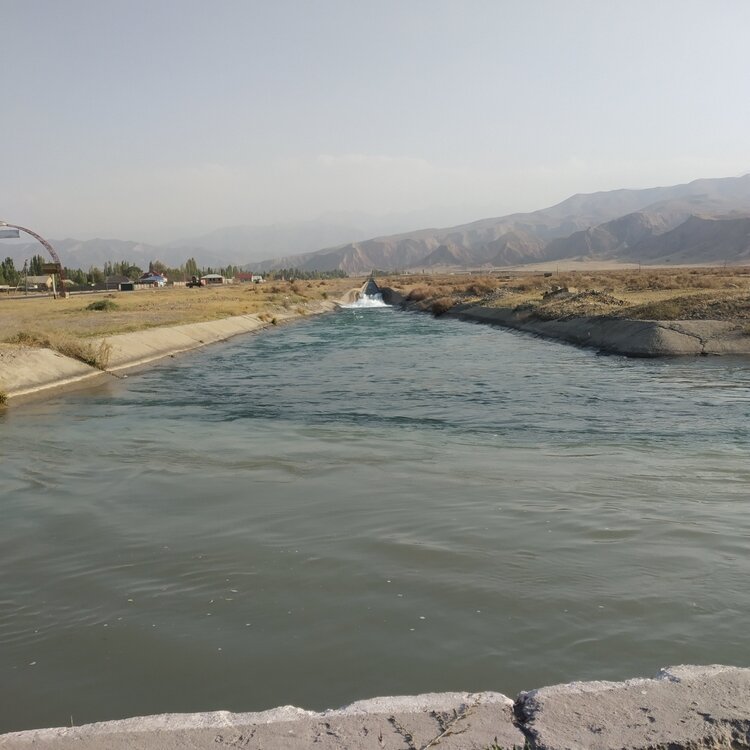
Kazakhstan is experiencing an increase in water-related disasters, as evidenced by recent severe floods and escalating water shortages caused by new infrastructure projects in neighbouring regions, and to mitigate future risks, must instigate improved irrigation and water management strategies.

Nurzhan Nurzhigitov, Kazakhstan’s Minister of Water Resources and Irrigation, commented: “Our Ministry faces many important tasks, one of which is the modernization and improvement of the country’s water management system. For this purpose, a concept and its comprehensive plan outlining specific measures for the development of water infrastructure in Kazakhstan and other large-scale projects were developed and approved. We intend to actively cooperate with international organizations and financial institutions, adopt the best practices of other countries, and jointly implement large projects that will bring benefits for decades to come. Today’s agreement is another step in this direction.”

Nikolay Podguzov, Chairman of the EDB Management Board, added: “We are on the verge of a water shortage in Central Asia – this is a complex regional challenge, but we are tackling it. This is the call we want to convey to all interested parties. We must act very quickly and together. We have only five years to get the region ready and avoid severe water shortages. To timely inform all interested parties, we have done significant work and will keep working to expand the network of partnerships.”

“Globally, the water sector suffers from insufficient funding and investment,” highlighted Sukhrob Khojimatov, UNDP Resident Representative a.i. in Kazakhstan. “Today, less than 10% of global investment goes into water infrastructure. In this context, we are encouraged by this partnership, which we believe will help address complex issues in water management, strengthen climate resilience, and develop regional cooperation in Central Asia under the water agenda.”