• KGS/USD = 0.01144 0%
  • KZT/USD = 0.00192 -0%
  • TJS/USD = 0.10849 0.37%
  • UZS/USD = 0.00008 0%
  • TMT/USD = 0.28571 0.28%
  • KGS/USD = 0.01144 0%
  • KZT/USD = 0.00192 -0%
  • TJS/USD = 0.10849 0.37%
  • UZS/USD = 0.00008 0%
  • TMT/USD = 0.28571 0.28%
  • KGS/USD = 0.01144 0%
  • KZT/USD = 0.00192 -0%
  • TJS/USD = 0.10849 0.37%
  • UZS/USD = 0.00008 0%
  • TMT/USD = 0.28571 0.28%
  • KGS/USD = 0.01144 0%
  • KZT/USD = 0.00192 -0%
  • TJS/USD = 0.10849 0.37%
  • UZS/USD = 0.00008 0%
  • TMT/USD = 0.28571 0.28%
  • KGS/USD = 0.01144 0%
  • KZT/USD = 0.00192 -0%
  • TJS/USD = 0.10849 0.37%
  • UZS/USD = 0.00008 0%
  • TMT/USD = 0.28571 0.28%
  • KGS/USD = 0.01144 0%
  • KZT/USD = 0.00192 -0%
  • TJS/USD = 0.10849 0.37%
  • UZS/USD = 0.00008 0%
  • TMT/USD = 0.28571 0.28%
  • KGS/USD = 0.01144 0%
  • KZT/USD = 0.00192 -0%
  • TJS/USD = 0.10849 0.37%
  • UZS/USD = 0.00008 0%
  • TMT/USD = 0.28571 0.28%
  • KGS/USD = 0.01144 0%
  • KZT/USD = 0.00192 -0%
  • TJS/USD = 0.10849 0.37%
  • UZS/USD = 0.00008 0%
  • TMT/USD = 0.28571 0.28%
11 December 2025

Almaty to Host International Conference KazHackStan-2024

The Kazakh Ministry of Digital Development, Innovation and Aerospace Industry has announced that Almaty is to host KazHackStan-2024 from 11-13 September. Featuring presentations by more than 30 worldwide specialists, the cybersecurity conference is expected to attract over 5,000 visitors from home and abroad.

KazHackStan will represent all aspects of cyber defense. Government & Business Day will provide a platform for discussion on policy and legislation; Secure Development Day, on experiences in secure software development; and HackDay, where experts and novices will learn about hacking techniques and vulnerabilities.

As part of the conference, the Ministry and the Centre for Analysis and Investigation of Cyber ​​Attacks, will conduct a panel session for members of Organization of Turkic States on cybersecurity in the region.

The event will also include a CyberKumbez competition – the largest hacker competition in Central Asia – involving over 100 hackers and representatives of both large companies and government agencies. Models of real IT infrastructure have been prepared for participants to simulate and neutralize virtual threats, to help ensure the future security of the state and society.


Uzbekistan’s Consumer Confidence Index Falls to Record Low

Based on Freedom Finance’s research, Spot has reported that the consumer confidence index in Uzbekistan fell to a record low in May. The indicator reached 126.8 points in May, decreasing by 3.4 points during the month. The decline was recorded in all five sub-indices, with the most substantial decline in economic dynamics in the last year.

The assessment of changes in the economic situation decreased by 117.5 points (-7.8). In March, 58% of Uzbeks had noted that the financial crisis had improved in the last twelve months; but in April, this figure decreased to 53.5%, and in May, to 48%. Just a third of respondents living in Tashkent assessed the economic dynamics positively. In Namangan, the percentage of positive responses decreased from 58.3% to 46.1%, while in five other areas it decreased by between 7 and 9%. The sub-index of changes in citizens’ financial situation also decreased by 128.4 points (-2.9).

Inflation is increasing in Uzbekistan. During the past year, prices have increased significantly—by 48.5% – breaking the record set in October of last year. The share of citizens who noted increased housing and communal services tariffs rose from 21.4% to 44.1% over two months.

Conversely, only 13.2% of participants expect inflation to accelerate next month, and 28% over the course of the year. Expectations of devaluation also decreased: 63.4% expected a substantial weakening of the som against the dollar during the year, and 43.5% in the monthly range.

Freedom Finance analyst Daniyor Orazboev told Spot that the decline in consumer confidence was caused by a “sharp acceleration of inflation due to administrative decisions in Uzbekistan.”

U.S. State Department Criticizes Tajikistan for Religious Restrictions

The U.S. State Department’s 2023 World Religious Freedom Report lists Tajikistan as a country of “particular concern” due to “gross violations of religious freedoms.” The report cited evidence of religious restrictions by the state, including a ban on the hijab, restrictions on minors and women performing namaz in mosques, and the harassment of Jehovah’s Witnesses. The authors of the report also noted that residents of  Tajikistan refrain from freely discussing religion for fear of persecution by the authorities.

This is not the first time the Tajik government has been criticized for restricting religious freedoms, including religious observance, but President Emomali Rahmon continues to support his government’s policy on these issues.

In Tajikistan, 90% of the population is Muslim, predominantly followers of the Hanafi madhhab, whilst 4% are Ismailis. The central part of the Christian community are followers of the Orthodox Church. There are 4,058 religious organizations and associations officially registered in the country, including 66 which are non-Muslim. The authors of the report noted that the activities of these organizations were under strict control.

According to the Tajik Interior Minister, Ramazon Rakhimzoda, 195 alleged members of “extremist” and “terrorist” organizations were detained in Tajikistan in the first half of 2023. The Norwegian human rights NGO for religious freedom, Forum-18, reported that at least 19 people were convicted last year for exercising the right to freedom of worship.

Prime Minister of Kyrgyzstan Holds Meeting with U.S. Business Mission

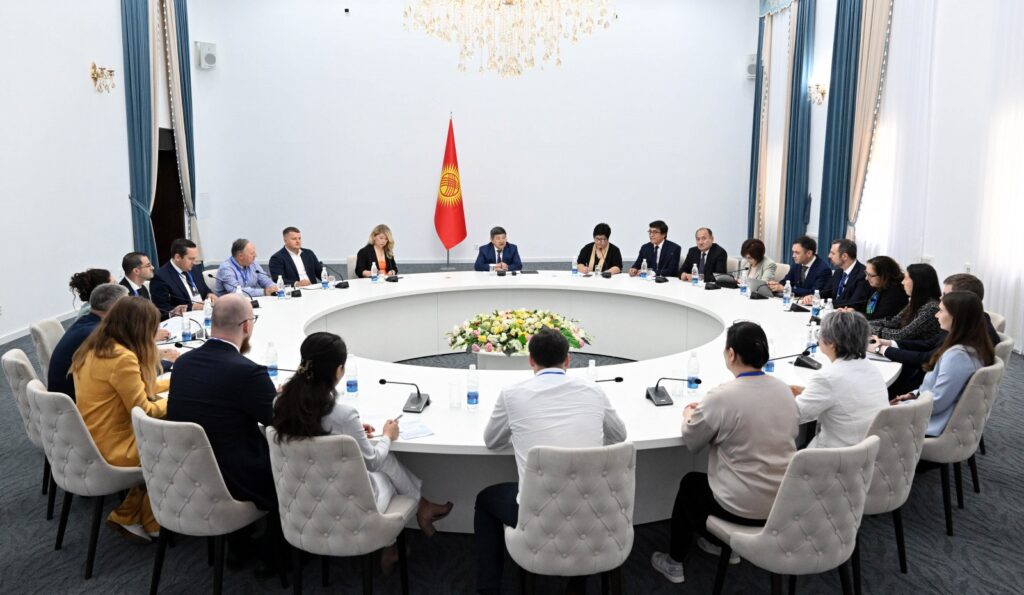
The Kyrgyz Chairman of the Cabinet of Ministers – Head of the Presidential Administration, Akylbek Japarov met with a business mission from the United States. The session was organized by the American-Kyrgyz Business Council, the Cabinet of Ministers of the Kyrgyz Republic press service reported.

Representatives from several significant companies attended the meeting, including Abbott, Coca-Cola, GE Vernova Inc., OpenWay, Thomas Greg & Sons Limited, VISA, White & Case, and Jones Equity Fund. The parties discussed measures to develop and strengthen cooperation between the business communities of Kyrgyzstan and the United States, focusing on inter-bank collaboration, investment, digitization, and energy. Japarov spoke about the favorable investment climate in Kyrgyzstan and the government’s efforts to create convenient conditions for doing business.

During his working trip to the United States in April 2024, Japarov invited American business-people to visit Kyrgyzstan, stating that he hoped the visit would allow American business community to become acquainted with Kyrgyzstan’s trade and investment potential, establish contacts, and cooperate with the local business community.

Representatives of the American companies which are members of the U.S.-Kyrgyz Business Council confirmed their interest in expanding business ties between the two countries.

Development of Uzbekistan–Afghanistan–Pakistan Transport Corridor

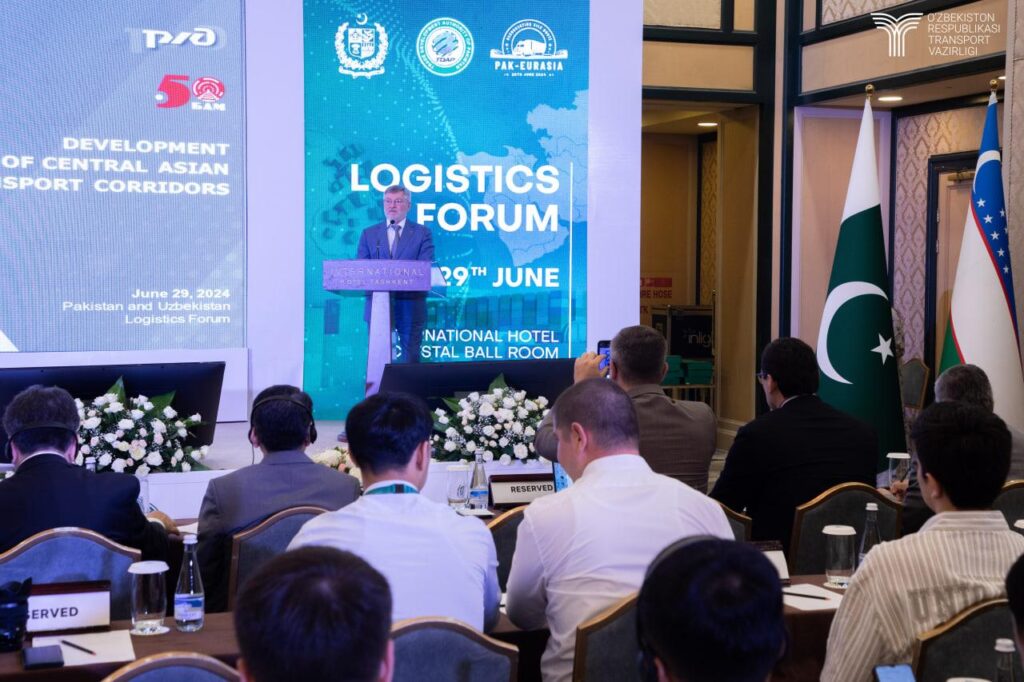
On June 29, representatives of Pakistan’s and Uzbekistan’s leading transport and forwarding companies, and First Deputy Chairman of the Board of JSC Russian Railways, Alexey Pavlov, participated in a Logistics Forum in Tashkent.

As reported by the Uzbek Ministry of Transport, the agenda focused on creating favourable conditions for bilateral and transit cargo transportation through the multimodal transport corridor Uzbekistan – Afghanistan – Pakistan, eliminating barriers and strengthening mutually beneficial strategic cooperation.

Members of the Commonwealth of Independent States (former Soviet republics) have a keen interest in redirecting cargo flows to the multimodal transport corridor Uzbekistan – Afghanistan – Pakistan. According to statistics, in 2023 the volume of cargo transportation along this corridor increased 1.5-fold compared to 2021.

Speaking at the forum, First Deputy Minister of Transport of Uzbekistan Mamanbiy Omarov emphasized the importance of the Uzbekistan-Afghanistan-Pakistan corridor and mooted proposals for its further development.

Recommendations included reducing fees levied on freight transport and establishing fees on a parity basis in the territory of each state; developing mechanisms for insuring cargo along the route and ensuring the safety of goods during transportation; digitalizing the cargo transportation process; and developing proposals to increase the capacity of the Salang Pass in Afghanistan, which is the “heart” of this transport corridor.


Islamic State Khorasan Province as Part of the Struggle for Central Asia

Following the high-profile terrorist attack at Moscow’s Crocus City Hall in March and reports that eight Tajik immigrants were arrested in the U.S., the media spotlight has once again fallen on Islamic State Khorasan Province (ISKP), also known as “Wilayat Khorasan“, and the “Khorasan Project.”

Many observers link ISKP to the countries of Central Asia, even though the terrorist organization, as it has been designated for a long time, has purely Afghanistani roots. In addition, there is a lot of talk about its geopolitical ambitions for “recreating” the state of “Khorasan.” Where this region’s boundaries lie is the subject of debate. The most expansive definitions include northeastern Iran, western and northern Afghanistan, eastern Turkmenistan, and parts of Tajikistan and Uzbekistan. It is important to understand, however, that clear boundaries have never existed, and neither has a state with that name. In modern times, the term “Khorasan” has only historical and cultural connotations, with no political meaning attached to it.

ISKP has suffered a clear military defeat in the borderlands of Afghanistan and Pakistan, and faces significant opposition there. Still, weakening and even destroying the Taliban remains an important goal for the organization. It continues to fight in several regions of Afghamistan, which has prompted the Taliban to intensify their counter-terrorism efforts.
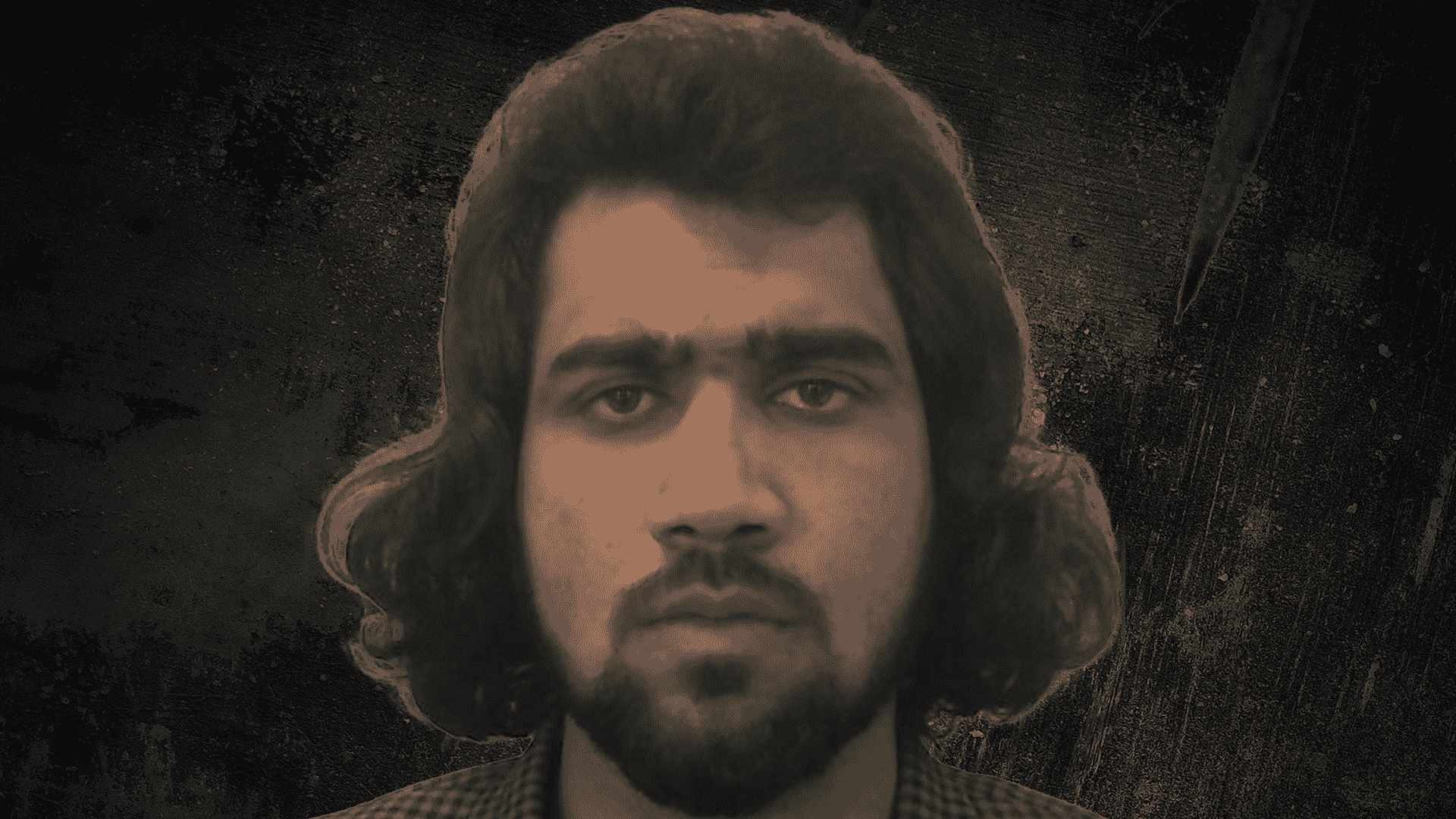
Sanaullah Ghafari, Emir of ISIS-K has a U$10 million bounty on his head; image: rewardsforjustice.net

The countries of Central Asia, having emerged out of the Soviet Union, are attractive for ISKP ideologists in the sense that they share a common historical and cultural past, while there are even linguistic similarities with Afghanistan (between the Persian languages).

The Russian internet portal and analytical agency, TAdviser, points out that ISKP, through its online propaganda publication, announced the start of a new campaign against the countries of the post-Soviet space in April 2022. In June of that year, the ISKP publication, written in the Uzbek language, declared that the countries of Central and South Asia would be united under the flag of the “Islamic Caliphate.”

TAdviser highlights that Turkmenistan has a special place in ISKP propaganda because according to the group a large part of what is now Turkmenistan was previously part of “Greater Khorasan,” while the foreign policy of the Turkmen authorities of actively cooperating with the Taliban is wholly at odds with the core goals of ISKP. The Lapis Lazuli corridor linking Afghanistan to Turkey, along with the Turkmenistan-Afghanistan-Pakistan-India gas pipeline (TAPI) which is being developed, are identified as priority targets for ISKP.

But what in fact is ISKP? As previously noted by The Times of Central Asia, the answer to this question is known by only a very narrow circle. Indeed, no one can provide objective data on the qualitative and quantitative composition of ISKP. Nevertheless, the group is taking on real dimensions in the media.

The threat to Central Asia from ISKP looks more virtual than real at this point. Any small group of terrorists can declare themselves part of ISKP, and, without any proof, the press will often accept this as truth, with ISKP presented as a “formidable regional entity.” However, in the Central Asian republics, there are not and will not be the relatively comfortable conditions that the ISKP has in Afghanistan.

The countries of Central Asia have developed both individual and collective experience in combating radical groups. In addition, significant measures are being taken within the framework of the Regional Anti-Terrorist Structure of the Shanghai Cooperation Organization (SCO) and the Collective Security Treaty Organization (CSTO).

Of course, there is a basis in Central Asia upon which religious-ethnic radicalism can be cultivated, such as low living standards and a shortage of social justice. Other factors, such as territorial claims, ethnic divisions, issues around water usage, and the risk of so-called “color revolutions,” have also not gone anywhere.

A cow grazes by the shell of a burnt-out bus in the Pyanj River separating Tajikistan and Afghanistan; image: TCA, Stephen M. Bland

It stands to reason that ISKP ideologists will focus on these vulnerabilities. Currently, Tajikistan looks to have been chosen as the main pressure point – the information space in recent months has been replete with reports about the involvement of Tajiks in the activities of the Islamic State. This is understandable given the difficult economic situation in the country, high labor migration, the lasting effects of the civil war, and strict state control over the religious sphere. Among the five Central Asian republics, Tajikistan, with its Persian language and cultural differences from its Turkic neighbors, appears rather isolated. In addition, about 5% of Tajikistan’s population is Ismaili Shia; this “feature” does not and cannot play any role whatsoever in modern interstate relations in the region, but, according to some experts, it may be cultivated by Islamic State ideologists.

In any case, the situation with movements such as ISKP requires the countries of Central Asia to have shared views and common approaches in countering the politicization of Islam and its use as a tool in geopolitical games.