• KGS/USD = 0.01144 0%
  • KZT/USD = 0.00192 -0%
  • TJS/USD = 0.10849 0.37%
  • UZS/USD = 0.00008 0%
  • TMT/USD = 0.28571 0.28%
  • KGS/USD = 0.01144 0%
  • KZT/USD = 0.00192 -0%
  • TJS/USD = 0.10849 0.37%
  • UZS/USD = 0.00008 0%
  • TMT/USD = 0.28571 0.28%
  • KGS/USD = 0.01144 0%
  • KZT/USD = 0.00192 -0%
  • TJS/USD = 0.10849 0.37%
  • UZS/USD = 0.00008 0%
  • TMT/USD = 0.28571 0.28%
  • KGS/USD = 0.01144 0%
  • KZT/USD = 0.00192 -0%
  • TJS/USD = 0.10849 0.37%
  • UZS/USD = 0.00008 0%
  • TMT/USD = 0.28571 0.28%
  • KGS/USD = 0.01144 0%
  • KZT/USD = 0.00192 -0%
  • TJS/USD = 0.10849 0.37%
  • UZS/USD = 0.00008 0%
  • TMT/USD = 0.28571 0.28%
  • KGS/USD = 0.01144 0%
  • KZT/USD = 0.00192 -0%
  • TJS/USD = 0.10849 0.37%
  • UZS/USD = 0.00008 0%
  • TMT/USD = 0.28571 0.28%
  • KGS/USD = 0.01144 0%
  • KZT/USD = 0.00192 -0%
  • TJS/USD = 0.10849 0.37%
  • UZS/USD = 0.00008 0%
  • TMT/USD = 0.28571 0.28%
  • KGS/USD = 0.01144 0%
  • KZT/USD = 0.00192 -0%
  • TJS/USD = 0.10849 0.37%
  • UZS/USD = 0.00008 0%
  • TMT/USD = 0.28571 0.28%
11 December 2025

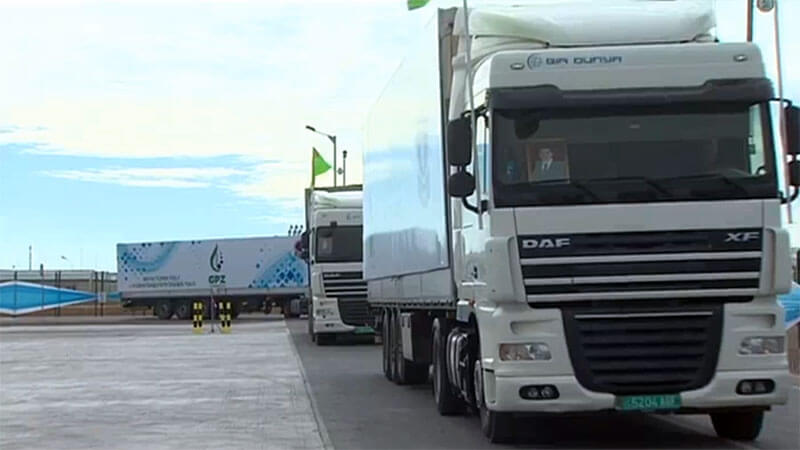
Turkmenistan to Increase Border Crossing Limit from Afghanistan to 120 Trucks Daily

Bakhtar News reported on June 26 that Turkmenistan is ready to increase the number of commercial cargo trucks passing through the border between Serkhetabad and Torgundi from Afghanistan to 120 per day. This issue was discussed at a meeting between the Consul General of Turkmenistan in Afghanistan, Batur Yulov, and the Governor of Herat Province, Sheikh Mawlana Noor Ahmad Islamjar. Consul General Yulov also reported that Turkmenistan has completed repair work at the Noor Jihad substation to increase the volume of electricity exported to Afghanistan.

In turn, Mawlana Noor Ahmad Islamjar once again called for acceleration of the construction of the TAPI gas pipeline, as well as organizing a meeting with the participation of the transport departments of Afghanistan, Turkmenistan, and Kazakhstan to discuss the resumption of the China-Kazakhstan-Turkmenistan route. The governor of Herat also asked that the procedure for issuing visas to Afghan traders who are transporting fresh and dried fruits to Turkmenistan be simplified.

In February 2024, the chairman of the Halk Maslahaty (People’s Council), Gurbanguly Berdimuhamedov, promised to simplify the issuance of visas to Afghan businessmen and transport workers in a meeting with the head of the Ministry of Foreign Affairs of Afghanistan, Amirkhan Muttaki.

Largest Makerspace Opens in Kyrgyzstan with U.S. Support

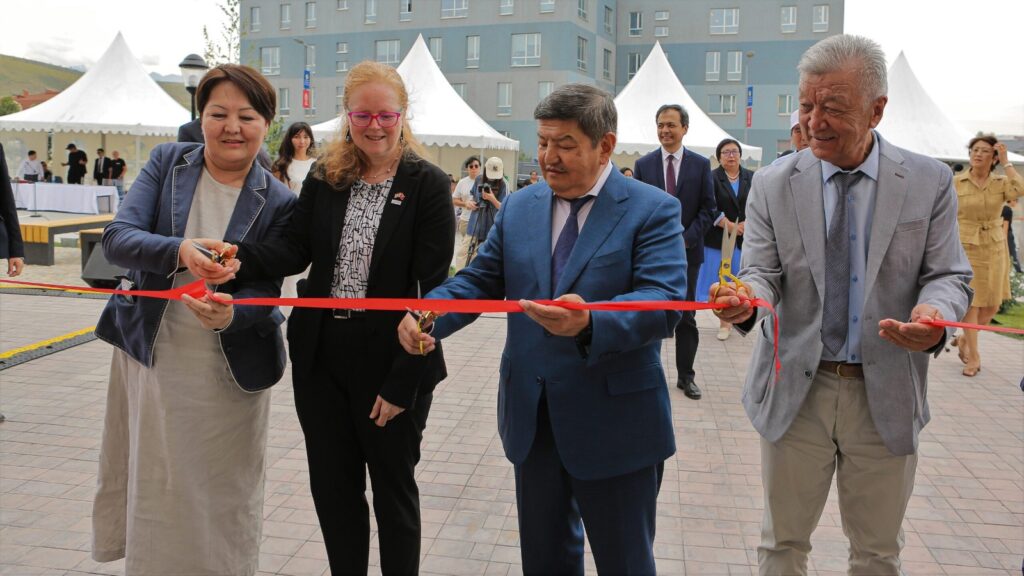
The Makerspace Learning and Design Centre, part-funded by the U.S. government, opened at the American University of Central Asia (AUCA) in Bishkek on June 24.

As reported by the U.S. Embassy in Kyrgyzstan, the U.S. Agency for International Development’s (USAID) American Schools and Hospitals Abroad initiative, Bard College, and American University of Central Asia funded the centre’s construction.

The Makerspace is a creative space equipped with high-tech equipment, including 3D printers, laser cutters, robotics kits, and sewing equipment. Open to AUCA students as well as scientists, engineers, entrepreneurs, and developers, the centre will provide facilities for users to network, learn, exchange ideas, create prototypes, and attract investors.

In his speech at the opening ceremony, Akylbek Japarov, Chairman of the Cabinet of Ministers of the Kyrgyz Republic, announced: “Makerspace is a place where technologies become accessible to everyone, and innovative projects become reality. There are many creative and progressive people in Kyrgyzstan who urgently need opportunities offered by the space to realize their potential and benefit society.”

USAID/Kyrgyz Republic Mission Director Kaya Adams praised the new facility saying, “We are especially proud of our partnership with the American University of Central Asia. This new building will strengthen AUCA’s international, diverse learning community and multidisciplinary learning approach. It will bring together creative thinkers of differing nationalities, ethnicities, gender, and professional backgrounds, including people with disabilities, to forge innovative solutions.”


Fugitive Oligarchs Ablyazov and Khrapunov Ordered to Return $32 Million to Kazakhstan by U.S. Court

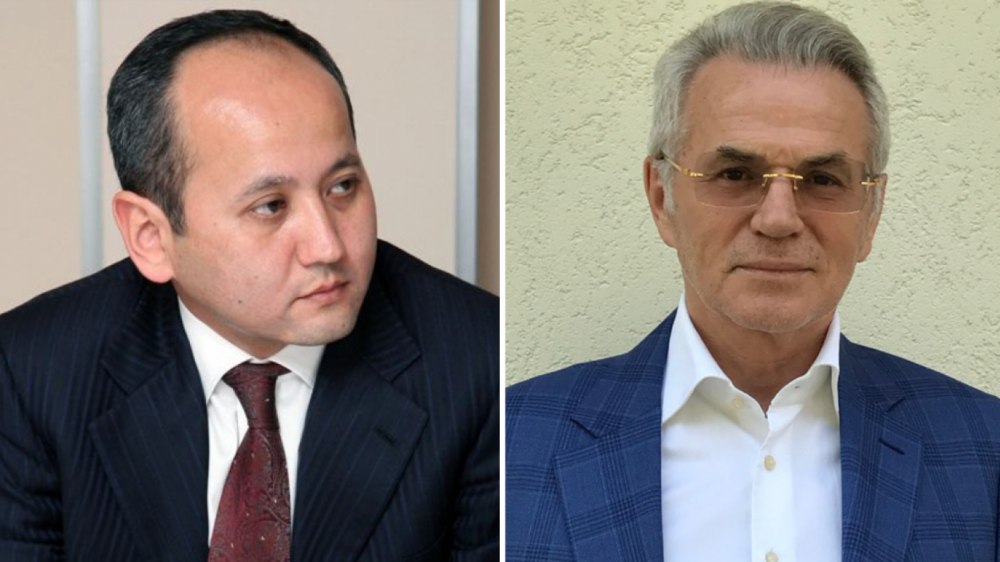
Kazakhstan has secured a victory in the United States against Felix Sater and his companies, which were involved in investing money stolen by Mukhtar Ablyazov from BTA Bank. The jury in the U.S. District Court for the Southern District of New York awarded over $32 million in favor of BTA and the city of Almaty. In addition, the Kazakh oligarch and former Mayor of Almaty and Minister of Emergency Situations, Viktor Khrapunov, was reported by BTA’s press service to have caused multi-billion-dollar damages through his actions.

After a three-week trial, the jury recognized BTA Bank and the city of Almaty as victims of Sater’s unlawful activities, which included the misappropriation of property, unjust enrichment, and obtaining money fraudulently. The compensation awarded exceeded the requested amount, totaling more than $32 million including interest.

The trial, which began on June 10, 2024, demonstrated that Mukhtar Ablyazov abused his position at BTA Bank by issuing fictitious loans worth billions of dollars, leading to the bank’s collapse. At the time, BTA was the third-largest bank in Kazakhstan. Ablyazov also privatized state land and sold it at undervalued prices to companies he controlled. In addition, the Khrapunov’s fraudulent actions, meanwhile, caused over $300 million in damages to Almaty, leaving significant urban land undeveloped, whilst other assets were sold to the Khrapunovs shell companies for significantly less than their market value through fictitious tenders.

Evidence presented in court showed that Ablyazov and Khrapunov combined their stolen funds, with Ilyas Khrapunov, Viktor’s son and Ablyazov’s son-in-law, accused of laundering a substantial part of these funds. In September 2018, a UK court fined Ilyas Khrapunov $500 million for helping Ablyazov breach an asset freezing order. The Bayrock Group, Inc., Global Habitat Solutions (both owned by Sater), and MeM Energy Partners LLC (owned by Mendel Mochkin) were found to have facilitated the laundering of the stolen money into the U.S. financial system. The jury determined that Sater and Mochkin knowingly laundered the funds stolen by Ablyazov and Khrapunov.

Additionally, the jury, having been presented with comprehensive evidence of Ablyazov’s fraud against BTA Bank, returned a unanimous verdict against his co-conspirators. For the first time, a U.S. jury also unanimously ruled in favor of the city of Almaty concerning fraud committed by Viktor Khrapunov.

Sater was not the only defendant in the asset laundering case. Daniel Ridloff and RRMI-DR LLC were also ordered to return assets to BTA and the Almaty Akimat. Ferrari Holdings LLC, another defendant, is in default, but Almaty Akimat and the bank plan to seek a judgment against it.

In Kazakhstan, in 2018 Mukhtar Ablyazov was sentenced in absentia to life imprisonment for organizing a murder and embezzling funds from depositors of BTA Bank. In the same year, Viktor Khrapunov and his wife, Leila Khrapunova, were also sentenced in absentia to 17 and 14 years in prison, respectively. Back in December 2022, the Southern District Court in New York ruled against Ablyazov and his associates in the amount of $218 million. In total, Ablyazov stands accused of having embezzled up to $10 billion, whilst Ilyas Khrapunov is subject to freezing orders in the amount of approximately $424 million.

New Report Analyses Eurasian Transport Network

On 27 June, the Eurasian Development Bank (EDB) released a report titled “The Eurasian Transport Network”. The report introduces a new conceptual approach to future developments within the Eurasian Transport Network and outlines key projects and initiatives aimed at improving transport connectivity in Eurasia.

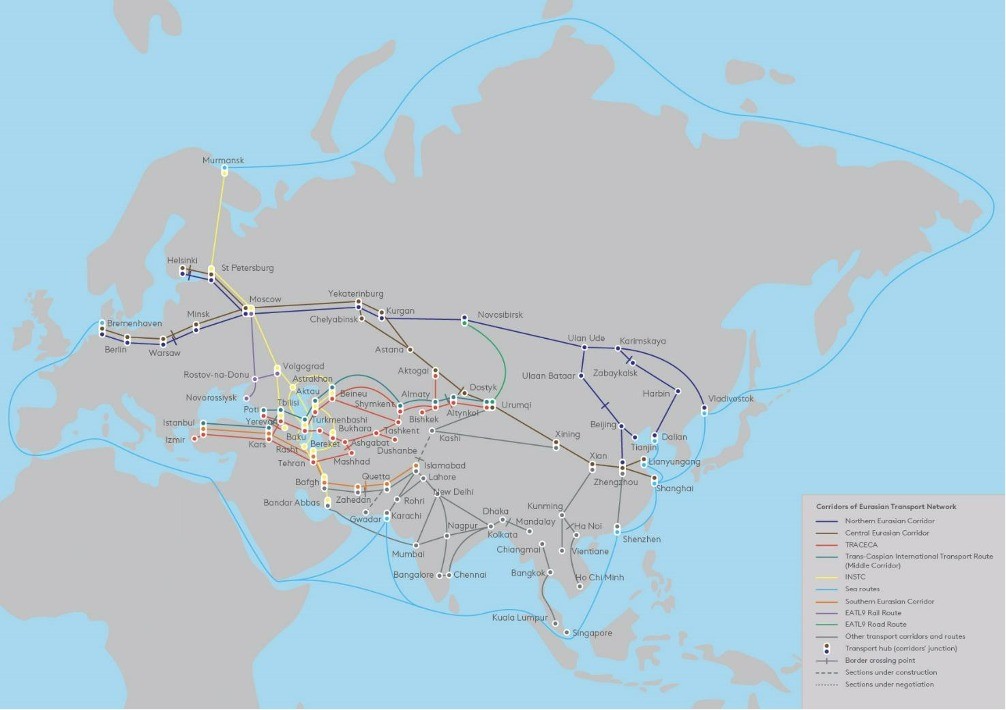
The Eurasian Transport Network is a system of interconnected latitudinal and longitudinal international transport corridors and routes, facilitating intra- and trans-continental connectivity for Eurasian countries. It builds upon over 50,000 km of international east-west and north-south transport corridors, linking Asia, Europe, and the Middle East.

The Eurasian Transport Network consists of five key international transport corridors: the Northern, Central and Southern Eurasian Corridors, TRACECA, and the International North-South Transport Corridor (INSTC), along with branch lines and regional routes.

According to EDB analysts, in 2023, international freight traffic along these five corridors of the Eurasian Transport Network totaled 260 million tons, including 3.6 million 20-foot containers (TEU). Compared to 2013, the volume of international container traffic has more than tripled. The most dynamic growth has been driven by foreign trade and transit container transit with China. Since 2013, the number of container trains to and from China via the Eurasian Economic Union countries and Central Asia has increased by a factor of 200.

The EDB introduced the concept of a Eurasian Transport Network in 2021, and this report presents its detailed framework.

Three years ago, the EDB released a report titled “The International North–South Transport Corridor: Promoting Eurasia’s Intra- and Transcontinental Connectivity”, which estimated that connecting international transport corridors would yield a 40% increase in freight traffic. In 2024, this projection was fully confirmed by the dynamic development of the INSTC and its linkage to TRACECA.

The advancement of the Eurasian Transport Network is paving the way for the establishment of a transport hub in Central Asia. The development of multimodal transport and transit corridors is the only viable solution for Central Asian countries due to the significant distances between trade partners. Establishing a transport hub will facilitate an increase in international traffic, including transit. The EDB projects that freight traffic along the three main corridors running through Central Asia will increase by 1.5 times to 95 million tons by 2030. Container traffic is expected to grow even more rapidly, by almost two-thirds, reaching 1.7 million TEU.

Evgeny Vinokurov, EDB Chief Economist, underlines that “at present, transportation costs for landlocked countries are 1.4 times higher than for coastal states. Even during the time of the Silk Road, trade routes in Central Asia were predominantly latitudinal, in the east-west direction. Building new north-south transportation links is a historic opportunity for Central Asia. This is an opportunity to become the continent’s transport hub, unlock new production niches and improve conditions for foreign trade, especially with West and South Asia.”

The EDB concludes that given the limited investment opportunities facing most developing countries in Eurasia, a key area of cooperation to develop transport links in Eurasia is boosting the number of projects attractive to international development banks and private investors. This includes projects implemented through public-private partnerships (PPPs) and cross-border PPPs.


New Industrial Zone Launched with Chinese Investment in Uzbekistan

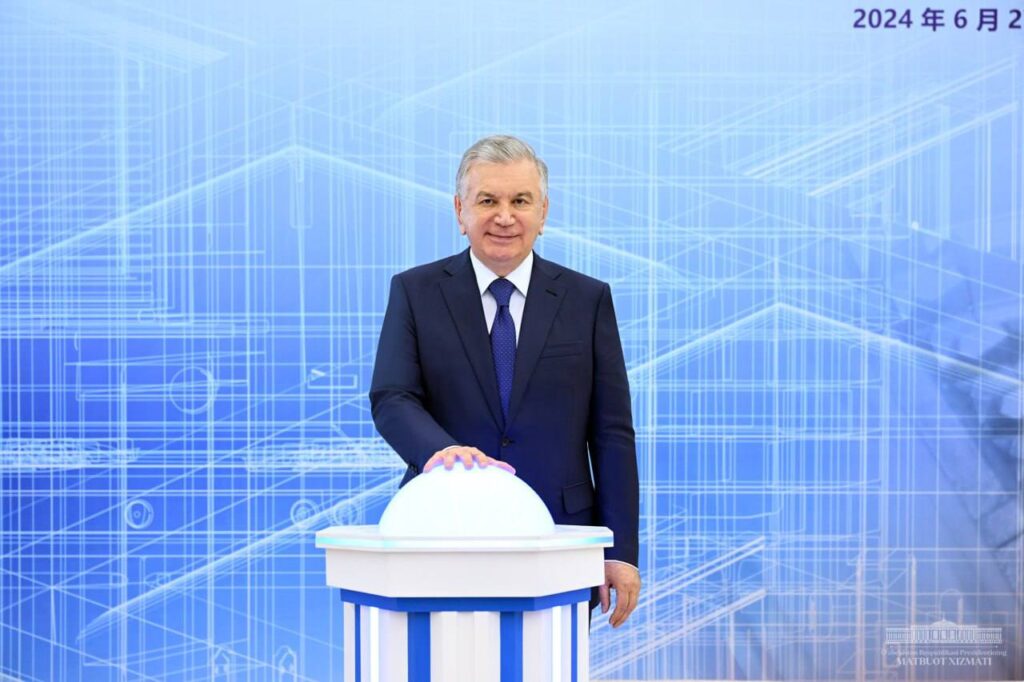
On June 27, President of Uzbekistan Shavkat Mirziyoyev launched the construction of the first project in the Technopark special industrial zone in the Zaamin district of Jizzakh.

Chinese investors have allocated a total $1.2 billion towards the realization of 30 projects in the new Technopark.

Located on 400 hectares of land, the Technopark will comprise facilities to produce goods with high added value and import-substituting products to meet demands from foreign markets, with particular focus on electrical and mechanical engineering, building materials, furniture, food, and services industries.

The initiative will create over 5,000 jobs and produce $70 million worth of goods for export.

The Technopark will also provide an International Center for the Exchange of Experience and Engineering, to provide training in specialized skills required by industrial enterprises.

Other facilities include an office complex, residential buildings, an eco-park, a large exhibition hall and a shopping center.

Apart from the Technopark, Zaamin has recently created a zone to develop its services to tourism which is fast becoming a major driver in the scenic region’s economy.


Islamic Development Bank Pledges up to $2 Billion for Infrastructure Projects in Kazakhstan

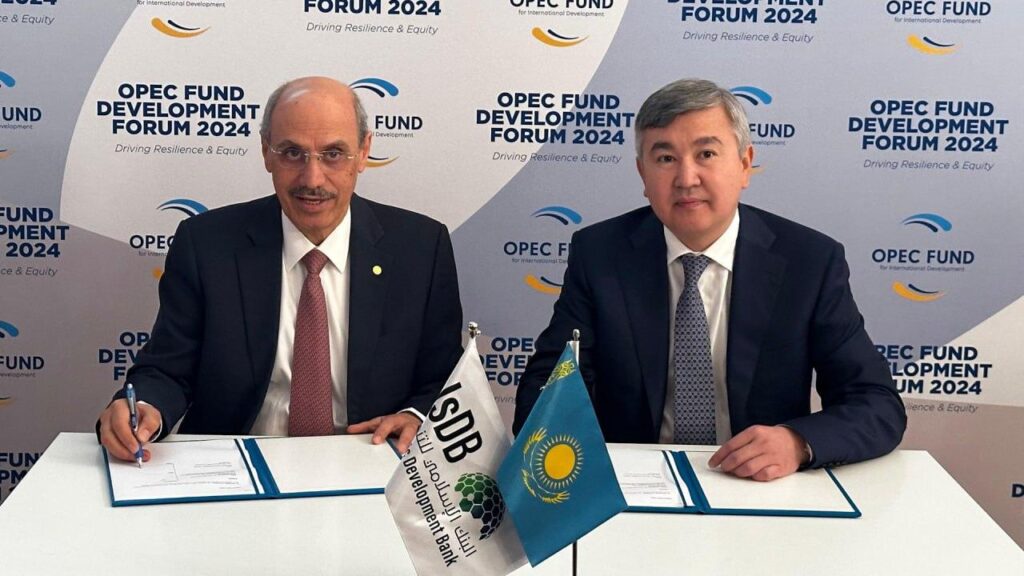
On June 27, Deputy Prime Minister-Minister of National Economy of Kazakhstan Nurlan Baybazarov signed a Framework Program Agreement between the Government of Kazakhstan and the Islamic Development Bank (IsDB).

As reported by the Kazakh Ministry of National Economy, the agreement consolidated previously reached agreements on attracting long-term investments to implement infrastructure projects concerning Kazakhstan’s water management and transport sectors this year.

The Islamic Development Bank will allocate up to $2 billion towards the above.

The Kazakh Ministry of Water Resources and Irrigation has earmarked 16 projects for funding in 2024 including the construction and reconstruction of reservoirs, dams, irrigation canals, and associated infrastructures.

The Ministry of Transport proposed four projects related to the reconstruction and construction of 500km of major highways.