• KGS/USD = 0.01143 -0%
  • KZT/USD = 0.00192 -0%
  • TJS/USD = 0.10820 0.19%
  • UZS/USD = 0.00008 0%
  • TMT/USD = 0.28575 0%
  • KGS/USD = 0.01143 -0%
  • KZT/USD = 0.00192 -0%
  • TJS/USD = 0.10820 0.19%
  • UZS/USD = 0.00008 0%
  • TMT/USD = 0.28575 0%
  • KGS/USD = 0.01143 -0%
  • KZT/USD = 0.00192 -0%
  • TJS/USD = 0.10820 0.19%
  • UZS/USD = 0.00008 0%
  • TMT/USD = 0.28575 0%
  • KGS/USD = 0.01143 -0%
  • KZT/USD = 0.00192 -0%
  • TJS/USD = 0.10820 0.19%
  • UZS/USD = 0.00008 0%
  • TMT/USD = 0.28575 0%
  • KGS/USD = 0.01143 -0%
  • KZT/USD = 0.00192 -0%
  • TJS/USD = 0.10820 0.19%
  • UZS/USD = 0.00008 0%
  • TMT/USD = 0.28575 0%
  • KGS/USD = 0.01143 -0%
  • KZT/USD = 0.00192 -0%
  • TJS/USD = 0.10820 0.19%
  • UZS/USD = 0.00008 0%
  • TMT/USD = 0.28575 0%
  • KGS/USD = 0.01143 -0%
  • KZT/USD = 0.00192 -0%
  • TJS/USD = 0.10820 0.19%
  • UZS/USD = 0.00008 0%
  • TMT/USD = 0.28575 0%
  • KGS/USD = 0.01143 -0%
  • KZT/USD = 0.00192 -0%
  • TJS/USD = 0.10820 0.19%
  • UZS/USD = 0.00008 0%
  • TMT/USD = 0.28575 0%
14 December 2025

Kazakhstan Poised for Large-Scale Locust Invasion

At a central operational headquarters meeting to counteract the spread of locusts, Vice Prime Minister of Kazakhstan Serik Zhumangarin received new reports on projected risks to the region.

Alarmed by the forecast, Zhumangarin announced, “We have never before faced such a wide spanning  infestation of locusts and must not underestimate the possible consequences.  I instruct the Committee of State Inspection of the Ministry of Agriculture to immediately finalize all procedural issues and send necessary equipment to the regions where it is needed. In the hot season, as a precaution, we will switch to meetings at the headquarters twice a week”

The government reported that 260,000 hectares had already been treated in the Turkestan Oblast, but thereafter, the areas affected by locusts had spread to an additional 50,000 hectares. Treatment is therefore being extended to the districts of  Arys City, Saryagash, Keles, Ordabasinsk, and Shardara. According to forecasts, the largest invasion of locusts  is expected in the regions of Kostanay and Aktobe.

“Locusts have always been with us, from the time of  dinosaurs and mammoths. We have always and will continue, to battle them,” stated Zhumangarin.

He then  said that whilst locusts are regarded as halal and some countries have learned to harvest them as a source of great protein food,  that’s not us, I guess!”
Kyrgyzstan Seeks Investment in Energy

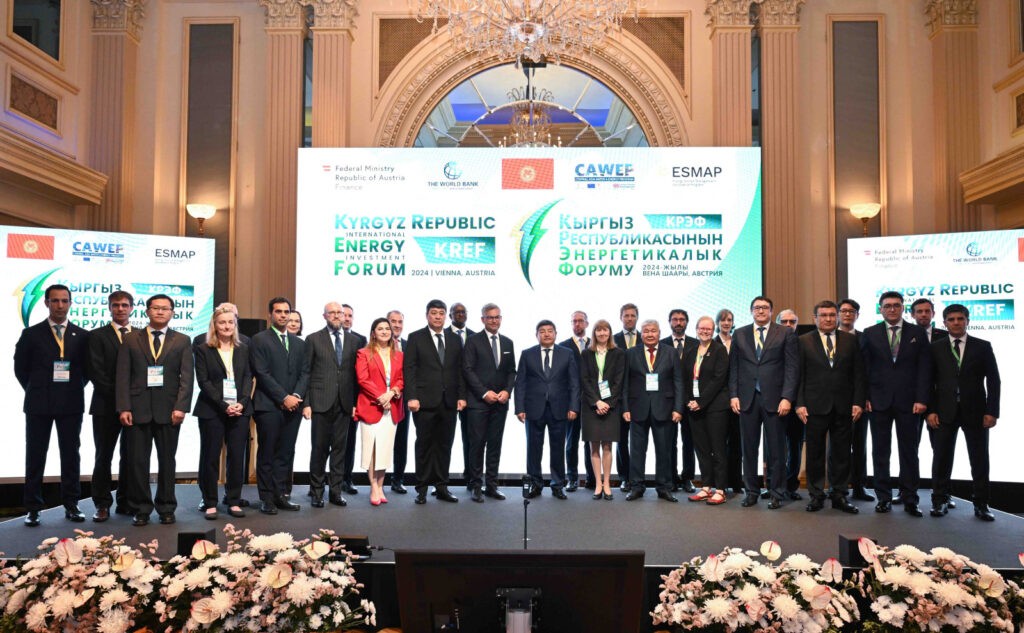
On June 10, The Kyrgyz Republic International Energy Investment Forum, organized by the Cabinet of Ministers of the Kyrgyz Republic with support from the World Bank Group and the Government of Austria, opened in Vienna.

In his address to representatives of international financial organizations, delegations from Central Asian, European, and Middle East countries, and private investors, Chairman of the Cabinet of Ministers of the Kyrgyz Republic Akylbek Japarov emphasized the importance of discussions on the construction of Kambarata HPP-1 not only for Kyrgyzstan but also for the entire Central Asian region.

Japarov then presented a paper on “Economic prospects and investment climate in the Kyrgyz Republic,” in which he stated, “In recent years, the economic growth of Kyrgyzstan has broken all records and demonstrated exceptionally sustainable development. The average GDP growth rate was 7%. And in the first quarter of 2024, the rate of economic growth accelerated to 8.8%.”

Referencing the country’s “period of revival” in its energy sector, he continued, “Tariffs are being reviewed and better conditions provided in the form of benefits and preferences for investors. The implementation of more than 50 renewable energy projects has begun throughout the country. The state, on its own, has built and recently launched the Bala-Saruu hydroelectric power plant, which will provide electricity to the [country’s north-western] Talas region.”

The head of the Cabinet of Ministers called on all international organizations to collaborate in implementing projects in the Kyrgyz energy sector especially the large-scale construction of Kambarata HPP-1 and stressed, “I am deeply convinced that through joint efforts the largest hydroelectric power plant in the region will be built and new horizons for green energy will open in the Central Asian region.”

Japarov also touched upon Kyrgyzstan’s tourist potential and with regard to winter sports, announced:

“We are starting the construction of a Kyrgyz Courchevel. The French company S3V, one of the first operators of the world- famous resort of Courchevel, is implementing the Three Peaks ski cluster in Kyrgyzstan with plans for around 200 km of ski slopes. The resort will operate all year round and able to receive up to 850 thousand tourists annually, will become the largest in Central Asia. In addition, we are launching the construction of a resort near Bishkek with a 20-kilometer funicular, which will operate both winter and summer. In winter, it will provide a unique opportunity to ski within a 20-minute drive from the capital, Bishkek. All technical structures will be built by the Austrian company Doppel Maier.”


Uzbekistan’s Soaring Air Transit Potential

Located at the heart of Central Asia, Uzbekistan offers great potential for air transit.

According to the Transport Ministry of Uzbekistan, the country’s airspace transit routes comprise a 60% flow between Southeast Asia and Europe; 20% between the Middle East and China, Korea, and Japan; 10% between the Middle East and Russia; and 10% between Southeast Asia and Canada and the USA.

The State Unitary Enterprise Uzaeronavigation, operating under the Ministry of Transport and responsible for air traffic control in Uzbekistan, currently serves over 500 airlines from around the world.

As evidenced by the growth of traffic in the Uzbek airspace, routes through Uzbekistan are becoming increasingly profitable for many countries’ air carriers.

Last year, Uzaeronavigation served 188 thousand flights, including 143 thousand by foreign airlines.

Between January and April 2024, over 74 thousand flights were serviced in Uzbekistan’s airspace, an increase of 30% compared to the first quarter of 2023. Flights operated by Uzbek airlines rose by 42% to over 17 thousand, and those operated by foreign airlines increased by 26% to 56 thousand.


Rise in Grain Exports from Kazakhstan to China

As announced last week at the first Kazakh-Chinese grain forum in China, the volume of cargo transportation between Kazakhstan and China in 2023 increased by 22% compared to 2022. Reaching a record high of over 28 million tons, the total includes 12.6 million tons of Kazakhstan’s export, 35% more than in 2022.

During their visit, the Kazakh delegation toured China’s new terminal in the bonded zone of the Alashankou station for unloading grain and vegetable oils, and according to  Kazakhstan’s Ministry of Transport, agreements were reached by both sides regarding transportation technicalities and increasing the throughput of Kazakh agricultural products.

Nurzhan Kelbuganov, Deputy Chairman of the Committee of Railway and Water Transport at the Ministry of Transport of Kazakhstan, commented, “Today, the main crops supplied by Kazakhstan to China are barley and wheat. In 2023, after the pandemic, it was possible to resume transportation to China, which allowed for a 2.5-fold increase in Kazakh grain exports. Hence, in 2021, about 347 thousand tons were exported [to China], in 2022 — 747 thousand tons, and in 2023 — over 2.2 million tons.”

Russia’s Gazprom Secures Long-Term Natural Gas Supply to Kyrgyzstan

Long-term contracts for natural gas supplies to Kyrgyzstan were signed on June 7 at the St. Petersburg International Economic Forum 2024, between Gazprom Export and Gazprom Kyrgyzstan.

The latter is a wholly-owned subsidiary of the Russian company, the exclusive importer of natural gas to Kyrgyzstan, and owner of the country’s gas transmission and distribution systems.

In the presence of Alexey Miller, Chairman of the Gazprom Management Committee, and Taalaibek Ibraev, Minister of Energy of the Kyrgyz Republic, contracts running from 2025 -2040, were also concluded between Gazprom Kyrgyzstan and two of Kyrgyzstan’s largest consumers, Electric Stations and the Bishkekteploenergo municipal heating enterprise.

Additional contracts, again effective from 2025- 2040, were signed by Gazprom and Kazakhstan’s national company QazaqGaz for the transmission of Russian natural gas across Kazakhstan to Uzbekistan and Kyrgyzstan.

During the forum, Alexey Miller and Roman Sklyar, First Deputy Prime Minister of Kazakhstan, also signed an action plan for the Central Asia – Center IV gas trunk pipeline for the increased transit of Russian natural gas to Uzbekistan.

Russia has been supplying  natural gas to Uzbekistan through Kazakhstan since October 2023.


Kazakhstan’s Unexploited Potential of Deep Processing of Coal

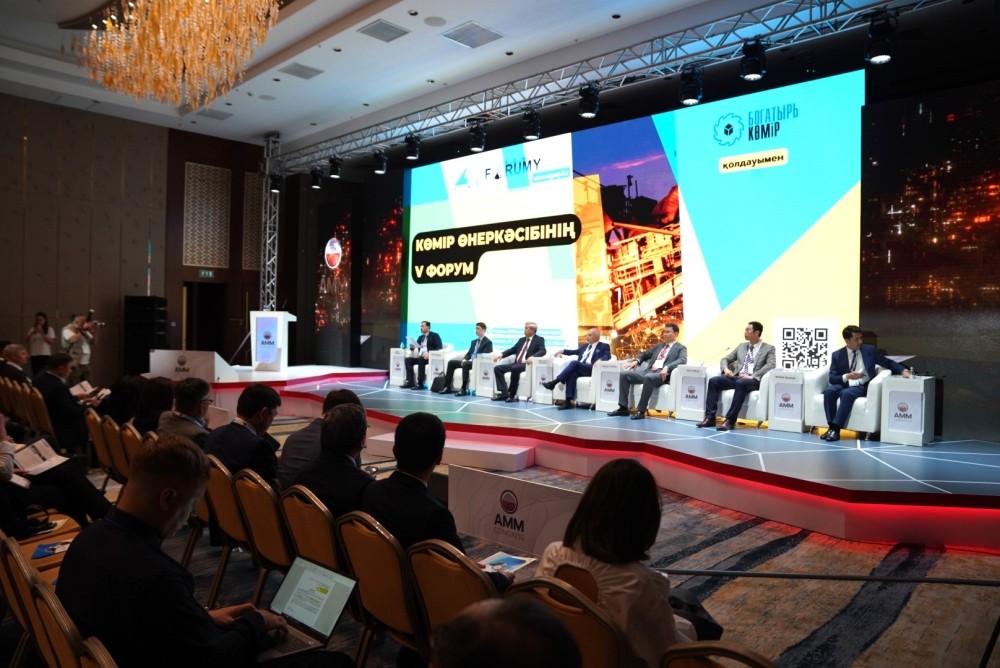
During the 5th Coal Industry Forum at the 14th International Mining and Metallurgical Congress on 6-7 June in Astana, Yerzhan Yelekeyev, Chairman of the Management Board of Kazakh Invest, presented new investment opportunities to produce high-tech goods from Kazakh coal.

Substantiating his claim that the coal chemistry industry has the means to help grow Kazakhstan’s chemical industry and developments in manufacturing, Yelekeyev stated:

“Having an extensive resource base and an advantageous geographical location, we must realize the potential of the coal chemical industry. In total, more than 400 different products can be obtained by processing coal, the cost of which is 20-25 times higher than the cost of coal itself. With the deep processing of coal, it is possible to obtain products that cost 25-30 times more than raw materials. Currently, the share of coal products in Kazakhstan is 3%; an indicator of the low level of development of coal chemistry. The price of coal is lower and more stable than that of gas and oil. According to preliminary calculations, the unused potential is  worth $25 billion.”

In his presentation on “Partnership of Kazakhstan and the European Union in the field of critical minerals,” Timur Izbasarov, Deputy Director of the Strategy Department at Kazakh Invest, added that according to the World Bank, Kazakhstan has over 5,000 undiscovered deposits valued at over 46 trillion US dollars, and hence, significant opportunities for investment and cooperation in the field waiting to be untapped.