• KGS/USD = 0.01144 0%
  • KZT/USD = 0.00194 -0%
  • TJS/USD = 0.10883 0%
  • UZS/USD = 0.00008 0%
  • TMT/USD = 0.28571 0%
  • KGS/USD = 0.01144 0%
  • KZT/USD = 0.00194 -0%
  • TJS/USD = 0.10883 0%
  • UZS/USD = 0.00008 0%
  • TMT/USD = 0.28571 0%
  • KGS/USD = 0.01144 0%
  • KZT/USD = 0.00194 -0%
  • TJS/USD = 0.10883 0%
  • UZS/USD = 0.00008 0%
  • TMT/USD = 0.28571 0%
  • KGS/USD = 0.01144 0%
  • KZT/USD = 0.00194 -0%
  • TJS/USD = 0.10883 0%
  • UZS/USD = 0.00008 0%
  • TMT/USD = 0.28571 0%
  • KGS/USD = 0.01144 0%
  • KZT/USD = 0.00194 -0%
  • TJS/USD = 0.10883 0%
  • UZS/USD = 0.00008 0%
  • TMT/USD = 0.28571 0%
  • KGS/USD = 0.01144 0%
  • KZT/USD = 0.00194 -0%
  • TJS/USD = 0.10883 0%
  • UZS/USD = 0.00008 0%
  • TMT/USD = 0.28571 0%
  • KGS/USD = 0.01144 0%
  • KZT/USD = 0.00194 -0%
  • TJS/USD = 0.10883 0%
  • UZS/USD = 0.00008 0%
  • TMT/USD = 0.28571 0%
  • KGS/USD = 0.01144 0%
  • KZT/USD = 0.00194 -0%
  • TJS/USD = 0.10883 0%
  • UZS/USD = 0.00008 0%
  • TMT/USD = 0.28571 0%
16 December 2025

Islamic Development Bank Supports Rogun HPP Project in Tajikistan

News agency Khovar has reported on the Islamic Development Bank (IDB) support in the construction of the Rogun Hydropower Plant (HPP) in Tajikistan. Dr. Muhammad Suleiman Al-Jasser, President of the IDB Group, announced this after a meeting with Tajik President, Emomali Rahmon. The meeting detailed Tajikistan’s history towards economic development and outlined the country’s priorities for the future.

“The Islamic Development Bank has cooperated closely and successfully with Tajikistan for many years. Financing under this agreement has amounted to more than $900 million. We are satisfied with the current level of cooperation. One of the projects under consideration today is support for the Rogun Hydroelectric Power Plant project. The Islamic Development Bank has decided to sign an agreement with the Government of the Republic of Tajikistan,” Muhammad Suleiman Al-Jasser stated.

Al-Jasser noted that IDB funds allocated to Tajikistan are directed to energy, education, industry, agriculture, transportation, and other key economic sectors. “We are confident that the current cooperation will be expanded and will serve as an invitation to other participants and investors,” Al-Jasser concluded.

By 2025, All of Kazakhstan Will Have Access to Clean Drinking Water

The Prime Minister of Kazakhstan, Olzhas Bektenov, has said at a government meeting where issues of water supply services to urban and rural settlements were addressed that the entire population will have access to clean drinking water within eighteen months.

At the end of last year, access to water supply services in Kazakhstan’s cities amounted to 98.9%, and in rural settlements, 96.6%. Full coverage of the urban population has been achieved in nine regions, with the lowest level of provision noted in the Abai and Pavlodar regions. To improve the situation in the regions with low indicators, funds are being allocated on a priority basis.

Twenty-nine projects to construct and reconstruct pipelines in nine oblasts are being implemented, with plans to reconstruct and develop 2,000 kilometers of water pipelines, providing water supply to 437 settlements. A connection to a centralized water supply will be made in 44 of these, with a total population of 92,000 people. Five projects are under development and will be implemented after receiving state expertise; their implementation will improve the water supply in 200 settlements.

In 2024, 218 billion tenge was bookmarked from the republican budget to fund the construction and reconstruction of water supply and sewage systems.

The Prime Minister emphasized that by the end of 2025, 100% of the population must have access to quality drinking water. “This is one of the most socially important tasks. Only one-and-a-half-years are left for its fulfillment. Despite the high percentage of fulfillment, akimats (local authorities) should intensify work to achieve the plans to bring the relevant infrastructure to villages and towns. All works on the water supply should be prioritized. The implementation of water supply networks within settlements should be synchronized with the plans to bring the infrastructure of group water conduits to the borders of villages”, said Bektenov.

Price of Liquefied Petroleum Gas to Rise Again in Kazakhstan

The Ministry of Energy of Kazakhstan has published for public discussion, a draft by the Minister of Energy to increase the price of liquefied petroleum gas (LPG) from July 1.

The maximum wholesale price of one ton of LPG will be increased from the current 40,320 tenge to 45,158 tenge, and the maximum retail price will increase slightly — by 5-8 tenge per liter, depending on the region.

Cheaper than gasoline, LPG is the most popular fuel for vehicle owners in Kazakhstan. A sharp hike in the price of LPG was met with nationwide objection in January, triggering mass protests in Zhanaozen which spread nationwide and turned violent in Almaty and Astana.

The ministry issued several reasons for what will be an unpopular move.

First, the price of liquefied petroleum gas is much lower than the cost of its production. The production cost of LPG varies from 60 thousand to 70 thousand tenge per ton, whereas the current maximum wholesale price is 40,320 tenge per ton.

Second, LPG consumption in Kazakhstan increases year on year. In 2023, it increased by 400 thousand tons, or 28%, compared to 2022. Last year, LPG consumption volumes amounted to 2.2 million tons compared to 1.8 million tons in 2022. Increasing consumption and the unprofitability of LPG production due to low prices have led to a decrease in the production of the fuel and its shortage in the regions. Today the deficit of LPG stands at 20-25%.

Third, due to unprofitability, manufacturers are increasingly losing interest in LPG production and switching instead, to more profitable products. For the same reason, investors are also reluctant to invest in its production.

Fourth, the price of LPG in Kazakhstan, between 54-86 tenge per litre depending on the region, is the lowest among former Soviet states. For comparison, the price per litre in Russia is equivalent to 132 tenge; in Kyrgyzstan, 159 tenge; in Azerbaijan, 171 tenge; and in Tajikistan, 273 tenge.

According to analysts, in 2024, LPG consumption in Kazakhstan will increase by another 200 thousand tons and reach 2.4 million tons, leading to a potential shortage of 30-40%

Kyrgyzstan and IFC Sign Agreement on Two Solar Power Plant Projects

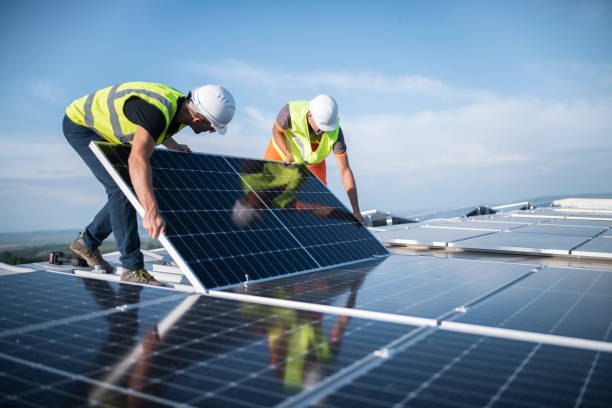
On 10 June, the Ministry of Energy and the Ministry of Economy and Commerce of the Kyrgyz Republic signed an agreement with the International Finance Corporation (IFC) on the implementation of two solar power plant projects in the country’s Batken and Talas regions.

According to the Ministry of Economy and Commerce, the agreement is a continuation of cooperation between the Kyrgyz government and IFC on the construction of solar power plants with a total capacity of up to 500 MW in Kyrgyzstan.

In the first phase of this collaboration, IFC helped the Kyrgyz Republic conduct a comprehensive analysis for a pilot project for a 100-150 MW solar power plant planned in the Kochkor district of Naryn region, and is currently helping to attract private investors in its implementation.

The second stage will include two solar plants, each with a capacity of 100-150 MW, in the Batken and Talas regions.


Uzbekistan Plans to Earn $300 Million a Year From Medical Tourism

Nuz.uz reports that Uzbekistan plans to earn $300 million annually from medical services and tourism. At the meeting chaired by President Mirziyoyev, the program “Medical Hospitality” was announced, under which the budget will cover the costs of private clinics for international certification and participation in foreign exhibitions. Doctors traveling abroad to advertise and provide diagnostic services will be reimbursed for transportation and accommodation expenses. In addition, value-added tax will be refunded to foreign patients visiting clinics.

“Last year, more than 60,000 foreign tourists were treated in 86 sanatoriums and medical institutions of the country. Suppose the number of such institutions is increased. In that case, it is possible to attract an additional 100,000 foreign patients, making it possible to earn $300 million a year from medical services,” the publication notes.

Zumrad Bekatova, a member of the Legislative Chamber of the Oliy Majlis, said that Uzbekistan is paying special attention to expanding the network of private medical organizations, diversifying their activities, and strengthening their material and technical base. However, despite these efforts, only two private clinics have received international certification, and the share of foreign patients has yet to exceed 12%.

Donor Coordination Committee Established for Kyrgyzstan’s Kambarata HPP-1 Project

The Kyrgyz Republic International Energy Investment Forum, held in Vienna, on June 10, concluded with the establishment of a Donor Coordination Committee for the construction of Kambarata HPP-1 hydropower plant in Kyrgyzstan.

The Kyrgyz Cabinet of Ministers said that the doors are open to interested parties but to date, the committee comprises major international financial institutions and development partners, including the World Bank, the OPEC Fund, the Asian Development Bank, the Asian Infrastructure Investment Bank, the Islamic Development Bank, and the European Bank for Reconstruction and Development.

The Committee’s first meeting is scheduled for autumn this year.

An inter-ministerial agreement on cooperation on the Kambarata HPP-1 project was also signed by the Ministries of Energy of the Kyrgyz Republic, Kazakhstan, and Uzbekistan.

Summarizing the outcome of the forum, Chairman of the Cabinet of Ministers of the Kyrgyz Republic Akylbek Japarov announced: “We have made significant progress in establishing contacts and a common understanding of further actions. I am confident that the created Donor Coordination Committee will be a continuation of actions to implement the national project — the construction of Kambarata HPP-1.”

Japarov told forum participants that “According to experts, by 2050 the population in Central Asia will increase by 27%, the demand for food by 35%, and the consumption of drinking water by 50%. At the same time, water is the main artery of life in the countries of the Central Asian region. Countries located at the sources of large rivers account for 80.7% of the region’s total water flow.”

Regarding different countries’ priorities for water usage – downstream Kazakhstan and Uzbekistan use water in irrigation mode in summer, and upstream Kyrgyzstan and Tajikistan, in energy mode in winter -he warned “This situation affects the energy and food security in the region.”

He then provided a more detailed report on the Kambarata HPP-1 project: “Kambarata HPP-1 is located at the source of the glaciers. Effective operation of this power plant will allow the accumulation and rational use of water resources of the Toktogul reservoir. The Kambarata HPP-1 construction project has broad economic, environmental, and social benefits and prospects for both Kyrgyzstan and the Central Asian region. The project will provide the Kyrgyz Republic and Central Asia with clean energy at the lowest cost, which entails lower costs of the energy transition in the region. Electricity generation at hydroelectric power plants will reduce emissions of pollutants into the atmosphere.”

Reiterating the project’s key importance in meeting the growing demand for energy and increasing energy security in the region, Japarov continued: “The power plant will be sited in the upper reaches of the Naryn River. Its installed capacity will be 1,860 megawatts with an average annual generation of 5.6 billion kilowatt-hours of electricity. The preliminary construction estimate is more than $4 billion. The master plan of Kambarata HPP-1 includes a rock-fill dam, a hydroelectric power plant building with four hydraulic units, construction and operational spillways and transport tunnels, a residential village [for personnel], a reservoir and water treatment facilities.”

He confirmed that the project will have no negative impact on the region’s environment and ecology, and to further construction of the Kambarata HPP-1, the Cabinet of Ministers has pledged  $500 million for the period 2024-2030.

He concluded by emphasizing that the Kambarata HPP-1 project has been assigned the status of “national project” and called on international financial institutions, investors and companies to take part in its implementation.