• KGS/USD = 0.01144 0%
  • KZT/USD = 0.00196 -0%
  • TJS/USD = 0.10899 -0%
  • UZS/USD = 0.00008 -0%
  • TMT/USD = 0.28490 0%
  • KGS/USD = 0.01144 0%
  • KZT/USD = 0.00196 -0%
  • TJS/USD = 0.10899 -0%
  • UZS/USD = 0.00008 -0%
  • TMT/USD = 0.28490 0%
  • KGS/USD = 0.01144 0%
  • KZT/USD = 0.00196 -0%
  • TJS/USD = 0.10899 -0%
  • UZS/USD = 0.00008 -0%
  • TMT/USD = 0.28490 0%
  • KGS/USD = 0.01144 0%
  • KZT/USD = 0.00196 -0%
  • TJS/USD = 0.10899 -0%
  • UZS/USD = 0.00008 -0%
  • TMT/USD = 0.28490 0%
  • KGS/USD = 0.01144 0%
  • KZT/USD = 0.00196 -0%
  • TJS/USD = 0.10899 -0%
  • UZS/USD = 0.00008 -0%
  • TMT/USD = 0.28490 0%
  • KGS/USD = 0.01144 0%
  • KZT/USD = 0.00196 -0%
  • TJS/USD = 0.10899 -0%
  • UZS/USD = 0.00008 -0%
  • TMT/USD = 0.28490 0%
  • KGS/USD = 0.01144 0%
  • KZT/USD = 0.00196 -0%
  • TJS/USD = 0.10899 -0%
  • UZS/USD = 0.00008 -0%
  • TMT/USD = 0.28490 0%
  • KGS/USD = 0.01144 0%
  • KZT/USD = 0.00196 -0%
  • TJS/USD = 0.10899 -0%
  • UZS/USD = 0.00008 -0%
  • TMT/USD = 0.28490 0%
08 December 2025

Tajik Schoolchildren to Be Taught English From Third Grade

Children in Tajikistan will now start to learn English from the third grade. Local media is reporting that teachers in the country will be given extra training ahead of this change.

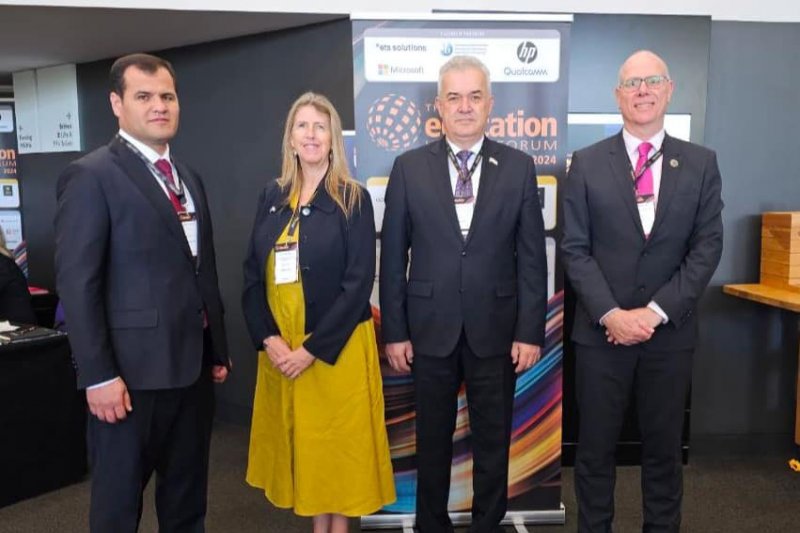
On 20 May a delegation from Tajikistan took part in the Education World Forum in London. In September the British Council’s regional director Adrian Chadwick will visit Dushanbe to discuss potential new projects in Tajikistan.

Kyrgyzstan President Announces New Social Welfare Measures

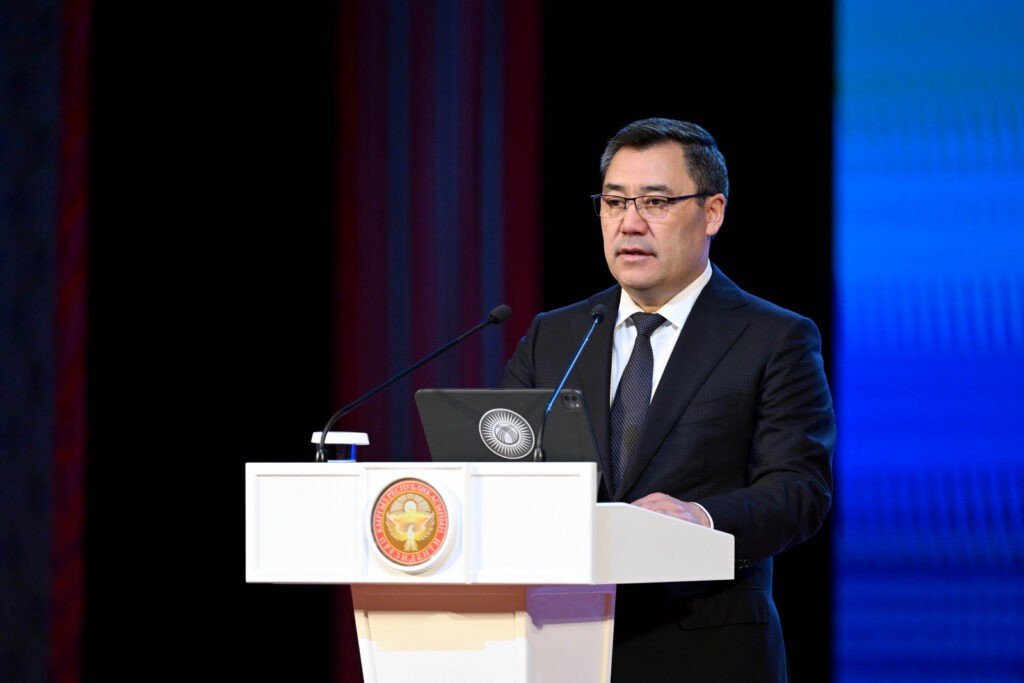
In his address at the National Congress on Social Mobilization on 22 May, Kyrgyzstan President Sadyr Japarov announced several initiatives aimed at raising the standard of living of the country’s citizens.

The event was attended by participants of a nationwide Social Contract program through which the Ministry of Labor, Social Security and Migration provides grants of 100 thousand soms/ $1,130, to low-income families wishing to open small businesses.

Launched three years ago, the program has enabled some 13,000 people to develop their businesses, created jobs, and generally enhanced the livelihoods of families and local communities. Highly effective, the initiative has to date, benefited over 70,000 people across the country.

In addition to a government allocation of 2 billion soms to maintain the program, the president announced plans to boost the economy and improve the wellbeing of Kyrgyzstan citizens, by establishing new enterprises, industrial facilities and in turn, more jobs.

President Japarov stated that the Cabinet of Ministers and local authorities had been tasked to support entrepreneurs at all levels from small workshops, fruit processing plants and retail outlets to tourist bed and breakfast services and cafes.

To ease the financial burden on small and medium-sized businesses, the president announced a reduction in social tax from 27 percent to 12 percent.

In addition, the president has introduced a strict moratorium on inspections of businesses to further support entrepreneurs.

Referencing amendments to the Constitution made in 2021 which guaranteed that pensions would not fall below the minimum living wage, the head of state announced that from 1 October, 2024, pensions in Kyrgyzstan will exceed the minimum living wage of 6,800 soms/ $77.

The president confirmed the government’s commitment to its provision affordable housing and reported that the construction of multi-storey buildings through the State Mortgage Company has enabled public sector employees and private individuals alike, to obtain mortgages on apartments. He continued by stating that 11,495 apartments are currently being built across the country and the construction of 12,000 apartments will begin before the end of this year.

In the healthcare sector, the president has instructed that from 1 July, the number of doctors participating in the program to locate medics in remote areas, small towns, and villages, is to increase from 200 to 500.

Regarding the shortage of doctors in the regions, the president has approved the introduction of an additional monthly payment of 20,000 soms/ $226 to paediatricians, neonatologists, surgeons, anaesthesiologists, and resuscitation doctors working outside Bishkek

Bishkek Thermal Plant Set For Upgrade With Eurasian Development Bank Funds

The Eurasian Development Bank and JSC “Electric Stations” have signed an agreement to buy equipment for Bishkek’s thermal power plant.

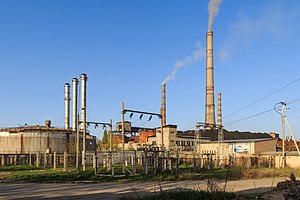
The project, financed by the EDB’s Technical Assistance Fund, aims to prevent another accident at the plant, after a serious fault that occurred on 2 February this year. Five people were injured by the incident; schools and kindergartens in the capital were temporarily shut, and there were outages in heating and hot water for six days.

The new equipment will ensure a reliable and uninterrupted power supply for Bishkek residents, including heating and hot water, which were most affected in February. The EDB has commented: “The agreement provides for the purchase of the necessary equipment, including low-voltage switchgear that will protect against overloads and short circuits in the networks. The total funding for the project is about US$0.5 million. the total amount of financing for the project is about USD 0.5 million. The project is financed on the terms of irrevocable and non-repayable grant”.

The Bishkek thermal plant plays a key role in Kyrgyz life, generating 14% of all electricity in the country, and providing heat to almost two-thirds of the capital.

“We aim not only to restore the functioning of the energy infrastructure but also to improve conditions for the future development and modernization of the city’s energy supply system,” said the bank’s senior managing director Denis Ilyin.

Turkmen Scientists Find Way to Make Depleted Gas Wells More Productive

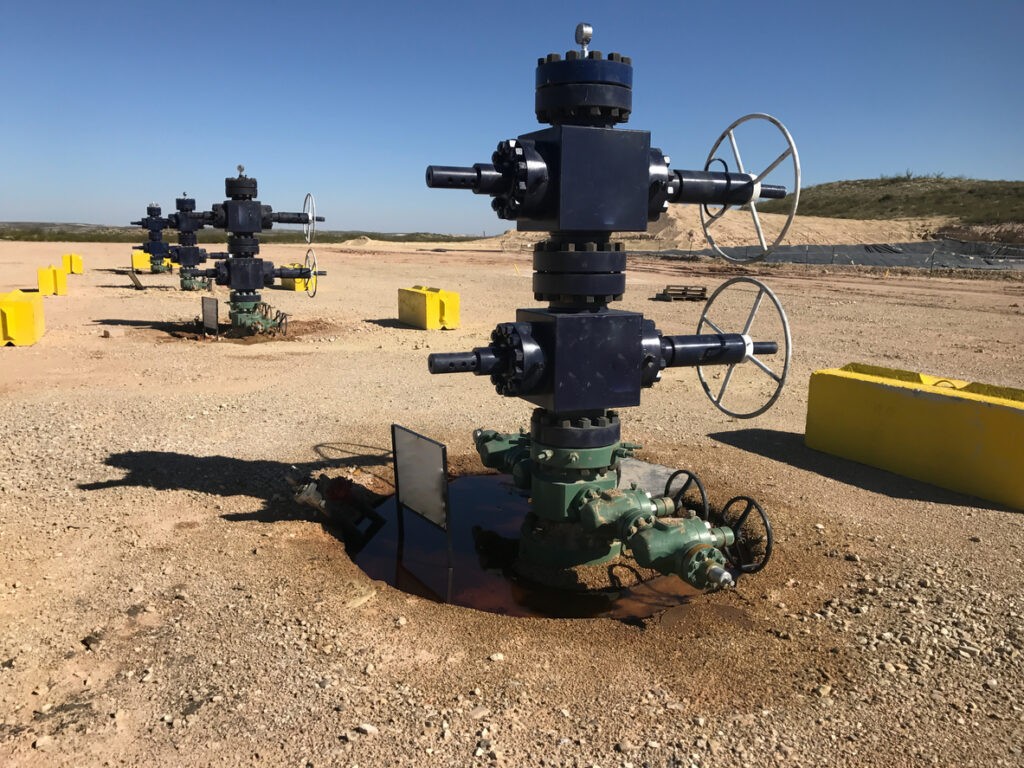
The government of Turkmenistan has reported that a group of scientists working for the state company Türkmengaz have developed a new technology to increase the productivity of depleted gas wells.

The technology, which uses hydrogen thermobaric chemicals, impacts the reservoir and increases production of oil, gas, and condensate. This allows for more efficient use of resources.

U.S. and Kazakhstan Discuss Shared Values at High-Level Dialogue on Human Rights and Democratic Reforms

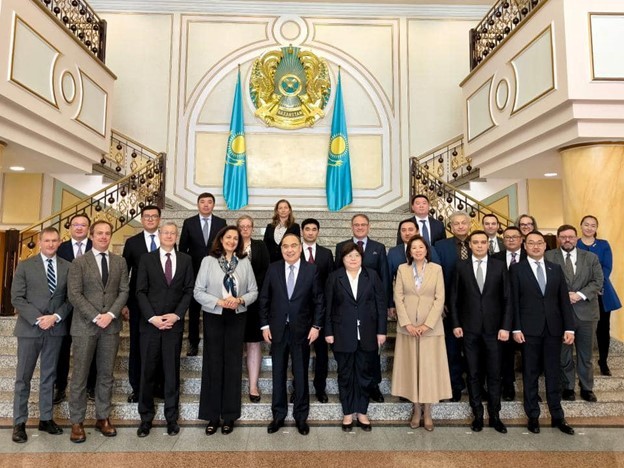
The United States and the Republic of Kazakhstan held their third annual High-Level Dialogue on Human Rights and Democratic Reforms on May 20, 2024, in Astana, Kazakhstan. The U.S. delegation was headed by Under Secretary of State for Civilian Security, Democracy, and Human Rights Uzra Zeya, while the Kazakh delegation was led by Ambassador Erzhan Kazykhan, Assistant to the President of Kazakhstan for External Affairs.

As in prior Dialogues, the United States and the Republic of Kazakhstan discussed their shared commitment to advancing human rights, rule of law, freedom of expression, and the protection of members of vulnerable and marginalized populations.

In this context, The United States “reaffirmed its strong support for the full implementation of President Tokayev’s reform agenda and commended the Republic of Kazakhstan for progress made in the advancement of human rights including the passage of the April 2024 law recriminalizing domestic violence, a very important step in protecting survivors” while encouraging “advancement of Kazakhstan’s reform efforts with the full participation of, and in consultation with, civil society partners for transparency and accountability”.

The United States stated that “Respect for human rights and fundamental freedoms are integral to a prosperous, vibrant “New Kazakhstan,” where independent media, civil society groups, and political parties can operate freely, without undue restrictions”.

Multilateral cooperations, including with the United Nations High Commissioner for Refugees and C5+1 Platform were also discussed.

The full press release of the US Department of State can be found here.

What Does Raisi’s Death Mean for the Caspian Sea Region?

By Robert M. Cutler

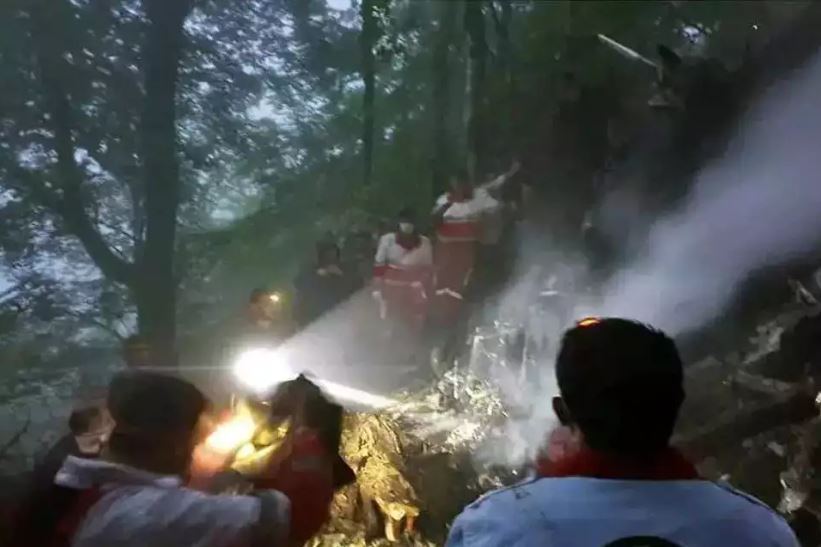
The death of Iranian President Ebrahim Raisi in a helicopter accident on May 19 will have significant effects on Iranian domestic politics and foreign policy. These include not only Iran’s relations with Armenia and Azerbaijan directly, but also indirectly through the Trans-Caspian International Trade Route (TITR, also called the “Middle Corridor”) and the International North–South Transit Corridor (INSTC). Despite conspiracy theories, the only reasonable alternative hypothesis to an accidental crash is that the pilot intentionally ran the helicopter into the mountain head-on at full speed. Both possibilities may be subsumed under the category “Act of God”.

Raisi was working to normalize relations with Azerbaijan and was seen as a potential – even likely – future Supreme Leader of Iran, succeeding the 85-year-old Ali Khamenei, who is in poor health. Now, however, it is not out of the question that his death leads to a reorientation of Tehran’s foreign policy and a wave of radicalization. The outcome will depend upon the obscure machinations of the theocratic and security-service elite, for which the formal organizational and constitutional arrangements set the framework but do not determine the result.

The Iranian president is not the most powerful individual in the country’s political system, but he is still influential. Raisi had sought to improve ties with Azerbaijan, including water projects on the Aras River and discussions about transportation links. These initiatives may now face delays or even reversals. Yerevan’s strategic significance for Tehran’s relationship with Moscow and its broader regional ambitions will not diminish; indeed, their bilateral military-industrial cooperation has only grown since Russia’s re-invigoration of its war of aggression against Ukraine in February 2022. At the same time, Tehran’s relations with Baku are more complicated, for myriad present-day and historical reasons, not least but not only concerning the Azerbaijani minority in Iran.


The South Caucasus and Trans-Caspian Implications

Armenia and Azerbaijan are nevertheless persevering in their bilaterally-based practical cooperation and peace negotiations, now proceeding without third-party mediation. The most recent high-level meeting in this process took place between their respective foreign ministers in Almaty on May 10–11. These significant discussions followed talks between them in Berlin in February of this year, and they took place in the context of ongoing efforts to delimit and demarcate the two countries’ common border.

Delimitation refers to drawing and describing lines on maps, whereas demarcation is the process of installing physical markers on the territory. Demarcation has already begun in the sensitive Tovuz region, and the Russian contingent assisting Armenian border guards under a bilateral agreement has already been withdrawn. In April, as a result of this process, Armenia returned four villages to Azerbaijan.

Unresolved issues involve territorial claims against Azerbaijan in Armenia’s constitution and the reopening of regional transit routes. Armenian Prime Minister Nikol Pashinyan’s initiative for the necessary constitutional reforms, along with his border-demarcation initiatives and continuing peace negotiations, have provoked anti-government protests in Armenia, fueled by the irredentist and xenophobic segments of the diaspora, which are the best established, most lavishly funded, and most vocal. The Pashinyan government is, as a matter of state policy, trying to mobilize other segments of the Armenian diaspora in favor of a “state-centered, pro-state” approach. They have a lot of work in front of them.

The reopening of the Zangezur Corridor, across southern Armenia from Azerbaijan proper to its exclave Nakhchivan (which has a border with Turkey), would not just improve commerce and communications between these two. It would also improve Russia’s connections with Turkey via Azerbaijani roads and rail, as well as further promote the development of the TITR. Raisi’s death, by contrast, complicates the implementation of the INSTC, which passes through Azerbaijan from Russia to Iran, and then southward to the Iranian port of Chabahar, whence shipping connections are possible to the rest of the world and India in particular.


More Problems for the North–South Corridor

The leadership vacuum created by Raisi’s unexpected death also puts into question the degree of commitment of the government to the International North–South Transport Corridor (INSTC), which relies on Azerbaijan as a key link between Russia and Iran. The attendant uncertainty around the political succession means that there could be delays in decision-making processes, stalling negotiations and potentially even reversing agreements critical to advancing the INSTC.

As mentioned above, Raisi was seen as a stabilizing figure who sought to work with Azerbaijan, which is a crucial partner in the INSTC. A less committed successor president, or one even hostile to Baku, could strain relations and restrain the corridor’s progress. Political infighting and potential public unrest could also delay the implementation of infrastructure projects and international agreements. Even if the semblance of political stability is re-established, still investors and international partners might hesitate to provide necessary funding.

For all these reasons, Raisi’s death and the succession crisis around it threaten to place further obstacles to the implementation of the International North–South Transport Corridor (INSTC), an infrastructure scheme that would link Russia to Iran and potentially to India via the Chabahar port in Iran’s south-east.


Conclusion

Indeed, Raisi’s death comes just within days of India’s signature of a contract with Iran to develop further the Chabahar project, which has languished for over a decade. Within hours of that contract being signed, the U.S. warned that participating companies may face sanctions. To be honest, infrastructure projects in eastern Iran are never good bets: just look at the Iran–Pakistan–India natural gas pipeline. The Azerbaijani-driven “Middle Corridor” (which technically used to designate just the trans-Caspian connection with Kazakhstan) and the extended TITR have much better chances to be realized and, indeed, are already under way with strong support from the international financial institutions.


Robert M. Cutler has written and consulted on Central Asian affairs for over 30 years at all levels. He was a founding member of the Central Eurasian Studies Society’s executive board and founding editor of its Perspectives publication. He has written for Asia Times, Foreign Policy Magazine, The National Interest, Euractiv, Radio Free Europe, National Post (Toronto), FSU Oil & Gas Monitor, and many other outlets. He directs the NATO Association of Canada’s Energy Security Program, where he is also senior fellow, and is a practitioner member at the University of Waterloo’s Institute for Complexity and Innovation. Educated at MIT, the Graduate Institute of International Studies (Geneva), and the University of Michigan, he was for many years a senior researcher at Carleton University’s Institute of European, Russian, and Eurasian Studies, and is past chairman of the Montreal Press Club’s Board of Directors.