• KGS/USD = 0.01144 0%
  • KZT/USD = 0.00194 0%
  • TJS/USD = 0.10872 0.18%
  • UZS/USD = 0.00008 0%
  • TMT/USD = 0.28571 0%
  • KGS/USD = 0.01144 0%
  • KZT/USD = 0.00194 0%
  • TJS/USD = 0.10872 0.18%
  • UZS/USD = 0.00008 0%
  • TMT/USD = 0.28571 0%
  • KGS/USD = 0.01144 0%
  • KZT/USD = 0.00194 0%
  • TJS/USD = 0.10872 0.18%
  • UZS/USD = 0.00008 0%
  • TMT/USD = 0.28571 0%
  • KGS/USD = 0.01144 0%
  • KZT/USD = 0.00194 0%
  • TJS/USD = 0.10872 0.18%
  • UZS/USD = 0.00008 0%
  • TMT/USD = 0.28571 0%
  • KGS/USD = 0.01144 0%
  • KZT/USD = 0.00194 0%
  • TJS/USD = 0.10872 0.18%
  • UZS/USD = 0.00008 0%
  • TMT/USD = 0.28571 0%
  • KGS/USD = 0.01144 0%
  • KZT/USD = 0.00194 0%
  • TJS/USD = 0.10872 0.18%
  • UZS/USD = 0.00008 0%
  • TMT/USD = 0.28571 0%
  • KGS/USD = 0.01144 0%
  • KZT/USD = 0.00194 0%
  • TJS/USD = 0.10872 0.18%
  • UZS/USD = 0.00008 0%
  • TMT/USD = 0.28571 0%
  • KGS/USD = 0.01144 0%
  • KZT/USD = 0.00194 0%
  • TJS/USD = 0.10872 0.18%
  • UZS/USD = 0.00008 0%
  • TMT/USD = 0.28571 0%
22 December 2025

Kazakhstan Charges Former Minister Yerlan Turgumbayev With Abuse of Power

Kazakhstan’s General Prosecutor’s Office has confirmed its detention of a former high-ranking police officer. Yerlan Turgumbayev, the country’s former minister of internal affairs, has been charged with abuse of power, resulting in grave consequences, during the public unrest and political upheaval in January 2022.

“The Prosecutor General’s Office continues to investigate criminal cases related to the January 2022 events. On April 29, ex-Minister of Internal Affairs Yerlan Turgumbayev was detained for abuse of power and official authority that caused grave consequences,” the prosecutor’s office said in an official statement. The office mentioned that the criminal case contains information that includes classified state secrets; therefore, the data, findings and statements included in the pre-trial investigation are not subject to disclosure.

As has already been widely reported, in early 2022 in Kazakhstan thousands of protests were organized across the country, which, when brutally suppressed by government forces, went down in history as Qandy Qantar — “Bloody January.” What began as peaceful anti-government demonstrations turned into uncontrolled riots with numerous casualties among the civilian population. Rapid response forces from the Collective Security Treaty Organization (CSTO), which includes Armenia, Russia, Kyrgyzstan, Belarus and Kazakhstan, were deployed. After the violent suppression of the protests, a number of high-ranking officials were arrested and accused of attempting a coup d’état.

In March 2024, the General Prosecutor’s Office reported that Turgumbayev was being questioned as part of ongoing investigations against security officials for failing to ensure law and order and public security during the January events, as well as for torturing citizens.

Turgumbayev became head of the Interior Ministry in 2019. Before that he headed the police department of Kazakhstan’s largest city, Almaty. In February 2022 he was dismissed from his post and appointed as an adviser to Kazakhstan’s president, Kassym-Jomart Tokayev.
Kyrgyz Authorities Promise Not to Persecute Human Rights Advocates Using Foreign Agent Law

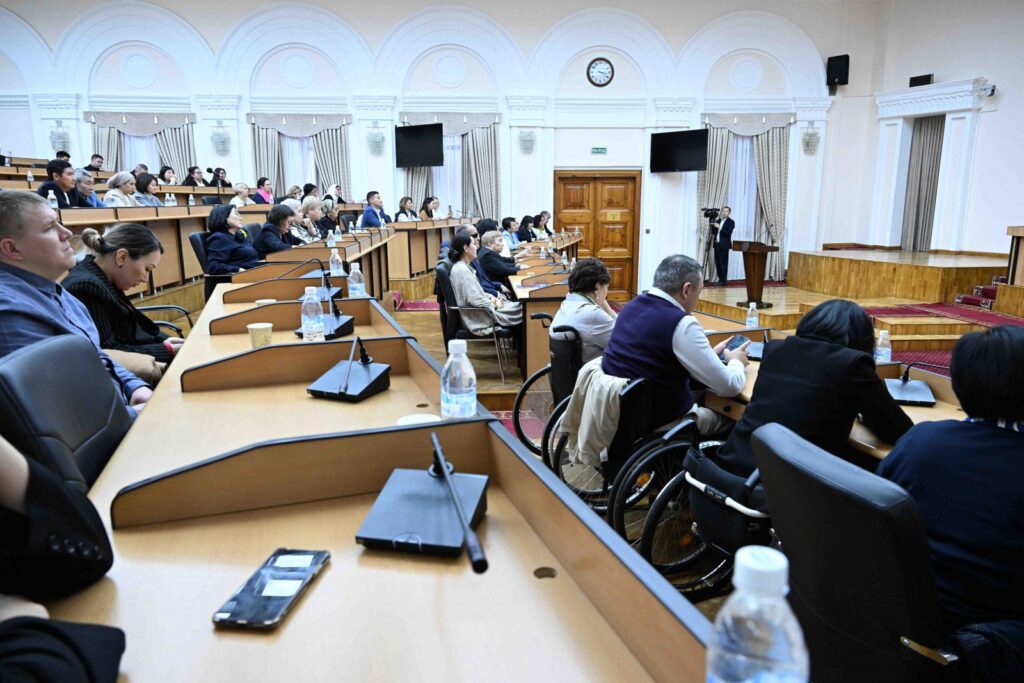
Deputy Chairman of the Cabinet of Ministers of the Kyrgyz Republic, Edil Baisalov met with representatives of domestic non-governmental organizations (NGOs), where he assured participants that the new Foreign Agent’s Law is not aimed at restricting the work of NGOs. All rights and freedoms have been preserved, and human rights defenders can participate in the political life of the country, Baisalov stated.

“The only thing required is to be on the register. This requirement is common around the world. There will be no persecution; no restrictions on activities. We are interested in the activities of [NGOs] for the benefit of our country,” Baisalov said.

Earlier, the Times of Central Asia reported on human rights activists concerns regarding reputational risks, possible interference by government agencies in the work of NGOs, and the risk of mandatory financial audits. There were also questions about the implementation of new legislative guidelines, most of which, according to opponents of the law, are not viable.

The Kyrgyz Ministry of Justice responded to an inquiry from the Times of Central Asia, with officials saying that bylaws and rule-making for the new law are in the works. However, more detailed information will be provided later, when the updates and amendments are submitted for public discussion.

In early April, Kyrgyz President Sadyr Japarov signed the law “On Foreign Representatives,” which sparked a wave of criticism from foreign organizations, foreign governments, and NGOs working in Kyrgyzstan.

Military in Kazakhstan Head Back to Bases After Working to Contain Floods

Kazakh military units that deployed to help with flood control measures in the past weeks are returning to their barracks as the crisis that hit large parts of the country winds down.

“Due to the stabilization of the situation and the drop in water levels, some of the personnel and military equipment of the armed forces are returning to their permanent deployment points from the West Kazakhstan, North Kazakhstan and Akmola regions,” Ruslan Zhangulin, spokesman for the Defense Ministry, said on Monday.

About 2,200 military personnel and 16 pieces of military equipment were involved in flood control as of Saturday, according to Zhangulin.

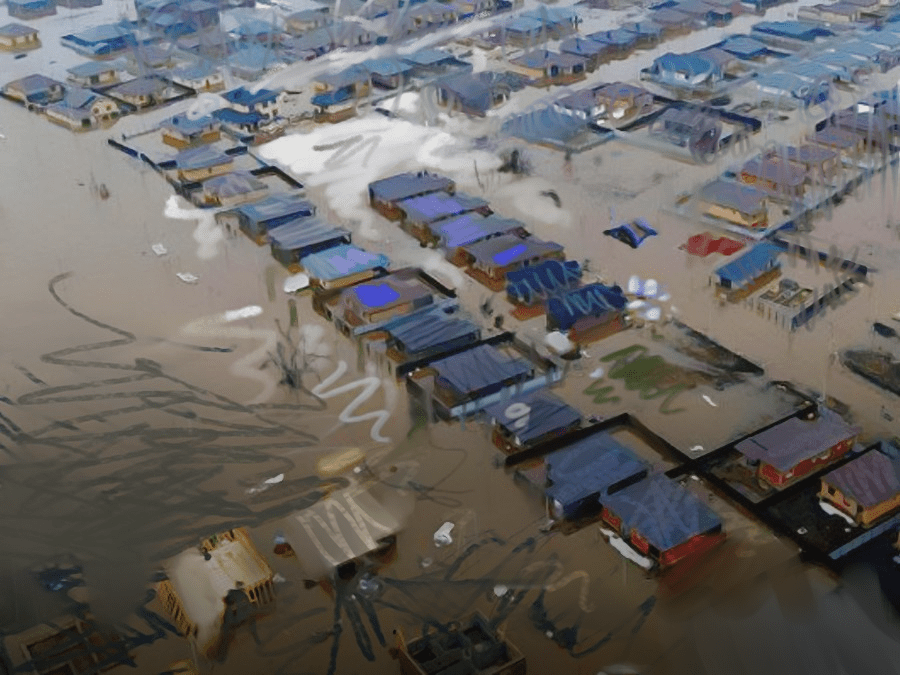
The military was involved in evacuations and building barriers to prevent water flows during the flooding, which began in March and forced the evacuation of more than 100,000 people as winter snow melted with the arrival of warmer temperatures. Nearly 40,000 have since returned to their homes.

President Kassym-Jomart Tokayev described the floods as Kazakhstan’s worst natural disaster in 80 years.

Twenty New Reservoirs for Kazakhstan

The Kazakh Ministry of Water Resources and Irrigation has announced plans to build 20 new reservoirs with a capacity of 2.5 billion cubic meters by 2030.

During the first stage, ten  reservoirs will  be constructed in the regions of Akmola, West Kazakhstan, Zhambyl, Kyzylorda and Zhetisu, and in the south, two more reservoirs will complement that of Kensai-Koskorgan-2 , already in operation in the Turkestan region. The installation of eight new reservoirs will then follow elsewhere.

Once completed, the project will reduce the country’s dependence on water flowing from upstream Kyrgyzstan and China by 25%, help combat drought in southern Kazakhstan and conversely, reduce the threat of flooding in 70 rural settlements with a total population of 137 thousand people. In addition, irrigation will be provided for  a further  250 thousand hectares of farmland.

Plans are also in place to reconstruct 15 existing reservoirs with a total capacity of 1.9 billion cubic meters, with work on six reservoirs in Aktobe, West Kazakhstan, Zhambyl, Kostanay, Turkestan regions and the city of Astana, scheduled to start this year.

Uzbekistan Earns Removal From U.S. Intellectual Property Rights Blacklist

The Office of the U.S. Trade Representative (USTR) has published its Special 301 Report for 2024 on the protection and enforcement of intellectual property. This annual report details the USTR’s review of more than 100 trading partners after significant research and extensive engagement with stakeholders, and the latest iteration holds very positive news for Uzbekistan.

According to the report, the USTR removed Uzbekistan from its Watch List this year because of sustained progress on long-standing issues pertaining to intellectual property (IP) protection and enforcement. For example, Uzbekistan enacted new Customs Code amendments that introduce ex officio authority to suspend and seize counterfeit imports and exports. Uzbekistan also continues to give high-level political attention to IP – including support for and participation in the Intellectual Property Working Group under the U.S.-Central Asia Trade and Investment Framework Agreement.

It was reported that the removal of Ukraine from the watch list was delayed due to the ongoing Russian-Ukrainian war.

The USTR continues to engage trading partners to address IP protection and enforcement concerns, including through bilateral cooperation through Trade and Investment Frameworks (TIFAs) and other mechanisms. Examples of cooperation include deals with Armenia, India, Kazakhstan, Kyrgyzstan, Paraguay, Peru, Tajikistan, Thailand, Turkmenistan, Ukraine, Uzbekistan, and Vietnam.

Kyrgyzstan Looks to Azerbaijan to Replace Russian Fuel

Geopolitical turbulence is forcing Kyrgyz authorities to diversify approaches to securing its fuel and lubricants supplies. Azerbaijan may become one of the sources of oil products.

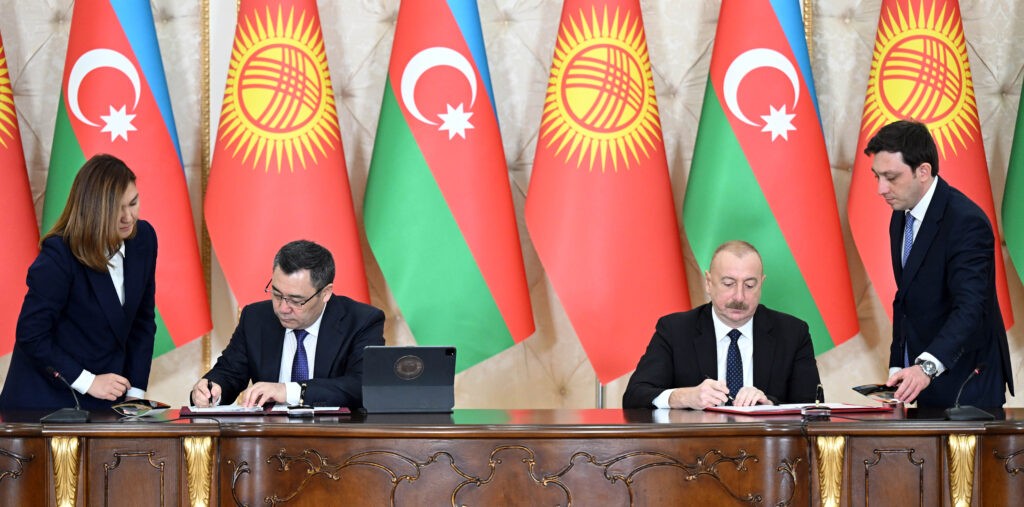
As part of Kyrgyz president Sadyr Zhaparov’s recent visit to Azerbaijan, negotiations were held with representatives of the Baku Oil Refinery, which is run by the state oil company, SOCAR.  The two sides discussed the specific details of Azerbaijani oil supplies to the Junda oil refinery in Kyrgyzstan.

“Azerbaijan is one of the largest exporters of oil products. In the near future, the Junda oil refinery will also start operating in Kyrgyzstan, the demand of which is more than 1 million tons of fuel per year. In this regard, the issues of oil supplies to Kyrgyzstan were discussed with the management of SOCAR. For their part, they are ready to cooperate,” said Kyrgyz energy minister Taalaibek Ibrayev.

Earlier, Kyrgyzstan’s Ministry of Economy and Commerce discussed various risks in the fuel market. The ministry is preparing a package of measures in case of a sharp increase in prices for crude oil and petroleum products.

Kyrgyzstan’s economy minister Daniyar Amangeldiev referenced the agreements between Russia and Kyrgyzstan on duty-free supplies of oil products under the customs rules of the Eurasian Economic Union (EAEU). However, the ministry fears a sharp reduction in imports from Russia — as Ukrainian forces use drones to bomb Russian refining capacity, and western sanctions make repairing and replacing parts more difficult.

Currently, Kyrgyzstan’s local capacity for refining petroleum products doesn’t even cover 5% of domestic demand.