• KGS/USD = 0.01143 -0%
  • KZT/USD = 0.00192 -0%
  • TJS/USD = 0.10820 0.19%
  • UZS/USD = 0.00008 0%
  • TMT/USD = 0.28575 0%
  • KGS/USD = 0.01143 -0%
  • KZT/USD = 0.00192 -0%
  • TJS/USD = 0.10820 0.19%
  • UZS/USD = 0.00008 0%
  • TMT/USD = 0.28575 0%
  • KGS/USD = 0.01143 -0%
  • KZT/USD = 0.00192 -0%
  • TJS/USD = 0.10820 0.19%
  • UZS/USD = 0.00008 0%
  • TMT/USD = 0.28575 0%
  • KGS/USD = 0.01143 -0%
  • KZT/USD = 0.00192 -0%
  • TJS/USD = 0.10820 0.19%
  • UZS/USD = 0.00008 0%
  • TMT/USD = 0.28575 0%
  • KGS/USD = 0.01143 -0%
  • KZT/USD = 0.00192 -0%
  • TJS/USD = 0.10820 0.19%
  • UZS/USD = 0.00008 0%
  • TMT/USD = 0.28575 0%
  • KGS/USD = 0.01143 -0%
  • KZT/USD = 0.00192 -0%
  • TJS/USD = 0.10820 0.19%
  • UZS/USD = 0.00008 0%
  • TMT/USD = 0.28575 0%
  • KGS/USD = 0.01143 -0%
  • KZT/USD = 0.00192 -0%
  • TJS/USD = 0.10820 0.19%
  • UZS/USD = 0.00008 0%
  • TMT/USD = 0.28575 0%
  • KGS/USD = 0.01143 -0%
  • KZT/USD = 0.00192 -0%
  • TJS/USD = 0.10820 0.19%
  • UZS/USD = 0.00008 0%
  • TMT/USD = 0.28575 0%
13 December 2025

Innovating in Uzbekistan: Council Aims to Nurture Young Scientists

TASHKENT, Uzbekistan – Uzbekistan has this to say to any young Uzbek citizen interested in science: Step up and collaborate.

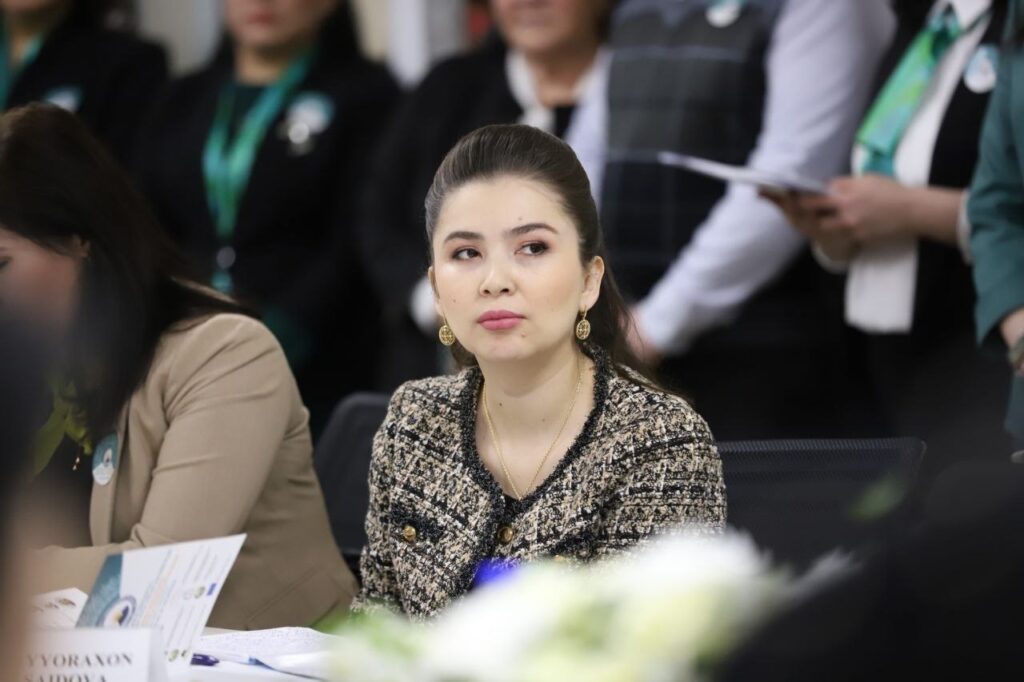
Uzbekistan’s Council of Young Scientists, or CYS, is seeking to expand the ranks of fledgling scientists, overseeing financial and other support as well as programs to attract researchers. The group, founded in 2017 under a presidential initiative, had more than 10,000 members in 2022 and the number has tripled since then, according to director, Sayyora Saidova.

In an interview with The Times of Central Asia, Saidova talked about the surge of interest in science in Uzbekistan.

“Even though the age limit for membership in the organization is 30, scientists under 45 are also members of our organization,” said Saidova, who has a PhD in philosophy. “We are ready to accept every young person interested in science as a member of the organization. In most cases, young scientists apply to CYS to find a scientific supervisor.”

The non-governmental group has organized free online and in-person conferences, offering a platform for young people to publish articles that are checked for quality by an editorial board. Young inventors are encouraged through forums and competitions, and it helps to patent their ideas, Saidova said.

The council introduced the “PhD sari qadam” (Step to PhD) project through social networks to support aspiring female scientists. In its second season, organizers selected a hundred women who were trained for two months on how to complete a PhD. Saidova spoke to The Times of Central Asia, or TCA, after the project’s closing ceremony on April 5.

Dilorom Mamadjanova, a participant in the “PhD sari qadam” project, said Uzbekistan offers adequate opportunities for young researchers.

“In our country, as in countries such as Germany, Finland, and the Czech Republic, doctoral students do not pay any fees,” said Mamadjanova, a PhD student at Tashkent State Pedagogical University. However, she pointed out difficulties.

“In some higher education institutions, doctoral students are required to come to the university every day, [as] daily attendance is taken,” she said in written remarks to TCA. “I believe that doctoral students should spend time in research facilities for their research work – libraries and similar places useful for dissertation work.”

Mamadjanova also noted that there were “small obstacles” when a doctoral student wants to use the database of another university’s library and is required to get a letter of application from his or her own university in order to do so.

“I believe that this is a time-consuming, bureaucratic process,” she said.

Saidova said the Council of Young Scientists cooperates with the Ministry of Innovation, helping young researchers in chemistry and physics get permission to use laboratories and access international literature.

“Although CYS does not have its own fund, it participates in many state and international grants. We directly mediate between international organizations and researchers,” Saidova said. “Last year, the UNICEF organization announced a grant to fight against corruption. CYS brought together all young scientists doing scientific work in this field. The organization directly helped young researchers participate in this grant as an intermediary partner.”

The council wants to publish a magazine to highlight the work of young Uzbek scientists, but lacks funds. Meetings among young scientists from several Central Asian countries have been fruitful. In 2022, Saidova said, Kazakh scientists came to Uzbekistan to conduct surveys.

“Their project aims to work on the problem of ´social understanding´ and ´social disputes´ to strengthen cooperation between young and middle-aged people,” she said.

Dilnozakhоn Tursunova, 26, is a PhD student at the Tashkent Institute of Chemical Technology and a member of the Council of Young Scientists. She won a 2021 award in Uzbekistan for the idea of obtaining bioorganic fertilizer from chicken feathers. She has been conducting research on extracting keratin protein from chicken feathers.

“More than 2.5 tons of feathers are thrown away as waste from a poultry factory in a month,” Tursunova said in a video call with TCA. “It is an urgent issue to reduce the amount of environmental waste and create technology for working without feather waste in poultry factories.”

It is, Tursunova said, an international problem.

Uzbekistan Planning to Abandon State Regulation of Coal Prices

A decision to end Uzbekistan’s price caps on coal has been made against the background of rising costs for electricity. To date, hard coal in the country is a social commodity, which is sold to the population at fixed prices.

Currently, coal is sold under direct contracts to the population, state organizations and thermal power plants, and because it’s included in the list of socially important goods, its price is regulated by the state.

Wholesale and retail prices for coal are considered and approved by the Interdepartmental Commission on Tariffs at least once a year (valid through June 1). Retail coal is sold to the population through coal warehouses run by the state company “Kumir ta’minot”. The Ministry of Energy, together with other agencies, has a mandate to make proposals for the formulation of wholesale and retail prices “based on market principles” within a month.

In 2023 Uzbekistan’s coal production rose to 6.19 million tons, up 15.5% from the previous year. However, imports also increased — 3.1 million tons were purchased from Kazakhstan alone. At the beginning of this year, Uzbek president Shavkat Mirziyoyev instructed domestic mining companies to increase coal production by 22%, taking into account the needs of the population, social sphere and industries. According to experts, the potential of the coal industry is not being properly utilized.

At the same time, coal combustion is the main air pollutant in Uzbekistan, especially in Tashkent, which has recently taken a leading position on the list of cities with the worst air quality. During the fall and winter period, greenhouses on the outskirts and industrial enterprises of the Uzbek capital massively use coal and fuel oil as heating and power generation fuel. This has led to a sharp deterioration of air quality indicators and an increase in respiratory diseases among citizens.

Tajikistan Takes Steps to Punish Sorcerers and Fortune-Tellers

The authorities in Tajikistan plan to introduce punishment in the form of compulsory labor for up to six months for those involved in fortune-telling, sorcery, or witchcraft.

“On the territory of the Republic of Tajikistan, inspection and preventive work is continuing to prevent violations related to non-compliance with the requirements of the Laws of the Republic of Tajikistan, ‘On the Ordering of Traditions, Celebrations and Rites,’ ‘On the Responsibility of Parents for the Education and Upbringing of Children,’ ‘On Freedom of Conscience and Religious Associations,’ and others. In this context, control is exercised over persons practicing witchcraft, illegal religious teachings, Mullo, distributing talismans and amulets, and a single register has been introduced for such persons,” the Interior Ministry said in an official statement.

Police stated that such violations of the law will be punished more severely in future, with the republic’s Interior Ministry considering people engaged in various “occult” businesses as fraudsters. “Persons earning a living by fraud (witchcraft, fortune-telling, distribution of talismans and amulets, illegal religious instruction) are [to be] punished with forced labor for up to six months,” the law enforcement agency stressed.

Back in 2007, against a backdrop of rising energy prices, unemployment and discontent, the government introduced a bill banning witchcraft and fortune-tellers, the visiting of whom was a popular pastime in Tajikistan. Consequently, a law was passed which stated that “those indulging in sorcery and fortune-telling shall be fined between 30 and 40 times the minimum monthly wage.”

Despite this, however, research released in 2012 found 26% of Tajiks still wore talismans for protection. With the belief in jinns and the “evil eye” holding strong, the appeal of the occult has never gone away, and earlier this year it was reported that demand for exorcisms is on the rise.

In March of this year, President Rahmon delivered a speech in which he stated: “People of Tajikistan! The Prophet of Islam strictly forbade going to fortune tellers and sorcerers and said: ‘Whoever goes to a fortune teller, his prayers will not be accepted for 40 days, and if he believes what the fortune teller says, he will leave the faith.'”

Despite Rahmon citing Islamic scripture, however, Tajikistan has always been a country where religion has been viewed as a challenge to the government’s authority, and it pays not to be too devout. In September 2015, clashes over the death in police custody of a man detained for “wearing his beard long” led to seventeen fatalities. In that year alone, the police forcibly shaved 13,000 men’s beards and shuttered over 160 shops selling Muslim clothing. Today, the authorities continue to surveil religious institutions.

CSTO Says It’s Satisfied With Negotiations on Kyrgyz-Tajik Border Demarcation

The Secretary General of the Collective Security Treaty Organization (CTSO), Imangali Tasmagambetov, said in an interview with Tajik media that Tajikistan and Kyrgyzstan are managing to peacefully resolve their border conflict. “The will of the political leadership of the two countries made it possible not only to start and successfully carry out the delimitation of the state border, but also to reach a political solution to the problem,” said Tasmagambetov.

The problem of a common border between the two countries arose after the collapse of the Soviet Union. The two countries both laid claim to lands rich in water resources. Because of this, there are periodic conflicts between citizens of border villages and residents of enclaves. In some cases, domestic clashes have turned into armed clashes with the use of heavy weapons. One of the bloodiest episodes occurred in September 2022. Military and civilian infrastructure on both sides of the border was destroyed and hundreds of people were injured.

The situation in the disputed territories is also monitored by the CSTO, of which Kyrgyzstan and Tajikistan are both members.

Representatives of Kyrgyzstan and Tajikistan meet once or twice a month to agree on the demarcation of the disputed section of the border. The heads of the national security services were also involved in negotiations. To date, the sides have agreed on about 800 kilometers of the common border from the previously disputed 975 kilometers.

Kyrgyz authorities are making every effort to finally resolve the border issue. The head of the State Committee for National Security (SCNS), Kamchibek Tashiyev, commented: “In order not to repeat all this [fighting on the border] we need to resolve the border issue. We are working on it. God willing, we hope it will be resolved. We have found a common language, the work is going on in a good way. As soon as everything is resolved, we will open the border and live in good neighborly relations. Neighbors are not chosen. God gave us a neighbor, and we must live with him in peace and harmony.”

Air Travel Between Tajikistan and Russia Rebounding After Terrorist Attack

Passenger traffic on flights between Tajikistan and Russia decreased after the terrorist attack at Crocus City Hall near Moscow on March 22, which Tajik members of the Islamic State (IS) are suspected of perpetrating. But the news site Avesta reports that the flow of passengers between the two countries is increasing again.

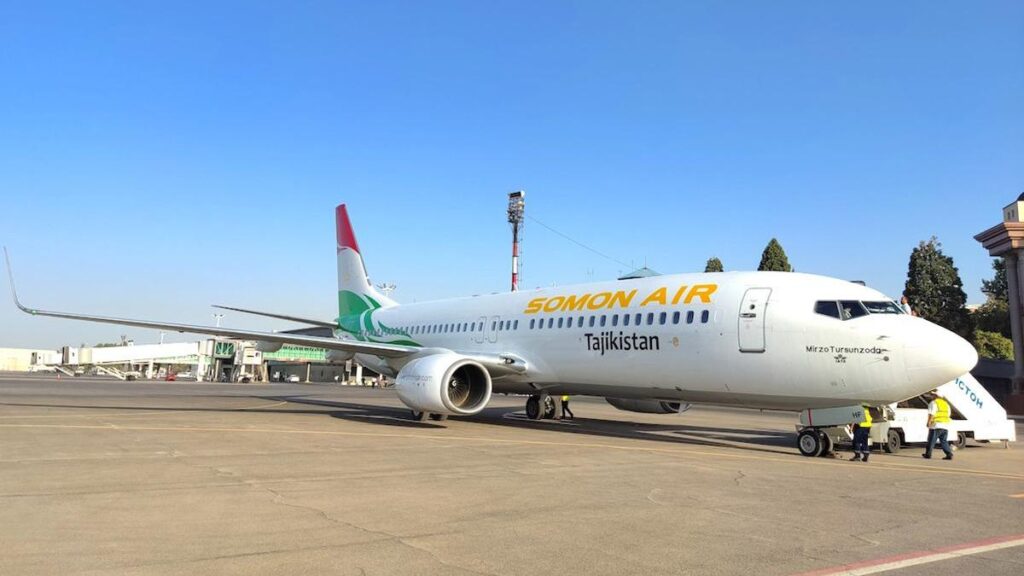
Tajikistan’s national airline Somon Air has commented: “Currently, we are observing an increase in the flow of passengers to and from the Russian Federation compared to two weeks ago. We hope that by the end of the month, the flow of passengers will be fully restored to the previous level.”

Representatives of Somon Air mentioned that they didn’t reduce the number of flights to Russian cities in the wake of the terrorist attack and subsequent political friction, and that the frequency of flights on some routes actually increased. The airline operates approximately 130–140 flights between Tajikistan and Russian cities per month.

Kazakh Military to Receive Transport Plane From Airbus

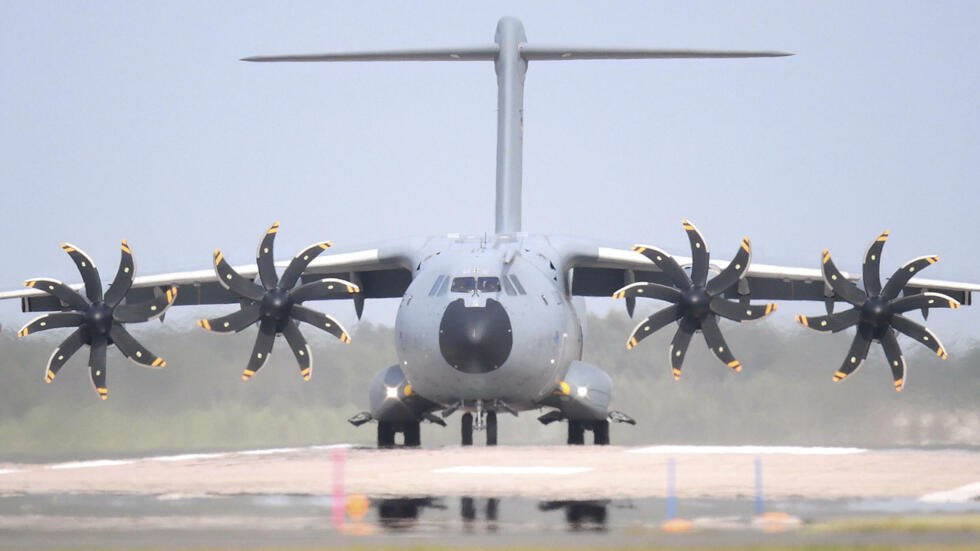
The world’s largest aerospace company Airbus is preparing to deliver its first military transport aircraft to Kazakhstan. The A400M Atlas aircraft will be used by the Ministry of Defense.

Airbus recently published a video on its website which shows how the aircraft has been painted for the Kazakh Ministry of Defense. The airliner will begin test flights in the near future.

In 2021 Kazakhstan placed an order for a pair of four-engine military transport aircraft. It was subsequently reported that the country intends to use these airliners together with other vessels from the military fleet. Kazakhstan will become the ninth country to operate this type of aircraft — and the first foreign customer since 2005.  The A400M is already in use in Turkey, Belgium, Germany, France, Spain, the United Kingdom, Malaysia and Luxembourg.

The first of the two airplanes, bearing tail number MSN139 and service number 21, is intended to be delivered to the country by the end of this year. The second airliner is scheduled for delivery in 2025. The A400M can carry 116 fully equipped paratroopers and 37 tons of cargo at a time. It quickly transforms into a flying hospital with accommodations for 66 stretchers.