• KGS/USD = 0.01144 0%
  • KZT/USD = 0.00210 0%
  • TJS/USD = 0.10528 0%
  • UZS/USD = 0.00008 0%
  • TMT/USD = 0.28571 0%
  • KGS/USD = 0.01144 0%
  • KZT/USD = 0.00210 0%
  • TJS/USD = 0.10528 0%
  • UZS/USD = 0.00008 0%
  • TMT/USD = 0.28571 0%
  • KGS/USD = 0.01144 0%
  • KZT/USD = 0.00210 0%
  • TJS/USD = 0.10528 0%
  • UZS/USD = 0.00008 0%
  • TMT/USD = 0.28571 0%
  • KGS/USD = 0.01144 0%
  • KZT/USD = 0.00210 0%
  • TJS/USD = 0.10528 0%
  • UZS/USD = 0.00008 0%
  • TMT/USD = 0.28571 0%
  • KGS/USD = 0.01144 0%
  • KZT/USD = 0.00210 0%
  • TJS/USD = 0.10528 0%
  • UZS/USD = 0.00008 0%
  • TMT/USD = 0.28571 0%
  • KGS/USD = 0.01144 0%
  • KZT/USD = 0.00210 0%
  • TJS/USD = 0.10528 0%
  • UZS/USD = 0.00008 0%
  • TMT/USD = 0.28571 0%
  • KGS/USD = 0.01144 0%
  • KZT/USD = 0.00210 0%
  • TJS/USD = 0.10528 0%
  • UZS/USD = 0.00008 0%
  • TMT/USD = 0.28571 0%
  • KGS/USD = 0.01144 0%
  • KZT/USD = 0.00210 0%
  • TJS/USD = 0.10528 0%
  • UZS/USD = 0.00008 0%
  • TMT/USD = 0.28571 0%

Belgian Company Expands Turkmenistan Operations to Support Growth of Middle Corridor

Jan De Nul, a Belgian group of companies known for its offshore construction and environmental projects, is expanding its activities in Turkmenistan.

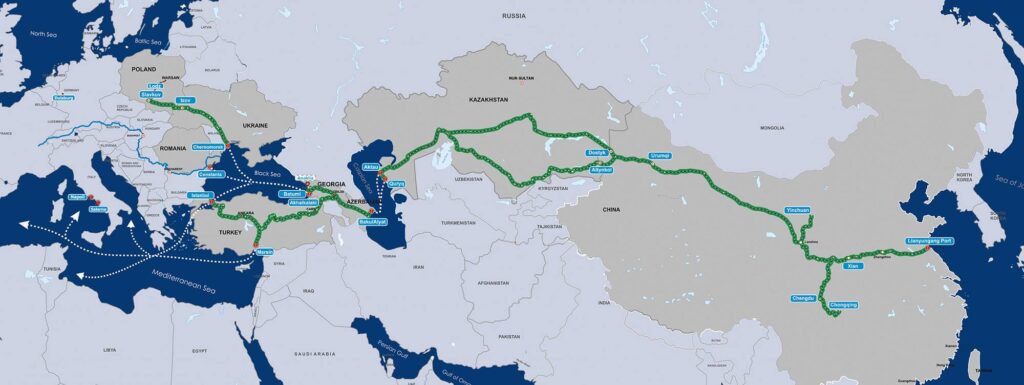
The company’s expansion is a response to the expected increase in cargo traffic along the Trans-Caspian International Transport Route (TITR), also known as the Middle Corridor.

A spokesperson from the company said: “We recognize the need to deepen maritime access channels to port infrastructure and operating bases as Caspian Sea levels drop and cargo traffic increases. Our company has the expertise and resources needed to address these challenges quickly and efficiently, given the growing role of the TITR in the region.”

Jan De Nul’s expansion in Turkmenistan confirms the region’s importance and potential for transportation infrastructure development.

Uzbekistan Sends Aid to Kyrgyzstan After Osh Region Floods

Following heavy flooding in Kyrgyzstan’s Osh region on July 14, people in Uzbekistan’s nearby Andijan region have sent 200 tons humanitarian aid to the people affected.

The aid received in Osh includes household goods, construction materials, clothes and food. The flood resulted from torrential rains in the surrounding mountains and hills.

Kyrgyzstan has suffered more than usual from extreme weather this summer. Last month nine people were killed by another flood in the Osh region.

Tigers to Return to Kazakhstan

The Ministry of Ecology of Kazakhstan and the World Wide Fund for Nature (WWF International) are set to reintroduce tigers to the republic by settling the animals in a new reserve.

Following an agreement signed by the two parties in mid-July, the Ministry of Ecology stated: “This memorandum is a continuation of successful and fruitful cooperation, which has already led to significant achievements in the restoration of biodiversity and infrastructure of the Ile-Balkhash Nature Reserve. The tiger’s return to Kazakhstan is an ecologically important project and a symbol of our efforts to restore the natural heritage.”

The project has been many years in the making. In 2021, President Kassym-Jomart Tokayev discussed reintroducing tigers to Kazakhstan with Russian President Vladimir Putin. Referencing the fact that the last Turanian tigers were spotted in Kazakhstan in the 1930s, he explained: “These are steppe tigers. In ancient times, they were sabre-toothed, so now we are developing an international project to restore the population of these tigers.”

The long-awaited tigers will arrive this autumn and as reported by the Ministry of Ecology, two tigers, a male and a female, will be delivered from the Netherlands at the expense of the Dutch side in September.

In addition to these animals, in 2023, environmentalists announced plans to release a group of Amur tigers from Russia within five years, following an agreement signed by Russia and Kazakhstan at the Eastern Economic Forum (EEF) in 2022. It was assumed that the first generation of the population would consist of Amur tigers, including those from Primorye. Turanian, otherwise known as Transcaucasian tigers, which used to live in Central Asia, northern Iran, and the Caucasus, are genetically close to Amur tigers but slightly smaller.

The intention to recreate the tiger population in the country was first declared at an international forum dedicated to preserving tigers in 2010.  Kazakhstan announced its readiness to embrace the initiative and since then, has been rigorous in its preparations. In September 2017, a memorandum was signed between the World Wildlife Fund (WWF) and the government of Kazakhstan on implementing the program  and in 2018, the Ile-Balkhash State Nature Reserve was established, where work to restore the ecosystem is in full swing.

The tiger reintroduction program is planned to span over 35 years and comprises three phases: habitat preparation, predator release, and monitoring the growth of the tiger population. In the Ile-Balkhash reserve, boundaries have been established, communication systems have been set up, and comprehensive territory protection measures have been implemented.

“The reserve territory is a natural complex that includes a variety of natural ecosystems from semi-desert, floodplain, and saxaul forests to wetlands. Such a favorable geographical location and rich forage create favorable conditions for the breeding of wild animals and a large number of birds. Biodiversity of the reserve includes about 40 species of mammals, 284 species of birds, and more than 420 species of plants, many of which are included in the Red Book of Kazakhstan,” the Ministry of Ecology explained.

Since 2019, the reintroduction of the Bukhara deer, a species that disappeared over a century ago, has proved highly successful and today, the reserve has over 100 deer. The number of wild boars and gazelles has also significantly increased.

Careful consideration has been paid to the impact of the project on villagers of Southern Pribalkhash, as outlined by Grigory Mazmanyants, Director of the World Wildlife Fund office in Kazakhstan: “Undoubtedly, the support of residents is one of the most important stages of the tiger reintroduction program. Without their assistance, realizing such an ambitious project is simply impossible. A separate area is being worked on for the economic development of these villages. Cattle breeding and agriculture cannot fully meet the needs of families, which is why one of the program’s directions is to support residents and provide opportunities to develop other sources of income that do not harm the environment. Over the past four years, the WWF has provided more than 40 small grants, established a community development fund, and supported the cultivation of melons for low-income families. Training in working with ecotourists is underway. In particular, attention is focused on the creation of guest houses, the art of being a guide, production of souvenirs, etc.”

According to ecologists, the presence of big wild cats will benefit rural residents. No compensation is available for livestock taken by wolves but since the tigers will replace these predators  in the food chain, their numbers will decline. Given that livestock may fall prey to tigers, the reintroduction program plans to reimburse residents for any losses, and drawing on the experience of the Russian Far East and India, will implement measures to track the animals’ movements to minimize the risk of collision with humans.

English Courses for Labor Migrants Open in Kyrgyzstan

Free English language courses have been opened in Bishkek and Osh for citizens wishing to work seasonal jobs in the UK.

According to the Center for Employment of Citizens Abroad, free English language training will be provided to citizens who have previously worked in the UK and plan to return as seasonal workers. The classes will start on August 1 and last two and a half months.

“The purpose of the course is to improve your level of English so you can have a more comfortable stay in the UK. If you enroll in the course, you are committing to take (the course) from start to finish,” the Center’s website says.

Students will learn grammar, vocabulary, and pronunciation. However, these courses are not prerequisites for selection into the seasonal worker program.

On the organization’s website, migrants can fill out a form that requires their data and information about their previous work experience.
Earlier this year, the Ministry of Labor, Social Security, and Migration of Kyrgyzstan opened online registration for Kyrgyz citizens seeking seasonal work in the UK. In one day, over 26,000 people registered on the migrant.kg portal. This year’s quota for seasonal work in England is at most 10,000 people.

World Bank Projects Tajikistan’s Economic Growth

On July 16 the World Bank released its latest Tajikistan Economic Update. Tajikistan’s economy has shown remarkable growth in recent years, with an impressive expansion of 8.3% in 2023 and 8.2% in early 2024.

The report attributes the growth to increased revenues from gold exports, substantial public infrastructure spending, robust migrant worker remittances, and public wage increases.

The report highlights that Tajikistan has managed to control inflation through declining global food and fuel prices and a tighter monetary policy.

However, the report says that Tajikistan’s economic outlook faces several challenges. Subdued economic growth is projected at 6.5% in 2024 and 4.5% in the medium term, reflecting sluggish growth in the country’s key trading partners: China, Kazakhstan, Russia, and Turkey.

The report says that potential risks to Tajikistan’s economic outlook include escalation of global and regional tensions, and stricter migration policies in Russia. It cautions that for Tajikistan to ensure sustainable development, it needs to implement structural reforms focused on enhancing economic openness and competitive neutrality and improving public sector governance, transparency, and accountability for better public service delivery.

Ozan Sevimli, World Bank Group Country Manager for Tajikistan, commented: “Tajikistan’s recent economic performance is commendable, but sustaining this momentum will require concerted efforts to address structural challenges to ensure competition among all economic players. Embracing fair competition and competitive neutrality between state-owned enterprises and the private sector is vital for fostering innovation, driving efficiency, and ensuring that all players can thrive on a level playing field, ultimately benefiting the economy and society.”

Kazakhstan to Increase Transit of Russian, Turkmen, and Uzbek Gas in 2024

At a government meeting on July 16, Kazakhstan’s Minister of Energy, Almasadam Satkaliyev, reported using the country’s natural gas transit potential.

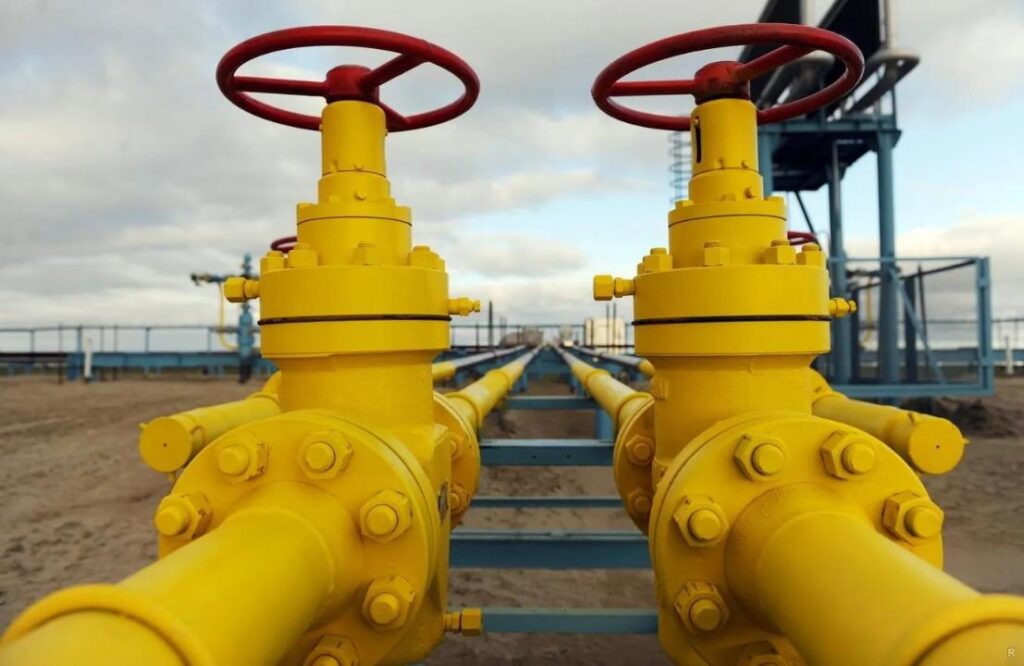
The transit transportation of Russian natural gas to Uzbekistan was launched in October 2023, and 1.28 billion cubic meters were transported last year. Kazakhstan plans to increase the transit to 3.8 billion cubic meters, with an additional increase to 11 billion cubic meters annually.

Turkmen and Uzbek natural gas transit to China has also shown steady growth. This year, Kazakhstan plans to increase this transit to 37.1 billion cubic meters (+1.5 billion cubic meters compared to last year).

The minister added that the issue of increasing the transit of Russian natural gas to Kyrgyzstan is currently being discussed.

The energy minister also reported that Kazakhstan plans to increase natural gas production by 2.3% compared to 2023 to 60.5 billion cubic meters this year. Most of the country’s natural gas is produced by three large fields — Karachaganak, Tengiz, and Kashagan. Marketable gas production will remain at last year’s 29.8 billion cubic meters.