• KGS/USD = 0.01144 0%
  • KZT/USD = 0.00197 -0%
  • TJS/USD = 0.10904 0%
  • UZS/USD = 0.00008 0%
  • TMT/USD = 0.28490 0%
  • KGS/USD = 0.01144 0%
  • KZT/USD = 0.00197 -0%
  • TJS/USD = 0.10904 0%
  • UZS/USD = 0.00008 0%
  • TMT/USD = 0.28490 0%
  • KGS/USD = 0.01144 0%
  • KZT/USD = 0.00197 -0%
  • TJS/USD = 0.10904 0%
  • UZS/USD = 0.00008 0%
  • TMT/USD = 0.28490 0%
  • KGS/USD = 0.01144 0%
  • KZT/USD = 0.00197 -0%
  • TJS/USD = 0.10904 0%
  • UZS/USD = 0.00008 0%
  • TMT/USD = 0.28490 0%
  • KGS/USD = 0.01144 0%
  • KZT/USD = 0.00197 -0%
  • TJS/USD = 0.10904 0%
  • UZS/USD = 0.00008 0%
  • TMT/USD = 0.28490 0%
  • KGS/USD = 0.01144 0%
  • KZT/USD = 0.00197 -0%
  • TJS/USD = 0.10904 0%
  • UZS/USD = 0.00008 0%
  • TMT/USD = 0.28490 0%
  • KGS/USD = 0.01144 0%
  • KZT/USD = 0.00197 -0%
  • TJS/USD = 0.10904 0%
  • UZS/USD = 0.00008 0%
  • TMT/USD = 0.28490 0%
  • KGS/USD = 0.01144 0%
  • KZT/USD = 0.00197 -0%
  • TJS/USD = 0.10904 0%
  • UZS/USD = 0.00008 0%
  • TMT/USD = 0.28490 0%
08 December 2025

Turkmenistan’s Balkan Shipyard to Partner with Dutch Company

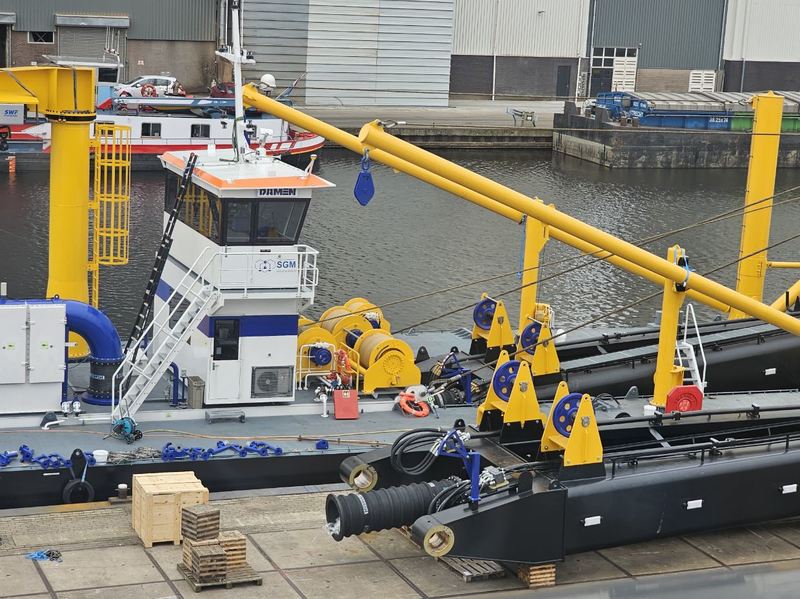
A group of managers from Turkmenistan’s Balkan Shipyard visited the Netherlands recently, and held a number of meetings with local shipbuilding companies, the Turkmen company reported. Balkan Shipyard is interested in constructing dredgers — boats or barges fitted with special machines that are used to deepen existing harbors, rivers, and canals — in Turkmenistan, as well as providing their staff with further training.

The shipyard’s managers discussed the production of an electric dredger with the managements of three Dutch companies: De Klopp BV, Royal IHC and Damen Shipyards Group. As a result of these meetings, Balkan Shipyard has announced that the CSD 650 dredger will be built at a shipyard in Turkmenistan, supervised by engineers from Damen.

In October 2023 managers from the state agency Turkmendeňizderýaýollary (Turkmen Sea and River Roads) discussed with Damen Shipyards Group the possibility of building a dredger at a factory in Turkmenistan.

Additionally, Korea’s Koryo Shipbuilding Industry Technology Co., Ltd. has reportedly transferred some proprietary construction technologies to Balkan Shipyard, which will increase the capacity of the Turkmen factory from four to five vessels per year.

Experts Warn Kazakhstan Over Possible Consequences of Further Armenia-Azerbaijan Conflict

On March 31, the Azerbaijani Defense Ministry said on its website that provocations on the Armenian-Azerbaijani border have recently become more frequent – and warned the Armenian authorities that Baku could take tough retaliatory measures. The same day, the Armenian Defense Ministry on its website rejected the information that it was accumulating troops on the Armenian-Azerbaijani border. The EU Mission in Armenia also stated that “no such movements have been observed.”

This turn of dialogue closely mirrors the events of autumn 2020, when there was a major military escalation. The Azerbaijani Defense Ministry then repeatedly warned Armenia against provocations in the conflict zone – and after that, hostilities started.

If the Armenian-Azerbaijani conflict develops, Kazakhstan will have to stop oil supplies to Europe via Azerbaijan, as the country is a member of the regional Collective Security Treaty Organization (CSTO), notes economist Galym Khusainov. “It is necessary to prepare a plan of action in case the conflict intensifies and Kazakhstan’s oil supplies through Azerbaijan may be cut off,” he told the Times of Central Asia.

Furthermore, Kazakhstan could face major losses if investments are made in developing the Zangezur transportation corridor, financier Rasul Rysmambetov said. “The most important strategy is to develop as many corridors as possible: Azerbaijan, the northern direction, the southern direction, [and] transit to Europe via Russia. In general, Kazakhstan mainly exports oil, so we just need to develop as many corridors as possible, so that the loss of one corridor or damage to one corridor will not affect the overall export of our goods,” Rysmambetov told the Times of Central Asia.

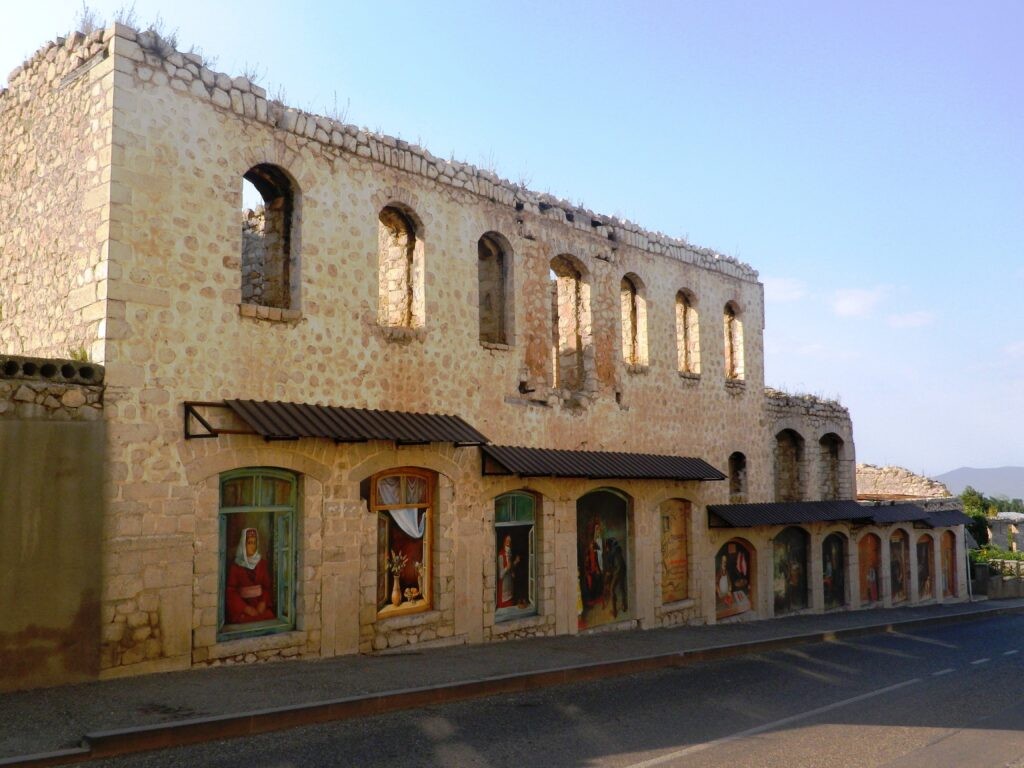
The conflict between Armenia and Azerbaijan escalated in the early 1990s after the collapse of the Soviet Union, centered around the dispute over control of the Karabakh region. As a result of the First Karabakh War, the region passed to Armenian jurisdiction. In the fall of 2020, after the Second Karabakh War, Karabakh passed to Azeri control. The United Nations (UN) recognizes Karabakh as the territory of Azerbaijan.

Despite the population within its borders being 94% ethnically Armenian, the Bolsheviks eventually founded the Nagorno-Karabakh Autonomous Oblast as part of Soviet Azerbaijan in 1923. Whilst there was an economic logic in allowing farmers to reach their traditional grazing lands without the hindrance of borders, the decision also owed much to divide and rule politics and a desire to please their Kemalist allies in Turkey. In 1921, the Treaty of Kars saw Moscow cede “imperialist” Western Armenia to Turkey as part of a ‘friendship and brotherhood’ agreement, the Soviets even going so far as to arm Kemalist troops. Massacres continued, and in September 1922 an estimated 100,000 Christians – 25,000 of whom were Armenians – were killed in modern-day Izmir alone.

Today, the threat of war between Armenia and Azerbaijan lingers in part because the issue of political control of several villages on the Armenia-Azerbaijan border in Armenia’s Syunik region remains unresolved. Azerbaijan calls these territories its historical lands, while Armenia argues that they are its territory, as was stipulated in the 1991 Almaty Declaration, which codified the modern Armenia-Azerbaijan border.

As for Kazakhstan’s oil supplies to Europe, the country’s authorities began actively seeking an alternative to supplies via Russia after the Kremlin began its attack on Ukraine in February 2022. Currently, one route is the Baku-Supsa pipeline, which runs through Azerbaijan to the Georgian Black Sea port of Supsa, through which Kazakhstan transports oil to European markets. Another is the Baku-Tbilisi-Ceyhan (BTC) pipeline, which sends oil to the Turkish port on the Mediterranean Sea.

Uzbekistan, EU Team Up to Train Local Ecology Specialists Amid Central Asia’s Water Crisis

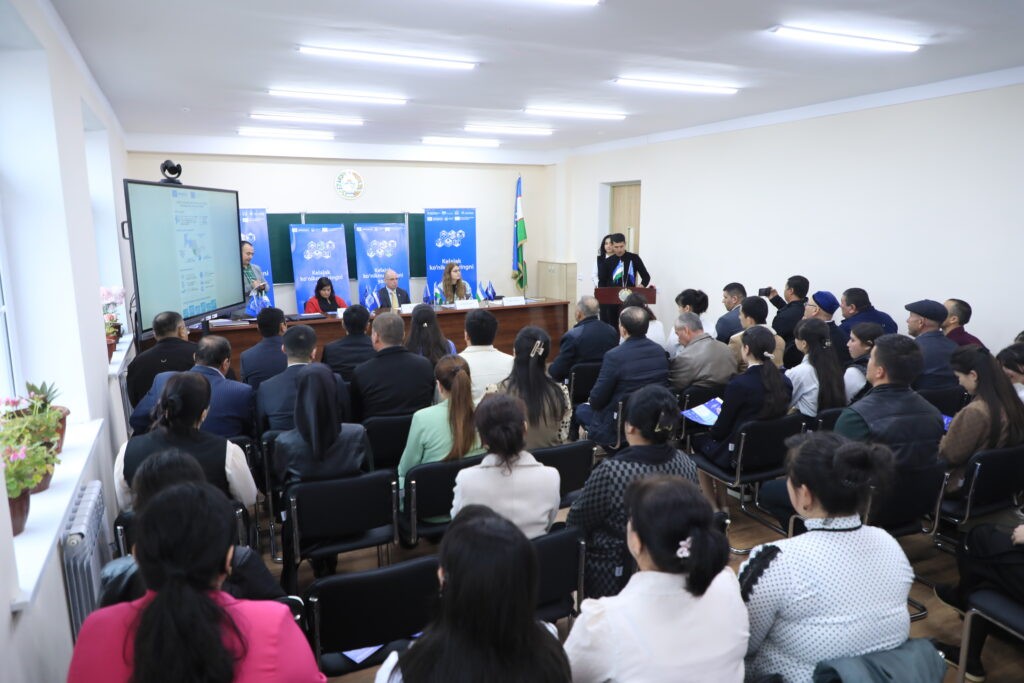
The European Union (EU) Delegation in Uzbekistan has provided financial assistance to modernize the Koshkopyr College of Water Management and Land Reclamation, located in the Khorezm province. The college was renovated within the framework of a project called Development of Employment Skills in Uzbekistan’s Rural Areas. As part of the renovation, workshops, classrooms and laboratories have been updated, with wiring and lighting replaced.

The renovation of the college started in April 2022 with an allocated budget of more than €1 million, said Dildora Tangriberganova, deputy rector for education and training. “All workshops and training laboratories of the college were modernized and updated. We received 16 new computers and all the furniture necessary for classrooms. We expect to receive equipment for laboratories and workshops soon,” Tangriberganova told the Times of Central Asia.

The Koshkopir College of Water Resources and Land Reclamation, established in 1989, trains specialists in such areas as hydromelioration (hydrological engineering), vehicle maintenance, animal husbandry, automation and computer science in water management, and other specialties. Currently the college has 221 students. The administration of the educational institution noted that the updated material and technical base will prove helpful for students in mastering their future professions.

The joint EU-Uzbekistan rural-development program has been in effect since July 2020. Its goal is to improve education in the agricultural and irrigation spheres. The total budget of the four-year project is €9.6 million.

The water crisis remains an acute problem in Central Asian countries, including Uzbekistan, as the landlocked region has no direct access to the world’s oceans. Experts believe that in 2030, the volume of freshwater shortage in Uzbekistan will reach 7 billion cubic meters – and by 2050 it will double, according to a report by Gazeta.uz.

Farmers consume the most water in the country. At the same time, 40% of water is wasted due to outdated municipal infrastructure. Experts emphasize that in the future, water scarcity will lead to higher prices for food products and increase the risk of diseases spreading.

Kazakhstan’s Ministry of Economy Proposes Canceling 21% of Taxes

The Ministry of National Economy of Kazakhstan has proposed reducing the number of taxes paid in the republic by 21%. The proposal focuses on three taxes: that imposed on the use of specially protected environmental zones, the tax on outdoor (visual) advertising, and the tax on the issuance of licenses to engage in certain types of professional activities. The ministry noted that these taxes bring about 14.4 billion tenge ($32 million) into the federal budget each year.

In addition to the abolition of these taxes, the ministry also proposed combining three payments into one – those for the use of water resources drawn from surface sources, for the use of forests, and for the use of wildlife. Instead of separate levies, the ministry put forth a single tax on the use of natural resources.

If these initiatives are approved, 77 different tax rates will be abolished – which is 21% of the total number of taxes in Kazakhstan.

The ministry has also proposed the abolition of eight levies which bring in about 1.1 billion tenge ($2.5 million) to the budget annually and is seeking to cancel six state duties, which contribute about 299 million tenge ($666,000). These measures will result in the reduction of 89 different fee rates and 53 state duties, respectively.

Kyrgyz Fuel Rules Set to Raise Prices Amid Fight With Black Market

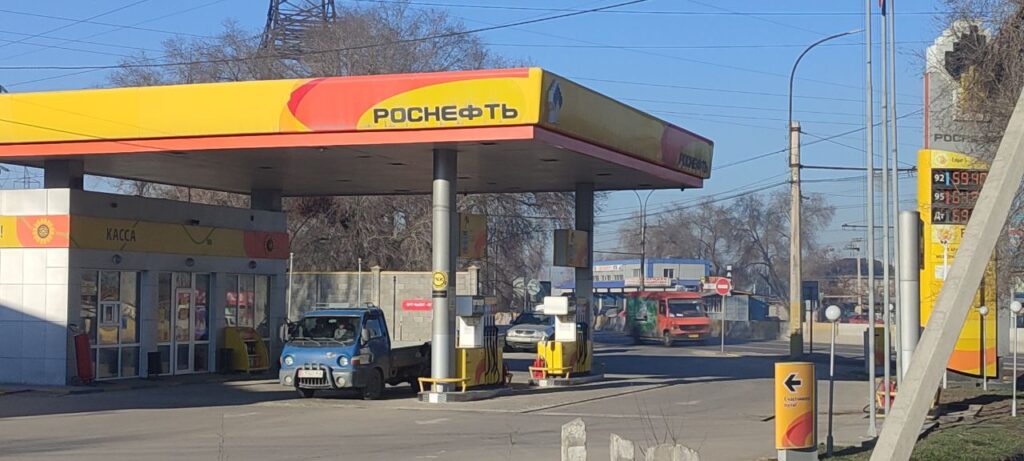
As part of the fight against the shadow gasoline market, the Kyrgyz authorities plan to introduce a rule that all gas stations in the country must label fuel from June 1 this year. The plan meant is to tighten control over the production, movement, storage, shipment and sale of motor fuels, and the initiator of the innovation is the tax service. The draft law was approved by the Ministry of Economy of Kyrgyzstan; the document is undergoing public hearings.

According to the bill, from June 1, all gas stations in the country will be required to sell only labeled fuel. There will be an exception only for fuels and lubricants produced in Kyrgyzstan and exported. The requirement will be for vendors to add a small amount of a special molecular marker to each batch of fuel. The tax service said that such a marker cannot be faked and cannot be washed off or altered in any way. Once the law comes into force, tax officials plan to create a mobile laboratory that will travel around the country and check gasoline at gas stations.

“Tax officials in any corner of the country will be able to check the legality of movement and sale of fuel and lubricants, and apply sanctions measures if necessary,” the Kyrgyz tax service stated. Fuel markers will make it possible to determine the origin of gasoline and prevent the mixing of different brands of fuel. Tax officials said some gas stations currently mix various additives to gasoline to artificially increase its octane number or dilute the fuel to increase its volume.

This isn’t the first time the authorities have tried to introduce fuel-labeling in Kyrgyzstan, Kanat Eshatov, president of the republic’s Association of Oil Traders commented, explaining that gas station owners include the cost of these substances in their pricing. This means that for the average consumer, gasoline will become more expensive. “So far we do not know how much such labeling will cost. We count gasoline by tons. So we will have to buy a certain amount of this substance per ton, and this amount will fall on the shoulders of the consumer,” Eshatov explained to the Times of Central Asia.

In their justification for the bill, Kyrgyz Economy Ministry officials said the country’s fuel and lubricants trade has a high shadow, or unregulated market component. The shadow market of gasoline continues to grow. For example, on the bypass road near Bishkek, which runs along the border with Kazakhstan, one can find a dozen illegal sellers of gasoline, which they sell in plastic bottles. Gasoline is smuggled into Kyrgyzstan from neighboring republics. According to the Kyrgyz Tax Service, in 2023 the agency seized almost six times as much illegal fuel as in 2022 – 19,600 liters versus 3,400 liters in 2022.

Legal gas stations sometimes also sell smuggled gasoline. With the introduction of labeling, this practice will stop, the tax service said.

President of Turkmenistan Pardons 356 Prisoners

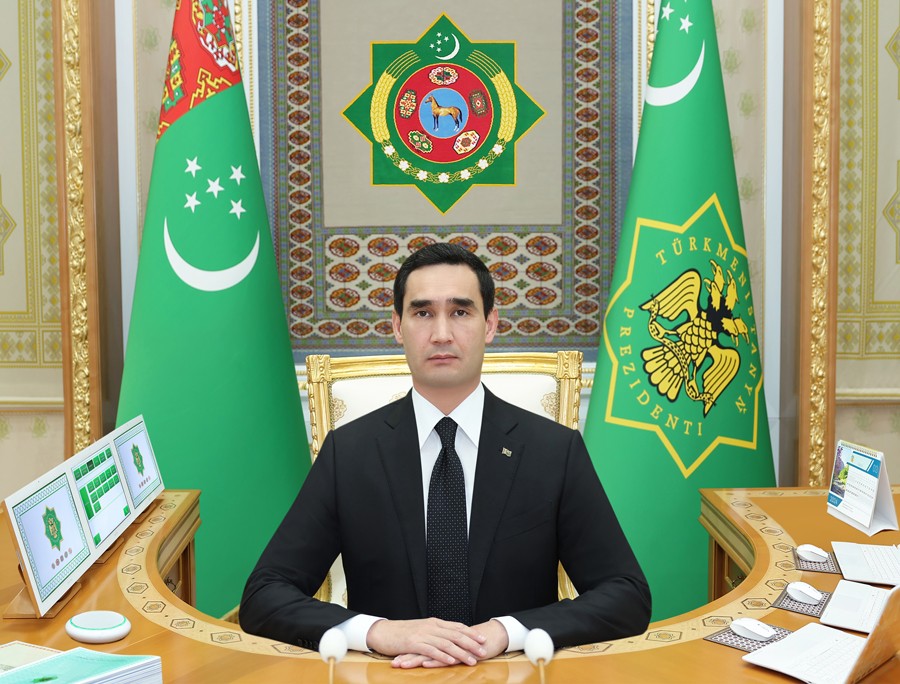
President of Turkmenistan, Serdar Berdymukhamedov has pardoned 356 people who repented for their crimes in honor of Laylat al-Qadr (The Night of Power). The head of state signed the relevant decision at the meeting of the Cabinet of Ministers, according to a report by the Turkmen state news agency.

Representatives of the relevant law-enforcement agencies were instructed to release the prisoners and return them to their families in the near future. Furthermore, provincial, etrap (sub-provincial) and city mayors and other leaders were instructed to take appropriate measures to employ pardoned persons.

On April 5-6, Muslims in Turkmenistan celebrate the night of power (gadyr gijesi in Turkmen), a symbol of virtue and spiritual purity.

Laylat al-Qadr is, in Islamic belief, the night when Muslims believe the Quran was first sent down from heaven to the world, and also the night when the first verses of the Quran were revealed to the Islamic prophet, Muhammad.