• KGS/USD = 0.01144 0%
  • KZT/USD = 0.00192 -0%
  • TJS/USD = 0.10876 0.55%
  • UZS/USD = 0.00008 0%
  • TMT/USD = 0.28490 0%
  • KGS/USD = 0.01144 0%
  • KZT/USD = 0.00192 -0%
  • TJS/USD = 0.10876 0.55%
  • UZS/USD = 0.00008 0%
  • TMT/USD = 0.28490 0%
  • KGS/USD = 0.01144 0%
  • KZT/USD = 0.00192 -0%
  • TJS/USD = 0.10876 0.55%
  • UZS/USD = 0.00008 0%
  • TMT/USD = 0.28490 0%
  • KGS/USD = 0.01144 0%
  • KZT/USD = 0.00192 -0%
  • TJS/USD = 0.10876 0.55%
  • UZS/USD = 0.00008 0%
  • TMT/USD = 0.28490 0%
  • KGS/USD = 0.01144 0%
  • KZT/USD = 0.00192 -0%
  • TJS/USD = 0.10876 0.55%
  • UZS/USD = 0.00008 0%
  • TMT/USD = 0.28490 0%
  • KGS/USD = 0.01144 0%
  • KZT/USD = 0.00192 -0%
  • TJS/USD = 0.10876 0.55%
  • UZS/USD = 0.00008 0%
  • TMT/USD = 0.28490 0%
  • KGS/USD = 0.01144 0%
  • KZT/USD = 0.00192 -0%
  • TJS/USD = 0.10876 0.55%
  • UZS/USD = 0.00008 0%
  • TMT/USD = 0.28490 0%
  • KGS/USD = 0.01144 0%
  • KZT/USD = 0.00192 -0%
  • TJS/USD = 0.10876 0.55%
  • UZS/USD = 0.00008 0%
  • TMT/USD = 0.28490 0%
11 December 2025

Uzbekistan’s Banks Top List of Country’s Most Valuable Brands

British company Brand Finance has published a list of rankings of the most valuable domestic brands in Uzbekistan. Uztelecom took first place among 20 companies with a brand valuation of $241 million, followed by Sanoat Qurilish Bank ($122 million) and Trastbank ($95 million). Additionally, the list includes Aloqa Bank ($43 million), Uzum ($39 million), NBU ($36 million), Anor Bank ($16 million), Farg’onaazot ($7 million), Kafil Sug’urta ($6 million), Uzagrosugurta ($6 million). Uzum recently became Uzbekistan’s first tech-company “unicorn” when it landed an investment of more than $100 million to fund its growth strategy, putting its overall valuation at $1 billion.

Brand Finance’s rating is compiled using information on 20 companies provided by the Uzbekistan Agency for Innovative Development, which is engaged in improving the country’s position in the Global Innovation Index. The British company took into account the company’s value, business efficiency, value of trademarks, as well as marketing investments and brand recognition when compiling the rating.

According to international PR expert Natalia Ikonnikova, in 2024 “[amid] the endless streams of generated content, brands that retain a human face will stand out. This trend is not [in its] first year, but in Uzbekistan it is still gaining popularity.”

Retailer Korzinka, headed by its founder Zafar Hashimov, is a good example of such a brand. Hashimov is not just the official face of the brand, but a real person with his own values and views who does not shy away from personal communication with consumers and eagerly solves problems.

According to Madina Ruzmatova, an independent consultant on corporate PR and personal branding, there are great prospects for the development of content-creators in Uzbekistan. At this early stage of the sector’s maturity, using the right PR tools, it’s possible to gain an audience and increase public awareness of any particular brand.
Kyrgyzstan and China’s Xinjiang Expand Economic Cooperation

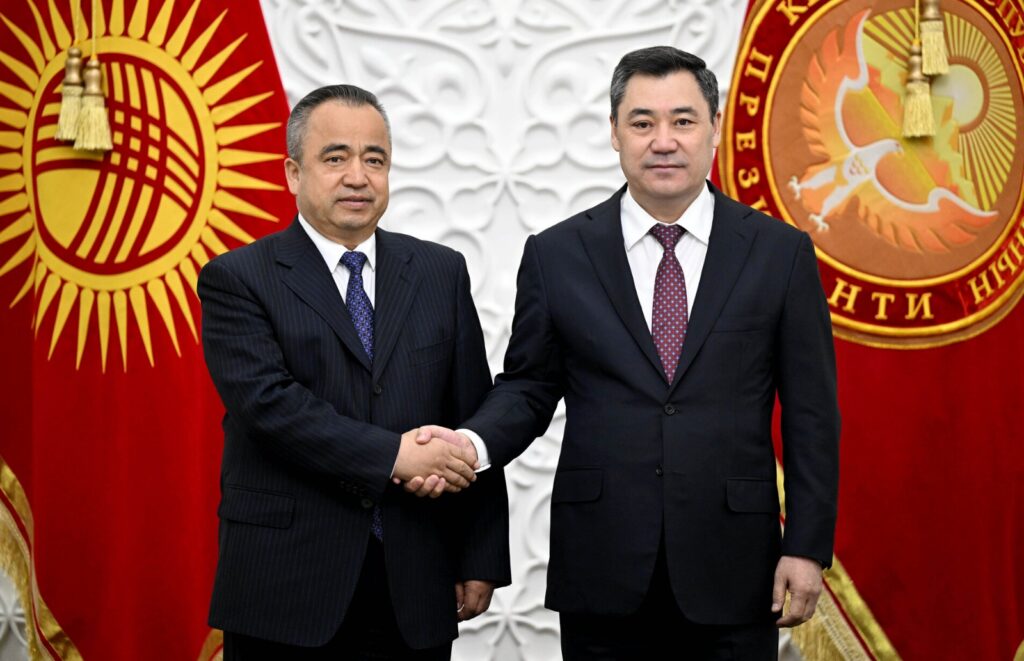
On April 2nd, President of the Kyrgyz Republic Sadyr Japarov met Chairman of the Government of China’s western Xinjiang Uyghur Autonomous Region, Erkin Tuniyaz in Bishkek.

With the participation of business representatives of more than 50 Chinese companies, discussions focused on proposals for digitalization, transport, logistics, investment, agriculture, and humanitarian projects.

President Japarov stated that China is one of his country’s main trade and investment partners and noted the successful progress of the construction of the China-Kyrgyzstan-Uzbekistan railway; the largest joint project to date. He also emphasized the importance of increasing cooperation with the XUAR and accelerating the practical implementation of further joint projects, adding that Kyrgyzstan is ready to expand and strengthen cooperation with China within the Belt and Road initiative and the Central Asia-China format.

A key topic of discussions was the expansion of bilateral cooperation in rare metals mining, the opening of a new air route between the Kyrgyz city of Osh and Xinjiang’s Kashgar, and the establishment of joint commercial and industrial parks.

Erkin Tuniyaz also met the Chairman of the Kyrgyz Cabinet of Ministers Akylbek Japarov, who said that “In trade and economic cooperation, we rely on Xinjiang; this region of China is for us a kind of gateway to your country.”

According to Chinese statistics, trade turnover between the two countries in 2023 amounted to $19.8 billion; an increase of 30% since 2022.

Kazakhstan Adjusts Migration Rules to Attract Foreign Specialists

The Ministry of Labour and Social Protection of Population has announced that foreigners with qualifications in specific fields can now obtain residence permits, both multi-year and permanent, in Kazakhstan.

The aim of the initiative, through a simplified procedure for residency, which negates the need for candidates to demonstrate their financial solvency, is to ultimately reduce the shortage of highly qualified personnel in the fields of science, healthcare, industry and IT.

The list of professions that qualify for such privileges will be revised according to proposals from the Ministries of Health; Culture and Sports; Digital Development, and Aerospace. Professionals already listed include neurosurgeons, haematologists, oncologists, specialists in IT infrastructure and software architects. Further applications are sought from specialists in the natural sciences, mathematics, statistics, as well as engineering and construction industries.

According to Kazakhstan’s Ministry of Labour Residence, permits may be granted for up to 10 years or until the expiration of a foreigner’s passport.

Since February 1, 2024, 785 foreign labour permits have been issued for workers in various sectors including construction, mining and agriculture from China, Turkey, India and Uzbekistan. In addition, 14,600 foreign labour permits were issued at the beginning of 2024 for skilled professionals.

The ministry emphasizes that one of the key objectives of migration policy is to protect the domestic labour market. The total quota for employers set for 2024 is 0.23% of the country’s labour force, equivalent to 22,000 jobs.

Islamic State Attack in Turkey Foiled; Tajik, Kyrgyz Citizens Arrested

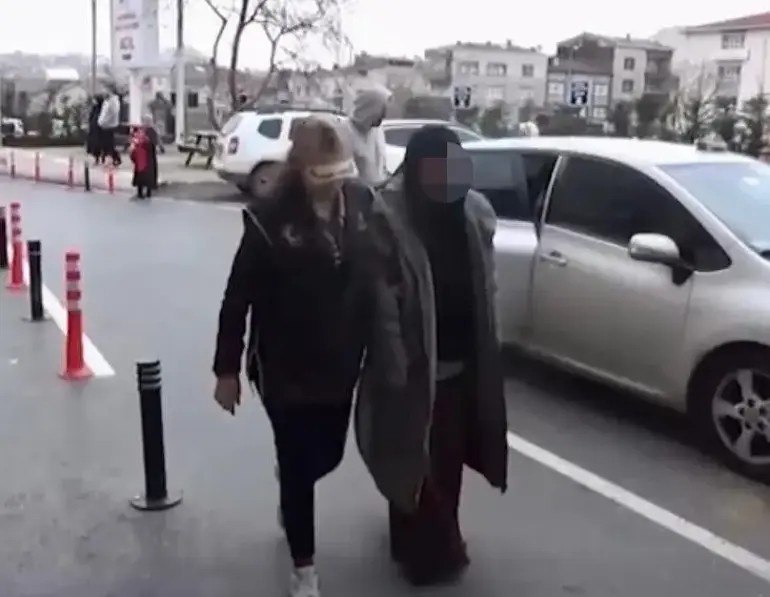
Turkish law enforcement agencies have arrested two individuals, a Tajik citizen named as Faziljon A. and a Kyrgyz national identified as Zulfiya S., on suspicion of planning a terrorist attack in Turkey on behalf of Islamic State (IS). Their arrest was reported by the Turkish newspaper Hurriyet.

The man and woman were caught during a raid on a house in Istanbul where IS members were hiding. The search of the property uncovered police uniforms and vests, emergency vehicle lights, police hats, car radios, knives and gun holsters – as well as some clothes that the suspects may have planned to wear for their escape.

According to Hurriyet, officials determined that the Central Asian nationals planned to carry out the attack within Turkey. Faziljon A., from Tajikistan with the code name Abu Ismail, was named as the organizer of the attack.

Istanbul’s Anti-Terrorism Department is investigating whether the arrested suspects have connections with any other people in Turkey. Both were interrogated before being taken to court. Faziljon A., a known member of Islamic State in Tajikistan, has been detained by the court; his associate, Zulfiya S., originally from Kyrgyzstan, was deported. Between March 27 and March 31, Turkish forces detained 51 IS suspects.

Uzbekistan to Participate in International TALIS Study for First Time in 2024

At a press conference on 1 April, the Information and Mass Communications Agency announced that Uzbekistan is to participate in the Organization for Security & Cooperation in Europe’s (OECD) Teaching and Learning International Survey (TALIS).

Referencing the alarming rise in mental stress amongst teachers across the educational sector, Laziz Khojakulov, head of the Ministry of Preschool and School Education’s Department of Strategic Development and International Ratings, stated, “Not only in Uzbekistan, but all over the world, teachers have social and emotional problems.”

He then noted two measures being taken by the ministry to address the issue.

“First of all, there are international TALIS studies, starting from the public education systems and continuing to the preschool and school education system, in which the attitude of teachers toward their profession and the effects on it are studied. This is something new to us. Secondly, we plan to sign up to a joint project to work on the socio-emotional conditions of teachers in the direction of continuous professional development in cooperation with the UNESCO organization.”

The ministry also plans to introduce special training courses for teachers to overcome mental stress and tension.

In a statement to Kun.uz, Sardor Rajabov, deputy minister of Preschool and School Education, confirmed that 210 of Uzbekistan’s schools have been selected to take part in the TALIS survey for the first time in April and May of 2024.

The worldwide TALIS study focuses on pedagogical and professional practices of educators, school administrators, and staff members, and also works within educational environments in schools to provide analysis on issues drawn from consistent and trustworthy data. The OECD has been conducting its study since 2008, with surveys conducted every six years.

Bishkek Tightens Grip on NGOs

BISHKEK, Kyrgyzstan – Kyrgyzstan´s President said on Tuesday that he has approved a law that tightens control over non-governmental organizations which receive foreign funding, despite concerns that the measure could erode basic freedoms and services.

President Sadyr Japarov defied international pressure to refrain from signing the law, which was passed by an overwhelming margin in Kyrgyzstan’s Parliament on March 14. In a Facebook post, he said the measure would make NGOs more accountable and increase transparency, an assertion that critics say is misleading.

For decades, NGOs “just opened bank accounts, took money from foreign donors and used it as they saw fit, including for personal purposes,” Japarov said. “From now on they will be registered with the Ministry of Justice like everyone else. They will open bank accounts. They will start to work openly. There will be no more confusion.”

NGOs “spread false information, saying ‘we will be persecuted, we will be arrested as agents of a foreign state’. And the donors believed it,” said Japarov, adding that “there will be no persecution” of the groups.

Critics say the law represents a slow-moving crackdown that rolls back efforts to develop civil society with the help of foreign governments and other institutions.

“We’re deeply disappointed that Kyrgyzstan’s president Sadyr Japarov has signed the repressive law on ‘foreign representatives,’ citing misleading, untrue arguments about NGOs,” said the International Partnership for Human Rights, a Brussels-based group. 

“At least get the facts straight,” Syinat Sultanalieva, a Central Asia researcher for Human Rights Watch, said of Japarov’s statement, adding that it was wrong of Japarov to suggest that NGOs “never registered and did not submit reports and basically ran amok unchecked.”

In his statement, Japarov bristled at criticism from Western-affiliated institutions and said there was a double standard.

“Why do non-governmental organizations in developed Western countries register with the Ministry of Justice, the Tax Service, open a bank account and not do the same when they come to us?” he said. “Or are we a second-class country? No, we are not. We will no longer allow such dubious actions.”

Japarov had previously accused NGOs of spreading “inaccurate information,” emphasizing that the draft law “is close to the Foreign Agents Registration Act (FARA) adopted in 1938 in the United States.”. Some opponents claim it is based on Russia´s “foreign agents” law, and could be used as an instrument of oppression.