• KGS/USD = 0.01144 0%
  • KZT/USD = 0.00196 -0%
  • TJS/USD = 0.10899 -0%
  • UZS/USD = 0.00008 -0%
  • TMT/USD = 0.28490 0%
  • KGS/USD = 0.01144 0%
  • KZT/USD = 0.00196 -0%
  • TJS/USD = 0.10899 -0%
  • UZS/USD = 0.00008 -0%
  • TMT/USD = 0.28490 0%
  • KGS/USD = 0.01144 0%
  • KZT/USD = 0.00196 -0%
  • TJS/USD = 0.10899 -0%
  • UZS/USD = 0.00008 -0%
  • TMT/USD = 0.28490 0%
  • KGS/USD = 0.01144 0%
  • KZT/USD = 0.00196 -0%
  • TJS/USD = 0.10899 -0%
  • UZS/USD = 0.00008 -0%
  • TMT/USD = 0.28490 0%
  • KGS/USD = 0.01144 0%
  • KZT/USD = 0.00196 -0%
  • TJS/USD = 0.10899 -0%
  • UZS/USD = 0.00008 -0%
  • TMT/USD = 0.28490 0%
  • KGS/USD = 0.01144 0%
  • KZT/USD = 0.00196 -0%
  • TJS/USD = 0.10899 -0%
  • UZS/USD = 0.00008 -0%
  • TMT/USD = 0.28490 0%
  • KGS/USD = 0.01144 0%
  • KZT/USD = 0.00196 -0%
  • TJS/USD = 0.10899 -0%
  • UZS/USD = 0.00008 -0%
  • TMT/USD = 0.28490 0%
  • KGS/USD = 0.01144 0%
  • KZT/USD = 0.00196 -0%
  • TJS/USD = 0.10899 -0%
  • UZS/USD = 0.00008 -0%
  • TMT/USD = 0.28490 0%
08 December 2025

Labor Migration – Making Money At Any Cost

The number of labor migrants from Tajikistan continues to grow steadily, officially reaching the highest figure seen in the last decade. According to the Ministry of Labor, Migration and Employment, in 2023, 652,014 people left the country to work abroad.

Despite the fact that the Government of Tajikistan claims the poverty level in the country has decreased (the poverty threshold is not specified), in reality a huge swathe of the male population is working abroad in an attempt to feed their families. Up to 40% of households in Tajikistan have at least one member working abroad.

Remittances from migrants therefore account for a significant part of the country’s GDP, but the authorities claim they cannot say exactly how much is sent by migrants because these remittances are funneled through different channels (accounts, banks, cards or through compatriots). However, various international organizations have stated that the figure stands in the realm of billions of dollars. Thus, according to the World Bank-KNOMAD, migrants’ remittances to Tajikistan in 2022 amounted to 5.346 billion dollars (39.6% of the country’s GDP). This makes Tajikistan one of the most remittance-based economies in the world, which serves as both a boon and a curse for the authorities, for whilst this mass migration removes those often viewed as unemployed malcontents, it’s also a source of embarrassment.

Against the background of military conflict, the number of Tajik workers in Russia has slightly decreased, from 775,000 in 2022 to just over 652,000 in 2023, according to the Minister of Labor, Migration and Employment, Gulnora Hasanzoda. However, official statistics from the Russian migration services, number citizens of Tajikistan who are labor migrants in Russia at 1.5 million, whilst several hundred thousand more have obtained Russian citizenship.

Renowned for being humiliated and extorted by border guards, these ex-pats are easy targets for the Russian police and are the subject of attacks by Neo-fascist groups. Often living in dormitory blocks overseen by gang-masters on the plains of Siberia, many die on the job, but they couldn’t survive back home. The poorest of the post-Soviet Republics, in September 2020, the World Food Program estimated that 47% of people in Tajikistan live on less than $1.33 a day, whilst an estimated 30% suffer from malnutrition.

A relatively new trend of leaving the country to work abroad has also been observed in Turkmenistan, where those serving in the police and in military units rank among the highest in terms of expats. Though salaries in these professions are considered quite high by Turkmen standards – police officers receive $142-157 and servicemen $160-185 a month, it is possible to earn several times more on a construction site, as a waiter or a cab driver in Russia. Thus, in April 2023 alone, around 200 officers from the Department of Internal Affairs of the Dashoguz Province of Turkmenistan submitted their resignations with the aim of going to work in Russia.

Konye-Urgench Bazaar, Dashoguz Province, Turkmenistan. Photo: TCA.

Against the background of aggravated labor migration, the authorities of Turkmenistan continue to do everything possible to hinder it: the issuance of foreign passports is a deliberately laborious process and a stringent visa regime is actively maintained. In 2022, the authorities requested that Turkey cancel a visa-free regime for its citizens, with the visa now costing a princely $250. In addition, those wishing to travel abroad have to pass an interview with the Ministry of National Security, who, since March 2023, oblige citizens to have a letter of guarantee they will return home signed by a close relative.  The final stage – buying a ticket – also involves a number of hurdles, including massive queues at ticket offices, corruption, and inflated ticket prices. Even after boarding the plane, a traveler cannot be sure that he or she will not be ejected from the flight without explanation.

Those who do manage to leave Turkmenistan in search of earnings often end up doing hard physical labor and living in unsatisfactory conditions. Most migrants are forced to work illegally, meaning they have no medical insurance and no rights in cases of accidents or disputes with employers.

Kazakhstan Exported a Million Tons of Goods to China Last Month

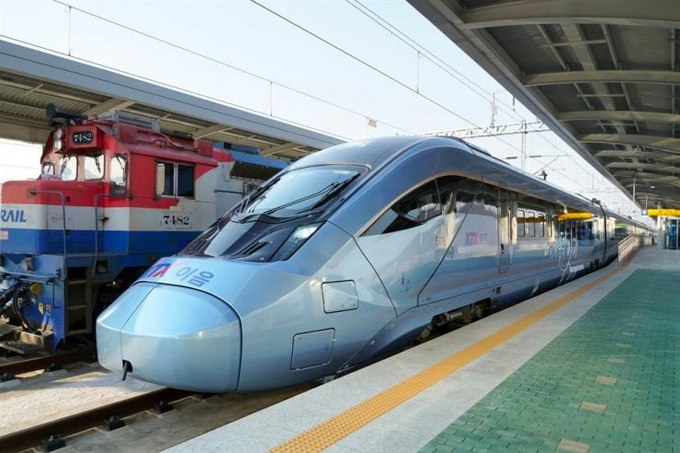
In January 2024 Kazakhstan sent over a million tons of cargo to China by rail, Kazakhstan’s nation rail company Kazakhstan Temir Zholy has reported. This is an increase of 43% compared to the volume recorded for January last year.

The supply of iron ore to its eastern neighbor has increased by 19%, grain supplies have gone up by 37%, and export of ferrous and non-ferrous metals has more than doubled.

Demand for passenger transport by rail is also growing in Kazakhstan. Last month 1.8m train journeys were made in Kazakhstan, a growth of 6.6% compared to January 2023.

Uzbekistan: Disabled Citizens Still Face Host of Challenges

The Times of Central Asia spoke with Muhabbat Rakhimova, head of the Uzbek public association for disabled people, Sharoit Plus. We discussed the current situation with disability rights in Uzbekistan, and the country’s entry to the international arena of advocates.

TCA: In your opinion, what is the state of the educational system for people with disabilities in Uzbekistan, today?

MR: In order to develop inclusive education, it is first necessary to make the infrastructure of buildings and educational equipment comfortable, to develop sufficient textbooks, and to provide educational materials that account for the possibility of persons with disabilities. Also, most of our schools were built a long time ago, the buildings have three to four floors, and they do not have elevators. In this case, not all people with disabilities have the opportunity to go and study.

TCA: This month in Tashkent, USAID launched its five-year project called All Children Succeed. The project will be implemented as a pilot program in the regions of Namangan and Syr Darya, and hopes to make school education, teaching materials and teacher qualifications inclusive. Do you think schools in Uzbekistan are accessible for everyone?

MR: According to the next reforms, construction of structures will be allowed only if the buildings are wheelchair accessible, but in many cases, we notice that ramps are inconveniently located. For example, on ramps near the wall, it is not possible to turn backwards or forwards in a wheelchair. In ordinary stores and pharmacies, it is difficult to climb due to the steepness of the ramp; even with the help of two or three people, it’s impossible to climb them. But the presence of a ramp does not mean the infrastructure of the building fully meets the requirements of disabled people. The interior of buildings, rooms, toilets should also be adjusted. In order for persons with disabilities to study and work effectively, it’s necessary to adapt the infrastructure of the buildings.

TCA: What joint projects are currently being implemented in Central Asia to support disabled people?

MR: Central Asian countries don’t have joint projects on persons with disabilities. The Eurasia Foundation of Central Asia organizes educational seminars on this [topic] and invites organizations of the countries of the region dealing with disability issues to them. I think that this is actually a form of cooperation.

In your opinion, are there any advanced international practices that can be implemented in Uzbekistan to help disabled people?

MR: There is a system of independent living centers in the Philippines and Thailand, where a person with a disability learns independent living skills for five to six months. As a result, after returning home this person can live without the support of family members, can live separately from them is they so choose. In order for Uzbekistan to have the opportunity to create this, first of all, we need the desire. For this to happen, the active participation of people with disabilities is a necessity.

Global Firepower Index: Kazakhstan is Central Asia’s Strongest Army; Tajikistan its Weakest

The military index Global Firepower has announced its Military Strength Ranking for 2024. The annual ranking evaluates 145 countries according to 60 criteria, including resources, financial stability, and logistics capabilities.

Kazakhstan has once again been revealed as the strongest army in Central Asia, in 58th place overall. Uzbekistan has fallen by three places since last year’s rankings — the only country in the region not to show an improvement — and is now in 65th position. In the bottom half of the table, Turkmenistan lies in 83rd place, while Kyrgyzstan is in 100th. Global Firepower puts Tajikistan in 107th place, making it the region’s weakest army.

The difference between Kazakhstan and Tajikistan’s military strength is apparent in the countries’ respective defense budgets. The Kazakh army has $7.5bn at its disposal, while Tajikistan’s defense budget is only $96.2m.

The world’s three strongest armies according to the Military Strength Rankings are the United States, Russia and China, with no change from their positions in 2023.

Kazakhstan’s Trade Policy Makes It a Nexus of Eurasian Supply Chains

Kazakhstan’s foreign-trade priorities have markedly evolved in response to global market demands and geopolitical shifts. Historically, the country has relied on its neighbors, particularly Russia, for trade and economic security. However, in recent years, it has been strategically diversifying its trade partners to leverage its geographical position and resource wealth more effectively in the global market. This wealth includes significant reserves of oil, natural gas and minerals. In 2023, Kazakhstan’s trade turnover broke a historical record and reached $139.8 billion. Top exports include crude petroleum, gold, refined copper, ferro-alloys, and copper ore.

The strategy of diversification enhances Kazakhstan’s sovereignty and economic stability, providing support for President Kassym-Jomart Tokayev’s multifaceted reform programs. These reforms include, among other things, increasing workers’ salaries, reducing corruption, abolishing capital punishment, and decentralizing the government. In his state-of-the-nation address, Tokayev announced a transition to a new economic model involving further de-monopolization and diversification of the economy.

The recent realignment of Kazakhstan’s trade relationships is marked by China’s ascendancy over Russia as the country’s principal trading partner. This development in turn reflects regional trade dynamics and underscores broader geopolitical and economic trends within Central Asia. In 2023, yearly trade turnover between Kazakhstan and China surged 30% to $31.5 billion. This growth is emblematic of deepening economic ties and expanding trade routes across Eurasia, Asia, Africa, and Europe.

China’s investment in Kazakhstan, especially in infrastructure and energy sectors, is a critical factor in this ascendancy. China has invested $36.7 billion in Kazakhstan’s economy in the last 17 years, with two-thirds of this (or $25.2 billion) invested in the power sector. Approximately half of the investments are in oil and gas, while the rest are mainly in mining and ore processing, machine manufacturing, energy and food production.

The partnership between Kazakhstan and China offers Kazakhstan significant economic growth opportunities, but necessitates careful navigation of its relationships with both China and Russia. President Tokayev is keenly attentive to balancing economic benefits with the need to maintain sovereignty and avoid over-dependence on a single partner.

Russia’s yearly trade turnover with Kazakhstan fell 3.7 percent to $26 billion in 2023. This decrease reflects the broader economic challenges and the volatility that Russia faces, impacting its capacity to engage in foreign trade at previous levels and pushing Kazakhstan to seek reliable and economically beneficial partnerships.

This shift in trade dynamics illustrates the ongoing realignment in the geopolitical landscape of Eurasia. China’s emergence challenges Russia’s historical influence in Central Asia. Kazakhstan’s enhanced cooperation with China reflects a strategic alignment and a hedging strategy against over-reliance on any single country.

China’s higher profile is not the only significant characteristic of Kazakhstan’s evolving trade policy. Kazakhstan is actively expanding its trade relationships beyond its traditional partners to include countries in Europe and the Middle East. Italy has become Kazakhstan’s third-largest trading partner, with a turnover of $16.1 billion in 2023, underscoring Kazakhstan’s efforts to diversify its economic connections and enhance its trade portfolio with European nations. This growth highlights the potential for increased trade in goods with Europe generally, as well as Kazakhstan’s attractiveness to European investments in its energy sector and infrastructure projects, which contribute to the country’s economic modernization.

A two-year-old agreement with Turkey to facilitate the international multi-modal transportation of goods is also being implemented, bolstering the country’s position as a key transit hub. Signed in Ankara on May 10th 2022, this agreement aims to enhance the Trans-Caspian International Transport Route (TITR). The TITR, also known as the Middle Corridor, is a trade route from Southeast Asia and China to Europe via Kazakhstan, the Caspian Sea, Azerbaijan, Georgia, and Turkey.

The Baku–Tbilisi–Kars railroad, which became operational on October 30th 2017, is a significant segment of TITR. The Caspian Sea ports, including Baku Port in Azerbaijan and Aktau Port in Kazakhstan, play a crucial role in facilitating this trade. The Western Europe–Western China international transit corridor is one of the largest infrastructure projects between China, Russia, and Kazakhstan, extending from the South China Sea to the Baltic Sea.

In addition, Kazakhstan has established a trade mission in Dubai and will soon open an embassy in Algeria. These moves demonstrate Kazakhstan’s commitment to building bridges with the Middle East and North Africa (MENA) region. A trade mission will visit Dubai at the end of February, aiming to tap into new markets and increase trade flows and investment. The United Arab Emirates (UAE) has been especially active in investing in the Caspian Sea region over the last two years.

The UAE has been especially active in investing in the Caspian Sea region over the last two years. For instance, Dubai-based ports operator DP World recently obtained a 49% stake in the Special Economic Zone in the Caspian Sea port of Aktau and 51% of the Special Economic Zone in the trans-shipment city of Khorgos on the Chinese-Kazakhstan border. Moreover, Abu Dhabi National Oil Company (ADNOC) acquired a 30% equity stake in the Absheron gas and condensate field in the Caspian Sea.

Kazakhstan’s new trade strategy is a nuanced balancing act that will diversify economic partnerships, bolster resilience against geopolitical volatility, ensure sustainable growth and enhance its global stature. The current highlight of this strategy is a shift towards China and away from a traditional reliance on Russia, which not only leverages China’s economic prowess through increased trade but also positions Kazakhstan as a nexus of Eurasian supply chains.

Additionally, by expanding its economic networks and establishing diplomatic footholds in key regions of Middle East and North Africa, Kazakhstan is also broadening its global economic influence. These moves aim to foster a dynamic economy that is resilient against the turbulence in international trade markets. These strategic endeavors aim to secure Kazakhstan’s economic future and further strengthen its role on the world stage.

Two Hydrometric Stations Open On Uzbekistan, Tajikistan Border

Two hydrometric stations have been opened along the cross-border Great Fergana Canal and North Fergana Canal, according to a report by news portal Gazeta.uz.

Construction of the stations was facilitated by the Swiss government’s Blue Peace Central Asia initiative. The project was started in 2017 in response to the need for a cross-border strategy for water management in Uzbekistan and Tajikistan.

The hydrometric stations were opened as part of the sixth meeting of the Uzbekistan-Tajikistan working group on the coordinated use of the transnational rivers’ water resources in Central Asia. The two countries signed a protocol on the automated computations and real-time transfer of cost data to Tajikistan and Uzbekistan from the two stations.

The Gazeta.uz report claims that Switzerland has been assisting water reform initiatives in Tajikistan and Uzbekistan for nearly 20 years, employing an integrated approach to national water resources management. Blue Peace Central Asia supports the creation of guidelines for regional cooperation aimed at ensuring water security for the entire population of Central Asia.

Recently, the data source Meteojurnal released statistics regarding the use of Amudarya water by Central Asian nations in 2023, based on information from the scientific information center of the Central Asian interstate water management coordination commission (Afghanistan was not taken into account). The largest user of river water was Turkmenistan, which diverted 42% of river water (20 cubic kilometers) to its own country.

In second place was Uzbekistan, which used 38.4% of the river’s water (about 18.3 cubic kilometers). The next largest user, Tajikistan, accounted for 19.8% of water (more than 9.4 cubic kilometers).