• KGS/USD = 0.01143 -0%
  • KZT/USD = 0.00192 -0%
  • TJS/USD = 0.10820 0.19%
  • UZS/USD = 0.00008 0%
  • TMT/USD = 0.28575 0%
  • KGS/USD = 0.01143 -0%
  • KZT/USD = 0.00192 -0%
  • TJS/USD = 0.10820 0.19%
  • UZS/USD = 0.00008 0%
  • TMT/USD = 0.28575 0%
  • KGS/USD = 0.01143 -0%
  • KZT/USD = 0.00192 -0%
  • TJS/USD = 0.10820 0.19%
  • UZS/USD = 0.00008 0%
  • TMT/USD = 0.28575 0%
  • KGS/USD = 0.01143 -0%
  • KZT/USD = 0.00192 -0%
  • TJS/USD = 0.10820 0.19%
  • UZS/USD = 0.00008 0%
  • TMT/USD = 0.28575 0%
  • KGS/USD = 0.01143 -0%
  • KZT/USD = 0.00192 -0%
  • TJS/USD = 0.10820 0.19%
  • UZS/USD = 0.00008 0%
  • TMT/USD = 0.28575 0%
  • KGS/USD = 0.01143 -0%
  • KZT/USD = 0.00192 -0%
  • TJS/USD = 0.10820 0.19%
  • UZS/USD = 0.00008 0%
  • TMT/USD = 0.28575 0%
  • KGS/USD = 0.01143 -0%
  • KZT/USD = 0.00192 -0%
  • TJS/USD = 0.10820 0.19%
  • UZS/USD = 0.00008 0%
  • TMT/USD = 0.28575 0%
  • KGS/USD = 0.01143 -0%
  • KZT/USD = 0.00192 -0%
  • TJS/USD = 0.10820 0.19%
  • UZS/USD = 0.00008 0%
  • TMT/USD = 0.28575 0%
14 December 2025

Central Asia’s Untapped Potential: Key to Green Transition, Food Security, and Digital Economy Growth

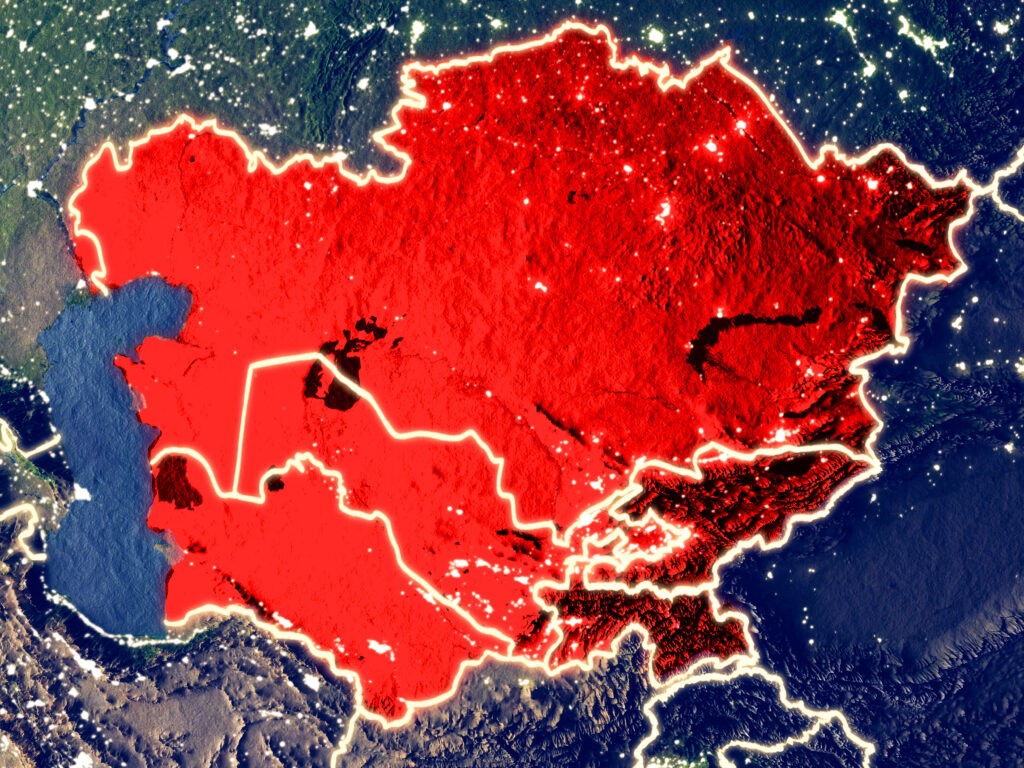
Central Asia, with its rich history as a crossroads of civilizations and a gateway between East and West, finds itself at a crucial juncture in its economic development. The region is showing signs of moving towards becoming a more cohesive economic group, an evolution that could have far-reaching implications for renewable energy development, food security, global commerce and geopolitics. Central Asian states are better positioned than ever to capitalize on their strengths and resources to help the rest of the world deal with climate change, security challenges associated with geopolitical shifts and the ongoing digital transformation of the global economy. Realizing this vast potential will require continued focus, commitment and cooperation from the region’s leaders, as well as long-overdue support from Western leaders for some of the most progressive reforms Central Asia has seen in recent years.

Green energy potential

Rich in natural resources, Central Asia is fast becoming pivotal for the global green energy transition. Leveraging vast reserves of rare earth elements (REEs) and other crucial minerals combined with its significant potential for renewable energy production, the region is increasingly recognized as a key contributor to realizing a more sustainable future.

Kazakhstan, one of the region’s major players, boasts over 56 identified deposits of REEs, with reserves and resources surpassing 450,000 tons. These elements, including lithium and cobalt production, are crucial for battery technologies powering renewable energy applications. This positions Kazakhstan as a significant supplier for the burgeoning green technology industry. Kyrgyzstan and Tajikistan also show promise. Inventory reviews of REE-bearing mineral occurrences and delineation of areas-of-interest suggest these countries could be home to considerable undiscovered resources, further boosting their contribution to green energy transitions.

In addition to its abundant natural resources, Central Asia is an ideal candidate for green hydrogen production. Uzbekistan, with  PowerChina and the Saudi company ACWA Power is constructing the  country’s first green hydrogen plant. Meanwhile, Kyrgyzstan and Tajikistan, with their surplus hydropower electricity, are well-positioned for hydrogen production. Once again, however, Kazakhstan boasts the most ambitious goal: The country aims to produce two million tons of green hydrogen annually by 2032, marking its intent to become a major player in the global green hydrogen market. In 2022, it inked a $50 billion deal with the German energy grou Svevind to build one of the world’s largest green hydrogen plants supplying Europe.

Kazakhstan, which holds 13% of the world’s uranium reserves, also leads the pack in uranium mining, meeting a significant portion of annual demand from  Europe and the U.S.. As nuclear power plays a crucial role in the green energy transition, Kazakhstan’s role is set to grow. The country is exploring new avenues to access the international market. On the other hand, Kyrgyzstan, Uzbekistan and Tajikistan are also known for their uranium deposits but they are currently prioritizing the remediation of past mining sites over active uranium production. This responsible approach underscores the region’s commitment to sustainable development.

Central Asia’s commitment to a greener future extends beyond resource development.. Several states, including Kazakhstan, Turkmenistan, Kyrgyzstan and Uzbekistan, have made commitments to reduce methane emissions as part of the Global Methane Pledge. Kazakhstan has formally joined this initiative, underlining its commitment to global efforts to mitigate the potent greenhouse gas. Turkmenistan has outlined a roadmap towards joining the pledge with Kyrgyzstan and Uzbekistan — Central Asia’s smallest and largest methane emitters respectively — also promising to participate.

The prospect of agricultural growth

Central Asia, characterized by a diverse climate and extensive arable land, holds significant potential for agricultural growth. If utilized effectively, this potential could notably strengthen the regional economy and improve global food security.

The region’s varied climatic conditions offer ideal environments for a broad range of crops. The cooler northern regions are suitable for cereals like wheat and barley, while the warmer southern areas are conducive to crops such as cotton, rice, and various fruits and vegetables. This diversity provides numerous opportunities for agricultural expansion and diversification.

Much of Central Asia’s arable land is cultivated either suboptimally or not at all. The region might therefore be able to increase its agricultural production. Principal irrigation sources include Amu Darya and Syr Darya Rivers, but water scarcity is endemic. Investments in water management technologies would help ameliorate the situation.

Central Asia also has a substantial potential to increase agricultural productivity through further modernization. The incorporation of advanced farming methods, the introduction of improved seed varieties, and superior post-harvest processing could result in considerable yield increases. Additionally, such modernization can promote more sustainable and environmentally friendly farming practices. Unlocking this potential relies on upgrading machinery and transportation infrastructure and improving access to credit. Such a transformation could stimulate the regional economy while diversifying global food supply chains.

Central Asia’s rise as a global technology hotspot

Central Asia is fast emerging as a new frontier in the global technology landscape. Over the past few years, and particularly in 2022 and 2023, an increasing number of multinational corporations have moved their operations to the region, transforming it into a hotspot for international businesses.

Several major tech players have established their presence in Central Asia including the Kazakhstani startup Pinemelon, Chinese tech giants Huawei and Alibaba, and US tech giants such as Microsoft while Alawar, EPAM, HH.ru, and Hypha have set up shop in Kyrgyzstan.

The information technology (IT) industries in Kazakhstan, Kyrgyzstan, and Uzbekistan are experiencing rapid growth, attracting an influx of IT professionals. By June 2023, almost 2,000 IT professionals had relocated from Russia and Belarus to Uzbekistan, fueling the growth of Tashkent’s tech scene. This migration of skilled professionals enhances the quality and competitiveness of the region’s IT sector.

With the rise of digital technology and increased internet connectivity, Central Asian countries are experiencing a tech boom that is transforming their economies and societies. The IT industry across Central Asia is already producing hundreds of millions of U.S. dollars in value, fueled by an increasing number of tech startups, advancements in mobile technology, and a focus on innovation and digital transformation. As a result, this budding IT sector is emerging as an engine for economic growth, creating new opportunities for businesses and individuals alike.

Central Asia’s youthful population, with approximately 72 million individuals having an average age of under 30 years, is another critical factor propelling the region’s tech boom. These tech-savvy youth are eager to participate in the digital economy, rejuvenating the workforce, fostering innovation and adaptability, and stimulating consumer spending. They are already driving growth in sectors like education technology (edtech) and finance technology (fintech), where innovative solutions can meet the needs of a dynamic population.

Bridging East and West

Central Asian nations occupy a strategic position as a conduit between the emerging economies of Asia and the established markets of Europe. There is escalating interest in fostering stability and prosperity in the region, and developing an infrastructure that allows Central Asia to become an integral component of East-West supply chains.

China has made substantial investments in Central Asia’s transportation infrastructure, with President Xi Jinping announcing in May 2023 an ambitious development plan for the region that allocates 26 billion yuan (approximately US $3.8 billion). As part of this strategy, China’s Belt and Road Initiative (BRI) is currently implementing 261 projects in Central Asia.

In parallel, the European Union (EU) has launched the Global Gateway initiative with the aim of establishing sustainable transport links between the EU and Central Asia. This investment in infrastructure is anticipated to foster sustainable and digital connectivity, thereby enhancing the region’s economic resilience.

A key component of this EU initiative is the Trans-Caspian International Transport Route (TITR), a multimodal trade and transportation network that connects Central Asia and the Caucasus with Europe. The TITR, serving as a strategic alternative to Russian land routes, has gained traction due to geopolitical shifts and the rising significance of Eurasia as a nexus for global trade.

The spotlight on the TITR has been partly fueled by the G7’s Partnership for Global Infrastructure and Investment (PGII). Established as a counterpoint to China’s BRI, the PGII aims to mobilize up to US$600 billion by 2027 to bridge the infrastructure investment gap in partner countries. Consequently, there has been a substantial increase in foreign investment in the TITR  during the G7 Summit. This trade corridor extends through Turkey, Georgia, Azerbaijan, the Caspian Sea and Central Asia, and plays a critical role in diversifying trade routes between Asia and Europe.

Conclusion

Central Asian countries are rapidly unlocking their potentials and becoming significant contributors to the global transition to green energy, thanks not only to their vast natural resources but also to a commitment to their responsible development through sustainable environmental initiatives. At the same time, the region’s ongoing tech boom, marked by heavy investment in digital infrastructure, a thriving culture of innovation, and a dynamic young population, are transforming the economic landscape. As the world digitizes, Central Asia’s tech sector stands on the brink of sustained growth, offering vast opportunities for businesses, investors, and individuals.  Its geostrategic location coupled with substantial infrastructure investments from global powers like China and the EU, positions Central Asia as a key player in global trade. The development of alternative trade routes has increased foreign investment, while new initiatives like TITR and PGII all point to a promising future for the region’s contribution to a green transition, global food security, and digital economic growth.

Uzbekistan to Boost Development in Karakalpakstan

On January 10th, the President of Uzbekistan, Shavkat Mirziyoyev held a government meeting on the socioeconomic development of the Republic of Karakalpakstan, an impoverished autonomous region in the northwest of the country. In recent years, Karakalpakstan has made headlines as a politically volatile area which saw deadly unrest break out in July 2022. The region has also suffered acutely from the consequences of the Aral Sea ecological disaster.

At the meeting, it was stated that over the past seven years, Karakalpakstan has undergone unprecedented changes. Twelve of the autonomous republic’s fifteen districts were formerly subsidized by the central government, but now they have begun to bring in revenues to the state budget. More than 5,300 projects have been implemented through investment. Forest plantations covering 1.8 million hectares have been sown on the desiccated bed of the former Aral Sea, and living conditions for 51,000 families have been improved.

In Karakalpakstan, there are incentives and opportunities for doing business which are not available in any other parts of Uzbekistan – taxes on profit, turnover, land and property have all been lowered twofold, and social tax has been set at 1%. Over the past two years, seven decrees and resolutions have been adopted on the development of industry, agriculture, entrepreneurship, and the improvement of the infrastructure in mahallas (local neighborhoods) in Karakalpakstan, with a total of $400 million and 250 billion Uzbek som have been allocated for these purposes.

Today, the population of Karakalpakstan exceeds two million, and every year 50,000 citizens enter the region’s labor market. At the meeting, the President emphasized the need to train them in modern professions, and provide them with gainful employment and decent conditions. In 2024, the government plans to attract $2.1 billion in foreign investment to the region. This injection of funds will help implement 206 projects in industry, 240 in the services sector, and 34 in agriculture, creating 13,000 jobs.

The head of state pointed out that tourism can become a driver of economic growth in Karakalpakstan, and set the task of developing a program to kick-start tourism in the region, with a focus on environmental, ethnographic, and pilgrimage destinations. The establishment of a tourism cluster and attracting foreign experts to the local tourist industry were also discussed.

USAID Provides $1.4 Million to Strengthen Central Asia’s Power Sector

On January 10th, the United States Agency for International Development (USAID) handed over $1.4 million of modern energy sector management equipment and software to the Coordinating Dispatch Center (CDC) Energia in Tashkent. This cutting-edge technology will allow CDC Energia’s dispatchers to display relevant information for maintaining the region’s energy regime, the U.S. Embassy in Uzbekistan reported.

This investment will enhance Central Asia’s ability to manage and monitor electricity flows to ensure the stability of the power grid and foster increased opportunities for the regional trade in electricity. It will also modernize the work of CDC Energia as a regional Systems Operator, which faces an increasing number of challenges in connection with the intensive integration of renewable energy sources and the introduction of the electricity and capacity market in Central Asia.

The Deputy Minister of Energy of Uzbekistan, Akmal Jumanazarov, U.S. Ambassador to Uzbekistan, Jonathan Henick, USAID/Uzbekistan Mission Director, David Hoffman, and the Head of CDC Energia, Khamidilla Shamsiev attended the ceremony.

Ambassador Henick emphasized Uzbekistan’s prominent role in the region’s energy sector, stating that “Uzbekistan plays a vital role in the region due to its central geographical location, abundant energy resources, and key infrastructure. As Central Asia’s power system expands and becomes more complex, innovative solutions are imperative for energy sector development planning. Together, we are creating the foundation for a sustainable future to address the complex challenges of energy transition.”

This delivery of modern equipment was possible through USAID’s flagship regional energy project, Power Central Asia. With a total budget of $39 million over a five-year period, the project aims to improve the performance of the energy sector, expedite clean energy development, and enhance energy security and resiliency through greater regional connectivity and expanded cross-border electricity trade. Through this project alone, USAID has leveraged $2.2 billion in clean energy investments and facilitated the installation of 2,241 megawatts of clean energy capacity across Central Asia to date.

The equipment’s installation is a significant step to achieving a more resilient and efficient energy landscape in Uzbekistan and the broader region, aligning with the high-level priorities outlined in the joint decree by the presidents of the U.S. and all five Central Asian nations. In a joint statement, the parties made it known that “Through C5+1 programs such as USAID Power Central Asia, the United States and Central Asian states will unlock the economic benefits of regional clean energy trade and a clean economy future.”

Uzbek-Japanese Forum Held in Tashkent

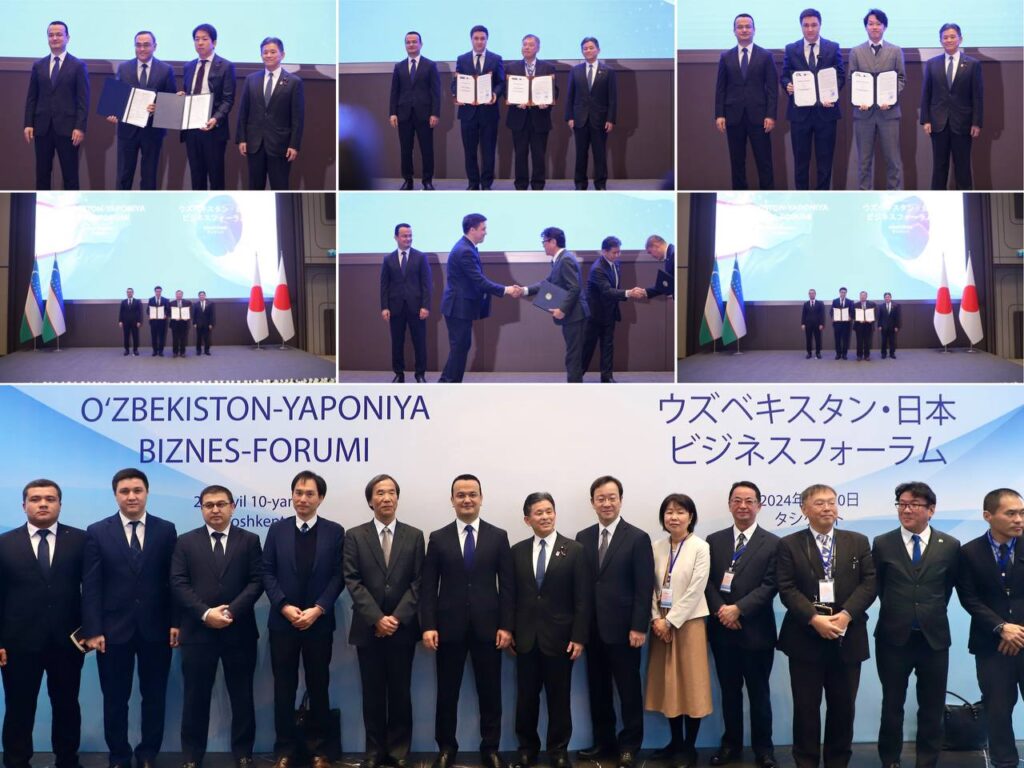
On January 10th, an Uzbek-Japanese business forum was held in Tashkent within the framework of the visit of Japan’s State Minister of the Economy, Trade and Industry, Ryosuke Kozuki. The forum gathered together the heads of key ministries, industry associations, as well as representatives from around 200 major companies from the two countries, the Ministry of Investment, Industry and Trade of Uzbekistan has reported.

Minister Kozuki and the Minister of Investment, Industry and Trade of Uzbekistan, Laziz Kudratov delivered the opening remarks at the forum. Kudratov outlined Uzbekistan’s key achievements in economic development and the improvement of the investment climate, highlighting the introduction of effective legislative norms aimed at protecting the rights of investors, the availability of energy resources, and the possibility of duty-free exports to EU markets within the framework of the EU’s GSP+ program for Uzbekistan.

Both sides emphasized the importance of intensifying direct contact between representatives of the business circles of the two countries. Alternative energy, IT, education, medicine, tourism, and digitization were named the most promising areas for joint investment projects.

The forum also included panel discussions on the topics of “Prospects for Energy Transformation,” and “Digital Transformation in Industrial Development: Japanese startups as a tool for the development of Uzbekistan’s economy.” Fourteen cooperation documents in the fields of education, IT-technologies, alternative energy, medicine, and the use of space technologies in geodesy and cartography were signed.

Kazakhstan and Japan to Cooperate in Low-Carbon Development

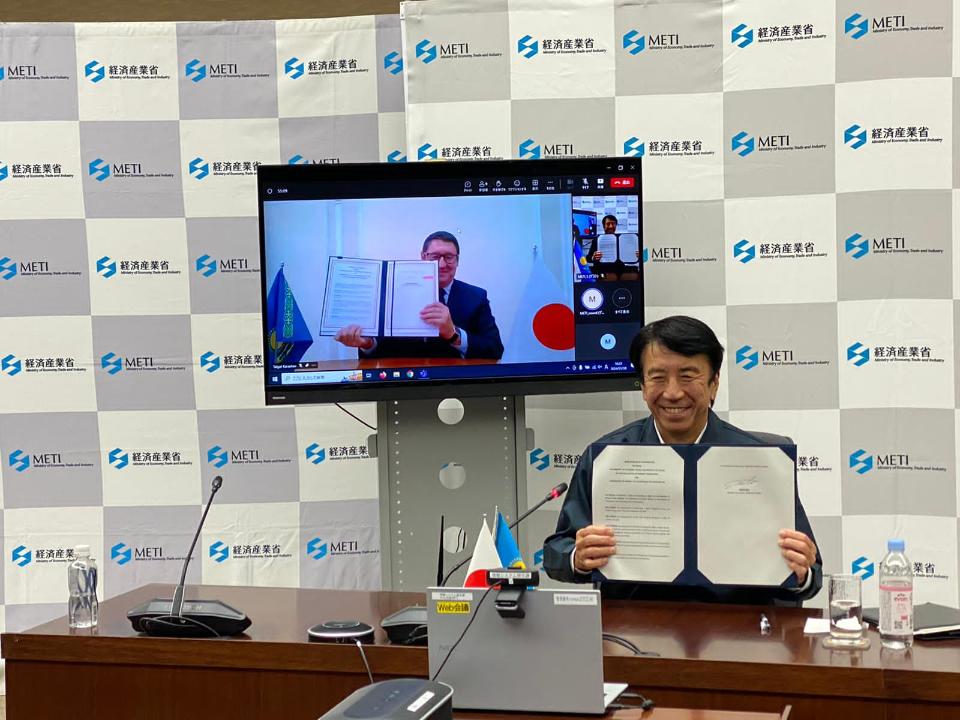
On January 9th the Minister of Energy of Kazakhstan, Almasadam Satkaliev, and the Minister of Economy, Trade and Industry of Japan, Ken Saito, signed a memorandum of cooperation in the field of low-carbon development and interaction in energy transition, the Ministry of Energy of Kazakhstan has stated. The document is aimed at strengthening cooperation in the use of energy resources and technologies, including energy conservation and renewable energy sources consistent with the goals of the Paris Agreement.

The Minister of Energy of Kazakhstan said that Kazakhstan and Japan are already successfully cooperating in the fields of uranium, oil and gas production, and are also introducing Japanese technologies at energy facilities.

The parties reached an agreement to prepare a list of potential projects for joint implementation in the energy sector, including in the field of electric power and renewable energy sources. One such project is for wind power using a 500 MW battery energy storage system in Kazakhstan.

The parties also agreed to strengthen their interaction in priority areas in the energy sector, including the implementation of sustainable development goals.

Uzbekistan and China: Cooperation in Ecology

A meeting was held at the Ministry of Ecology, Environmental Protection and Climate Change to discuss the prospects of cooperation and strategic partnership between China and Uzbekistan in the field of ecology and environmental protection. Important issues, including a number of promising projects based on the idea of constructing buildings that meet the principles of energy efficiency and environmental cleanliness were deliberated upon. In addition, the active introduction of green technologies and the development of strategies to recycle household and solid waste, including the recycling of batteries and the prevention of air pollution were proposed. Such projects are oriented towards the creation of a sustainable and environmentally friendly infrastructure, and reducing the negative impact on the climate.

The meeting also focused on the establishment of global environmental standards, the widespread use of digital technologies, and studying China’s experience in the field of ecology and creating mechanisms for environmental protection.

At the meeting, China’s best practices in the greening of barren desert areas was discussed. China is successfully implementing innovative methods, including the creation of specialized farms for planting seedlings. Measures to attract investors to implement the latest technologies in the systematic treatment of urban wastewater was also on the agenda. The Ministry of Environment and Natural Resources provided valuable information on the activities the government is actively pursuing to ensure the sustainable development of various sectors, including important work on environmental protection.

In addition, the parties discussed the establishment of a national taxonomy of green projects and the establishment of a Green Fund.

As a result of the meeting, the parties agreed to hold additional negotiations on these issues, emphasizing their intent and commitment to find the best solutions available.