• KGS/USD = 0.01144 0%
  • KZT/USD = 0.00212 0%
  • TJS/USD = 0.10456 0.19%
  • UZS/USD = 0.00008 0%
  • TMT/USD = 0.28490 0%
  • KGS/USD = 0.01144 0%
  • KZT/USD = 0.00212 0%
  • TJS/USD = 0.10456 0.19%
  • UZS/USD = 0.00008 0%
  • TMT/USD = 0.28490 0%
  • KGS/USD = 0.01144 0%
  • KZT/USD = 0.00212 0%
  • TJS/USD = 0.10456 0.19%
  • UZS/USD = 0.00008 0%
  • TMT/USD = 0.28490 0%
  • KGS/USD = 0.01144 0%
  • KZT/USD = 0.00212 0%
  • TJS/USD = 0.10456 0.19%
  • UZS/USD = 0.00008 0%
  • TMT/USD = 0.28490 0%
  • KGS/USD = 0.01144 0%
  • KZT/USD = 0.00212 0%
  • TJS/USD = 0.10456 0.19%
  • UZS/USD = 0.00008 0%
  • TMT/USD = 0.28490 0%
  • KGS/USD = 0.01144 0%
  • KZT/USD = 0.00212 0%
  • TJS/USD = 0.10456 0.19%
  • UZS/USD = 0.00008 0%
  • TMT/USD = 0.28490 0%
  • KGS/USD = 0.01144 0%
  • KZT/USD = 0.00212 0%
  • TJS/USD = 0.10456 0.19%
  • UZS/USD = 0.00008 0%
  • TMT/USD = 0.28490 0%
  • KGS/USD = 0.01144 0%
  • KZT/USD = 0.00212 0%
  • TJS/USD = 0.10456 0.19%
  • UZS/USD = 0.00008 0%
  • TMT/USD = 0.28490 0%

Great Women in the History of Tajikistan

On the occasion of the day of solidarity of women in the struggle for rights and emancipation, we remember outstanding Tajik women, each of whom has left her own unique mark on the history of the nation.


Malika Sabirova

Photo: halva.tj

A Soviet-era ballerina, Malika Sabirova left her indelible mark on the history of the arts as the prima ballerina of the Aini Tajik Academic Opera and Ballet Theater. Her exceptional talent was acknowledged on the world stage after she won a gold medal in the first International Ballet Competition in Moscow in 1969, which led to her being awarded the title of People’s Artist of the USSR.

Sabirova not only performed her roles magnificently on stage, but also became a driving force in the development of Tajik ballet. A pupil of the outstanding Galina Ulanova, she inscribed her name in the list of outstanding Soviet ballerinas as the “princess of Tajik ballet,” working tirelessly from the age of ten until her untimely demise just shy of her fortieth birthday.


Zebiniso Rustamova

Photo: asiaplustj.info

Representing the Soviet Union, Zebiniso Rustamova won the world and team championship in archery in 1975, setting a new record. She was also an integral part of the team that won the world championship in 1985 and 1987, and European team championship in 1976, 1984 and 1986. In 1976, Rustamova won the bronze medal at the Montreal Olympics. A legendary athlete in her homeland, from 1992-2000 she served as the President of the Tajikistan Olympic Committee.


Malika Kalandarova

Still from the film “Bride and Groom”

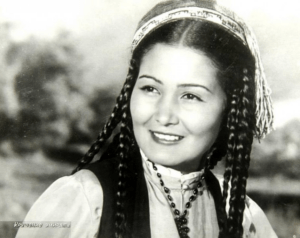
Known for her extraordinary talent in the art of folk dance, Malika Kalandarova made a significant impact with her unique blend of grace and strength earning her an international reputation. An Honored People’s Artist of the USSR and the Tajik SSR, Kalandarova’s performances were characterized by her striking plasticity, with her career also involving her work as a stage director and a tutor. In 1993, she emigrated to the U.S., opening the Malika International Dance School. In 2020, she was commemorated with a stamp by the Post of Tajikistan, underscoring her cultural significance.


Sarajan Yusupova
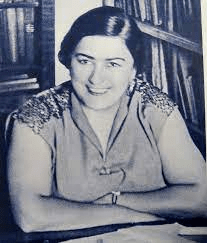
Photo: Creative Commons

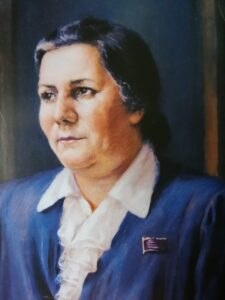
Sarajan Yusupova was a Soviet geochemist, Honored Worker of Science and Technology of Tajikistan, an academician at the Academy of Sciences of the Tajik SSR, and a Doctor of Geological and Mineralogical Sciences. The first woman academician in geochemistry in the history of Tajikistan, with her research on the celestine deposits from which radioactive strontium is extracted, she earned global recognition in the scientific community. Yusupova also served as a deputy of the Supreme Soviet of the Tajik SSR in two convocations.


Sofia Hakimova

Photo: asiaplustj.info

An eminent medical scientist, Sofia Hakimova carved her place in history by becoming the first Tajik woman to attain a Doctorate of Medical Sciences at the age of just 33. Her illustrious career saw her become a member of the Academy of Medical Sciences and earn the title of Honored Scientist of the Tajik SSR.

Beyond her academic accomplishments, Hakimova demonstrated a deep commitment to enhancing obstetric and gynecological services in her homeland. Her tenacity led to significant developments in women’s healthcare across the country, including the establishment and modernization of women’s clinics in various cities and districts. Furthermore, her efforts paved the way for the construction of state-of-the-art maternity hospitals in Dushanbe and other regions.

Hakimova’s scientific research was comprehensive and multifaceted, with a particular emphasis on endocrinological gynecology. She explored the role of estrogens in DNA synthesis and the division of endometrial cells, contributing valuable knowledge to the field. Additionally, she focused on the issues of iron deficiency anemia, hemoglobinopathies, and thalassemia in women and children.

Another area of Hakimova’s research was family planning, underscoring her dedication to improving women’s health and wellbeing. Her pioneering work in this field has had a profound impact globally.


Oinikhol Bobonazarova

Photo: U.S. Department of State

Oynikhol Bobonazarova is a prominent activist who has earned international recognition for her work, which has primarily focused on protecting human rights and investigating violations within her home country. In 1993, she was arrested and accused of plotting a coup, spending a month in prison followed by four years under house arrest. Despite these challenges, she remained steadfast in her commitment to human rights advocacy following her release.

In 1997, Bobonazarova was offered the position of Deputy Prosecutor General, but declined the opportunity. Since 2007, she has led Perspective+, a public organization aimed at monitoring prison conditions, combating torture, and safeguarding women’s and migrant workers’ rights.

In 2013, Bobonazarova was nominated as the presidential candidate from the united opposition coalition, marking a significant milestone in Tajikistan’s political history. A year later, she received the International Women of Courage Award from the U.S. State Department, a prestigious honor which is awarded to ten women worldwide who have shown exceptional courage and leadership. The award was presented to her by Michelle Obama.

Great Women in the History of Uzbekistan

The history of Uzbekistan is awash with outstanding female personalities who played a key role in the formation of the nation. From defenders of rights to creative geniuses, they became pioneers, leaving their mark in various fields. To mark International Women’s Day, we remember some of the great women of Uzbekistan, revealing their influence on culture, politics and social movements.


Nozimahonim

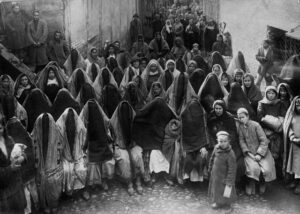
Uzbek Women, Tashkent, 1924; Photo: archive.is

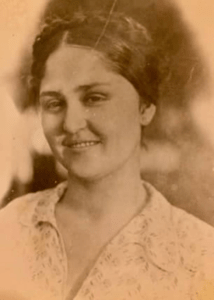
Born in the Jizzakh Region in 1870, Nozimahonim became the first woman journalist of the Jadidism-era, playing a key role in the struggle for the empowerment of women in Uzbekistan. In her poems, she raised questions about education for women and inequalities in familial relationships.

Published in the newspaper, Tarakkiy, in her poem “Afsus” (translated from Uzbek as “Unfortunately”), Nozimahon wrote: “How wonderful that the night of tyranny has come to an end,” reflecting her hope for the end of the long struggle for women’s liberation and rights.

In addition to her work as a journalist and poet, Nozimahonim worked to educate girls as an “Otin,” the traditional name for women who read and taught the Qur’an. Nozimahonim died in 1924; no known image of her exists.


Sobira Kholdarova

Photo: qalampir.uz

Upon being sent to an orphanage at age thirteen, Sobira Kholdarova completed a literacy course in just six months. At the age of just seventeen, she became one of the editors of the newspaper, Yangi yul (New Way). In 1924, at a rally against inequality in Tashkent, Kholdarova cast of her burqa and, shortly thereafter, joined the Communist Party of the Soviet Union. In 1926, despite having a two-year-old son, she was selected to study in Moscow, becoming the first woman from Uzbekistan to be trained as a professional journalist.

Despite spending over fifteen years in exile in Siberia for allegedly “losing class consciousness,” both before and after her return to the press in the 1950s, Kholdarova made a hugely significant contribution to journalism.


Zulfiya Umidova

Image: facebook.com/tashkentretrospective

The first female physician and doctor of medical sciences in Uzbekistan, Zulfiya Ibragimovna Umidova made a profound impact on the medical field. Her noteworthy contributions lie primarily in her research on the prevalence of cardiovascular diseases in the Uzbek Soviet Socialist Republic. For her doctoral dissertation, she conducted an in-depth examination of how Tashkent’s climate affects the human cardiovascular system and the specificities of myocardial infarction. Following the massive earthquake in Tashkent in 1966, she expanded her research to study the effects of earthquakes on hypertension.

Her prolific academic journey is evidenced by her 80 scientific publications, and the supervision of 32 candidate and three doctoral theses. Umidova’s legacy continues to inspire future generations in the field of medicine.


Nelya Ataullayeva

Photo: mytashkent.uz

Nelya Ataullayeva initially embarked on her career as an actress, but she soon made history by becoming the first female documentary filmmaker in Uzbekistan. Her inaugural documentary paid tribute to eminent women in Uzbekistan, including the poet Zulfiya, scientist Professor Irina Raikova, medical doctor Zulfiya Umidova, and the trailblazing locomotive driver and parachutist, Bashorat Mirbabaeva. Over her career span, she created approximately 20 documentaries that addressed significant issues and narrated the stories of groundbreaking women. Regrettably, Ataullayeva’s promising career was prematurely ended when she passed away at the age of just 43.


Shahlo Turdikulova

Photo: podrobno.uz

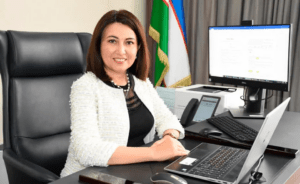
A Doctor of Biological Sciences, Shahlo Turdikulova became the first woman to hold the post of First Deputy Minister of Innovative Development of Uzbekistan. With a background in human genetics, she has submitted more than 160 scientific papers, including two textbooks and two monographs, and published over 40 articles in international publications.

Her efforts to foster unity were recognized when she received the Order of Dustlik. This honor is bestowed upon individuals who have made substantial contributions to fortifying friendship and mutual understanding among the ethnic groups residing in Uzbekistan.


Mukhlisa Azizova

Photo: cyclowiki.org

A name which resonates in the Uzbek film industry, as a director and producer Mukhlisa Azizova has carved her niche with a unique flair for storytelling. Azizova’s journey into the world of filmmaking started with the realization of her film idea, “Geologist is stronger than death” in 2014. Her directorial debut came with the short film, “The Shore of the World” in 2015, which showcased her ability to create engaging narratives. It was her 2017 short film, “She” that brought Azizova international recognition, however, when she made history by becoming the first representative of the Uzbek film industry at the prestigious Cannes Film Festival.

Azizova continued to expand her creative arsenal with the thriller, “Scorpion,” released in 2018, which cemented her status as a force to be reckoned with in the industry. Her works continue to inspire aspiring filmmakers.


Tanzila Narbayeva

Photo gk-usbekistan.de

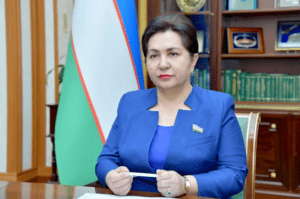
A distinguished state and public personality, Tanzila Narbayeva has held several key positions in Uzbekistan, including the Chair of the Federation of Trade Unions, Chair of the Women’s Committee, and Deputy Prime Minister. Since 2019, she has broken new ground by becoming the first woman to lead the Senate of the Oliy Majlis of Uzbekistan.

Throughout her distinguished career, Narbayeva has significantly advanced women’s rights, being instrumental in the creation of the Committee on Women and Gender Equality. Furthermore, she has enhanced media transparency and government accountability by arranging for live broadcasts of meetings. These sessions were open not only to state journalists but also to representatives from independent media outlets.


Global Environment Facility to Aid Ecosystem Restoration in Central Asian Countries

The Global Environment Facility (GEF) Trust Fund will provide almost $5.4m to Tajikistan, Turkmenistan and Uzbekistan to support their efforts to strengthen integrated water resources management in the Amu Darya, Zarafshan and Panj river basins. This funding is part of the Central Asia Water-Land Linkages (CAWLN) program, implemented by the United Nations (UN) Food and Agriculture Organization (FAO) and supported by the GEF Trust Fund. Under this initiative, GEF will provide financing for projects totaling over $26m across Central Asia. The project will run until August 2025.

The financing will be used to restore 5,350 hectares of land and ecosystems, and also to introduce improved cultivation practices on 1.3 million hectares of land. It also aims to reduce greenhouse gas emissions by over 11 million tons, and improve co-management of shared ecosystems. The program is projected to improve the lives of 487,000 people.

Central Asia’s complex river systems are the main sources of water for the region’s 60 million people, agriculture, and energy production. They also support diverse ecosystems and livelihoods in these countries. However, unsustainable water use and soil degradation have led to water scarcity and upset the ecological balance of the region.

The program aimed at addressing these negative impacts consists of seven projects, including individual projects in Kazakhstan, Kyrgyzstan, Turkmenistan and Uzbekistan. They aim to improve agriculture and natural resource management by addressing issues such as tree felling, land degradation and loss of biodiversity. In addition, there is a regional project to coordinate efforts and share knowledge across basins.

Although there is no separate program for Tajikistan, the country will be involved in projects on ecosystem restoration and sustainable agriculture.

The Central Asia Water and Land Resources Complex Program, recently approved by the GEF council and overseen by FAO, will provide $26m (with co-financing from the World Bank of $335.5m) to restore the ecosystems of the Amu Darya and Syr Darya river basins. It will also aim to improve water security, resilience and livelihoods of rural communities in Kazakhstan, Kyrgyzstan, Tajikistan, Turkmenistan and Uzbekistan.

Since 1994 Uzbekistan has participated in the implementation of more than 50 GEF projects at the national, regional and international level.

Cenomi Retail Expands its Presence in Tashkent

The largest shopping and entertainment complex in Uzbekistan, Tashkent City Mall, has partially opened. While the official opening is scheduled for later in the first quarter of 2024, part of the retail premises is already open to shoppers.

Saudi-based Fawaz Alhokair Group, a retail-development company that operates under the Cenomi Retail brand in Uzbekistan and elsewhere, is already 11th in the world by revenue. Their entry onto the Uzbek market signifies that Uzbekistan has become an attractive enough retail center to bring in the world’s fashion giants, including Inditex-owned brands Zara, Massimo Dutti, Oysho, Bershka, Stradivarius, and Pull&Bear.

Tashkent City Mall will house an entertainment complex called Sky Park, which will include extreme sports, a virtual-reality zone, a children’s science complex and playground.

Given the increasing demand for global brands in Uzbekistan, the entry of Inditex brands to the market may create a platform for future foreign investments in the country’s retail trade.

According to the INFOLine consulting agency, Uzbekistan, Kyrgyzstan and Tajikistan are becoming increasingly attractive for global retailers. The main reason for this is the robust population growth rates found in the region. In addition, the population’s income on a nationwide scale continues to increase, which, in turn, encourages consumers to spend more money. Urbanization holds another reason for the popularity of retail in Central Asia, as the population is increasingly more willing to shop online and in shopping malls.

Korean Geologists Discover Lithium in Kazakhstan

The Korea Institute of Geology and Mineral Resources (KIGAM) has announced that it has discovered a lithium deposit in Kazakhstan following testing in 2023. According to a report by The Korea Times on March 5th, the institute plans to develop this deposit.

Lithium is one of the most important minerals for the electric vehicle industry, as it is a key component in their batteries — along with elements like nickel, manganese, cobalt, aluminum and copper.

At the recent International Primary Minerals Forum in Seoul, KIGAM announced that the lithium deposit was discovered over a 1.6 square kilometer area of pegmatites in eastern Kazakhstan. It added that tantalum had previously been mined at this site.

Tantalum is usually found together with lithium and cesium, so KIGAM has been exploring the area since May last year at the request of the Kazakh government.

According to information provided by KIGAM, citing Kazakh forecasts, resources worth $15.7bn are buried in the area. KIGAM plans to apply for a drilling survey in the area next year with a Korean company to begin mining the lithium. The details of that Korean company weren’t made public, The Korea Times reported.

The Price of Liquefied Petroleum Gas Falls Below Production Costs in Kazakhstan

In a report on March 5th, Almasadam Satkaliev, Kazakhstan’s Minister of Energy, stated that in 2023 consumption of liquefied petroleum gas (LPG) by the country’s domestic market rose to 2.2 million tons; an increase of 400 thousand tons (or 28%) compared to 2022.

Cheaper than gasoline, LPG is understandably the fuel of choice for vehicle owners and a sharp hike in the cost of LPG was met with nationwide objection. Mass protests staged in the western Kazakh town of Zhanaozen in January 2022 soon spread across the country and turned violent in the cities of Almaty and Astana.

According to the energy minister, the current maximum wholesale price for LPG established by the state is lower than its production cost. While production varies from 60 thousand to 70 thousand tenge per ton, the wholesale price for manufacturing plants is set at 40,320 tenge/ton excluding VAT.

“Due to the unprofitability of liquefied petroleum gas production, manufacturers are running at a loss and are unable to invest in either the maintenance or modernization of their plants,” stated the minister.

The price of LPG in Kazakhstan, between 54-86 tenge per litre depending on the region, is the lowest among former Soviet states. For comparison the price per litre in Russia is equivalent to 165 tenge; in Kyrgyzstan, 159 tenge; in Azerbaijan, 171 tenge, and in Tajikistan, 273 tenge.

To meet the immediate demands of the country’s vehicle owners, a formal agreement has been made between the Ministry of Energy and Tengizchevroil for the monthly supply of 20 thousand tons of LPG.

The national company QazaqGaz and shareholders of the North Caspian project are also poised to sign an agreement for the supply of up to 700 tons of LPG per annum from the Kashagan oilfield by the end of this year.